LindyPanels
LindyPanels specializes in creating and optimizing Google Knowledge Panels for individuals and brands. It helps establish online credibility, …
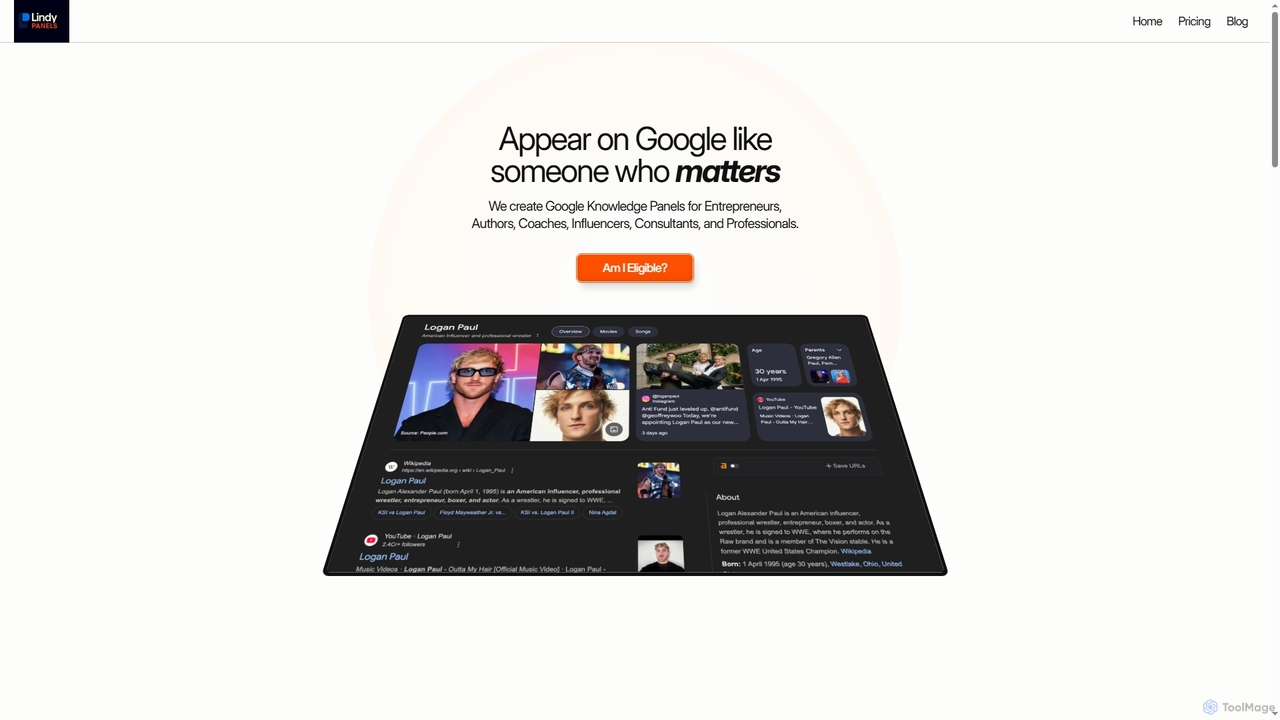
LindyPanels specializes in creating and optimizing Google Knowledge Panels for individuals and brands. It helps establish online credibility, enhance search visibility, and build trust with clients, investors, and the press by curating a professional digital presence on Google Search.
Trackaianswers
trackaianswers is an AI-powered monitoring service, acting as a 'Google Alerts for AI'. It tracks what major AI …
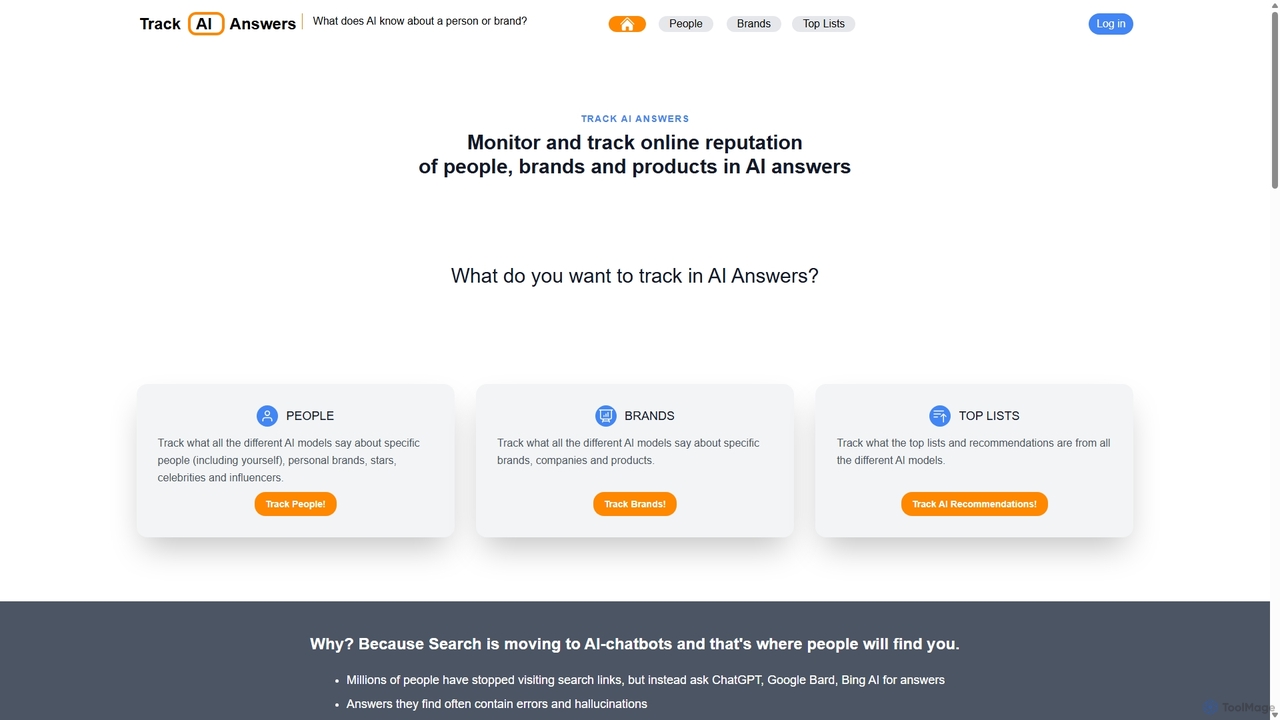
trackaianswers is an AI-powered monitoring service, acting as a 'Google Alerts for AI'. It tracks what major AI chatbots like ChatGPT, Google Bard, and Bing AI say about people, brands, and products. It provides a unified dashboard and email alerts for any changes, helping you protect and manage your online reputation in the new era of AI-driven search.
Ecomtent
Ecomtent is an AI-powered platform for e-commerce product listing optimization. It automates the creation of high-converting product images, …
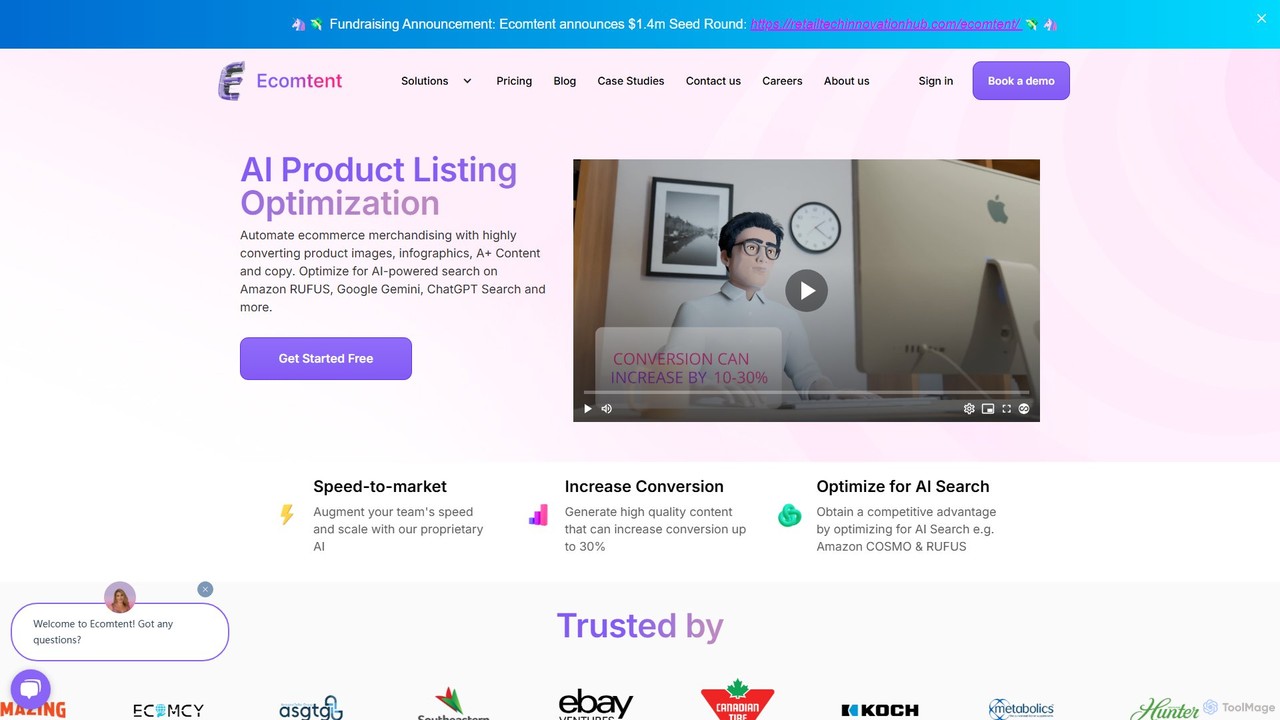
Ecomtent is an AI-powered platform for e-commerce product listing optimization. It automates the creation of high-converting product images, infographics, A+ Content, and copy. It specializes in Generative Engine Optimization (GEO) to improve visibility on AI search engines like Amazon RUFUS and Google Gemini, helping brands increase conversion rates and accelerate their go-to-market process.
About Search Engine Optimization
AI Search Engine Optimization (SEO) tools are a class of software that leverages artificial intelligence to automate and enhance website optimization for search engines. These tools utilize machine learning models and natural language processing (NLP) to analyze vast datasets, identify complex patterns, and generate actionable insights. They help users improve keyword strategies, optimize content, conduct technical audits, and track performance with greater speed and accuracy than traditional methods. By automating repetitive tasks and providing predictive analytics, AI SEO tools enable marketers and businesses to make more data-driven decisions and gain a competitive edge in search rankings.
Core Features
- AI-Driven Keyword Analysis: Identifies high-potential keywords, clusters them by topic, and analyzes search intent using machine learning.
- Automated Content Optimization: Provides real-time suggestions for improving content relevance, readability, and structure based on top-ranking pages.
- Predictive Rank Tracking: Forecasts potential ranking changes and estimates the impact of SEO efforts before implementation.
- AI-Powered Technical Audits: Automatically scans websites to detect complex technical issues like crawlability problems and indexation errors.
- Intelligent Competitor Analysis: Analyzes competitors' strategies, content gaps, and backlink profiles to uncover strategic opportunities.
Use Cases
These tools are widely used by digital marketing agencies, in-house SEO teams, content strategists, and e-commerce businesses. They are particularly valuable for managing large-scale SEO campaigns, creating data-informed content strategies, and performing comprehensive technical audits that would be time-consuming to do manually.
How to Choose
When selecting an AI SEO tool, consider the scope of its features (e.g., all-in-one platform vs. specialized tool), its integration capabilities with platforms like Google Analytics and CMSs, the accuracy and freshness of its data, and the user interface's complexity. Also, evaluate the pricing model in relation to your team's size and needs.

Search Engine OptimizationUse Cases
Automated Keyword Clustering for Content Strategy
A content strategist for a B2B SaaS company needs to build a comprehensive content plan around a core topic. Using an AI SEO tool, they input a primary 'seed' keyword. The tool's AI analyzes thousands of related search queries and automatically groups them into semantically related clusters based on user intent. This process, which would manually take days, is completed in minutes, providing a clear content pillar and cluster structure. The strategist receives a data-backed blueprint for creating articles, blog posts, and landing pages that cover the topic exhaustively, increasing topical authority and search visibility.
AI-Powered On-Page SEO Audits at Scale
An SEO manager at a large e-commerce company with thousands of product pages needs to ensure all pages are optimized. They use an AI SEO tool to perform a site-wide audit. The tool crawls the entire website, using machine learning to identify subtle on-page issues like keyword cannibalization, thin content, and suboptimal internal linking structures that are often missed by standard crawlers. It then prioritizes the fixes based on their potential impact on traffic and revenue, providing clear, actionable recommendations for each page. This allows the SEO team to efficiently address the most critical issues first.
Generating SEO-Optimized Content Briefs
A digital marketing agency needs to create high-quality, SEO-focused articles for multiple clients. Instead of manually researching competitors and SERPs for each topic, the content team uses an AI SEO tool. They enter a target keyword, and the tool analyzes the top-ranking content to generate a detailed brief. The brief includes recommended word count, key subtopics to cover, semantically related terms (LSI keywords), common questions to answer, and suggested internal and external links. This ensures that writers have all the necessary information to create content that meets search intent and is structured for ranking success.
Predictive Rank Forecasting for SEO Campaigns
A marketing director is planning a major website redesign and needs to understand the potential SEO risks and opportunities. They use an AI SEO tool with predictive capabilities. The tool analyzes the proposed changes, such as URL structure modifications and content updates, and forecasts their likely impact on keyword rankings and organic traffic. This data-driven forecast allows the team to make informed decisions, adjust their strategy to mitigate potential negative impacts, and set realistic performance goals for the campaign, securing stakeholder buy-in with concrete projections.
Automated Internal Linking Optimization
The webmaster of a large content-rich website, such as a news portal or an extensive blog, struggles with maintaining an optimal internal linking structure. They employ an AI SEO tool that continuously analyzes the site's content. The tool identifies relevant linking opportunities, suggesting contextual anchor text and linking new articles to established 'pillar' pages. It also flags orphaned pages that have no internal links pointing to them. This automation helps distribute link equity effectively across the site, improves user navigation, and helps search engines discover and index content more efficiently.
AI-Driven Competitor Content Gap Analysis
An SEO specialist for an online retailer wants to outperform key competitors. They use an AI SEO tool to conduct a content gap analysis. The tool compares their website's keyword profile against several top competitors, identifying valuable keywords that competitors rank for but they do not. The AI goes beyond simple keyword lists by categorizing these opportunities by search intent (informational, transactional) and business value. This provides a prioritized roadmap for creating new content that directly targets profitable gaps in the market, attracting qualified traffic away from competitors.