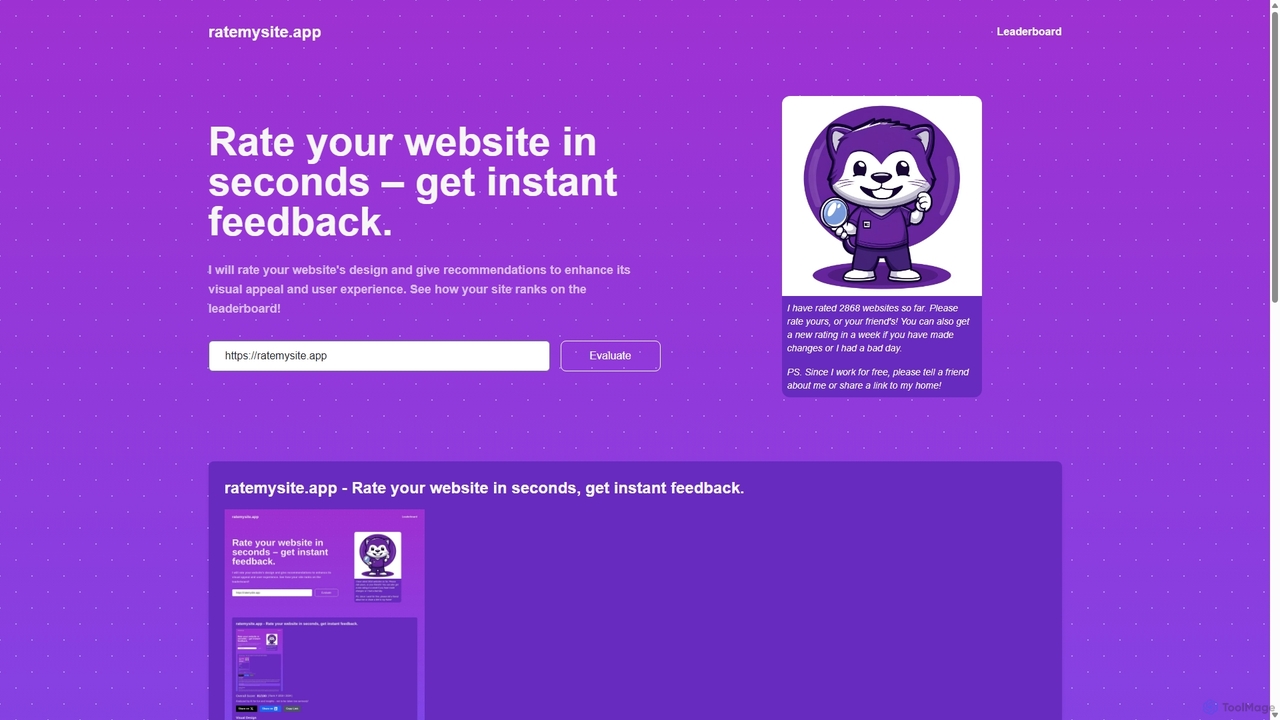
Ratemysite.app
An AI-powered tool that instantly rates your website's design, layout, and content. Get a detailed score out of …
An AI-powered tool that instantly rates your website's design, layout, and content. Get a detailed score out of 100, actionable recommendations to improve visual appeal and user experience, and see how your site ranks on a global leaderboard. It's fast, free, and requires no signup.
About User Experience
User Experience (UX) tools are AI-powered platforms designed to analyze user behavior, optimize interfaces, and enhance overall digital interactions. Leveraging machine learning and data analytics, these tools predict user needs, identify pain points, and suggest improvements for websites, apps, and software. They help businesses create intuitive, engaging, and accessible digital products, driving higher satisfaction and conversion rates. Within the broader SEO landscape, these tools are vital for improving on-page experience signals, which directly impact search rankings and user retention.
Core Features
- User Behavior Analytics: AI analyzes heatmaps, session recordings, and click paths to reveal user interaction patterns and friction points.
- Predictive Design: Utilizes machine learning to suggest optimal design layouts, content placements, and feature functionalities based on user data.
- Automated A/B Testing: Automatically generates and tests multiple design variations to identify the most effective elements for conversion and engagement.
- Accessibility Auditing: Scans digital interfaces for compliance with accessibility standards, providing recommendations for inclusive design.
- Sentiment Analysis: Processes user feedback from reviews, surveys, and support tickets to gauge emotional responses and identify areas for improvement.
Applicable Scenarios
These tools are indispensable for product teams optimizing software interfaces, e-commerce managers enhancing checkout flows, and content creators improving website readability. They are also crucial for marketing professionals aiming to personalize user journeys and developers ensuring digital products meet accessibility standards, all contributing to better on-page SEO performance.
How to Choose
When selecting an AI UX tool, consider its data integration capabilities with your existing analytics and CRM systems, the sophistication of its AI for predictive insights, and the level of customization it offers for testing and design recommendations. Evaluate its reporting features for actionable insights and ensure it aligns with your team's technical proficiency and budget.

User ExperienceUse Cases
Optimizing E-commerce Checkout Flows
E-commerce managers use AI UX tools to analyze user drop-off points in the checkout process, identifying friction areas like complex forms or confusing navigation. The tools suggest design changes, form field optimizations, or personalized prompts to streamline the path to purchase, significantly reducing cart abandonment and boosting conversion rates, which positively impacts SEO by improving user signals.
Enhancing SaaS Product Onboarding
Product teams deploy AI UX tools to monitor new user interactions with their software, detecting common hurdles or confusion points during onboarding. The AI provides insights for refining tutorial flows, simplifying initial setup, or personalizing welcome experiences, leading to higher feature adoption and user retention. This improved initial experience reduces churn and signals product quality to search engines.
Improving Content Readability and Engagement
Content creators and SEO specialists utilize these tools to assess the readability, structure, and visual appeal of web pages. AI can analyze eye-tracking data or scroll depth simulations to suggest optimal paragraph lengths, image placements, and call-to-action positions. This ensures content is easily digestible and keeps users engaged longer, reducing bounce rates and increasing dwell time, which are strong positive signals for SEO.
Automating Accessibility Audits
Web developers and compliance officers use AI UX tools to automatically scan websites for accessibility issues, such as insufficient color contrast, missing alt text for images, or improper keyboard navigation. These tools quickly identify non-compliance with WCAG standards, providing actionable recommendations to make digital products usable for individuals with disabilities, broadening audience reach and avoiding legal issues, while also improving SEO by adhering to best practices.
Personalizing User Journeys
Marketing teams leverage AI UX tools to create dynamic, personalized user experiences across different touchpoints. By analyzing individual user data and behavior patterns, the AI can tailor content, recommendations, and navigation paths, making each user's interaction feel unique and relevant. This increases engagement, conversion rates, and fosters loyalty, which indirectly benefits SEO through improved user signals and brand authority.
Predictive Design for New Features
Product designers employ AI UX tools during the design phase of new features or products. Based on vast datasets of user interactions and design principles, the AI can predict how users will interact with different design layouts or feature placements. This allows designers to iterate and optimize designs before development, saving time and resources, and ensuring that new offerings are inherently user-friendly, which contributes to long-term SEO success.