ToolMage
Sign in

Best 1 Website Optimization AI tools for Seo

Popular Website Optimization AI tools in Seo include ToolsMaverick, helping you work more efficiently.

ToolsMaverick
Free

ToolsMaverick

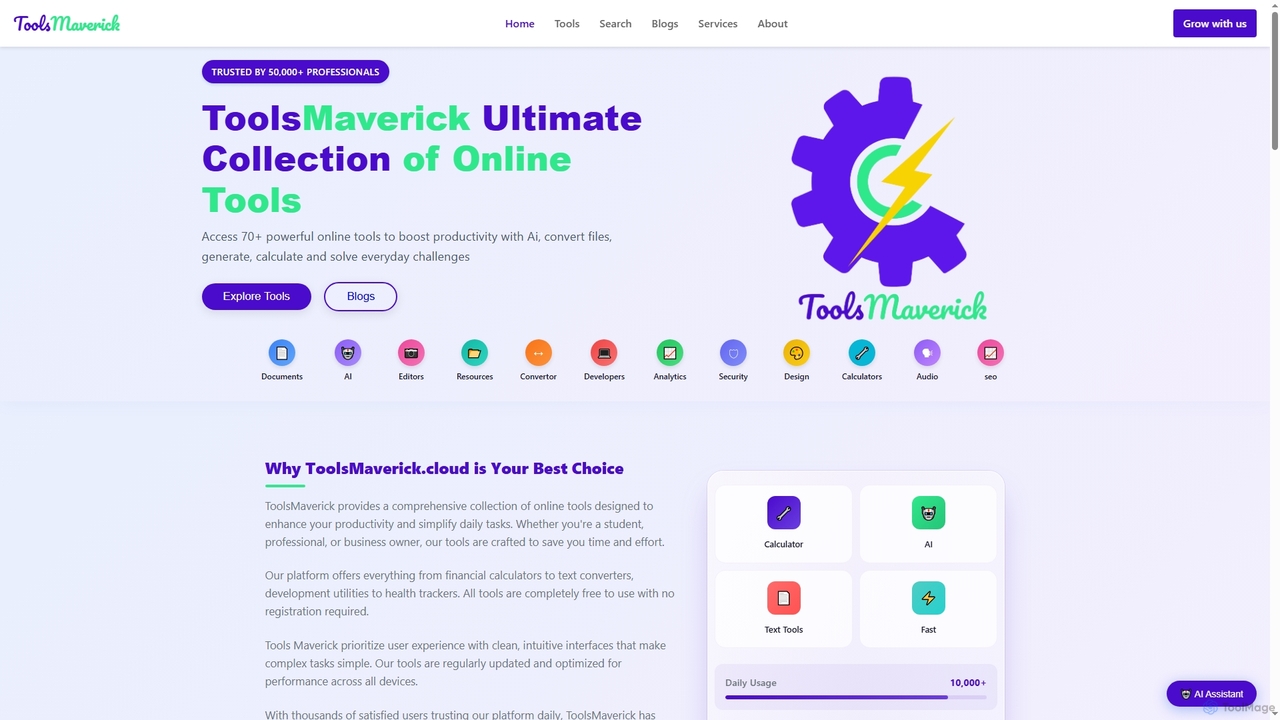
ToolsMaverick is a comprehensive, free online platform offering over 70 diverse utilities, including powerful AI tools, calculators, converters, SEO aids, and development tools. Designed for simplicity, it requires no sign-up, features no ads, and provides immediate access to enhance productivity for professionals, students, and everyday users.

Content Analysis
Visits 6.5KFavorites 139Likes 146

About Website Optimization

Website Optimization tools are AI-powered solutions designed to enhance a website's performance, user experience, and search engine visibility. These tools leverage advanced algorithms to analyze various aspects of a site, from technical health to content quality and user behavior. By identifying areas for improvement, they help businesses attract more organic traffic, reduce bounce rates, and convert visitors more effectively, playing a crucial role within the broader field of SEO.

Core Features

  • Performance Analysis: Identifies and diagnoses issues affecting page load speed, responsiveness, and overall site health.
  • Content Optimization: Analyzes content for readability, keyword relevance, and engagement, suggesting improvements for higher rankings.
  • User Experience (UX) Analysis: Monitors user interactions, heatmaps, and session recordings to uncover friction points and improve navigation.
  • Technical SEO Audits: Scans for broken links, crawl errors, sitemap issues, and other technical factors impacting search engine indexing.
  • Competitor Benchmarking: Compares website performance and SEO metrics against competitors to identify strategic advantages.

Applicable Scenarios

Website Optimization tools are essential for digital marketers, webmasters, and e-commerce managers aiming to maximize their online presence. They are used to continuously monitor site health, implement data-driven improvements to content and design, and ensure technical compliance with search engine guidelines. This leads to better search rankings, increased organic traffic, and ultimately, higher conversion rates for businesses across various industries.

How to Choose

When selecting Website Optimization tools, consider their scope of features, ensuring they cover technical SEO, content analysis, and UX insights. Evaluate integration capabilities with existing analytics platforms and CMS. Look for intuitive dashboards and actionable recommendations, as well as scalable pricing models that fit your website's size and traffic. Finally, prioritize tools offering robust reporting and real-time monitoring to stay ahead of performance issues.

Website Optimization use cases

1

Improving Page Load Speed for E-commerce Sites

An e-commerce manager uses Website Optimization tools to identify slow-loading product pages. The tool analyzes image sizes, script execution, and server response times, providing specific recommendations like image compression and lazy loading. Implementing these suggestions significantly reduces load times, improving user experience and decreasing cart abandonment rates, directly impacting sales.

2

Optimizing Blog Content for Higher Search Rankings

A content creator utilizes an AI-powered Website Optimization tool to analyze existing blog posts. The tool suggests relevant keywords, improves readability scores, and identifies opportunities for internal linking. By refining content based on these insights, the creator sees a measurable increase in organic search visibility and higher rankings for target keywords.

3

Enhancing User Experience on a SaaS Platform

A UX designer for a SaaS company employs Website Optimization tools to gather user behavior data, including heatmaps and session recordings. The analysis reveals common navigation issues and areas where users drop off. Based on these findings, the designer redesigns specific UI elements, leading to a smoother user journey and increased feature adoption.

4

Conducting Regular Technical SEO Audits for Large Portals

A webmaster managing a large news portal uses Website Optimization tools to perform automated technical SEO audits. The tool regularly checks for broken links, crawl errors, duplicate content, and sitemap issues across thousands of pages. This proactive approach ensures the portal remains fully indexed by search engines, preventing drops in organic traffic due to technical glitches.

5

Benchmarking Against Competitors for Strategic Advantage

A digital marketing strategist uses Website Optimization tools to analyze competitor websites. The tool provides insights into their keyword strategies, backlink profiles, and content performance. By understanding competitor strengths and weaknesses, the strategist can refine their own SEO and content plans, identifying untapped opportunities and gaining a competitive edge.

6

Monitoring Website Health and Uptime for Critical Services

An IT operations team for a critical online service uses Website Optimization tools for continuous monitoring of website health, uptime, and server response. The tool sends instant alerts for any performance degradation or downtime, allowing the team to quickly address issues. This ensures high availability and reliability, crucial for maintaining user trust and service continuity.

Website Optimization FAQ

What are Website Optimization tools?

Website Optimization tools are AI-driven platforms that analyze and improve various aspects of a website to boost its performance, user experience, and search engine ranking. They go beyond basic SEO by focusing on technical health, content quality, and visitor behavior to ensure a site is fast, engaging, and easily discoverable.

How do Website Optimization tools differ from general SEO tools?

While Website Optimization is a core component of SEO, these tools specifically focus on the on-page and technical aspects of a website's health and user experience. General SEO tools often cover broader areas like keyword research, link building, and off-page SEO. Website Optimization tools provide deeper insights into site speed, content quality, UX, and technical audits to directly improve the website itself.

What key metrics do Website Optimization tools track?

Website Optimization tools track a wide range of metrics including page load speed (Core Web Vitals), bounce rate, conversion rates, organic traffic, keyword rankings, crawl errors, broken links, mobile responsiveness, and user engagement signals like time on page and click-through rates. These metrics provide a holistic view of a website's performance.

Who benefits most from using Website Optimization tools?

Digital marketers, SEO specialists, web developers, e-commerce managers, and content creators benefit significantly. Anyone responsible for a website's online presence, performance, and user engagement will find these tools invaluable for identifying issues, implementing data-driven improvements, and achieving better business outcomes through an optimized web experience.

Can Website Optimization tools help improve conversion rates?

Yes, absolutely. By improving page load speed, enhancing content relevance, optimizing user experience, and ensuring technical soundness, Website Optimization tools directly contribute to higher conversion rates. A faster, more user-friendly, and trustworthy website encourages visitors to stay longer, engage more, and complete desired actions, whether it's making a purchase, filling out a form, or subscribing to a newsletter.