
ToolMage
Sign in

Best 1 Product Comparison AI tools for Shopping

Popular Product Comparison AI tools in Shopping include thegigabrain, helping you work more efficiently.

thegigabrain
Freemium

thegigabrain

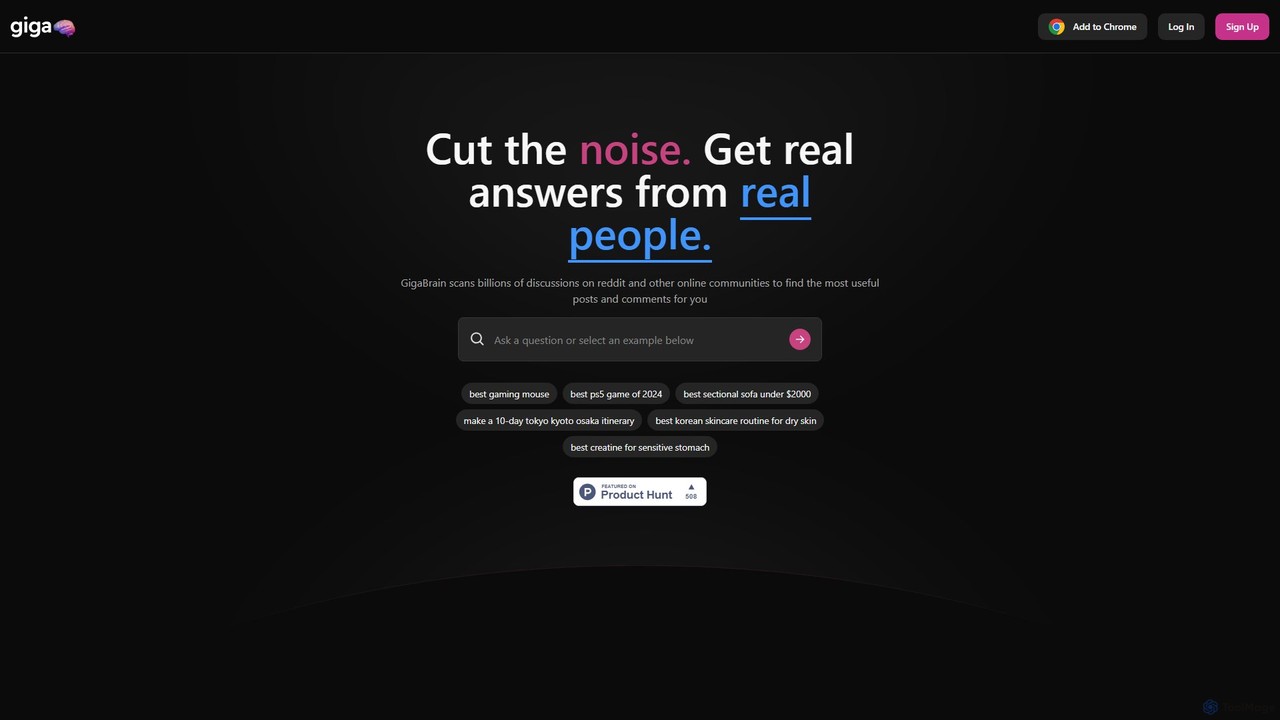
GigaBrain is an AI-powered search engine that scans billions of discussions on Reddit and other online communities. It delivers authentic, summarized answers from real people, cutting through marketing noise to provide genuine product reviews, travel advice, and practical solutions.

Research
Visits 48KFavorites 134Likes 132

About Product Comparison

Product Comparison tools are AI-powered platforms designed to analyze, compare, and summarize information about various products, helping users make informed purchasing decisions. These tools leverage advanced natural language processing and data extraction techniques to gather specifications, prices, features, and user reviews from diverse online sources. They provide objective, side-by-side comparisons, saving significant time and effort for consumers and businesses alike within the broader shopping context.

Core Features

  • Automated Data Extraction: Gathers product details, prices, and reviews from multiple e-commerce sites and databases.
  • Feature-by-Feature Analysis: Presents a clear, structured comparison of product attributes, specifications, and functionalities.
  • Sentiment Analysis of Reviews: Summarizes public opinion and highlights common pros and cons from user feedback.
  • Personalized Recommendations: Suggests products based on user-defined criteria, preferences, and past interactions.
  • Price Tracking & Alerts: Monitors price changes across retailers and notifies users of drops or best deals.

Use Cases

These tools are invaluable for individuals researching major purchases like electronics or vehicles, and for businesses evaluating software solutions or suppliers. They streamline the decision-making process by consolidating vast amounts of data into digestible comparisons, ensuring users find the best fit for their needs.

How to Choose

When selecting a product comparison tool, consider its data source coverage and accuracy, the depth of its comparison criteria, and its ability to customize reports. Evaluate the user interface for ease of use and the pricing model to ensure it aligns with your budget and usage frequency.

Product Comparison use cases

1

Researching High-Value Electronics

An individual consumer planning to buy a new laptop or smartphone can use AI product comparison tools to quickly analyze specifications, benchmark scores, battery life, and user reviews across dozens of models from various brands. This helps them identify the best device that meets their performance and budget requirements without manually sifting through countless product pages.

2

Selecting Business Software Solutions

A small business owner needs to choose a new CRM system. They can input their requirements into an AI comparison tool, which then analyzes features, pricing tiers, integration capabilities, and customer support ratings of multiple CRM platforms. The tool provides a concise report, enabling a data-driven decision for their operational needs.

3

Comparing Financial Products

A financial advisor or individual seeking a new credit card or insurance policy can leverage these tools. The AI analyzes interest rates, annual fees, reward programs, coverage details, and terms and conditions from various providers, presenting a clear comparison to help select the most advantageous option tailored to specific financial goals.

4

Automating Competitive Analysis for E-commerce

An e-commerce manager wants to monitor competitor pricing and product features. An AI comparison tool can continuously track specific products across rival online stores, identifying price changes, new feature introductions, and shifts in customer sentiment from reviews. This provides real-time market intelligence for strategic adjustments.

5

Generating Product Review Content

A tech blogger or content creator needs to write a comprehensive review comparing several smart home devices. Instead of manually gathering data, they use an AI tool to extract key features, performance metrics, and common user feedback for each device. This accelerates content creation, ensuring accuracy and depth in their comparative analysis.

6

Finding Best Deals on Everyday Items

A budget-conscious shopper wants to find the best price for a specific grocery item or household product. An AI comparison tool can scan multiple online supermarkets and retailers, including local store flyers, to identify the lowest current price, available discounts, and shipping costs, helping them save money on routine purchases.

Product Comparison FAQ

What are AI Product Comparison tools?

AI Product Comparison tools are software applications that use artificial intelligence to automate the process of researching and comparing products. They gather data from various online sources, analyze features, prices, specifications, and user reviews, then present this information in an organized, digestible format to help users make informed purchasing decisions.

How do I choose the best AI product comparison tool?

When selecting an AI product comparison tool, consider its data coverage (how many sources it pulls from), the accuracy of its information, and the customization options for comparison criteria. Also, evaluate its user interface for ease of navigation, the types of products it specializes in, and its pricing model to ensure it fits your needs and budget.

What kind of information can AI product comparison tools analyze?

These tools can analyze a wide range of product information, including technical specifications (e.g., CPU, RAM), pricing from different retailers, availability, customer ratings and reviews (often with sentiment analysis), key features, warranty details, and even shipping costs. They aim to provide a holistic view for comprehensive evaluation.

What are the main benefits of using AI for product comparison?

The primary benefits include significant time savings by automating data collection and analysis, improved decision-making through objective and comprehensive comparisons, and access to a broader range of information than manual research. AI tools can also identify subtle differences and trends, leading to more informed and potentially cost-effective choices.

How do AI product comparison tools differ from traditional review sites?

While traditional review sites offer opinions and ratings, AI product comparison tools go further by actively extracting, structuring, and analyzing data from multiple sources, including review sites, e-commerce platforms, and manufacturer specifications. They provide a data-driven, side-by-side comparison rather than just subjective opinions, often summarizing sentiment and highlighting key differences automatically.