Groupflows
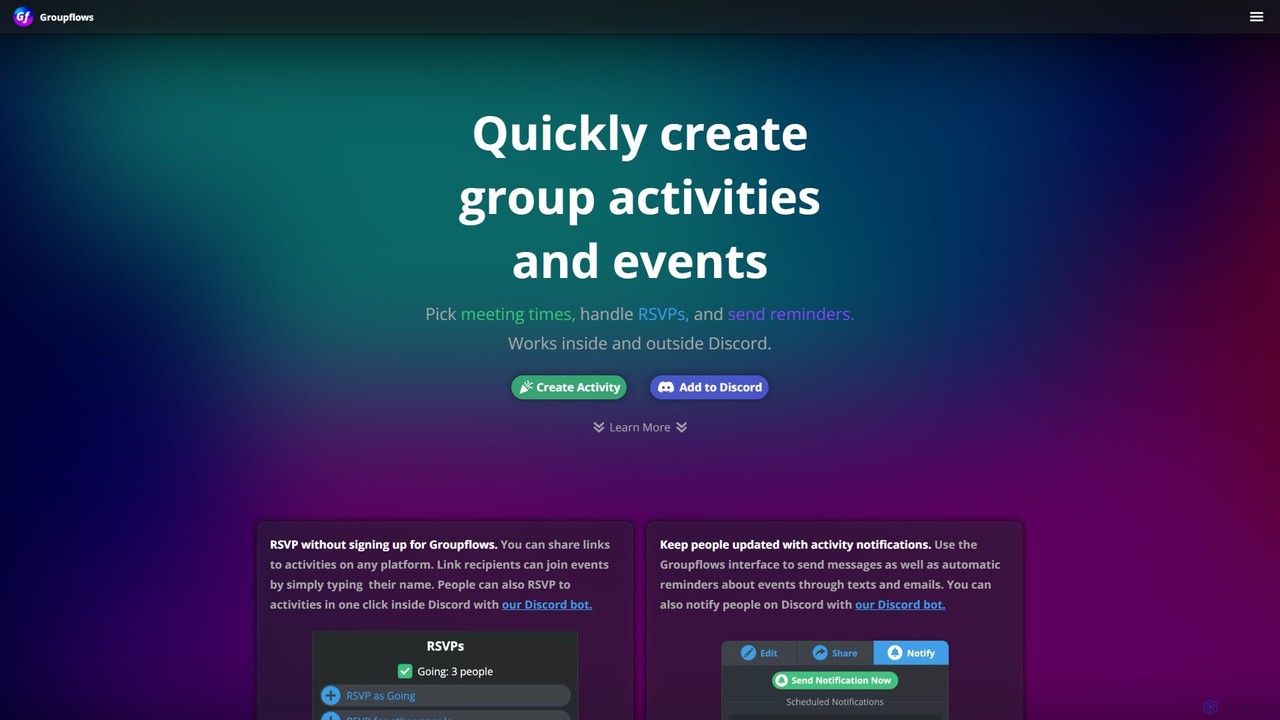
Groupflows is an intelligent event scheduling and RSVP management tool designed to simplify group coordination. It helps users …
Groupflows is an intelligent event scheduling and RSVP management tool designed to simplify group coordination. It helps users find the best meeting times, handle RSVPs effortlessly, and send automated reminders. With deep integration for Discord, it's perfect for communities, teams, and social groups.
About Event Management
Event Management AI tools are specialized platforms designed to automate, optimize, and enhance various stages of event planning and execution. Leveraging artificial intelligence, these tools streamline complex processes from initial conceptualization and attendee registration to real-time engagement and post-event analysis. They empower organizers to deliver more personalized, efficient, and impactful event experiences, whether for virtual, hybrid, or in-person gatherings, ultimately driving better outcomes and ROI.
Core Features
- AI-Powered Scheduling: Automatically optimizes session timings, speaker availability, and venue logistics to prevent conflicts and maximize attendance.
- Personalized Attendee Journeys: Utilizes AI to recommend relevant sessions, networking opportunities, and content based on individual attendee profiles and interests.
- Automated Communication: Deploys AI chatbots and intelligent email systems for instant attendee support, FAQs, and personalized updates.
- Real-time Engagement Analytics: Monitors attendee sentiment, participation rates, and interaction patterns during the event to provide actionable insights.
- Predictive Analytics: Forecasts attendance, resource needs, and potential issues, enabling proactive adjustments and risk mitigation.
Applicable Scenarios
Event Management AI tools are invaluable for corporate event planners organizing large-scale conferences, marketing teams managing product launches, and professional associations hosting annual summits. They are also crucial for virtual event hosts needing to manage complex digital logistics and for hybrid event organizers aiming to seamlessly integrate physical and online experiences.
How to Choose
When selecting an Event Management AI tool, consider its specific AI capabilities, such as natural language processing for chatbots or machine learning for recommendations. Evaluate its integration with existing CRM, marketing automation, and video conferencing platforms. Assess scalability to handle varying event sizes and types, and examine the depth of its analytics and reporting features for measuring event success and attendee engagement.
Event ManagementUse Cases
Automating Personalized Event Registration
Corporate event planners can utilize AI tools to create dynamic registration forms that adapt based on attendee profiles, offering personalized ticket tiers, session recommendations, and upsell opportunities. This streamlines the signup process, reduces manual data entry, and enhances the attendee's initial experience by presenting highly relevant options, leading to higher conversion rates and more accurate attendee data for subsequent personalization efforts.
Optimizing Conference Agendas with AI
Conference organizers face the challenge of scheduling numerous sessions and speakers without conflicts while maximizing attendee interest. AI-powered event management platforms can analyze speaker availability, venue capacity, and attendee preferences to generate an optimized agenda. This ensures a balanced schedule, minimizes overlaps, and suggests the most engaging session combinations, improving overall attendee satisfaction and operational efficiency.
Enhancing Attendee Engagement via AI Chatbots
During large-scale virtual or hybrid events, attendees often have immediate questions about schedules, speakers, or technical support. AI chatbots integrated into the event platform provide instant, 24/7 assistance, answering FAQs, guiding attendees to relevant content, and even facilitating networking introductions. This significantly improves the attendee experience by offering timely support and freeing up human staff for more complex issues.
Personalized Networking Recommendations
For professional networking events, AI tools can analyze attendee profiles, interests, and professional goals to suggest highly compatible connections. By leveraging machine learning algorithms, the platform identifies potential matches and facilitates introductions through dedicated networking lounges or one-on-one meeting scheduling. This enhances the value of networking, ensuring attendees connect with the most relevant peers and potential collaborators.
Real-time Performance Monitoring for Live Events
Event managers overseeing live or hybrid events can use AI-driven analytics dashboards to monitor attendee sentiment, engagement levels, and session popularity in real-time. AI processes live chat, polls, and social media mentions to identify trending topics or potential issues instantly. This allows organizers to make immediate adjustments, such as extending popular Q&A sessions or addressing technical glitches, ensuring a smooth and responsive event flow.
Streamlining Post-Event Lead Qualification
Marketing teams often struggle to efficiently process leads generated from events. AI event management tools can analyze attendee interactions, session attendance, and engagement data to automatically score and qualify leads post-event. This provides sales teams with a prioritized list of high-potential prospects, detailing their interests and engagement levels, significantly reducing manual lead nurturing efforts and accelerating the sales cycle.