ToolMage
Sign in

Best 1 Polling AI tools for Social & Community

Popular Polling AI tools in Social & Community include Pulsed, helping you work more efficiently.

Pulsed
Freemium

Pulsed

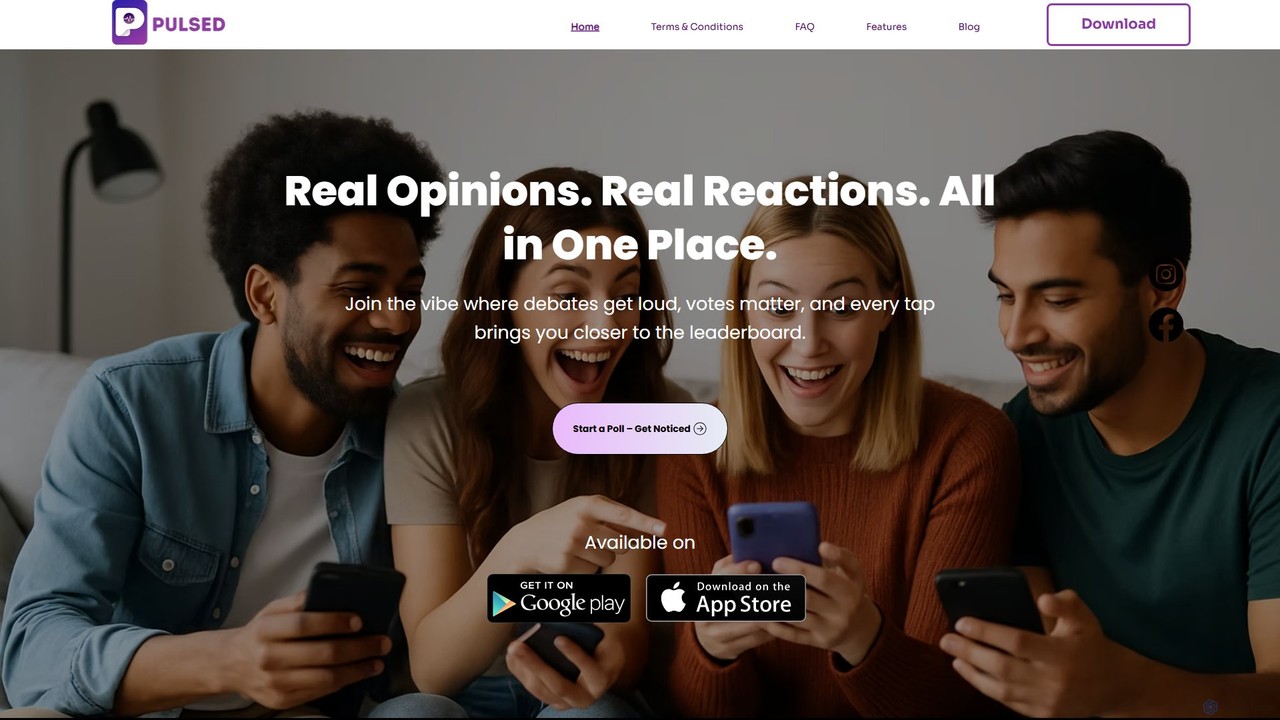
Pulsed is a gamified social polling app where your opinions earn you points and status. Create and vote on polls, climb leaderboards, and engage with a community of real users, verified through optional facial recognition. The app also features AI-powered news summaries to keep you informed. It's a fun, rewarding way to share your voice, see real-time results, and influence conversations on topics that matter.

Surveys
Visits 5.5KFavorites 143Likes 149

About Polling

AI Polling tools are a specialized category of software designed to create, distribute, and analyze interactive polls and surveys using artificial intelligence. These tools leverage machine learning and natural language processing to go beyond simple data collection, offering automated analysis of open-ended responses, sentiment detection, and trend identification. They are primarily used to quickly gather and interpret feedback from a community, customer base, or audience, transforming raw opinions into structured, actionable insights. This AI-driven approach provides deeper understanding compared to traditional survey methods.

Core Features

  • AI Question Generation: Suggests relevant and unbiased questions based on the poll's topic and objectives.
  • Real-time Sentiment Analysis: Automatically analyzes text-based answers to classify opinions as positive, negative, or neutral.
  • Automated Insight Reporting: Generates summaries and visual reports highlighting key trends, patterns, and significant findings from the data.
  • Audience Segmentation: Automatically groups respondents based on their answers or demographic data to reveal insights within specific subgroups.
  • Multi-channel Integration: Allows for seamless distribution of polls across various platforms like social media, email, websites, and messaging apps.

Use Cases

These tools are widely used by marketers for rapid market research, product managers for collecting feature feedback, and HR departments for measuring employee engagement. Community managers also use them to facilitate group decision-making and gauge member satisfaction within online communities or social platforms.

How to Choose

When selecting an AI Polling tool, consider the depth of its analytical capabilities, such as the accuracy of its sentiment analysis. Evaluate its integration options with your existing platforms (e.g., Slack, CRM, social media). Also, assess its scalability for your expected audience size and ensure its data privacy policies comply with relevant regulations like GDPR.

Polling use cases

1

Analyzing Customer Feedback on a New Feature

A product manager for a SaaS company needs to understand customer sentiment about a recently launched feature. Instead of manually reading hundreds of feedback comments, they use an AI polling tool integrated with their app. The tool collects both quantitative ratings and open-ended text feedback. The AI engine then automatically processes all text responses, categorizing them into themes like 'Usability Issues,' 'Feature Requests,' and 'Positive Feedback,' and assigns a sentiment score to each. This allows the product manager to quickly identify the most common points of friction and delight, saving dozens of hours of manual analysis and enabling faster, data-driven product improvements.

2

Boosting Audience Engagement During Live Events

An event organizer for a large tech conference wants to keep the virtual audience engaged during a keynote speech. They use a live polling tool to pose questions to the audience in real-time. As the speaker discusses industry trends, a poll appears on the screen asking attendees to vote on which trend they believe will be most impactful. The results are displayed live as a dynamic word cloud or bar chart, creating an interactive and shared experience. This not only maintains audience attention but also provides the speaker with immediate feedback, allowing them to tailor their subsequent points to the audience's interests.

3

Conducting Anonymous Employee Engagement Surveys

An HR department wants to gather honest feedback on workplace culture without compromising employee anonymity. They deploy an AI polling tool to create and distribute a company-wide engagement survey. The platform guarantees anonymity, encouraging candid responses. After the survey closes, the AI analyzes the data, segmenting results by department, tenure, and role while maintaining confidentiality through data aggregation. It identifies key drivers of satisfaction and dissatisfaction, highlighting specific areas like 'work-life balance' or 'career growth opportunities' that need attention. The HR team receives a comprehensive report with actionable insights, enabling them to develop targeted initiatives to improve morale and retention.

4

Rapid Market Research for a New Product Idea

A startup founder wants to quickly validate a new app idea before investing in development. They use an AI polling tool to create a short survey targeting their ideal customer profile on social media. The AI helps formulate neutral, effective questions about the problem the app solves and potential pricing. Within 48 hours, they collect hundreds of responses. The tool's dashboard provides an instant summary, showing that while the problem is valid, the proposed price point is too high for 70% of respondents. The sentiment analysis of open-ended questions reveals a recurring request for a specific feature they hadn't considered. This rapid, low-cost feedback loop allows the founder to pivot their strategy early, saving significant time and resources.

5

Facilitating Community Governance and Decision-Making

The manager of a large online gaming community needs to decide on a new rule change that has divided players. To ensure a fair and transparent process, they use a polling tool to put the decision to a community vote. The poll is integrated directly into the community forum and Discord server, making it easily accessible. The tool provides secure, one-vote-per-member functionality to prevent manipulation. After the voting period, the results are automatically tallied and published, showing a clear majority in favor of the change. This data-driven approach removes ambiguity, demonstrates that the leadership values member input, and helps maintain harmony within the community by making everyone part of the decision.

6

Prioritizing a Content Calendar with Audience Input

A content creator running a popular YouTube channel wants to ensure their upcoming videos align with audience interests. They use a simple polling tool on their community tab and social media to ask subscribers what topics they'd like to see covered next. They provide several options based on their expertise and past video performance. The poll runs for a week, gathering thousands of votes. The clear winner from the poll directly informs their next three video projects. This approach not only guarantees that the content will be in high demand but also strengthens the creator-audience relationship by making subscribers feel heard and involved in the channel's direction.

Polling FAQ

What are AI Polling tools?

AI Polling tools are applications that use artificial intelligence to enhance the process of creating, distributing, and analyzing surveys and polls. Unlike traditional polling software that just collects answers, AI-powered tools can automatically analyze open-ended text responses for sentiment, identify key themes and trends in the data, and even help generate unbiased questions. Their main purpose is to accelerate the process of turning raw audience feedback into actionable, easy-to-understand insights, making them valuable for market research, community engagement, and customer feedback.

How to choose the right AI Polling tool?

Choosing the right AI Polling tool depends on your specific needs. Consider these factors:

  • Analytical Depth: Do you need simple polls with basic charts, or advanced features like sentiment analysis and topic clustering for open-ended questions?
  • Integration Capabilities: Check if the tool integrates with platforms you already use, such as Slack, Microsoft Teams, social media, or your CRM, for seamless distribution and data flow.
  • Audience Size and Scalability: Ensure the tool can handle your expected number of respondents without performance issues or prohibitive costs.
  • User Experience: The tool should be easy for you to create polls and for your audience to respond, especially on mobile devices.
  • Data Security and Privacy: Verify that the tool complies with data protection regulations like GDPR and has robust security measures, particularly if you are collecting sensitive information.
What's the difference between AI Polling and traditional survey tools?

The primary difference lies in the analysis phase. Traditional survey tools (like Google Forms or basic SurveyMonkey plans) are excellent for data collection; they gather responses and present them in simple charts and tables. AI Polling tools do this as well, but their key advantage is the automated intelligence they apply afterward. They use natural language processing (NLP) to analyze text answers, identifying sentiment and common themes without manual effort. This saves significant time and uncovers deeper insights that are often missed in large datasets, transforming data collection into automated insight generation.

Can AI Polling tools be used for formal research?

Yes, many AI Polling tools can be used for formal research, but it's important to choose one with the right features. For academic or rigorous market research, look for tools that offer features like question randomization, logic branching (skip logic), and detailed demographic data collection. It's also crucial that the tool provides transparent data export options (e.g., CSV, SPSS) so you can perform further statistical analysis. While simple polling tools are great for quick feedback, research-grade platforms offer the control and data integrity needed for formal studies.

Who benefits most from using AI Polling tools?

Various professionals can benefit significantly from AI Polling tools. Key users include:

  • Marketers: For quickly testing campaign messages, understanding consumer preferences, and conducting rapid market research.
  • Product Managers: To gather user feedback on new features, prioritize development roadmaps, and measure product satisfaction.
  • HR Professionals: For conducting anonymous employee engagement surveys and analyzing feedback to improve workplace culture.
  • Community Managers: To engage members, facilitate group decisions, and gauge community health and satisfaction.
  • Event Organizers: To increase audience interaction during live events and gather real-time feedback on sessions.

Essentially, anyone who needs to understand the opinions of a group quickly and deeply, without spending hours manually analyzing qualitative data, will find these tools highly valuable.