ToolMage
Sign in

Best 3 Monitoring AI tools for Social Media

Popular Monitoring AI tools in Social Media include TruthSignal, Hiddenlogo, and LeadLooking, helping you work more efficiently.

LeadLooking
Paid

LeadLooking

LeadLooking is an AI-powered tool that automates the discovery of high-intent sales leads and potential customers on Reddit. It continuously tracks Reddit conversations for specific keywords, delivering real-time email alerts when users actively seek products or services matching your offerings, streamlining customer acquisition for businesses and freelancers.

Lead Generation
Visits 5.9KFavorites 28Likes 31
TruthSignal
Freemium

TruthSignal

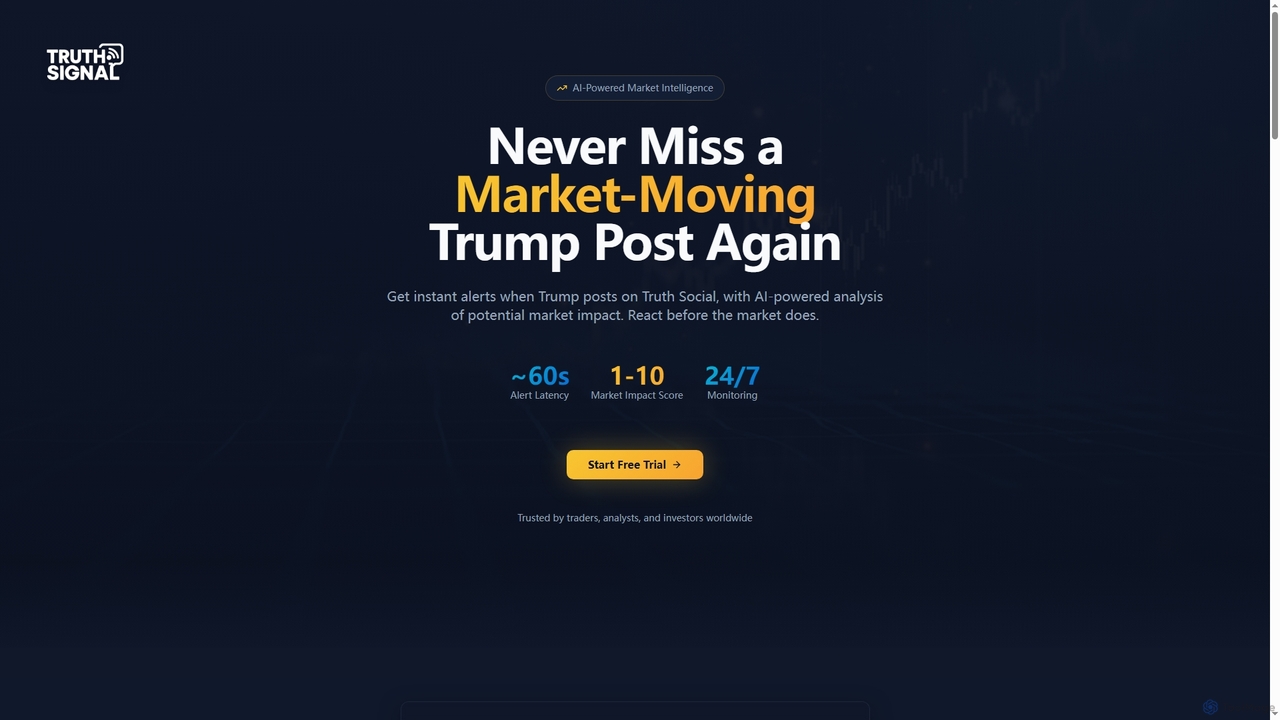
TruthSignal is an AI-powered market intelligence platform that provides real-time alerts on Donald Trump's Truth Social posts. It analyzes potential market impact with a 1-10 score, enabling traders, analysts, and investors to react swiftly to market-moving political events. The service offers rapid notifications, typically within 60 seconds, through channels like Telegram, with email and Discord integrations coming soon.

Predictive Analytics
Visits 8.4KFavorites 134Likes 122
Hiddenlogo
Freemium

Hiddenlogo

An advanced AI-powered platform for detecting and analyzing logos in images and videos. Ideal for brand monitoring, competitive analysis, and measuring sponsorship ROI by identifying even partially obscured or subtle logos in visual content.

Video Recognition
Visits 6KFavorites 130Likes 130

About Monitoring

AI-powered Monitoring tools are designed to track, analyze, and interpret vast amounts of data from social media platforms and the web. These tools leverage advanced artificial intelligence, including natural language processing (NLP) and machine learning, to identify mentions of brands, products, keywords, and topics in real-time. They provide invaluable insights into public sentiment, emerging trends, and competitor activities, enabling businesses to make data-driven decisions for brand reputation management, marketing strategy, and customer engagement.

Core Features

  • Brand & Keyword Tracking: Real-time alerts and comprehensive tracking of specific brand names, products, or keywords across various social channels and online sources.
  • Sentiment Analysis: AI-driven assessment of the emotional tone (positive, negative, neutral) behind mentions, helping gauge public perception and brand health.
  • Trend Identification: Automatically identifies and highlights emerging topics, viral content, and trending hashtags relevant to your industry or interests.
  • Competitor Intelligence: Monitors competitor activities, campaign performance, and public discussions to provide strategic insights into market positioning.
  • Crisis Detection: Proactively identifies spikes in negative sentiment or unusual activity that could indicate a potential PR crisis, allowing for rapid response.

Applicable Scenarios

Marketing teams utilize these tools to measure campaign effectiveness and understand audience reactions. Public relations professionals rely on them for proactive reputation management and swift crisis response. Product development teams gain direct customer feedback from social conversations to inform feature enhancements and new product ideas.

How to Choose

When selecting an AI monitoring tool, consider its data source coverage (e.g., specific social platforms, forums, news sites), the depth of its sentiment and trend analysis capabilities, and the flexibility of its alert and reporting features. Evaluate its integration options with existing marketing or CRM systems, and assess its scalability to match your data volume needs and budget.

Monitoring use cases

1

Real-time Brand Reputation Management

Public relations teams use AI monitoring to detect negative mentions, misinformation, or potential PR crises as they emerge on social media. This enables immediate intervention, allowing them to address issues swiftly, mitigate damage, and protect brand image before problems escalate.

2

Competitor Strategy Analysis

Marketing analysts leverage AI monitoring to track competitor product launches, marketing campaigns, and customer feedback across social platforms. By analyzing their share of voice, sentiment, and engagement, businesses can identify market gaps, refine their own strategies, and gain a competitive edge.

3

Optimizing Social Media Campaigns

Social media managers employ AI monitoring to track the performance of specific campaigns, hashtags, and content. They analyze mentions, sentiment, and engagement rates to understand audience reception, identify top-performing content, and make data-driven adjustments to optimize future campaign effectiveness and ROI.

4

Gathering Product Feedback & Insights

Product development teams utilize AI monitoring to analyze social conversations about their products or industry. They identify common pain points, feature requests, and user satisfaction trends directly from customer discussions, providing valuable insights for product improvements and innovation.

5

Identifying Influencers & Advocates

Marketers use monitoring tools to discover influential voices and brand advocates who are actively discussing relevant topics or their brand. By analyzing their reach, sentiment, and engagement, businesses can identify potential partners for collaborations and amplify their messaging effectively.

6

Spotting Industry Trends & Opportunities

Business strategists and market researchers use AI monitoring to identify emerging industry trends, shifts in consumer behavior, and new market niches. By tracking keywords and topics, they can anticipate changes, adapt strategies, and uncover new business opportunities before competitors.

Monitoring FAQ

What are AI Social Media Monitoring tools?

AI Social Media Monitoring tools are advanced platforms that use artificial intelligence, such as natural language processing and machine learning, to automatically track, collect, and analyze online conversations. They focus on identifying mentions of brands, products, keywords, and topics across social media and the broader web, providing insights into public sentiment, trends, and competitor activities.

How do AI monitoring tools differ from traditional social listening?

While both involve tracking online conversations, AI monitoring tools go beyond basic keyword tracking. They leverage AI for deeper sentiment analysis, automatically categorizing mentions as positive, negative, or neutral. They can also identify complex patterns, predict emerging trends, and provide more nuanced insights than traditional, rule-based social listening methods, offering greater automation and accuracy.

What key metrics can AI monitoring tools track?

AI monitoring tools can track a wide array of metrics crucial for understanding online presence. These include brand mentions (volume and frequency), sentiment scores (positive, negative, neutral breakdown), engagement rates, reach, trending topics and hashtags, share of voice compared to competitors, and demographic insights of the audience discussing your brand or industry.

Who benefits most from using AI social media monitoring?

A diverse range of professionals benefits from these tools. Marketing teams use them for campaign optimization and brand health. Public relations specialists rely on them for reputation management and crisis communication. Customer service departments gain insights into common issues. Product development teams gather direct customer feedback, and sales teams can identify leads or market opportunities.

What should I consider when choosing an AI social media monitoring tool?

Key considerations include the breadth of data sources it covers (e.g., Twitter, Facebook, Instagram, Reddit, news sites), the accuracy and depth of its AI-powered sentiment and trend analysis, the customization options for alerts and reports, and its integration capabilities with your existing CRM or marketing automation platforms. Also, evaluate its scalability to handle your data volume and its pricing model.