Problem Miner
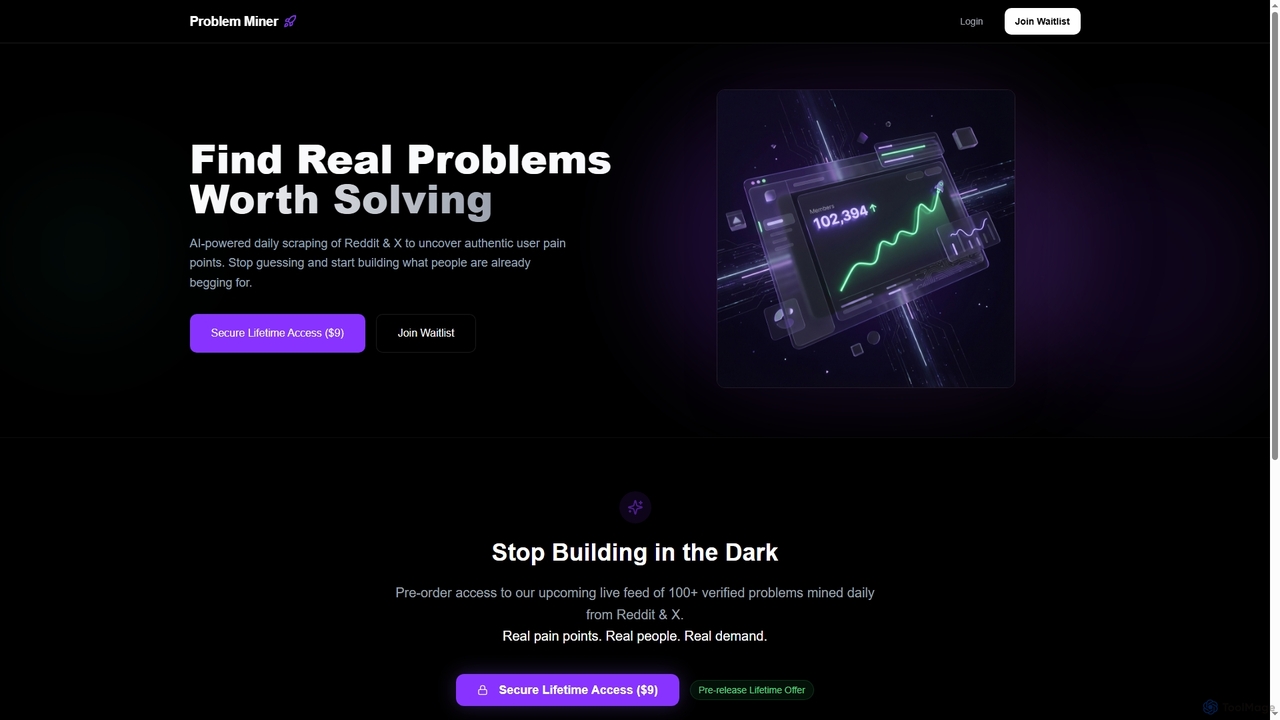
Problem Miner is an AI-powered tool that scrapes Reddit and X daily to identify authentic user pain points …
Problem Miner is an AI-powered tool that scrapes Reddit and X daily to identify authentic user pain points and real-world problems. It provides a live feed of over 100 verified problems, helping entrepreneurs and builders discover validated startup ideas and build solutions that people genuinely need, eliminating guesswork in product development.
bizideas
bizideas is an AI-powered business idea generator that provides personalized startup concepts in seconds. It goes beyond simple …
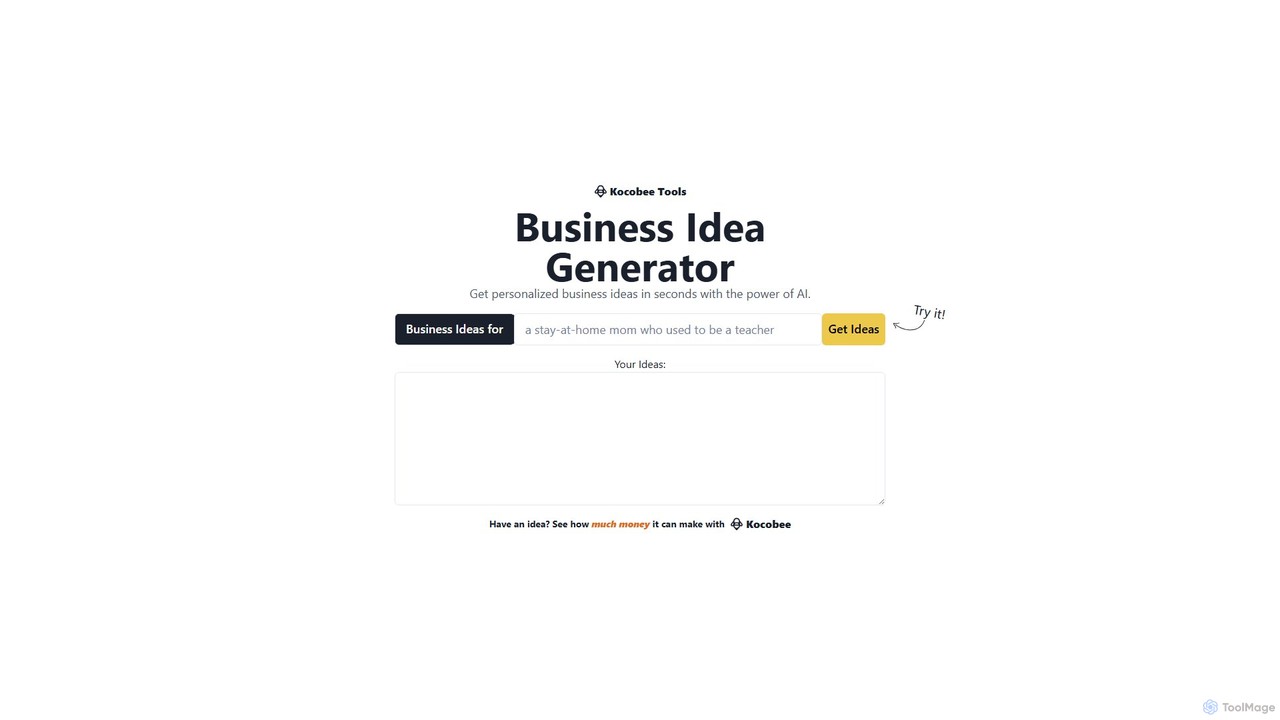
bizideas is an AI-powered business idea generator that provides personalized startup concepts in seconds. It goes beyond simple ideation by offering in-depth analysis, including potential revenue projections and market viability. Ideal for aspiring entrepreneurs, it helps you discover, evaluate, and select your next profitable business venture with data-driven insights.
indieideas.io
indieideas.io is an AI-powered idea generation platform that scours Reddit in real-time to uncover user pain points. It …
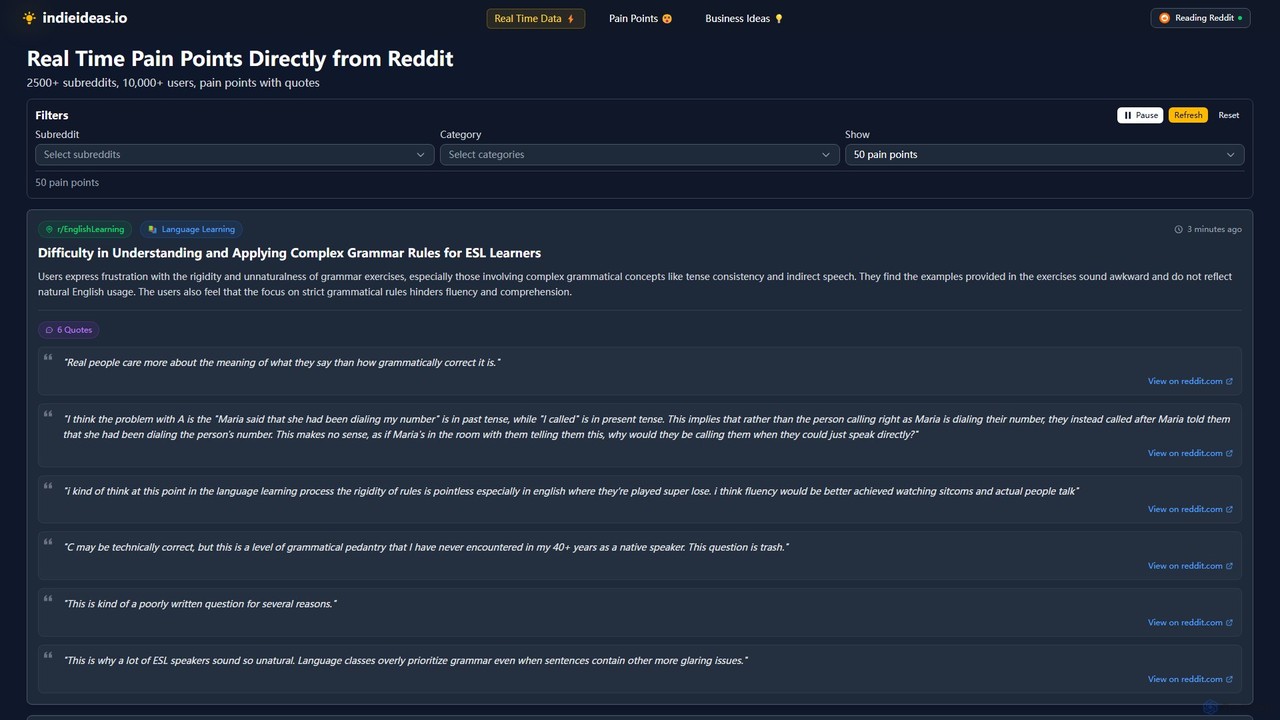
indieideas.io is an AI-powered idea generation platform that scours Reddit in real-time to uncover user pain points. It transforms these authentic problems into actionable business ideas, complete with user quotes and context. Ideal for indie hackers, entrepreneurs, and product managers seeking their next validated project.
BigIdeasDB
BigIdeasDB is an AI-powered market research platform that helps entrepreneurs discover and validate profitable business ideas. It analyzes …
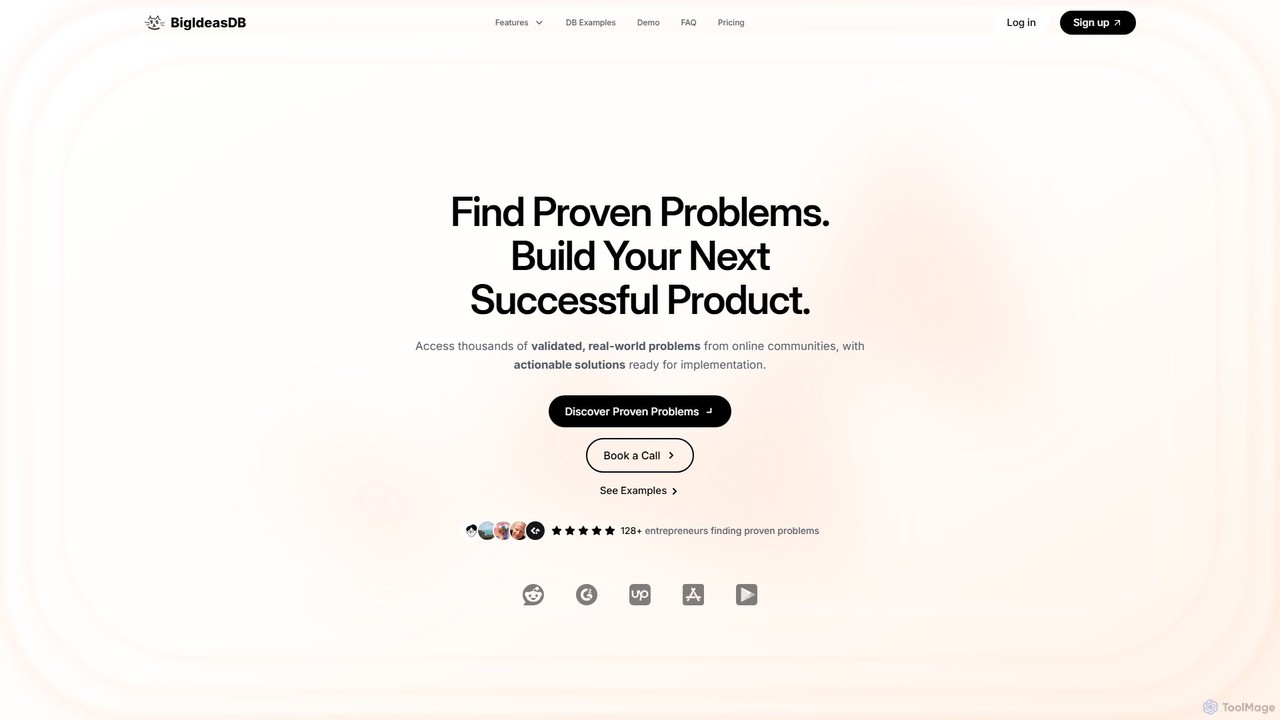
BigIdeasDB is an AI-powered market research platform that helps entrepreneurs discover and validate profitable business ideas. It analyzes online communities, app reviews, and market data to uncover real-world user pain points, providing a curated database of problems, solutions, and successful product strategies to reduce the risk of building a new product.
ideamate
ideamate is an AI-powered mobile app designed for entrepreneurs to generate, refine, and brainstorm business ideas. It transforms …
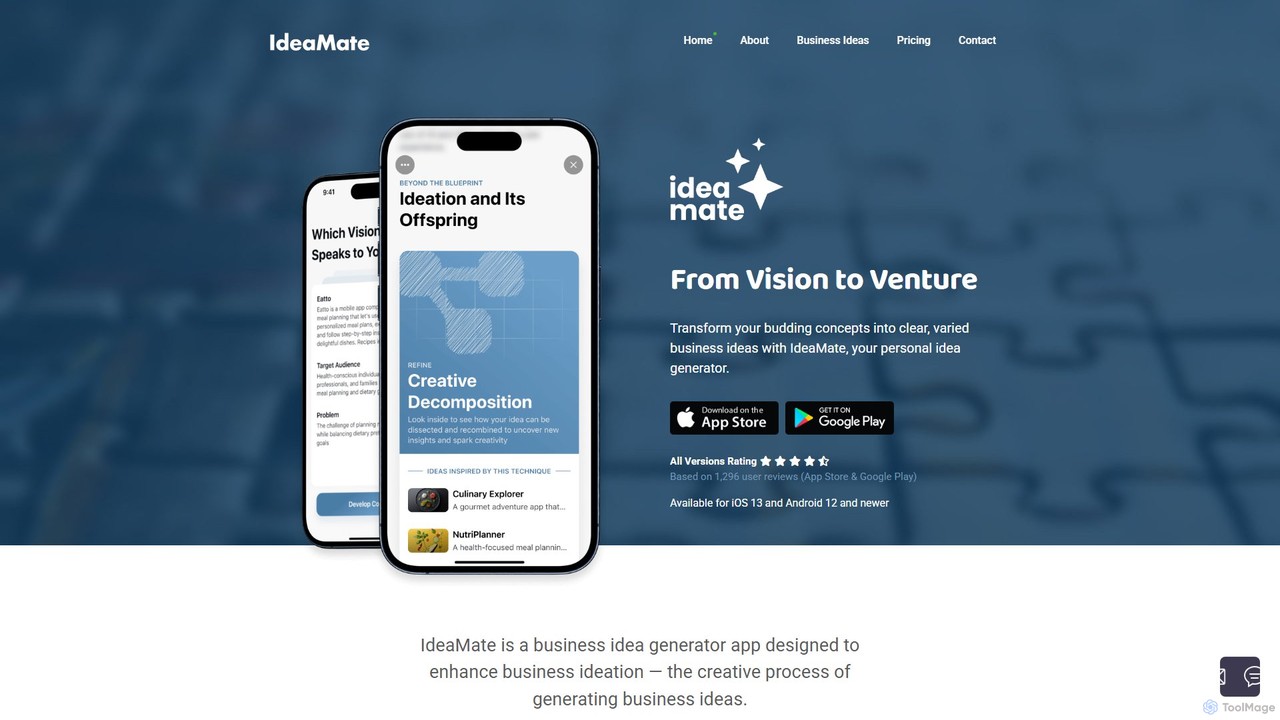
ideamate is an AI-powered mobile app designed for entrepreneurs to generate, refine, and brainstorm business ideas. It transforms initial concepts into well-structured, innovative ventures using creative thinking techniques like Six Thinking Hats and lateral thinking, providing a comprehensive toolkit for ideation, competitor analysis, and originality evaluation.
About Idea Generation
AI Idea Generation tools are a class of software that leverages large language models and data analysis to brainstorm and formulate new concepts. These tools process user prompts, market data, and existing knowledge bases to produce a wide range of creative outputs, from business models to marketing slogans. For startups, they serve as a powerful catalyst for innovation, helping teams overcome creative blocks and explore untapped market opportunities systematically. Their primary advantage lies in the ability to generate a high volume of diverse and structured ideas in a fraction of the time required for traditional brainstorming.
Core Features
- Contextual Brainstorming: Generates ideas based on specific inputs like industry, target audience, keywords, or problem statements.
- Trend-Based Ideation: Analyzes current market trends, news, and data to suggest relevant and timely concepts.
- Idea Expansion & Structuring: Takes a basic concept and elaborates on it, suggesting potential features, business models, or implementation steps.
- Persona-Driven Suggestions: Creates ideas tailored to the needs, pain points, and desires of specific user personas.
- Creative Variant Generation: Produces numerous variations of a single idea, such as different names, slogans, or marketing angles.
Applicable Scenarios
These tools are particularly valuable for startup founders in the initial stages of venture creation, product managers seeking innovative features, and marketing teams developing new campaign concepts. For example, a founder can use them to generate ten different business models for a single problem, while a content creator can brainstorm a month's worth of unique article topics in minutes.
Selection Criteria
When choosing an AI Idea Generation tool, evaluate the quality and originality of the ideas it produces. Consider its ability to incorporate real-time data versus relying solely on its training model. Also, assess the depth of customization options—can you define constraints, personas, and specific formats? Finally, for team use, look for collaboration features that allow multiple users to build upon and refine generated ideas.
Idea GenerationUse Cases
Generate Business Models for a New Venture
An entrepreneur identifies a gap in the sustainable packaging market but is unsure of the best business model. Using an AI Idea Generation tool, they input the core problem: 'reducing plastic waste for e-commerce'. The tool generates several distinct models, including a B2B subscription service for biodegradable mailers, a D2C marketplace for eco-friendly packaging suppliers, and a tech platform that optimizes shipping routes to reduce carbon footprint. This allows the founder to quickly compare value propositions, revenue streams, and target markets for multiple viable concepts, saving weeks of manual research.
Brainstorming Innovative Product Features
A product manager for a project management app wants to develop features for the next major release. They input current user feedback themes like 'difficulty tracking cross-team dependencies' and competitor feature sets into an AI ideation tool. The AI suggests several novel features: an 'automated dependency map' that visualizes project links, a 'risk prediction module' that flags potential delays based on historical data, and a 'smart notification system' that only alerts relevant stakeholders. This provides a structured list of high-potential, user-centric features to prioritize for the development roadmap.
Discovering New Marketing Campaign Angles
A marketing team is launching a new eco-friendly cleaning product. Instead of using standard 'green' messaging, they use an AI tool to find unique angles. They input the product's features (plant-based, refillable) and target audience (millennial homeowners). The tool generates campaign ideas like 'The 10-Minute Tidy-Up for Busy Parents', focusing on speed and convenience, or 'Your Home's Carbon Footprint Detox', appealing to a data-driven audience. It also suggests slogans, social media hooks, and influencer collaboration concepts, providing a rich pool of creative directions beyond the obvious.
Generating a Content Calendar for a Niche Blog
A content creator runs a blog about 'urban gardening for small apartments'. To avoid running out of topics, they use an AI idea generator. They input their core theme and specify formats like 'how-to guides', 'product reviews', and 'expert interviews'. The AI outputs a structured list of 50+ blog post titles, such as 'How to Build a Vertical Herb Garden on Your Balcony', 'Review: Top 5 Self-Watering Planters for Beginners', and 'Interview with Jane Doe on Apartment Composting'. This instantly populates their content calendar for the next quarter, ensuring a consistent stream of relevant and engaging content.
Creating Catchy Brand and Domain Names
A founder is launching a new fintech startup focused on automated savings for freelancers. They need a memorable name that is also available as a .com domain. Using an AI idea tool, they input keywords like 'freelance', 'savings', 'auto', 'money', and 'flow', and specify a modern, trustworthy tone. The tool generates hundreds of options, including portmanteaus ('SavvyLance'), evocative names ('AcornFlow'), and brandable words ('ZenithPay'). It can also check for domain availability in real-time, drastically shortening the time-consuming process of brainstorming and checking names one by one.
Identifying Untapped Market Niches
A market research firm wants to advise a client in the beverage industry on new growth areas. Instead of traditional surveys, they use an AI idea generator fed with market reports, social media trend data, and consumer reviews. They ask the tool to 'identify underserved customer segments in the non-alcoholic beverage market'. The AI synthesizes the data and suggests niches like 'functional drinks for cognitive focus among remote workers' or 'botanical-infused sparkling water for stress relief'. These data-backed ideas provide a strong foundation for further qualitative research and product development, highlighting opportunities that might be missed by human analysts.