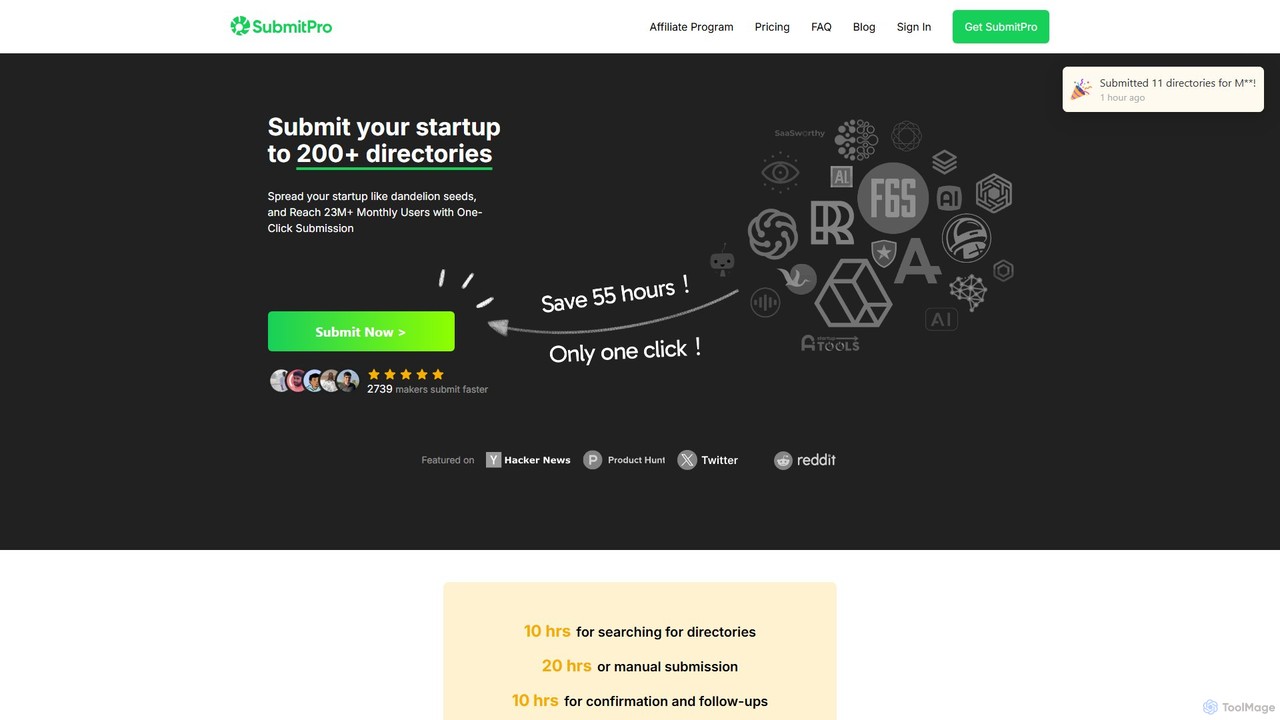
Launch Tools are a specialized category of AI-powered applications designed to streamline and automate the process of introducing a new product, service, or company to the market. These tools leverage AI to manage pre-launch waitlists, generate marketing copy, and coordinate multi-channel promotional campaigns. Their primary value lies in maximizing visibility, building initial user bases, and analyzing launch performance with high efficiency. As a key component of the startup toolkit, they focus specifically on the critical, time-sensitive activities surrounding a go-to-market event.
Core Features
- Waitlist & Referral Management: Build pre-launch hype and grow an email list through viral referral mechanics.
- AI-Powered Content Generation: Automatically create landing page copy, social media posts, press releases, and email announcements.
- Campaign Automation: Schedule and execute coordinated marketing sequences across email, social media, and community platforms.
- Press & Influencer Outreach: Identify relevant media contacts and automate personalized outreach to secure coverage.
- Launch Analytics Dashboard: Consolidate and track key launch metrics like sign-ups, conversion rates, referral traffic, and social mentions in real-time.
Use Cases
These tools are primarily used by startup founders, product managers, and marketing teams within tech, SaaS, and mobile app companies. They are essential during the pre-launch and launch phases to build momentum, acquire early adopters, and measure the impact of a go-to-market strategy. For example, a SaaS company might use a launch tool to manage a beta program, while an indie developer uses it to coordinate a Product Hunt launch.
How to Choose
When selecting a Launch Tool, first assess your primary goal: is it building a waitlist, securing press coverage, or driving sales? Evaluate the tool's integration capabilities with your existing marketing stack (e.g., CRM, email service). Consider its scalability to handle potential traffic spikes and the depth of its analytics. Finally, compare pricing models and the level of automation provided to ensure it aligns with your team's resources and budget.