
System Best in category 1 results Search AI Tool

Popular AI tools in the Search field of System include AI Finder, etc., helping you quickly improve efficiency.

AI Finder

AI Finder

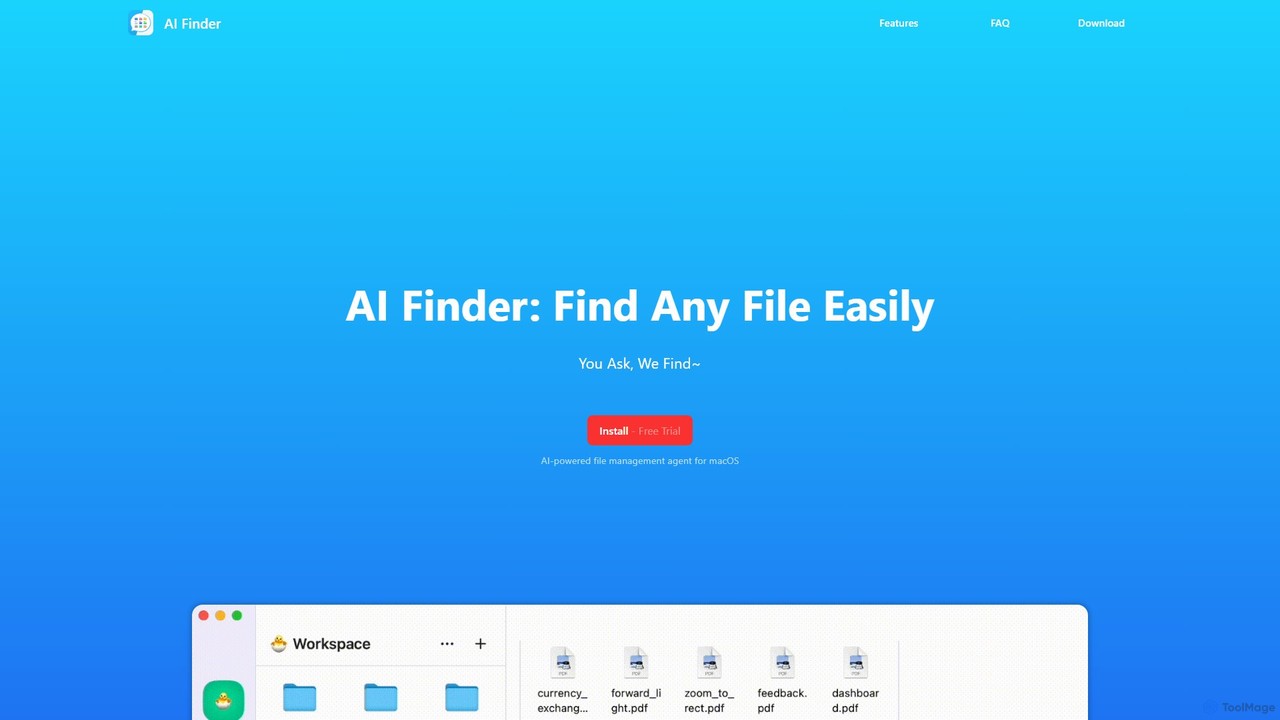
AI Finder is an intelligent file management agent for macOS that revolutionizes how you find files. Using natural …

4.0K

About Search

AI Search tools are a class of applications that use artificial intelligence to provide highly relevant and contextual information retrieval. These tools leverage Natural Language Processing (NLP) and machine learning to understand user intent, going beyond simple keyword matching. They enable users to find precise information within large volumes of unstructured data, significantly improving discovery and productivity. This technology is particularly effective at interpreting conversational queries and identifying semantic relationships between concepts.

Core Features

  • Semantic Understanding: Interprets the meaning and context of a query, not just the literal words, to deliver more accurate results.
  • Natural Language Query (NLQ): Allows users to ask questions in everyday, conversational language as if speaking to a human.
  • Cross-Format Search: Indexes and retrieves information from diverse data types, including text documents, PDFs, images, and databases.
  • Personalized Results: Adapts search outcomes based on individual user history, role, and past interactions to increase relevance.
  • Automated Data Tagging: Intelligently analyzes content to extract key entities, topics, and metadata for improved filtering and organization.

Use Cases

AI Search tools are widely adopted in enterprise environments for internal knowledge management, allowing employees to quickly find company policies, project documents, or technical support information. They are also crucial for customer-facing applications like e-commerce sites, where they power intelligent product discovery, and in support portals, where they help users find answers to their problems instantly.

How to Choose

When selecting an AI Search tool, consider the types of data sources you need to connect (e.g., Confluence, Google Drive, Slack). Evaluate its ability to understand industry-specific jargon and its integration capabilities with your existing software stack. Also, assess the scalability of the solution to handle growing data volumes and the level of security and access control it provides.

SearchUse Cases

1

Accelerate Enterprise Knowledge Discovery

For a large consulting firm, employees frequently need to access past project reports, case studies, and internal research to prepare for new client engagements. Using an AI Search tool connected to their internal SharePoint and Confluence, a consultant can simply ask, 'Find me case studies on supply chain optimization in the retail sector from the last two years.' The AI understands the intent, filters by date and industry, and retrieves the most relevant documents, saving hours of manual searching through complex folder structures and improving the quality of client proposals.

2

Enhance E-commerce Product Discovery

An online fashion retailer implements an AI Search tool on their website. A customer types 'summer dress for a beach wedding' into the search bar. Instead of just matching keywords like 'dress', the AI understands the context of 'summer', 'beach', and 'wedding'. It then displays lightweight, elegant dresses in appropriate colors and styles, and even suggests matching sandals or accessories. This contextual understanding leads to a higher conversion rate and improved customer satisfaction by making product discovery intuitive and effective.

3

Streamline Customer Support with Instant Answers

A SaaS company's support team is overwhelmed with repetitive queries. By integrating an AI Search tool into their help center and support chat, customers can ask questions like 'How do I reset my two-factor authentication?'. The system instantly searches the knowledge base, community forums, and technical documentation to provide a direct answer or a link to the most relevant guide. This reduces ticket volume by over 30%, frees up support agents to handle more complex issues, and provides customers with immediate 24/7 assistance.

4

Facilitate Legal eDiscovery and Research

A law firm needs to analyze thousands of documents for a complex litigation case. A paralegal uses an AI Search tool to find all documents related to 'breach of contract due to product failure'. The AI not only finds documents with exact keywords but also identifies conceptually similar content, such as emails discussing 'unmet performance specifications' or memos about 'warranty violations'. This semantic search capability drastically reduces the time required for document review, ensures no critical evidence is missed, and lowers the overall cost of the discovery process.

5

Unify Search Across Personal Cloud Apps

A freelance writer stores their work across multiple cloud services like Google Drive, Dropbox, and Notion. Finding a specific article draft or research note can be time-consuming. By using a personal AI Search tool, they can connect all their accounts into a single, unified search interface. When they search for 'research notes on renewable energy', the tool instantly pulls up relevant documents, spreadsheets, and Notion pages from all connected apps, presenting them in a single, ranked list. This creates a centralized knowledge hub and saves significant time daily.

6

Powering Intelligent In-App Search

A developer building a project management application wants to offer a powerful search feature. Instead of building a search engine from scratch, they integrate an AI Search API. This allows users of their app to find tasks, comments, or files using natural language queries like 'show me all tasks assigned to John that are due this week'. The API handles the complex NLP and indexing, enabling the developer to deliver a premium search experience with minimal effort. This enhances the app's usability and provides a significant competitive advantage.

SearchFrequently Asked Questions