Best of the Year 1 results Text AI Tools

Popular AI tools in the Text field include smudge.ai, etc., helping you quickly improve efficiency.

smudge.ai

smudge.ai

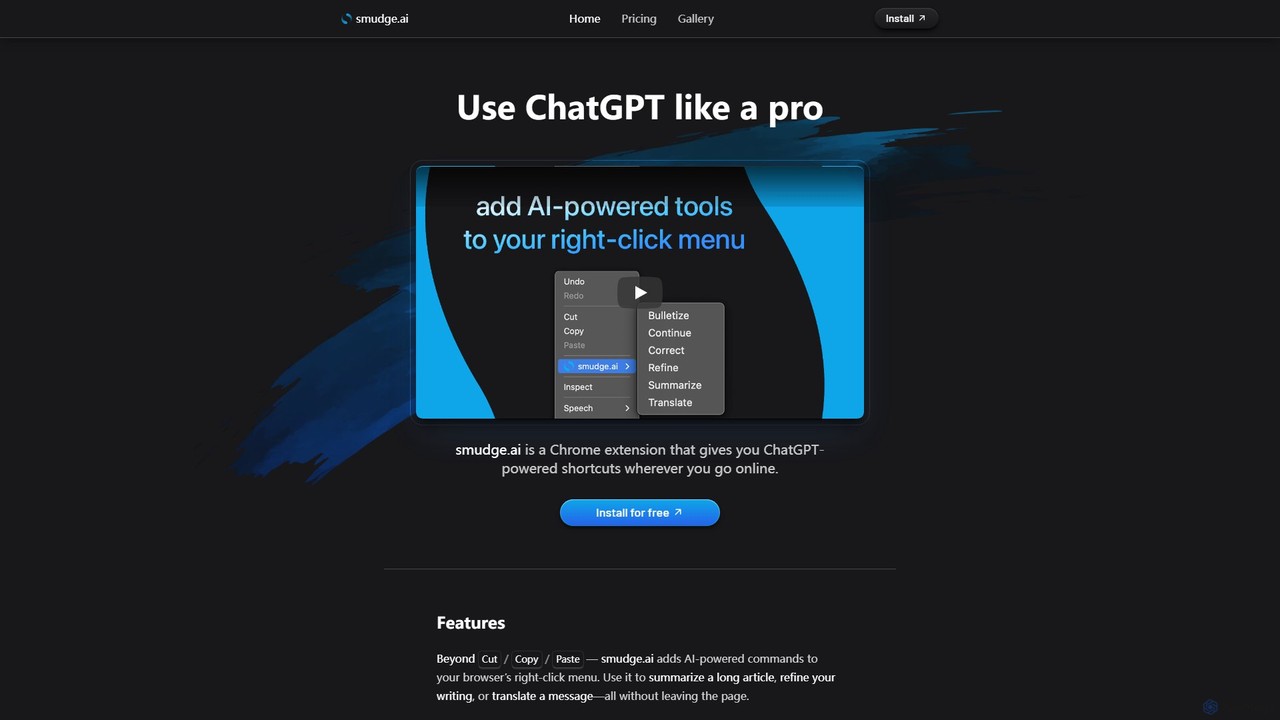
smudge.ai is a powerful Chrome extension that integrates ChatGPT-powered shortcuts directly into your browser's right-click menu. Instantly summarize …

4.5K

About Text

Text AI tools are AI-powered applications that process, generate, analyze, and transform human language. Leveraging advanced natural language processing (NLP) and machine learning models, these tools can understand context, extract meaning, and produce coherent, human-like text. They significantly enhance productivity across various domains by automating repetitive writing tasks, improving communication, and providing deep insights from textual data. From content creation and marketing to customer service and academic research, Text AI tools are becoming indispensable for businesses and individuals alike, streamlining workflows and unlocking new possibilities in textual data management.

Core Features

  • Content Generation: Automatically create articles, marketing copy, social media posts, and creative writing based on prompts and desired styles.
  • Summarization: Condense long documents, reports, or articles into concise, key takeaways, saving time on information digestion.
  • Translation: Accurately translate text between multiple languages while preserving context, nuance, and cultural appropriateness.
  • Sentiment Analysis: Identify and categorize the emotional tone (positive, negative, neutral) within text data, crucial for customer feedback and market research.
  • Paraphrasing & Rewriting: Rephrase existing text to improve clarity, avoid plagiarism, or adapt content for different audiences.
  • Grammar & Style Correction: Enhance writing quality by detecting and suggesting corrections for grammatical errors, spelling, punctuation, and stylistic inconsistencies.

Use Cases

Text AI tools are widely adopted by content creators, marketers, customer service teams, and researchers. They can automate the drafting of email responses, generate product descriptions for e-commerce platforms, assist in academic literature reviews by summarizing complex papers, or analyze vast amounts of customer feedback for sentiment insights. These applications streamline workflows, enable more efficient handling of large volumes of textual information, and foster more effective communication strategies across organizations.

How to Choose

When selecting a Text AI tool, consider its accuracy in language processing, the breadth of supported languages, and its specific functional capabilities (e.g., generation, analysis, translation). Evaluate integration options with existing platforms, customization potential for specific use cases, and the pricing model, including token usage. User-friendliness, the quality of output, and the ability to handle diverse text formats are also crucial for effective adoption and maximizing value.

TextUse Cases

1

Generating Marketing Copy for Campaigns

Marketing professionals can leverage Text AI tools to rapidly produce diverse marketing copy, including ad headlines, social media posts, and email newsletters. By inputting key product features and target audience, the AI generates multiple creative variations, saving hours of manual brainstorming and drafting. This allows teams to quickly A/B test different messages and optimize campaign performance, significantly accelerating content production cycles and improving engagement rates.

2

Automating Customer Service Responses

Customer support teams utilize Text AI to automate responses to frequently asked questions and routine inquiries. The AI can analyze incoming customer messages, understand their intent, and generate personalized, accurate replies based on a knowledge base. This reduces agent workload, decreases response times, and ensures consistent communication, leading to higher customer satisfaction and allowing human agents to focus on complex issues.

3

Summarizing Research Papers and Reports

Academics, researchers, and business analysts use Text AI tools to quickly digest large volumes of information. By feeding in lengthy research papers, financial reports, or market analyses, the AI can extract key findings, methodologies, and conclusions into concise summaries. This dramatically speeds up literature reviews, competitive analysis, and decision-making processes, enabling users to grasp essential information without reading every detail.

4

Translating Multilingual Business Communications

Global businesses and international teams employ Text AI for efficient and accurate translation of documents, emails, and real-time communications. These tools can translate content between dozens of languages while maintaining context and professional tone, facilitating seamless cross-border collaboration. This ensures that marketing materials, legal documents, and internal communications are accessible to all stakeholders, breaking down language barriers and expanding market reach.

5

Analyzing Customer Feedback and Reviews

Product managers and market researchers apply Text AI for sentiment analysis of customer feedback, social media comments, and product reviews. The AI processes vast datasets to identify prevailing sentiments (positive, negative, neutral), common themes, and emerging trends. This provides actionable insights into customer satisfaction, product strengths, and areas for improvement, guiding product development and marketing strategies effectively.

6

Enhancing Code Documentation and Explanations

Developers and technical writers use Text AI to generate clear, comprehensive documentation for codebases, APIs, and software features. By providing code snippets or functional descriptions, the AI can produce explanations, comments, and user manuals that are easy to understand. This improves code maintainability, accelerates onboarding for new team members, and ensures that technical information is consistently well-documented and accessible.

TextFrequently Asked Questions