JimakuAI
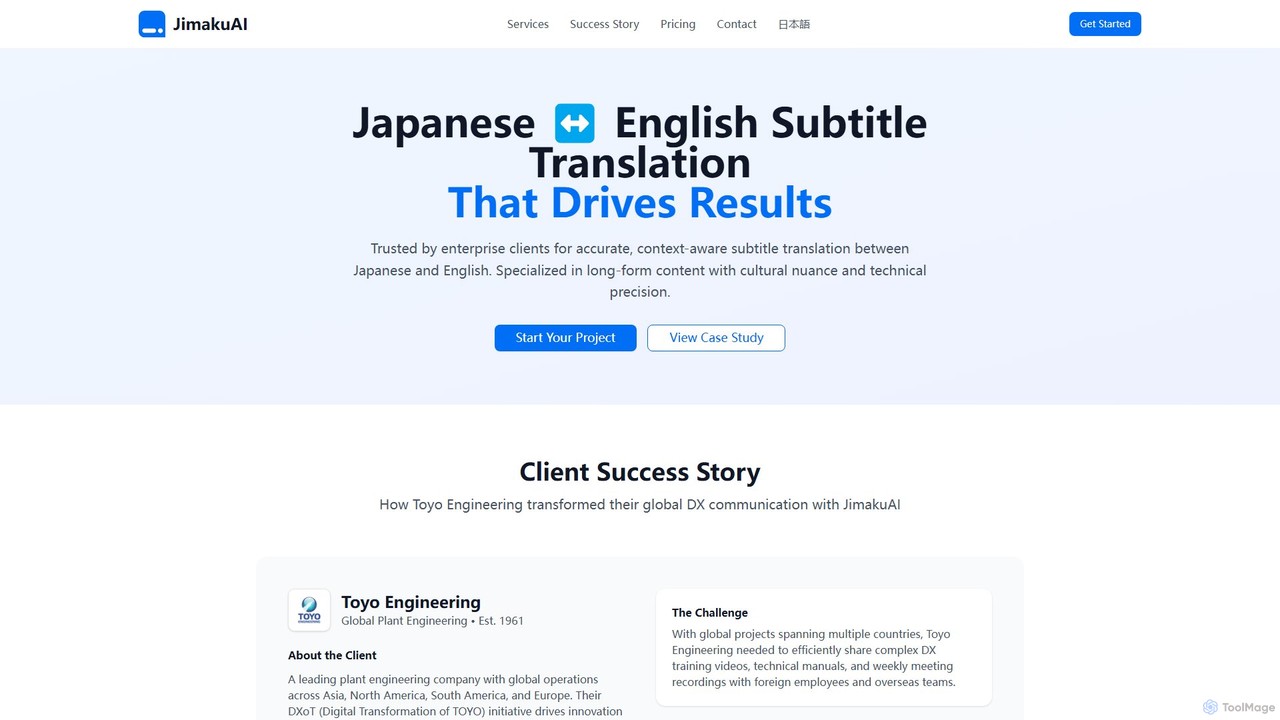
JimakuAI is a professional AI-powered subtitle translation service specializing in English and Japanese. It's designed for enterprise clients, …
JimakuAI is a professional AI-powered subtitle translation service specializing in English and Japanese. It's designed for enterprise clients, offering highly accurate, context-aware translations for long-form content. With a focus on technical fields like engineering and medicine, it ensures cultural nuance and terminological precision, seamlessly integrating into existing video workflows to facilitate global communication.
About Localization
Localization tools are AI-powered solutions that adapt products, content, and services to specific target markets, going beyond mere linguistic translation. These tools leverage advanced natural language processing and cultural intelligence to ensure cultural relevance, functional accuracy, and a native user experience. They streamline the complex process of preparing global content, enabling businesses to effectively connect with diverse audiences worldwide.
Core Features
- Contextual Translation: Provides culturally appropriate translations, considering idioms, tone, and local nuances.
- Terminology Management: Ensures consistent use of brand-specific terms and industry jargon across all localized content.
- UI/UX Adaptation: Helps adjust user interfaces, layouts, and visual elements to fit local preferences and display requirements.
- Date, Time, Currency Formatting: Automatically converts numerical formats, dates, times, and currencies to local standards.
- Cultural Compliance Checks: Identifies and flags content that might be culturally insensitive or legally non-compliant in target regions.
Use Cases
Localization tools are essential for global enterprises, software developers, and content creators expanding into new markets. They are used to adapt software interfaces, marketing campaigns, e-commerce platforms, and educational materials, ensuring cultural relevance and local appeal.
How to Choose
When selecting AI localization tools, consider the breadth of supported languages and locales, the depth of cultural adaptation features, and integration capabilities with existing content management systems. Evaluate the accuracy of AI suggestions, the flexibility for human review, and the tool's ability to handle various content types, from software strings to multimedia.

LocalizationUse Cases
Software UI/UX Adaptation for Global Markets
A software development team uses AI localization tools to adapt their application's user interface, date and time formats, currency symbols, and measurement units for new international markets. This ensures the software feels native to users in different regions, reducing friction and improving user adoption by automatically adjusting visual elements and functional conventions.
Adapting Software UI for Global Markets
A software development team uses AI localization tools to adapt their application's user interface for new markets like Japan and Germany. The tools not only translate text strings but also adjust layout, iconography, date/time formats, and currency symbols, ensuring the UI feels native and intuitive to local users, reducing user friction and support queries.
Localizing Global Marketing Campaigns
A marketing manager employs AI localization platforms to tailor advertising copy, landing page content, and social media posts for specific cultural audiences. The tools analyze cultural nuances and local slang, ensuring marketing messages resonate authentically with target demographics, leading to higher engagement rates and improved campaign ROI across diverse regions.
Localizing E-commerce Product Descriptions
An international e-commerce brand employs localization AI to tailor product descriptions and marketing copy for various regional storefronts. Beyond direct translation, the AI adapts product names, adjusts promotional messaging to resonate with local cultural values, and ensures pricing is displayed in local currencies with appropriate decimal separators, boosting conversion rates.
E-commerce Product Catalog Adaptation
An e-commerce specialist leverages AI localization to translate product descriptions, customer reviews, and pricing information, while also adapting payment methods, shipping options, and legal disclaimers for various regional storefronts. This creates a seamless and trustworthy shopping experience for international customers, boosting sales and reducing cart abandonment rates.
Culturalizing Marketing Campaigns
A global marketing agency leverages AI localization to culturalize advertising campaigns for different countries. The tools analyze imagery, color palettes, and taglines, suggesting alternatives that align with local cultural sensitivities and preferences. This ensures campaigns are impactful and avoid unintended cultural missteps, maximizing brand reception.
Video Game Content Localization
A game studio utilizes AI localization tools to adapt in-game text, character dialogues, cultural references, and legal notices for players worldwide. Beyond translation, the tools help ensure that humor, idioms, and narrative elements are culturally appropriate and enjoyable in each target language, enhancing player immersion and global market reach.
Streamlining Game Content Localization
A game studio utilizes AI localization platforms to prepare game dialogue, UI elements, and in-game text for multiple language releases. The AI assists in translating dialogue while maintaining character voice and tone, adapting cultural references, and ensuring text fits UI constraints, significantly accelerating the release cycle for global audiences.
Ensuring Legal and Regulatory Compliance
A legal department uses AI localization to ensure contracts, terms of service, and privacy policies are not only accurately translated but also legally compliant and culturally appropriate for specific jurisdictions. The tools help identify and adapt clauses that might conflict with local laws or cultural norms, mitigating legal risks and facilitating international business operations.
Ensuring Legal and Regulatory Compliance in Content
A multinational corporation uses AI localization to review and adapt legal documents, terms of service, and privacy policies for various jurisdictions. The tools help identify phrases or clauses that might conflict with local laws or regulations, suggesting culturally and legally compliant alternatives, thereby mitigating legal risks in new markets.
Multilingual Customer Support Content Creation
A customer service manager deploys AI localization to adapt help center articles, FAQs, and chatbot responses for a global user base. The tools ensure that support content is not only linguistically accurate but also culturally sensitive and easy to understand for customers from diverse backgrounds, improving customer satisfaction and reducing support ticket volumes.
Adapting Educational Content for Diverse Learners
An online learning platform employs AI localization to adapt its course materials for students in different countries. This involves translating lectures and texts, but also adjusting examples, case studies, and cultural references to be relevant to the local educational context, enhancing engagement and comprehension for a global student body.