ToolMage
Sign in

Best 1 Language Translator AI tools for Translation

Popular Language Translator AI tools in Translation include Kairo, helping you work more efficiently.

Kairo
Freemium

Kairo

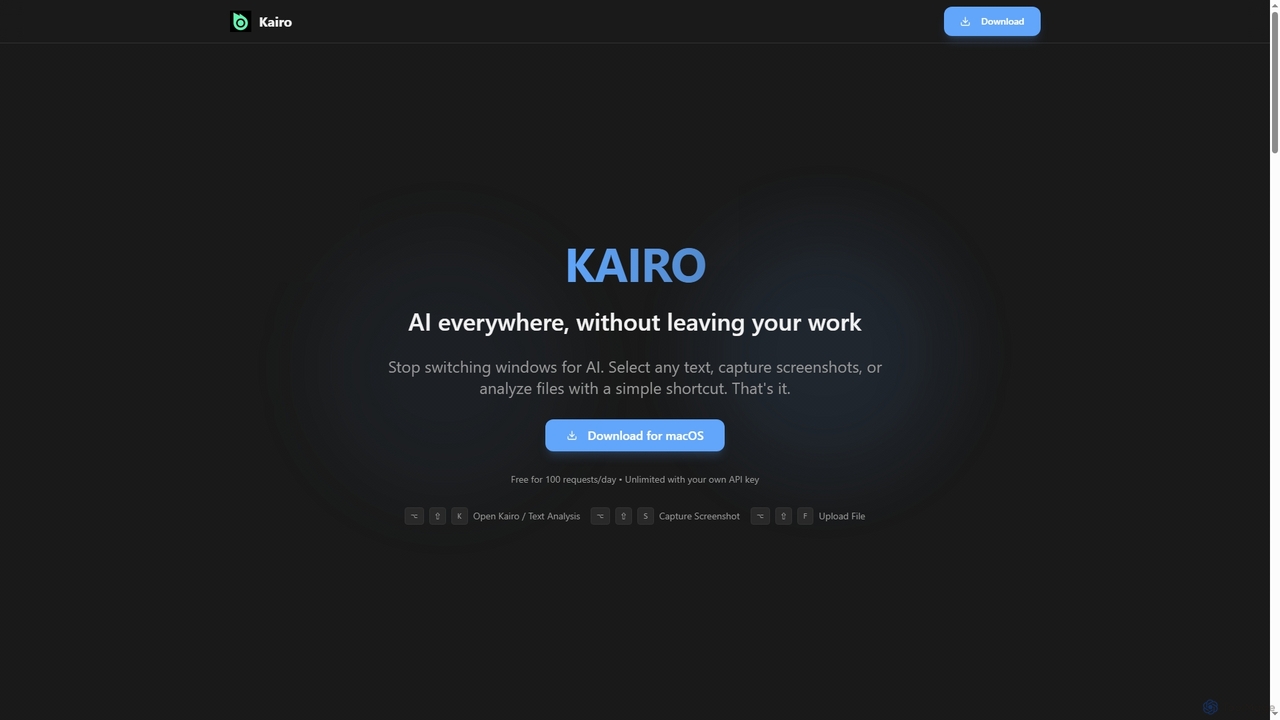
Kairo is an AI-powered desktop assistant for macOS that integrates seamlessly into your workflow, eliminating the need to switch applications for AI tasks. It offers smart text transformation, visual analysis of screenshots, and deep analysis of files directly from any app using simple keyboard shortcuts.

Document Analysis
Visits 5.7KFavorites 134Likes 127

About Language Translator

Language Translator tools are AI-powered applications designed to convert text or speech from one language into another, facilitating seamless communication across linguistic barriers. Leveraging advanced neural machine translation (NMT) models, these tools offer high accuracy and context awareness, making them indispensable for global business, travel, and content creation. They provide instant, accessible solutions for understanding and generating multilingual content.

Core Features

  • Neural Machine Translation (NMT): Utilizes deep learning to produce more natural and contextually accurate translations than traditional methods.
  • Real-time Translation: Instantly translates spoken words or typed text, ideal for live conversations or dynamic content.
  • Document & Website Translation: Processes entire files or web pages while preserving original formatting and layout.
  • Speech-to-Text & Text-to-Speech: Converts spoken language into text for translation, and translates text back into synthesized speech.
  • Glossary & Customization: Allows users to define specific terms and phrases for consistent, industry-specific translations.

Use Cases

Language translator tools are vital for professionals in international trade, education, and tourism. They enable global teams to collaborate effectively, help students access foreign language resources, and assist travelers in navigating unfamiliar environments. From translating business contracts to understanding local menus, these tools bridge communication gaps daily.

How to Choose

When selecting a language translator, consider the supported languages and translation quality, especially for specific domains. Evaluate features like real-time capabilities, document format support, and integration options with existing workflows. Also, assess data privacy policies and pricing models to ensure they align with your usage frequency and security requirements.

Language Translator use cases

1

Facilitating International Business Communication

For global sales teams and international project managers, language translator tools are crucial for seamless communication. They enable instant translation of emails, chat messages, and video conference dialogues, ensuring all parties understand complex discussions and agreements without delays. This accelerates decision-making and strengthens cross-border collaborations.

2

Facilitating International Business Meetings

Business professionals conducting virtual or in-person meetings with international partners can leverage AI language translators for real-time interpretation. This ensures all participants understand discussions, presentations, and negotiations, breaking down linguistic barriers and fostering clearer communication and collaboration across global teams.

3

Localizing Marketing & Website Content

Marketing teams and content creators aiming to reach a global audience use language translators to localize websites, advertisements, product descriptions, and social media posts. This allows for rapid adaptation of content to various languages and cultural contexts, significantly expanding market reach and engagement without extensive manual translation efforts.

4

Translating Academic Research Papers

Researchers and students frequently encounter academic papers published in various languages. AI language translators allow them to quickly translate entire research documents, abstracts, and scientific articles, gaining access to a broader spectrum of global knowledge and accelerating literature reviews for their studies.

5

Assisting International Travelers & Tourists

Travelers can utilize portable or app-based language translators to navigate foreign countries. These tools help translate street signs, restaurant menus, public announcements, and facilitate basic conversations with locals, making travel experiences smoother, safer, and more enjoyable by overcoming language barriers on the go.

6

Enhancing Customer Support for Global Audiences

Customer service departments serving a diverse international clientele can use language translators to provide support in multiple languages. Integrating these tools into live chat or ticketing systems enables agents to understand customer queries and respond accurately, significantly improving customer satisfaction and reducing response times.

7

Localizing Marketing Content and Websites

Marketing professionals aiming to expand into new international markets utilize language translators to localize website content, product descriptions, and advertising campaigns. These tools help adapt messaging to cultural nuances, ensuring resonance with local audiences and driving higher engagement and conversion rates.

8

Supporting Multilingual Customer Service

Customer service departments use language translators to efficiently handle inquiries from a diverse, global customer base. Agents can quickly translate customer emails, chat messages, or even live calls, providing timely and accurate support regardless of the customer's native language, thereby improving satisfaction and operational efficiency.

9

Enabling Cross-border Academic & Research Collaboration

Academics and researchers collaborate internationally by using language translators to understand research papers, journals, and communications written in different languages. This facilitates knowledge sharing, accelerates scientific discovery, and enables scholars worldwide to contribute to and benefit from a broader pool of information and expertise.

10

Assisting Travelers and Tourists Abroad

Travelers can rely on real-time language translator apps to navigate foreign countries with ease. From translating street signs, restaurant menus, and public announcements to facilitating conversations with locals, these tools remove language barriers, making travel experiences smoother and more enjoyable.

11

Translating Legal & Technical Documents

Legal and technical professionals often require precise translation of contracts, patents, user manuals, and regulatory documents for international compliance or operations. AI language translators, especially those with custom glossary features, can provide initial drafts quickly, significantly reducing the time and cost associated with specialized human translation, while maintaining accuracy for review.

12

Supporting Multilingual Content Creation

Content creators, journalists, and bloggers can leverage language translators to produce content for a global audience. They can translate articles, blog posts, and social media updates into multiple languages, expanding their reach and engaging diverse communities without needing to hire individual human translators for every piece.

Language Translator FAQ

What are Language Translator tools?

Language Translator tools are AI-powered software or devices designed to automatically convert text or speech from one natural language into another. They utilize sophisticated natural language processing (NLP) and machine learning models, particularly neural networks, to understand context and provide more fluid, accurate, and human-like translations than older, rule-based systems. Their primary purpose is to break down communication barriers across different languages.

What are Language Translator tools?

Language Translator tools are AI-powered applications designed to automatically convert text or speech from one human language into another. They leverage advanced algorithms, primarily neural machine translation (NMT), to understand context and produce natural-sounding, accurate translations. These tools are essential for bridging communication gaps in personal, professional, and academic settings.

How do I choose the best AI Language Translator for my needs?

To choose the best AI Language Translator, consider several factors. First, evaluate its accuracy and fluency for the specific language pairs you frequently use. Second, check for essential features like real-time voice translation, document translation with formatting preservation, and custom glossary support. Third, assess its integration capabilities with your existing workflows or applications. Finally, review data privacy policies, security measures, and the pricing structure to ensure it meets your budget and compliance requirements.

How do AI Language Translators differ from traditional translation software?

AI Language Translators, especially those using Neural Machine Translation (NMT), differ significantly from traditional rule-based or statistical machine translation software. NMT models learn from vast amounts of text to understand context and generate more fluid, human-like translations, often handling idioms and complex sentence structures better. Traditional software relies on predefined rules or statistical phrase matching, which can result in less natural or accurate output.

What's the difference between AI Language Translators and traditional translation software?

The key difference lies in their underlying technology and approach. Traditional translation software often relies on rule-based systems or statistical machine translation, performing word-for-word or phrase-based conversions without deep contextual understanding. AI Language Translators, particularly those using neural machine translation (NMT), learn from vast datasets to understand context, grammar, and nuances, producing more natural, coherent, and contextually appropriate translations that mimic human output more closely.

What factors should I consider when choosing a Language Translator tool?

When selecting a language translator, consider several key factors: the accuracy and fluency of translations for your specific language pairs, the range of supported languages, and whether it offers real-time, document, or speech translation capabilities. Also, evaluate its integration options with other platforms, data privacy and security features, and the pricing model to ensure it meets your budget and operational needs.

Can Language Translators handle specialized or technical terminology?

Many advanced AI Language Translators can handle specialized or technical terminology, especially those offering customization features. Tools with glossary management, custom dictionaries, or domain-specific models allow users to input industry-specific terms and ensure consistent, accurate translations for technical documents, legal texts, or medical reports. However, for highly critical or nuanced content, human review is often recommended.

What advanced features do modern Language Translator tools offer?

Modern Language Translator tools offer a range of advanced features beyond basic text conversion. These include real-time voice translation for live conversations, optical character recognition (OCR) for translating text from images, comprehensive document translation that preserves original layouts, and API integrations for seamless embedding into other applications. Many also provide custom glossaries for industry-specific terminology, offline translation capabilities, and secure data handling for sensitive information.

Are Language Translator tools suitable for real-time conversations?

Yes, many modern Language Translator tools are specifically designed for real-time conversations. Features like speech-to-text and text-to-speech integration, combined with instant translation capabilities, enable users to communicate effectively in live dialogues, video calls, or face-to-face interactions. While not always perfect, they significantly facilitate understanding across language barriers in dynamic settings.

How accurate are AI Language Translators, and what are their limitations?

AI Language Translators have achieved remarkable accuracy, especially for common language pairs and general content, often approaching human parity in certain contexts. However, limitations exist. They may struggle with highly nuanced cultural references, complex literary texts, poetry, or very specialized jargon without specific training. While constantly improving, they sometimes miss subtle contextual meanings or produce grammatically correct but unnatural-sounding phrases, requiring human review for critical or high-stakes translations.

What are the benefits of using AI Language Translators for businesses?

AI Language Translators offer numerous benefits for businesses, including expanding global reach by localizing content, improving customer support efficiency across different languages, and streamlining internal communication for multinational teams. They reduce translation costs and time compared to human translation, enable faster market entry, and help maintain brand consistency in diverse linguistic contexts, fostering better international relations and growth.