
ToolMage
Sign in

Best 1 Multilingual Content AI tools for Translation

Popular Multilingual Content AI tools in Translation include AIVideoTranslator, helping you work more efficiently.

AIVideoTranslator
Free

AIVideoTranslator

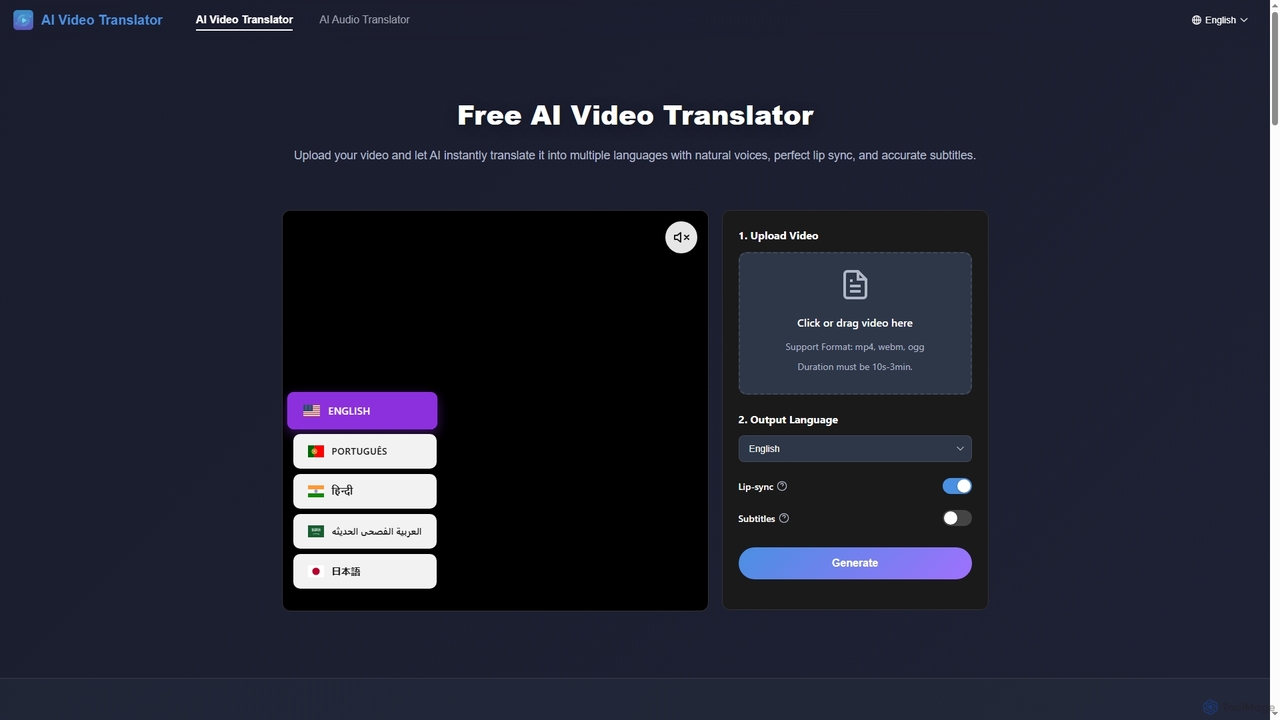
AIVideoTranslator is a powerful AI tool that instantly translates videos and audio into multiple languages with natural voices, perfect lip synchronization, and accurate subtitles. It helps content creators, businesses, and educators reach a global audience effortlessly, offering fast processing and advanced voice customization without requiring sign-up for video translation.

3D
Visits 36.1KFavorites 147Likes 130

About Multilingual Content

Multilingual Content AI tools are specialized platforms that leverage artificial intelligence to generate, adapt, and manage content directly in multiple languages. These tools go beyond simple translation, focusing on creating original, culturally relevant content while maintaining brand consistency across diverse linguistic markets. They streamline the entire content lifecycle for global reach, ensuring messages resonate with local audiences.

Core Features

  • AI-powered Multilingual Generation: Create original text, marketing copy, or documentation directly in several target languages.
  • Localization & Cultural Adaptation: Adjust content for cultural nuances, local idioms, and regional preferences, not just literal translation.
  • Cross-Language Consistency: Maintain uniform terminology, style, and brand messaging across all language versions of content.
  • Dynamic Content Adaptation: Automatically adapt content in real-time based on user language, location, or specific preferences.
  • Integrated Workflow Management: Tools for managing the creation, review, and publishing of content across different language teams.

Use Cases

Global marketing teams utilize these tools to launch simultaneous campaigns in diverse markets, ensuring localized relevance. E-commerce businesses generate culturally adapted product descriptions for international storefronts. Companies also build and maintain consistent customer support knowledge bases for a worldwide audience, enhancing global service efficiency.

How to Choose

Evaluate the breadth and quality of AI-powered content generation across various languages. Consider seamless integration capabilities with your existing CMS or marketing automation platforms. Assess features for maintaining cross-language consistency, brand voice, and cultural adaptation. Look for scalability to efficiently manage growing international content demands and ensure robust security measures.

Multilingual Content use cases

1

Global Marketing Campaign Creation

Marketing teams leverage Multilingual Content AI tools to generate localized ad copy, social media posts, and email campaigns for multiple target markets simultaneously. This ensures brand consistency while adapting messages to cultural specifics, significantly accelerating campaign launches and reducing manual translation efforts, leading to higher engagement rates across regions.

2

Automated Multilingual Product Descriptions

E-commerce businesses leverage these tools to automatically create unique, SEO-optimized product descriptions in various languages for their international online stores. This helps them reach a broader customer base and improves search visibility in different regions without extensive manual localization, leading to increased sales and market penetration.

3

Developing Multilingual Customer Support Knowledge Bases

Companies employ Multilingual Content AI to build and maintain comprehensive knowledge bases and FAQs in numerous languages. This enables customers worldwide to find answers to their questions in their native tongue, reducing support ticket volumes, improving customer satisfaction, and ensuring consistent self-service options globally.

4

Localizing Website and App Content

Content managers utilize Multilingual Content AI to adapt website pages, blog posts, and application interfaces for different linguistic and cultural contexts. This goes beyond direct translation, ensuring the tone, imagery, and examples resonate with local audiences, enhancing user engagement and improving conversion rates in specific markets.

5

Generating Internal Communications for Global Teams

Multinational corporations use these tools to draft company-wide announcements, policy updates, and training materials in the native languages of their diverse workforce. This fosters better understanding, inclusivity, and engagement among employees across different regions, ensuring critical information is accessible and clearly understood by everyone.

6

Creating Multilingual Educational or Training Materials

Educational institutions or corporate training departments use AI to produce courses, modules, and assessments in multiple languages. This allows for wider dissemination of knowledge and ensures accessibility for learners from various linguistic backgrounds, standardizing learning experiences globally and reducing the cost of content adaptation.

Multilingual Content FAQ

What are Multilingual Content AI tools?

Multilingual Content AI tools are advanced platforms that use artificial intelligence to generate, adapt, and manage content directly in multiple languages, going beyond simple word-for-word translation. They focus on creating original, culturally appropriate content, maintaining brand voice, and ensuring consistency across diverse linguistic markets. These tools are crucial for businesses aiming for global reach and localized relevance.

How to choose the right Multilingual Content AI tool?

When selecting a Multilingual Content AI tool, consider several key factors. First, evaluate the breadth of language support and the quality of AI-powered content generation. Second, assess its integration capabilities with your existing content management systems (CMS) or marketing platforms. Third, look for robust features that ensure cross-language consistency, brand voice maintenance, and cultural adaptation. Finally, consider its scalability to meet your growing international content demands and the level of security and data privacy offered.

How do Multilingual Content tools differ from traditional Translation tools?

Traditional translation tools primarily convert existing text from one language to another, focusing on linguistic accuracy. Multilingual Content AI tools, however, leverage AI to *generate* new content directly in target languages, adapt it culturally, and manage its consistency across a global content strategy. They offer a more holistic approach to international content creation and management, often incorporating features like brand voice adherence and cultural nuance adaptation, which go beyond mere linguistic conversion.

Who benefits most from using Multilingual Content AI tools?

Global enterprises, e-commerce businesses, marketing agencies, content creators, and localization teams benefit significantly from Multilingual Content AI tools. These tools are ideal for anyone needing to produce high volumes of consistent, culturally relevant content for diverse international audiences efficiently and at scale. They are particularly valuable for organizations expanding into new markets or managing complex global content strategies.

Can Multilingual Content AI tools maintain brand voice and cultural nuance?

Yes, advanced Multilingual Content AI tools are specifically designed to maintain brand voice and incorporate cultural nuances. They often use sophisticated NLP models trained on vast datasets, allowing them to understand context, tone, and cultural specifics. While AI provides a strong foundation, human oversight and refinement are often recommended for final content, especially for highly sensitive or creative materials, to ensure perfect alignment with local sensibilities.