
ToolMage
Sign in

Best 1 Hotel Booking AI tools for Travel

Popular Hotel Booking AI tools in Travel include Mighty Travels Premium, helping you work more efficiently.

Mighty Travels Premium
Freemium

Mighty Travels Premium

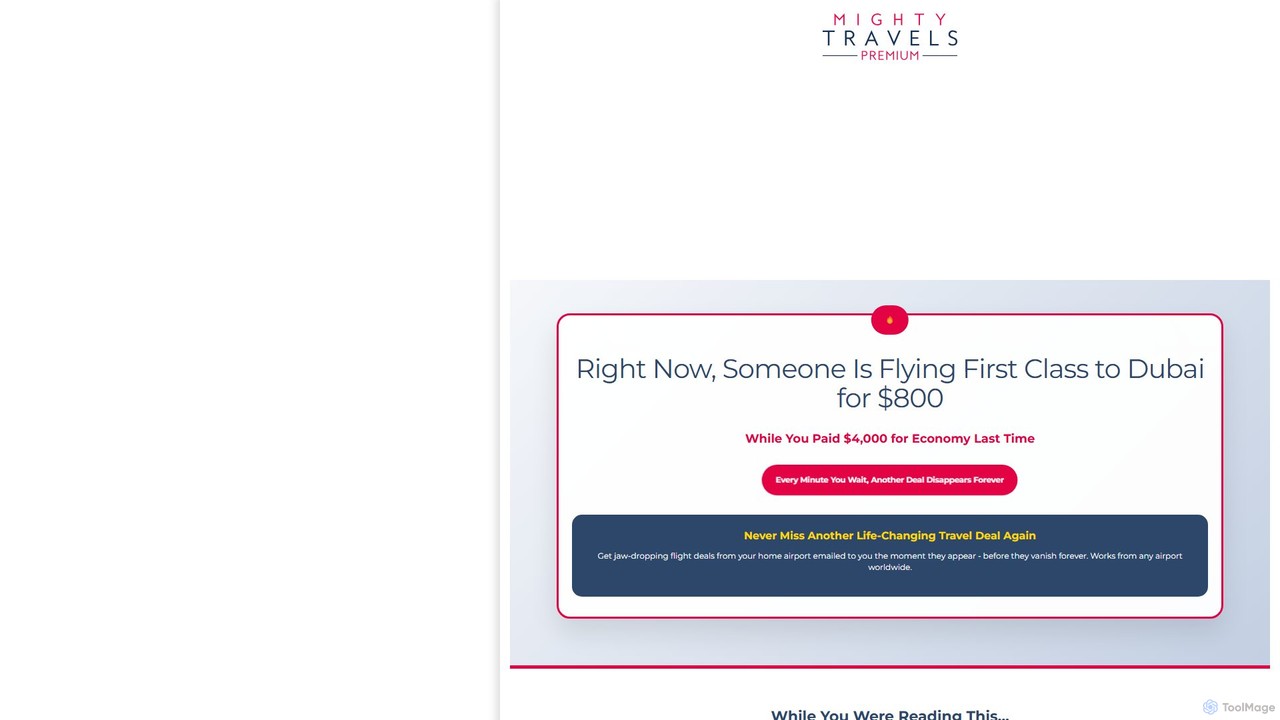
Mighty Travels Premium is an AI-powered subscription service that helps travelers save up to 90% on flights and hotels. It monitors over 1,000 airports worldwide 24/7 to find and instantly alert users to unpublished deals and mistake fares, especially for business and first-class tickets. By setting your home airport, you receive real-time email notifications for incredible travel bargains, ensuring you never miss a life-changing deal before it disappears.

Alerts
Visits 30.4KFavorites 144Likes 147

About Hotel Booking

AI Hotel Booking tools are specialized platforms that use artificial intelligence to streamline and optimize the process of finding and reserving accommodations. They leverage machine learning algorithms to analyze vast amounts of data, including historical pricing and user preferences, to deliver highly personalized recommendations. This enables travelers to discover ideal hotels at optimal prices, often predicting future price drops or identifying hidden deals. These tools go beyond simple search filters by understanding complex, conversational queries and user intent.

Core Features

  • Predictive Price Analysis: Forecasts hotel price fluctuations to recommend the best time to book.
  • Personalized Recommendations: Suggests hotels based on past travel behavior, stated preferences, and review analysis.
  • Natural Language Search: Allows users to search with conversational phrases like "a quiet hotel near the beach with a pool".
  • Automated Deal Monitoring: Continuously tracks bookings and can automatically rebook a room if the price drops.
  • Review Sentiment Analysis: Summarizes thousands of guest reviews into concise pros and cons.

Use Cases

These tools are ideal for frequent business travelers seeking efficiency, budget-conscious families looking for the best value, and adventurous tourists searching for unique, highly-rated accommodations that match their specific tastes.

How to Choose

When selecting a tool, consider the accuracy of its price predictions, the depth of its personalization features, its range of hotel inventory, and the intuitiveness of its user interface. Also, check for integrations with loyalty programs or exclusive member deals.

Hotel Booking use cases

1

Optimize Booking for a Family Vacation

A family planning a summer holiday uses an AI hotel booking tool to find the perfect accommodation. Instead of manually checking prices daily, they set their destination, dates, and budget. The AI analyzes historical price trends for hotels in that area and predicts that prices are likely to drop in two weeks. The tool sends an alert at the optimal time, allowing the family to book their preferred hotel with a pool and family suite at a 15% lower price than their initial search, saving both time and money.

2

Streamline Business Trip Accommodations

A consultant who travels frequently needs to book a hotel for an upcoming conference. She uses an AI tool and types in her request: "a quiet, business-friendly hotel near the downtown convention center with high-speed Wi-Fi and late check-in." The AI instantly filters out noisy, tourist-focused hotels and presents a shortlist of three options that perfectly match her criteria, complete with summarized reviews highlighting Wi-Fi speed and room quietness. This reduces her planning time from an hour to just a few minutes.

3

Discover Unique Stays for a Spontaneous Getaway

A couple decides on a last-minute weekend trip but wants to avoid generic chain hotels. They use an AI booking tool that analyzes their past preferences for boutique hotels and artistic decor. The platform scours social media trends, travel blogs, and booking data to recommend a highly-rated, newly opened designer hotel that wasn't appearing on major search sites yet. This helps them discover a unique "hidden gem" that perfectly matches their travel style, creating a more memorable experience.

4

Coordinate Hotel Bookings for a Group Event

Someone is organizing a reunion for a group of 10 friends with varying budgets and preferences. Using an AI tool, they input the group's needs: proximity to the city center, a mix of single and double rooms, and an average price point. The AI platform quickly identifies hotels that have sufficient availability and meet the diverse criteria. It presents a comparison table showing how each option caters to different budget levels within the group, simplifying the complex decision-making process.

5

Maximize Travel Loyalty Program Benefits

A frequent traveler has points across multiple hotel loyalty programs like Hilton Honors and Marriott Bonvoy. They connect their accounts to an AI booking tool. When searching for a hotel, the AI not only shows cash prices but also calculates the redemption value for their points at eligible hotels. It recommends the option that offers the best value, suggesting whether to pay with cash or points to maximize their loyalty benefits and accelerate their progress toward elite status.

6

Find Pet-Friendly Accommodations Instantly

A traveler planning a road trip with their dog struggles with standard booking sites where "pet-friendly" filters are often unreliable. They use an AI tool and search "hotel in Denver that allows large dogs with no extra fee and is near a park." The AI uses natural language processing to understand the specific constraints, scans hotel policies and recent guest reviews mentioning pets, and returns a curated list of verified pet-friendly options, saving the user from having to call hotels individually to confirm their policies.

Hotel Booking FAQ

What are AI Hotel Booking tools?

AI Hotel Booking tools are advanced platforms that use artificial intelligence to provide personalized and optimized hotel search results. Unlike traditional search engines, they analyze user behavior, market data, and pricing trends to predict the best time to book, recommend hotels tailored to individual tastes, and understand complex, natural language search queries. Their goal is to make the booking process faster, smarter, and more cost-effective.

How do AI tools find better hotel deals than traditional sites?

AI tools find better deals by employing several advanced techniques. They use predictive analytics to forecast price fluctuations, advising you to book now or wait for a price drop. They also perform continuous price monitoring on your existing bookings and can automatically rebook you at a lower rate. Furthermore, they can uncover "hidden" deals or member-only rates by aggregating data from multiple sources beyond the major booking platforms.

How to choose the right AI Hotel Booking tool?

To choose the right tool, consider these factors:

  • Prediction Accuracy: Check reviews or trial periods to see how reliable its price forecasts are.
  • Personalization Depth: Does the tool learn from your searches and feedback to refine its recommendations?
  • Hotel Inventory: Ensure it covers a wide range of hotels, including major chains and independent boutiques, in your desired destinations.
  • User Interface: The platform should be intuitive and make it easy to specify your unique preferences.
What's the difference between an AI Hotel Booking tool and a standard booking site?

The main difference lies in intelligence and personalization. Standard booking sites like Expedia or Booking.com rely on user-defined filters (price, stars, location). AI Hotel Booking tools go further by learning your preferences, understanding conversational search queries (e.g., "quiet hotel for a work trip"), and actively predicting market trends to advise you on the best booking time. They shift the process from manual searching to automated, intelligent recommending.

Is my personal data safe with AI Hotel Booking tools?

Reputable AI Hotel Booking tools prioritize data security and privacy. They use your data, such as past travel history and preferences, primarily to enhance your user experience and provide tailored recommendations. It is always important to choose well-known platforms and review their privacy policy to understand how your data is collected, used, and protected. Look for tools that are transparent about their data practices.