ToolMage
Sign in

Best 2 Navigation AI tools for Travel

Popular Navigation AI tools in Travel include Citymapper and Destination App, helping you work more efficiently.

Destination App
Freemium

Destination App

Destination App is your ultimate AI-powered commuting companion, streamlining travel across university, corporate, and public transit systems. It offers live bus tracking, real-time ETAs, schedules, and a trip planner by integrating with over 800 agencies. Features include an AI chatbot for quick inquiries, saved routes, community reports, and deep iOS integration with widgets and Live Activities to simplify your daily journey.

Commuting
Visits 4.8KFavorites 122Likes 131
Citymapper
Freemium

Citymapper

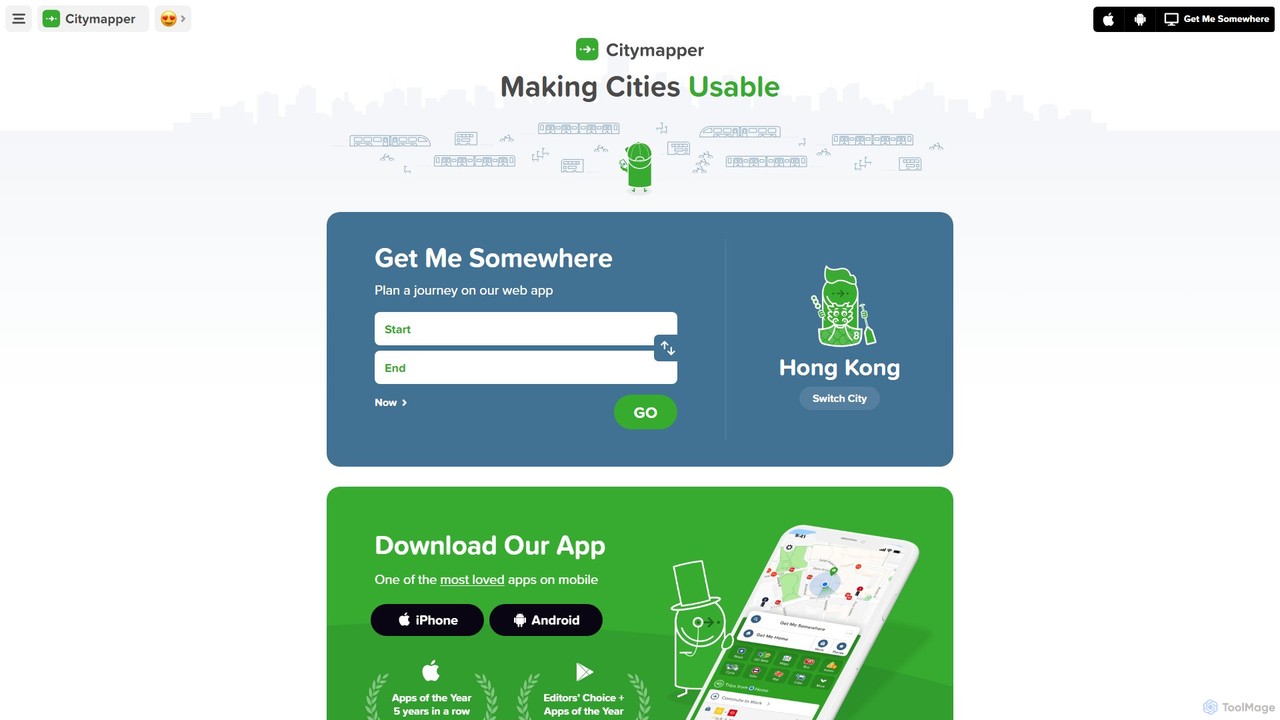
Citymapper is the ultimate AI-powered urban transport app that simplifies city navigation. It integrates all modes of transport—public transit, cycling, scooters, and walking—into one platform, offering real-time data, smart route planning, and turn-by-turn navigation to make cities more usable.

Location
Visits 1.2MFavorites 135Likes 122

About Navigation

AI Navigation tools are intelligent systems designed to provide optimized route planning, real-time guidance, and personalized travel information. Leveraging machine learning and vast datasets, these tools analyze traffic patterns, road conditions, and user preferences to offer dynamic, efficient, and safer journeys. They enhance the travel experience by predicting congestion, suggesting points of interest, and adapting to changing circumstances, making every trip, whether for daily commute or long-distance travel, more streamlined and informed.

Core Features

  • Intelligent Route Optimization: Dynamically plans the most efficient routes considering real-time traffic, weather, road closures, and user preferences.
  • Real-time & Predictive Traffic: Utilizes AI to analyze current and historical data, offering highly accurate traffic predictions and proactive rerouting.
  • Personalized Recommendations: Suggests relevant points of interest, restaurants, fuel stations, or attractions based on user history and context.
  • Multimodal Transport Integration: Seamlessly combines driving, public transport, walking, and cycling options within a single navigation plan.
  • Augmented Reality (AR) Guidance: Overlays virtual directions onto a live camera view, providing intuitive, real-world navigation cues.

Applicable Scenarios

AI Navigation tools are invaluable for various travel contexts. They assist daily commuters in urban areas by identifying the quickest routes and public transport alternatives, significantly reducing travel time. For logistics and delivery companies, these tools optimize complex multi-stop routes, leading to substantial fuel savings and improved delivery schedules. Additionally, tourists and road-trippers benefit from personalized itineraries and discovery of local attractions, enhancing their exploration experience.

How to Choose

When selecting an AI Navigation tool, prioritize data accuracy and the real-time update frequency of maps and traffic information. Evaluate the breadth of features, such as voice guidance, offline map capabilities, multimodal support, and personalized recommendations, to match your specific needs. Consider the user interface for intuitiveness and ease of use, ensuring a smooth and frustration-free experience. Finally, assess the tool's privacy policy regarding location data and personal information handling.

Navigation use cases

1

Optimizing Urban Commutes

Urban professionals can utilize AI navigation to significantly reduce daily commute times. The tool analyzes real-time traffic, public transport schedules, and even parking availability, suggesting the fastest combination of routes and modes. This helps users avoid unexpected delays, choose optimal departure times, and arrive at their destination more punctually, transforming stressful commutes into predictable journeys.

2

Efficient Multi-Stop Delivery Planning

Logistics and delivery drivers leverage AI navigation to plan the most efficient sequence for multiple drop-offs. By considering factors like traffic, delivery windows, and vehicle type, the AI calculates optimal routes that minimize fuel consumption and maximize the number of deliveries per shift. This leads to substantial operational cost savings and improved customer satisfaction through timely deliveries.

3

Personalized Tourist Exploration

Travelers exploring a new city can use AI navigation for a highly personalized experience. Based on their interests (e.g., history, food, art) and real-time location, the tool recommends hidden gems, local eateries, and cultural sites. It can also suggest optimized walking tours or public transport routes between attractions, allowing tourists to discover more authentically and efficiently.

4

Dynamic Road Trip Itinerary Creation

Families or adventurers planning long-distance road trips benefit from AI navigation's ability to create dynamic itineraries. Users input their desired destinations and points of interest, and the AI generates an optimized route, estimates travel times, and suggests suitable stops for fuel, food, or rest. It can also dynamically reroute based on unexpected road closures or weather changes, ensuring a smooth journey.

5

Emergency Response Route Optimization

Emergency services, such as ambulances or police, can utilize AI navigation for critical route optimization. The system identifies the quickest, least congested path to an incident location, often integrating with real-time traffic feeds and emergency vehicle priority signals. This capability is crucial for reducing response times, potentially saving lives, and ensuring rapid deployment of resources.

6

Accessibility-Focused Pedestrian Guidance

Individuals with specific mobility needs can rely on AI navigation for accessible pedestrian routes. The tool can filter paths to avoid stairs, steep inclines, or uneven terrain, and provide audio cues for visually impaired users. By prioritizing accessibility features, these tools empower a wider range of users to navigate urban environments independently and safely, enhancing inclusivity.

Navigation FAQ

What are AI Navigation tools?

AI Navigation tools are advanced software applications that use artificial intelligence, particularly machine learning and data analytics, to provide highly intelligent and personalized guidance for travel. Unlike traditional GPS, they go beyond simple route calculation by predicting traffic, understanding user preferences, and dynamically adapting routes in real-time, offering a more informed and efficient journey experience.

How do I choose the best AI Navigation tool for my needs?

To choose the best AI Navigation tool, consider its core functionalities like real-time traffic updates, offline map support, and multimodal options. Evaluate its personalization capabilities, such as recommending points of interest based on your preferences. Check user reviews for data accuracy and reliability. Also, assess the user interface for ease of use and ensure it respects your privacy regarding location data.

What's the difference between traditional GPS and AI Navigation?

Traditional GPS primarily calculates routes based on static map data and current location. AI Navigation, however, integrates AI algorithms to analyze vast amounts of dynamic data, including historical traffic patterns, real-time road conditions, weather, and even social events. This allows AI tools to predict future traffic, offer proactive rerouting, provide personalized recommendations, and learn from user behavior, making them significantly more intelligent and adaptive.

What are the key features of AI Navigation tools?

Key features of AI Navigation tools include intelligent route optimization that considers multiple dynamic factors, real-time and predictive traffic analysis for avoiding congestion, and personalized recommendations for nearby amenities or attractions. Many also offer multimodal transport integration, augmented reality (AR) guidance for intuitive directions, and voice control for hands-free operation, enhancing safety and convenience.

How do AI Navigation tools improve the travel experience?

AI Navigation tools significantly improve the travel experience by making journeys more efficient, predictable, and enjoyable. They reduce travel time by avoiding congestion, minimize stress through dynamic rerouting, and help users discover new places with personalized recommendations. For businesses, they optimize logistics, leading to cost savings and improved service. Overall, they transform navigation from a simple task into an intelligent, adaptive, and user-centric process.