Paragraph
Paragraph is a Web3-native publishing platform designed for creators to build, grow, and monetize their audience. It empowers …
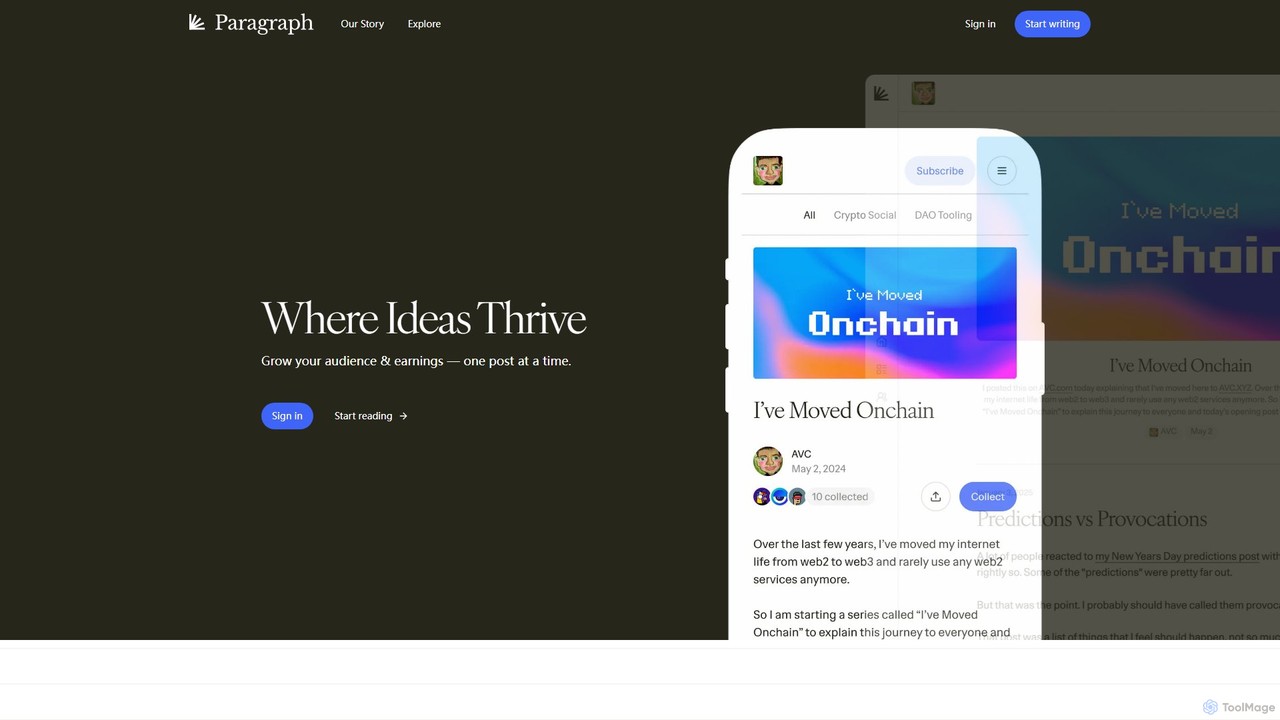
Paragraph is a Web3-native publishing platform designed for creators to build, grow, and monetize their audience. It empowers writers to own their content and community relationships through email and crypto wallet subscriptions, offering innovative ways to earn directly from their work beyond traditional ads and paywalls.
Paragraph
Paragraph is a Web3-native publishing platform that empowers writers and creators to build, own, and monetize their audience. …
Paragraph is a Web3-native publishing platform that empowers writers and creators to build, own, and monetize their audience. It integrates blockchain technology to offer unique features like crypto subscriptions, content NFTs, and token-gated access, moving beyond traditional ads and paywalls.
About Publishing
Web3 Publishing tools are platforms that use blockchain technology for decentralized content creation, distribution, and monetization. These tools leverage smart contracts and decentralized storage like IPFS or Arweave to give creators true ownership and control over their work. This model enables censorship-resistant publishing, transparent revenue streams, and direct engagement with audiences, fundamentally changing the creator economy. Unlike traditional platforms, they provide an immutable, on-chain record of authorship and ownership history.
Core Features
- Decentralized Content Hosting: Stores content on distributed networks, making it resistant to censorship and single-point-of-failure takedowns.
- Content Tokenization (NFTs): Allows creators to mint articles, books, or media as non-fungible tokens, enabling verifiable ownership and new sales models.
- Direct Crypto Monetization: Facilitates peer-to-peer payments, subscriptions, and crowdfunding directly in cryptocurrency, bypassing traditional financial intermediaries.
- On-Chain Governance: Enables community-led platforms where token holders can vote on editorial policies, feature development, and treasury management.
Use Cases
These tools are ideal for independent journalists, investigative reporters, academic researchers, and digital artists who require censorship resistance and verifiable authorship. They are also used by creators and DAOs (Decentralized Autonomous Organizations) looking to build community-owned media outlets and explore innovative, transparent monetization strategies without relying on centralized corporations.
How to Choose
When selecting a Web3 Publishing tool, consider the underlying blockchain protocol, as it affects transaction fees and speed (e.g., Ethereum, Polygon, Solana). Evaluate the level of decentralization for both content storage and platform governance. Assess the available monetization models, such as NFT sales, subscriptions, or revenue sharing. Finally, consider the user experience and whether it suits your technical comfort level, as some platforms are more developer-focused than others.

PublishingUse Cases
Publishing Censorship-Resistant Journalism
An investigative journalist needs to publish a sensitive report on corporate malfeasance that traditional media outlets refuse to cover due to advertiser pressure. Using a Web3 publishing platform, they upload the article to a decentralized storage network like Arweave, ensuring it's permanently archived and cannot be altered or deleted. The article is published on-chain, creating an immutable record of its existence and authorship. This allows the journalist to bypass gatekeepers and deliver critical information directly to the public without fear of censorship or de-platforming.
Tokenizing a Digital Novel as NFTs
An author wants to create a new economic model for their upcoming novel. Instead of a traditional publishing deal, they serialize the book on a Web3 platform. Each chapter is minted as a limited-edition NFT. Early supporters can purchase these chapter NFTs, which grant them access to read the content and potentially other perks like access to a private community or a share of future royalties. This model allows the author to fund their work directly from their community, retain full creative control, and give readers a verifiable stake in the project's success.
Creating a Decentralized Academic Journal
A group of researchers is frustrated with the high fees and slow processes of traditional academic publishers. They decide to launch their own journal on a Web3 platform. Submissions are managed on-chain, and the peer-review process is conducted transparently, with reviewers' feedback recorded immutably. Published papers are stored on IPFS and tokenized, giving authors clear, verifiable ownership. This approach reduces publication costs, accelerates the dissemination of knowledge, and creates a more equitable and transparent system for academic publishing.
Monetizing a Blog with Crypto Subscriptions
A content creator runs a popular blog but wants to move away from ad-based revenue and platform dependency. They migrate their blog to a Web3 publishing tool like Mirror.xyz. This allows them to offer paid subscriptions directly to their readers using cryptocurrency. Readers can connect their wallets to subscribe and can also collect their favorite articles as NFTs. This creates a direct financial relationship between the creator and their audience, fosters a stronger community, and provides the creator with a revenue stream they fully control.
Launching a Community-Owned Media DAO
A collective of writers and artists decides to form a Decentralized Autonomous Organization (DAO) to create a new media publication. They use a Web3 publishing platform that integrates with DAO tooling. Governance tokens are issued to founding members and early contributors. All editorial decisions, such as which articles to commission and publish, are proposed and voted on by token holders. Revenue generated from subscriptions and NFT sales is directed to the DAO's treasury, and its use is also determined by community votes. This creates a truly democratic and community-owned media outlet.
Verifying Authenticity of Digital Art Commentary
A digital artist publishes a new piece of artwork and wants to provide an official, verifiable commentary to accompany it, explaining their creative process and intent. They use a Web3 publishing tool to write the commentary and cryptographically link it to the artwork's NFT. This creates an immutable on-chain connection between the art and the artist's words. Collectors can now be certain that the commentary is authentic and directly from the artist, adding a layer of provenance and value to the artwork that cannot be forged or separated from the piece itself.