ToolMage
Sign in

Best 2 Security AI tools for Web3

Popular Security AI tools in Web3 include Forta and Kritisi, helping you work more efficiently.

Kritisi
Free

Kritisi

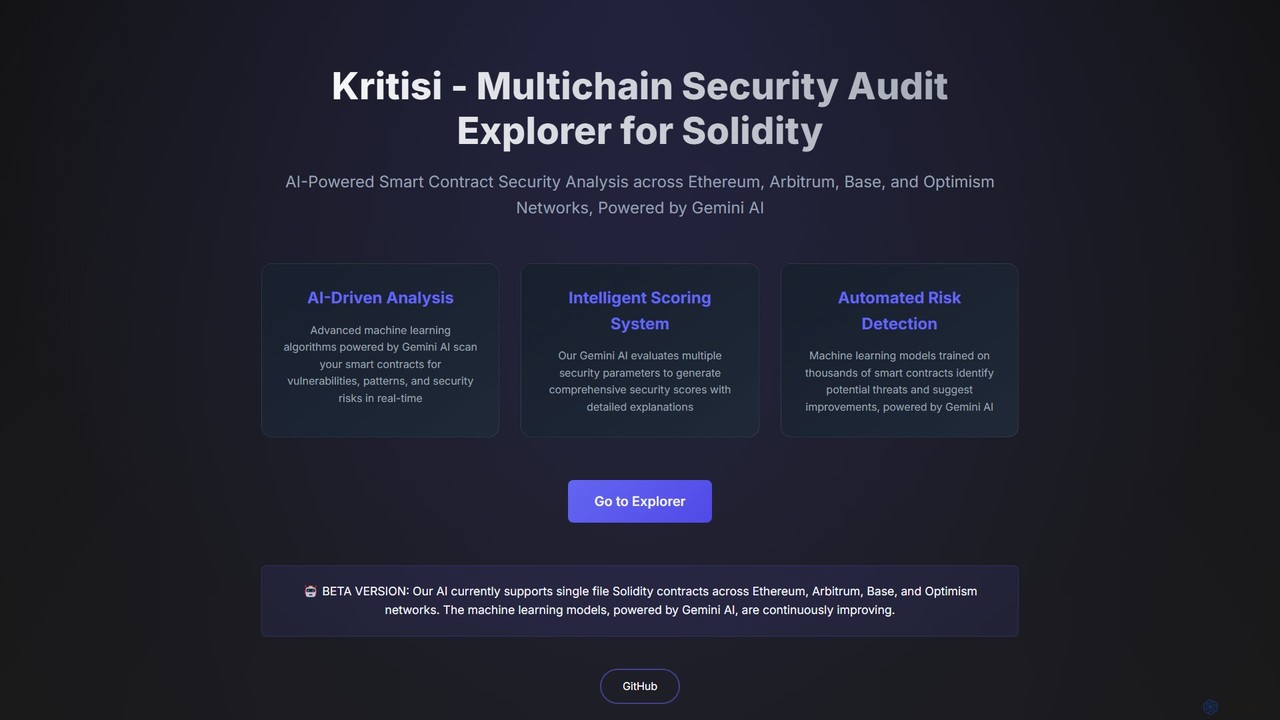
Kritisi is an AI-powered security audit explorer for Solidity smart contracts. Powered by Google's Gemini AI, it scans code for vulnerabilities across Ethereum, Arbitrum, Base, and Optimism networks. It provides real-time analysis, intelligent security scores, and automated risk detection to help developers build more secure Web3 applications.

Code Auditing
Visits 6.4KFavorites 149Likes 156
Forta
Paid

Forta

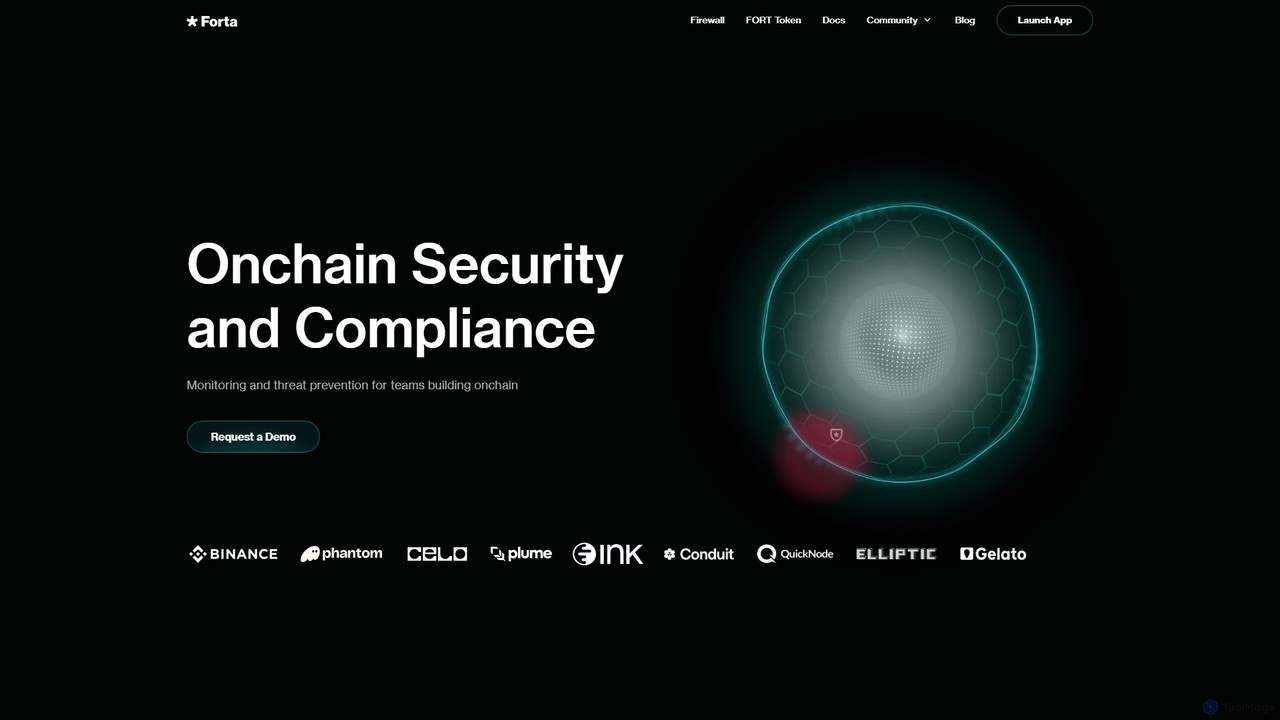
Forta is a real-time threat detection and prevention network for Web3. It uses AI to monitor on-chain activity, block malicious transactions before execution, and ensure compliance. Forta secures blockchains and dApps against exploits, scams, and regulatory risks.

Blockchain
Visits 26.4KFavorites 127Likes 138

About Security

Web3 Security AI tools are specialized solutions designed to protect decentralized applications (dApps), smart contracts, blockchain networks, and digital assets within the Web3 ecosystem. Leveraging artificial intelligence, these tools automate the identification of vulnerabilities, detect real-time threats, and enhance the overall integrity and trustworthiness of decentralized systems. They provide critical safeguards against sophisticated attacks, ensuring the safety of user funds and data in a rapidly evolving digital landscape.

Core Features

  • Smart Contract Auditing: Automatically scans smart contract code for vulnerabilities, logic errors, and security best practice violations before deployment.
  • Real-time Threat Detection: Monitors blockchain transactions and network activity for suspicious patterns, identifying potential attacks, fraud, or anomalies as they occur.
  • Decentralized Identity Management: Assists in securing and managing self-sovereign identities (SSIs) and access controls across various Web3 platforms.
  • Vulnerability Scanning: Proactively identifies weaknesses in dApps, protocols, and underlying infrastructure that could be exploited by malicious actors.
  • Secure Key Management: Provides AI-enhanced solutions for protecting private keys and cryptographic secrets essential for accessing digital assets.

Applicable Scenarios

Web3 Security AI tools are indispensable for dApp developers ensuring code integrity, blockchain enterprises safeguarding their networks, and crypto investors protecting their digital assets. They are also vital for security auditors performing comprehensive assessments and for users seeking to manage their decentralized identities securely across various platforms.

How to Choose

When selecting a Web3 Security AI tool, consider its audit depth for smart contracts, real-time monitoring capabilities for active threats, and compatibility with specific blockchain networks. Evaluate its AI-driven anomaly detection accuracy, ease of integration with existing Web3 development workflows, and the reputation and expertise of the provider in the blockchain security space.

Security use cases

1

Smart Contract Vulnerability Auditing

A dApp development team uses an AI-powered Web3 security tool to automatically scan their newly developed smart contracts for common vulnerabilities like reentrancy, integer overflows, and access control issues. The tool provides detailed reports and suggestions for remediation, significantly reducing the risk of exploits before the contract is deployed to a live blockchain, saving weeks of manual auditing time.

2

Real-time DeFi Protocol Threat Detection

A decentralized finance (DeFi) protocol operator integrates an AI security solution to continuously monitor all transactions and liquidity pool movements. The AI detects unusual transaction volumes, flash loan attacks, or suspicious arbitrage patterns indicative of potential exploits, alerting the team instantly to mitigate risks and protect user funds from ongoing attacks.

3

Decentralized Identity (DID) Protection

An individual managing multiple Web3 identities across various dApps and metaverses employs an AI-enhanced security tool. This tool helps secure their decentralized identifiers (DIDs) by monitoring for unauthorized access attempts, alerting them to potential phishing scams targeting their identity credentials, and providing secure methods for credential storage and verification.

4

NFT Marketplace Fraud Prevention

An NFT marketplace utilizes AI Web3 security tools to identify and prevent fraudulent activities such as wash trading, fake NFT listings, and intellectual property infringements. The AI analyzes transaction histories, metadata, and image origins to flag suspicious collections or sellers, protecting both buyers and legitimate creators on the platform.

5

Blockchain Network Anomaly Detection

A blockchain infrastructure provider deploys AI security tools to monitor the health and integrity of their network nodes. The AI detects unusual network traffic, consensus mechanism anomalies, or potential denial-of-service attacks by analyzing vast amounts of on-chain data, ensuring the stability and security of the underlying blockchain for all participants.

6

Automated Wallet Security Monitoring

A crypto investor uses an AI-driven security application to monitor their hardware and software wallets for suspicious activities. The tool tracks incoming and outgoing transactions, flags unusual token approvals, and alerts the user to potential phishing attempts or unauthorized access to their wallet, providing an extra layer of protection for their digital assets.

Security FAQ

What are Web3 Security AI tools?

Web3 Security AI tools are advanced software solutions that leverage artificial intelligence to identify, prevent, and mitigate security risks within the decentralized Web3 ecosystem. They specifically target vulnerabilities in smart contracts, dApps, blockchain networks, and digital assets, using AI for pattern recognition, anomaly detection, and automated threat analysis to enhance protection beyond traditional methods.

How do AI tools enhance Web3 Security compared to traditional methods?

AI tools significantly enhance Web3 Security by automating complex analysis, identifying subtle patterns that human auditors might miss, and providing real-time threat intelligence. Unlike traditional, often manual, security audits or rule-based systems, AI can adapt to new attack vectors, process vast amounts of on-chain data quickly, and predict potential vulnerabilities, offering a more proactive and scalable defense.

What types of Web3 security threats do these AI tools primarily address?

These AI tools primarily address threats such as smart contract vulnerabilities (e.g., reentrancy, logic bugs), phishing and social engineering attacks targeting Web3 users, rug pulls and exit scams in DeFi, oracle manipulation, and various forms of blockchain network attacks (e.g., 51% attacks, DDoS). They also help in detecting fraud in NFT marketplaces and securing decentralized identities.

What should I consider when choosing a Web3 Security AI tool?

When choosing a Web3 Security AI tool, consider its specific focus (e.g., smart contract auditing, real-time monitoring, identity protection), the blockchain networks it supports, and the depth of its AI analysis capabilities. Evaluate its integration options with your existing development or operational workflows, the clarity of its reporting, and the provider's reputation and track record in the Web3 security space.

What is the key difference between Web3 Security and traditional cybersecurity?

The key difference lies in their scope and underlying architecture. Traditional cybersecurity focuses on centralized systems, servers, and data, protecting against threats like malware and data breaches. Web3 Security, conversely, deals with decentralized, immutable blockchain networks, smart contracts, and self-sovereign identities. It addresses unique vulnerabilities arising from code transparency, cryptographic principles, and the absence of central authority, requiring specialized tools and expertise.