ToolMage
Sign in

Best 1 Optimization AI tools for Website

Popular Optimization AI tools in Website include Elsie, helping you work more efficiently.

Elsie
Free

Elsie

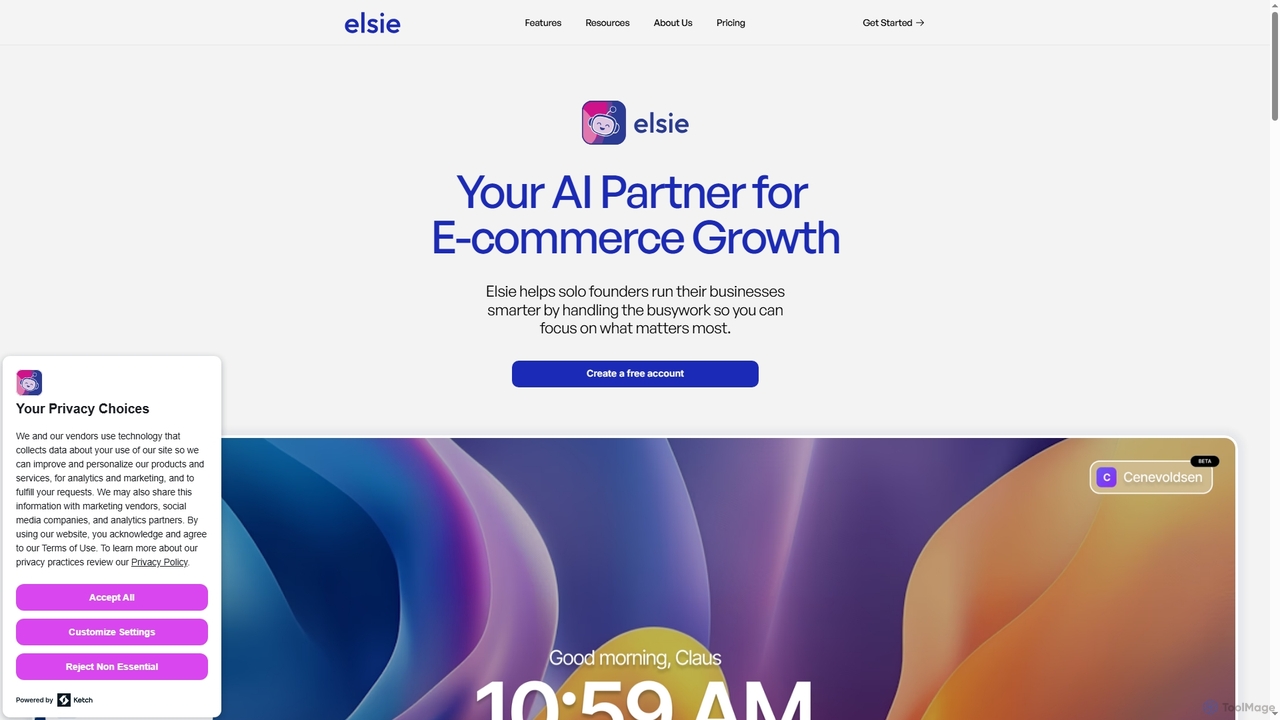
Elsie is an AI partner designed for solo e-commerce founders, automating routine tasks to free up time for growth. It connects to your website, analyzes data, and provides actionable insights for marketing, website optimization, and future customer understanding, helping small businesses scale smarter.

Marketing Automation
Visits 6.6KFavorites 181Likes 170

About Optimization

Optimization tools are AI-powered solutions designed to enhance various aspects of a website's performance, user experience, and search engine visibility. Leveraging machine learning and data analytics, these tools identify bottlenecks and provide actionable insights to improve site speed, SEO rankings, content relevance, and conversion rates. They automate complex analysis, enabling businesses and webmasters to achieve their online goals more efficiently within the broader context of website management.

Core Features

  • SEO Content Optimization: Provides AI-driven suggestions for keywords, readability, and content structure to improve search engine rankings.
  • Website Speed Optimization: Identifies and recommends fixes for slow loading elements, such as image compression and code minification.
  • Conversion Rate Optimization (CRO): Analyzes user behavior to suggest A/B test variations for higher conversions on landing pages and product pages.
  • Personalization & Recommendation: Delivers tailored content, product, or service recommendations based on individual user data and preferences.
  • Technical SEO Auditing: Automatically detects and reports on technical SEO issues like broken links, duplicate content, and crawl errors.

Applicable Scenarios

These tools are invaluable for e-commerce sites aiming to boost product page conversions, content publishers seeking higher search rankings and reader engagement, and marketing teams optimizing landing pages for lead generation. Web developers also utilize them to ensure optimal site performance and technical health, making websites more effective and competitive.

How to Choose

When selecting an AI optimization tool, consider its specific scope (e.g., SEO, speed, CRO, content), integration capabilities with your existing CMS and analytics platforms, and the depth and clarity of its reporting and analysis. Evaluate its ease of use for your team's technical proficiency and compare pricing models to ensure it aligns with your budget and specific optimization goals.

Optimization use cases

1

Boost E-commerce Product Page Conversions

E-commerce operators utilize AI optimization tools to analyze user behavior, automatically generate A/B testing variations, and refine product descriptions, image layouts, and call-to-action buttons. This data-driven approach significantly improves purchase conversion rates, leading to increased sales and revenue for online stores.

2

Optimize E-commerce Website Loading Speed

An e-commerce manager needs to ensure product pages load quickly to reduce bounce rates and improve sales. AI optimization tools analyze image sizes, script loads, and server responses, then automatically compress images, suggest lazy loading, and identify critical CSS. This results in pages loading 30% faster, significantly enhancing user experience and boosting conversion rates.

3

Improve Blog Post SEO Rankings

A content marketer aims to enhance the organic search visibility of new and existing blog posts. AI tools suggest relevant keywords, analyze competitor content, recommend internal linking strategies, and improve readability scores. Consequently, blog posts rank higher for target keywords, driving a substantial increase in organic traffic and reader engagement.

4

Automate Blog Post SEO Optimization

Content creators leverage AI tools to analyze target keywords, competitor strategies, and content gaps. The tools then provide SEO-friendly suggestions for titles, meta descriptions, content structure, and internal linking, ensuring blog posts achieve higher rankings in search engine results and attract more organic traffic.

5

Accelerate Website Loading Speed

Website administrators employ AI optimization tools to identify and compress large images, optimize code, and configure Content Delivery Networks (CDNs). This process significantly reduces page load times, enhancing user experience, decreasing bounce rates, and positively impacting search engine optimization scores.

6

Automate A/B Testing for Conversion Rate Increase

A digital marketing specialist continuously tests website elements to maximize conversion rates for campaigns. AI identifies optimal headlines, call-to-action buttons, and layout variations based on user behavior data, then automates A/B testing and deploys winning versions. This leads to a 15-20% increase in conversion rates for landing pages without extensive manual intervention.

7

Resolve Website Technical SEO Issues

A web developer or SEO specialist needs to identify and resolve technical issues hindering search engine crawling and indexing. AI performs comprehensive site audits, detecting broken links, duplicate content, missing schema markup, and crawl budget inefficiencies, providing prioritized fix recommendations. This improves site health scores, enhances indexability, and reduces manual debugging time.

8

Personalize User Experience

Marketing teams use AI tools to dynamically adjust website content, recommend products, or suggest services based on individual user browsing history, preferences, and real-time behavior. This personalization fosters greater user engagement, increases customer loyalty, and drives repeat purchases by delivering highly relevant experiences.

9

Personalize User Experience and Recommendations

A product manager seeks to deliver tailored content and product recommendations to individual users. AI analyzes user browsing history, demographics, and real-time behavior to dynamically adjust website content, product displays, and promotional offers. This results in increased user engagement, longer session durations, and a higher average order value for the website.

10

Optimize Ad Landing Page Performance

Advertisers utilize AI tools to analyze the alignment between landing page content and ad copy, user bounce rates, and conversion paths. The tools provide actionable recommendations to improve page relevance, user flow, and call-to-action effectiveness, ultimately lowering Cost Per Acquisition (CPA) and boosting overall ad campaign performance.

11

Automate Technical SEO Issue Diagnosis

SEO specialists use AI optimization tools for regular website scans to automatically detect and report technical SEO issues such as broken links, duplicate content, crawl budget inefficiencies, and schema markup errors. The tools also offer specific recommendations for remediation, ensuring the website's technical health and crawlability.

12

Optimize Media Resources for Faster Delivery

A webmaster or content creator needs to ensure media-rich pages load quickly without compromising visual quality. AI automatically compresses images and videos to optimal formats and sizes, implements responsive image delivery, and configures lazy loading for off-screen media. This significantly reduces page load times, especially on mobile devices, enhancing overall user satisfaction.

Optimization FAQ

What are AI-powered Optimization tools for websites?

AI-powered Optimization tools for websites are software solutions that utilize artificial intelligence to analyze, monitor, and improve various aspects of a website. They go beyond basic analytics by identifying complex patterns in user behavior, technical performance, and search engine data. Their core function is to provide data-driven recommendations or automate changes to enhance SEO, page speed, user experience, and conversion rates, leading to better overall website performance.

What are AI Website Optimization Tools?

AI website optimization tools are software solutions that leverage artificial intelligence to analyze website data and provide actionable recommendations for improvement. They aim to enhance a website's search engine ranking, loading speed, user experience, and conversion rates. Key functionalities include content optimization, technical SEO analysis, and user behavior prediction.

How do AI Optimization tools differ from traditional optimization methods?

AI Optimization tools differ from traditional methods primarily in their scale, automation, and predictive capabilities. Traditional methods often rely on manual analysis, rule-based systems, and human interpretation. AI tools, however, can process vast amounts of data in real-time, identify subtle correlations, offer predictive insights into future performance, and often automate the implementation of optimizations, making the process more efficient, dynamic, and less prone to human error.

How do AI Website Optimization Tools improve SEO rankings?

AI website optimization tools improve SEO rankings by analyzing keyword trends, competitor strategies, and content quality. They offer data-driven suggestions for creating SEO-friendly content, optimizing titles, meta descriptions, and internal linking. Additionally, they detect and help fix technical SEO issues like site structure, page speed, and mobile-friendliness, comprehensively boosting a website's visibility in search engines.

What specific aspects of a website can AI Optimization tools improve?

AI Optimization tools can significantly improve several critical website aspects. These include enhancing page load speed by optimizing media and code, boosting search engine rankings through advanced keyword research and content optimization, increasing conversion rates via intelligent A/B testing and personalization, and improving overall user experience by identifying navigation issues and content relevance. They also excel at proactive technical SEO audits and security monitoring.

What factors should be considered when choosing an AI website optimization tool?

When selecting an AI website optimization tool, consider its functional scope (e.g., SEO, speed, CRO), the depth and accuracy of its data analysis, integration capabilities with existing platforms, user interface usability, and pricing model. It's also crucial to evaluate whether the tool provides actionable recommendations and comprehensive reports that align with your specific optimization goals.

Who can benefit most from using AI-powered website Optimization tools?

A wide range of professionals and businesses can benefit from AI-powered website Optimization tools. This includes digital marketers aiming to maximize campaign ROI, SEO specialists seeking to improve organic visibility, e-commerce managers focused on sales and site performance, content creators looking to enhance content reach, and web developers needing to streamline performance and technical SEO tasks. Essentially, anyone managing a website who wants data-driven, efficient improvements will find these tools valuable.

How do AI website optimization tools differ from traditional website optimization methods?

The primary difference between AI and traditional website optimization lies in automation and intelligence. Traditional methods rely on manual analysis and human expertise, which can be time-consuming and prone to error. AI tools, however, rapidly process vast amounts of data, identify complex patterns, and offer data-driven, predictive recommendations, significantly improving efficiency and accuracy, especially in personalization and real-time optimization.

What should I consider when choosing an AI Optimization tool for my website?

When selecting an AI Optimization tool, consider your specific needs: are you prioritizing SEO, speed, CRO, or a combination? Evaluate its integration capabilities with your current website platform (CMS) and analytics tools. Assess the sophistication of its AI features, such as predictive modeling or automated implementation. Look for clear reporting, actionable insights, and good customer support. Finally, compare pricing models and ensure the tool aligns with your team's technical expertise and budget.

What types of websites can benefit from AI website optimization tools?

AI website optimization tools are beneficial for various types of websites, including e-commerce platforms, content blogs, corporate websites, SaaS product pages, and news media. Whether the goal is to increase product sales, boost article readership, optimize customer experience, or improve technical site health, these tools provide valuable insights and automated solutions to help websites achieve their specific objectives.