
FlashPaper
FlashPaper is a free AI-powered academic paper writer designed to help students and researchers generate high-quality academic content. …
FlashPaper is a free AI-powered academic paper writer designed to help students and researchers generate high-quality academic content. It focuses on producing text that is designed to be undetectable by common AI detection tools, ensuring originality and academic integrity for users. This tool aims to streamline the paper writing process, offering a valuable resource for academic pursuits.
Mindprompts
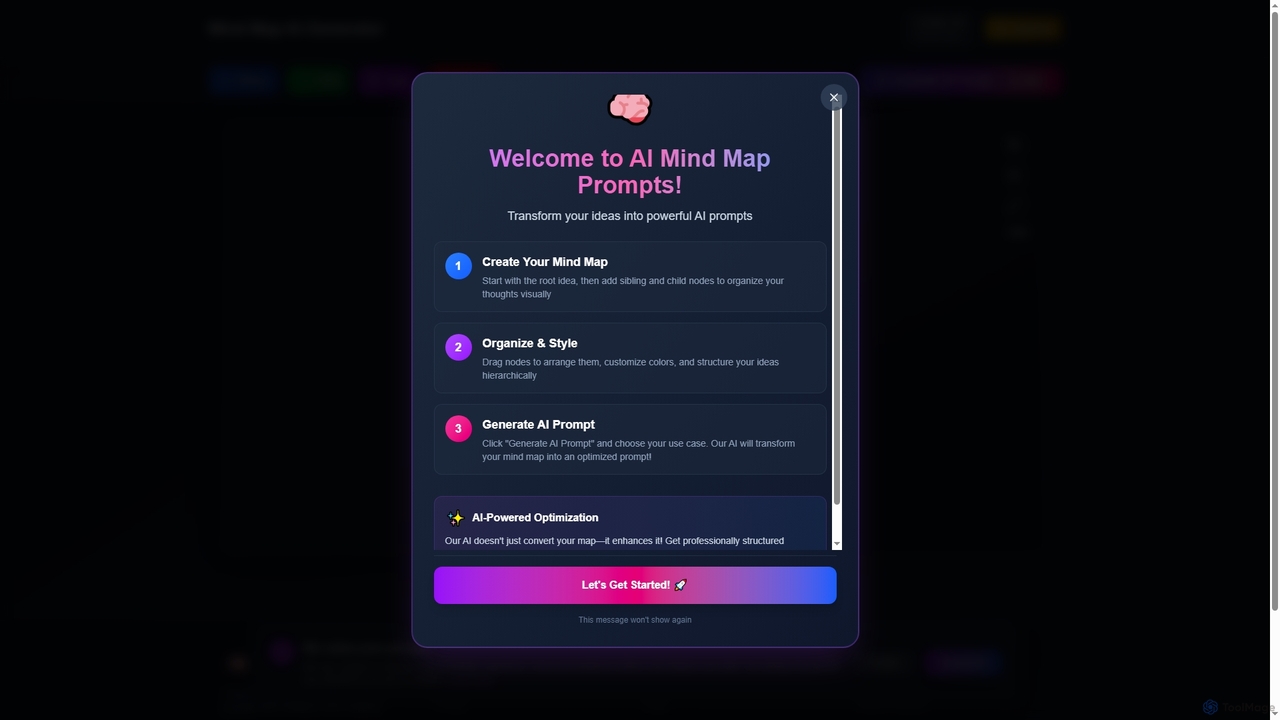
Mindprompts is an AI-powered tool that transforms your ideas from a visual mind map into optimized, structured prompts. …
Mindprompts is an AI-powered tool that transforms your ideas from a visual mind map into optimized, structured prompts. Users can create hierarchical mind maps, customize nodes, and then generate high-quality prompts tailored for various use cases like coding, research, or creative writing. It offers a simple, intuitive interface to visually organize thoughts and convert them into powerful instructions for AI models.
ChatHub
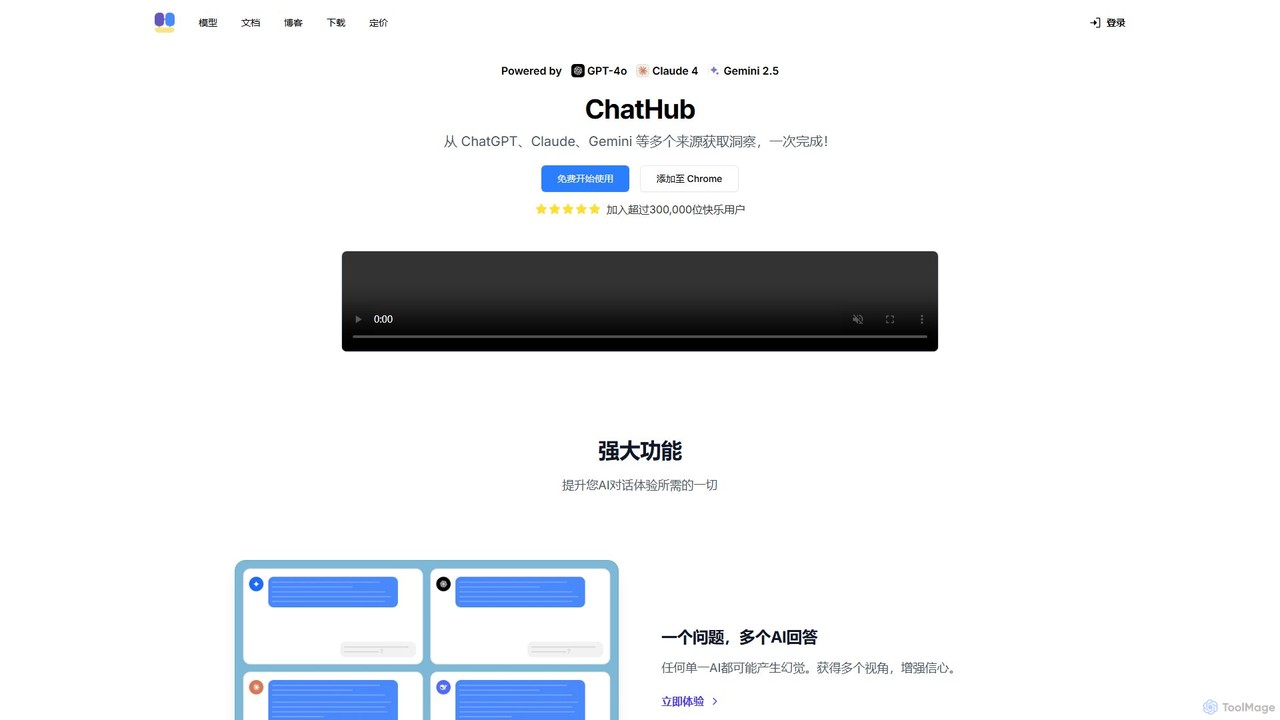
ChatHub is an all-in-one chatbot client that allows you to simultaneously use and compare responses from multiple AI …
ChatHub is an all-in-one chatbot client that allows you to simultaneously use and compare responses from multiple AI models like GPT-4o, Claude 4, and Gemini 2.5 in a single interface. It enhances productivity by providing diverse perspectives, reducing AI hallucinations, and integrating features like image generation and file analysis.
BrainChat
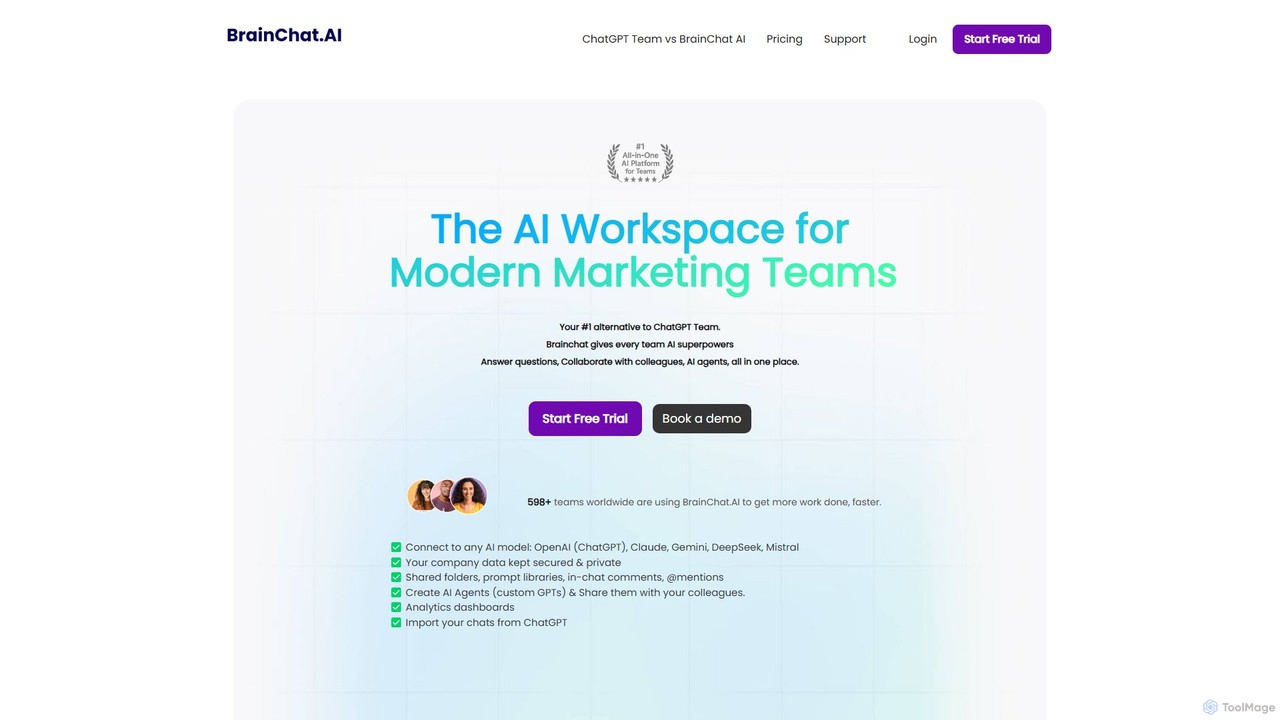
BrainChat is a collaborative AI workspace designed for modern teams, serving as a powerful alternative to ChatGPT Team. …
BrainChat is a collaborative AI workspace designed for modern teams, serving as a powerful alternative to ChatGPT Team. It centralizes access to top AI models like GPT-4o, Claude 3, and Gemini, enabling teams to create, analyze, and collaborate securely. Features include shared prompt libraries, custom AI agents, document analysis, and robust admin controls, all within a single, cost-effective platform that prioritizes data privacy.
About Ai Writing Assistant
AI Writing Assistants are sophisticated software tools designed to help users generate, refine, and optimize written content. Leveraging advanced natural language processing (NLP) and machine learning, these tools can understand context, suggest improvements, and even create drafts from prompts. They significantly enhance productivity for content creators, marketers, students, and professionals by automating repetitive writing tasks and overcoming writer's block. These assistants go beyond simple grammar checks, offering creative suggestions, style adjustments, and factual verification to produce high-quality, engaging text.
Core Features
- Content Generation: Automatically create articles, blog posts, social media updates, emails, and more from brief inputs.
- Grammar & Style Correction: Identify and correct grammatical errors, punctuation mistakes, and suggest stylistic improvements for clarity and conciseness.
- Paraphrasing & Rewriting: Rephrase existing text to improve originality, tone, or to avoid plagiarism, while maintaining the core message.
- Tone Adjustment: Modify the writing style to match specific tones, such as formal, casual, persuasive, or empathetic.
- SEO Optimization: Suggest keywords and optimize content structure to improve search engine visibility.
Use Cases
Content marketers utilize AI writing assistants to generate blog post outlines and social media captions. Students draft essays and research papers, ensuring grammatical accuracy and proper academic tone. Business professionals compose emails, reports, and presentations efficiently, saving valuable time.
How to Choose
When selecting an AI writing assistant, evaluate its feature set against your specific needs, such as long-form content generation or SEO integration. Assess the accuracy and quality of its output, ensuring it produces coherent and relevant text. Check for seamless integration with your existing workflows and compare pricing models to find a cost-effective solution that aligns with your budget and usage.
Ai Writing AssistantUse Cases
Crafting Engaging Marketing Copy for Campaigns
Marketing professionals often need to produce high volumes of compelling copy for ads, landing pages, and social media. An AI writing assistant can quickly generate multiple variations of headlines, product descriptions, and call-to-actions based on brief inputs, saving hours of brainstorming and drafting. This allows marketers to test different messages efficiently and optimize campaign performance, ensuring their content resonates with target audiences and drives conversions.
Accelerating Blog Post and Article Creation
Content creators and bloggers frequently face writer's block or time constraints when producing long-form content. AI writing assistants can generate outlines, expand on bullet points, or even draft entire sections of articles from a simple prompt. This helps in maintaining a consistent publishing schedule, exploring diverse topics, and ensuring content is well-structured and informative, significantly speeding up the content pipeline.
Streamlining Business Communication and Reporting
Business professionals spend considerable time writing emails, memos, and reports. An AI writing assistant can help compose clear, concise, and professional communications, adjust tone for different recipients, and summarize lengthy documents. This improves internal and external communication efficiency, ensuring messages are impactful and error-free, ultimately saving valuable work time and enhancing professional image.
Supporting Students in Academic Writing
Students and researchers can utilize AI writing assistants to refine essays, generate research paper outlines, or paraphrase sources to avoid plagiarism while maintaining academic integrity. The tools can check for grammatical errors, suggest vocabulary improvements, and ensure a consistent academic tone, helping students produce high-quality assignments and focus more on research and critical thinking rather than mechanics.
Creating Social Media Content at Scale
Social media managers need a constant flow of fresh, engaging content across various platforms. AI writing assistants can generate diverse captions, hashtags, and post ideas tailored to specific audiences and platforms. This enables rapid content creation, helps maintain brand voice consistency, and frees up time for strategic planning and community engagement, boosting online presence and audience interaction.
Enhancing Originality and Clarity Through Rewriting
Writers, editors, and SEO specialists often need to rephrase existing content for uniqueness, clarity, or to target different keywords. AI writing assistants excel at paraphrasing sentences, paragraphs, or even entire articles, offering multiple stylistic options. This is invaluable for avoiding duplicate content issues, refreshing old posts, or adapting content for new audiences while preserving the original meaning and improving overall readability.