Writing Best in category 5 results Book Writing AI Tool

Popular AI tools in the Book Writing field of Writing include Book by Anyone、Magic Bookifier、BookAI、Inkflow、instabooks, etc., helping you quickly improve efficiency.

Inkflow

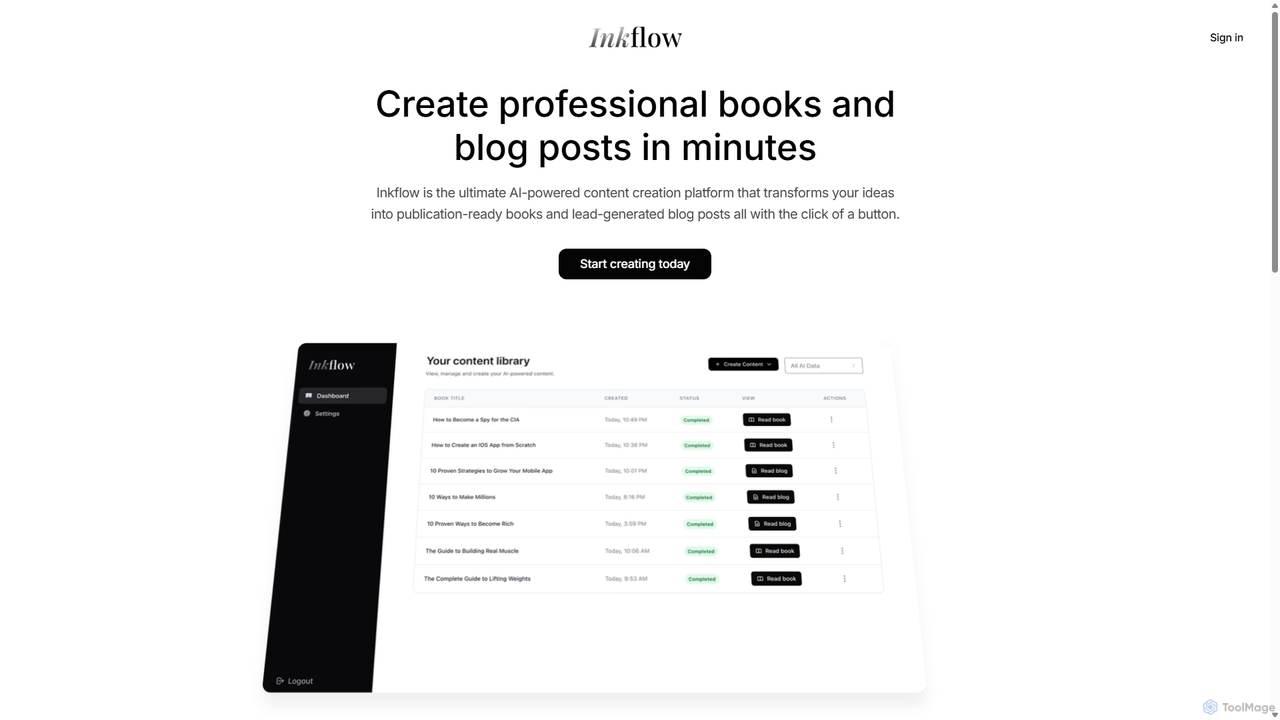
Inkflow

Inkflow is an AI-powered content generation platform designed for creating full-length books and high-quality blog posts in minutes. …

3.8K
Magic Bookifier

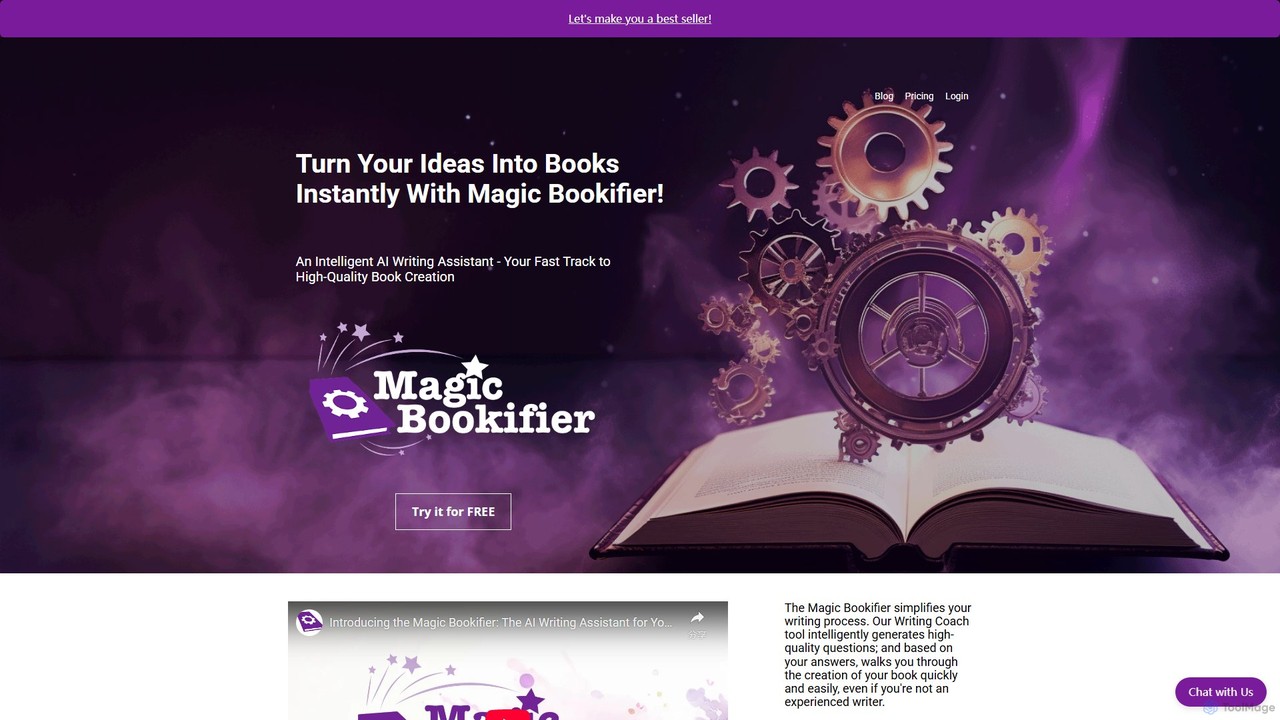
Magic Bookifier

Magic Bookifier is an AI-powered writing assistant that instantly transforms your ideas, audio files, or text into well-structured …

10.6K
BookAI

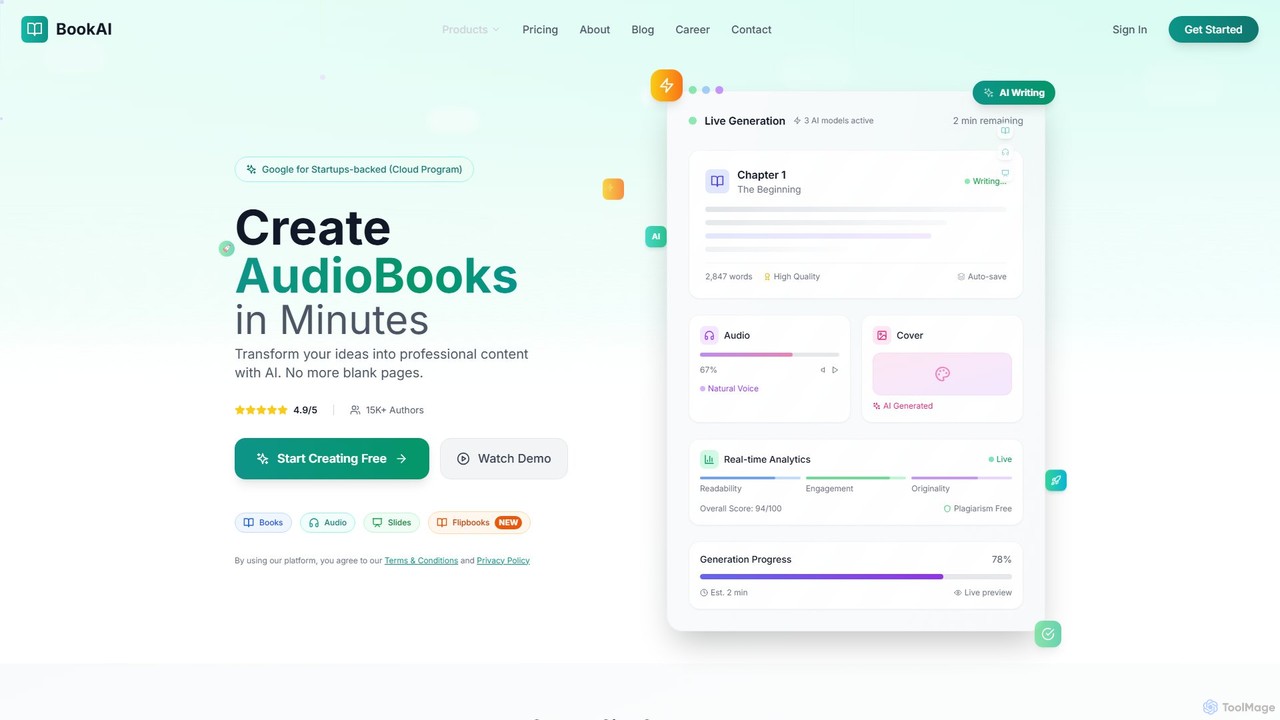
BookAI

BookAI is an AI-powered writing platform designed to help authors, marketers, and creators generate complete books, from novels …

7.1K
instabooks

instabooks

instabooks is an AI-powered book generator that allows users to create complete, well-structured books on virtually any topic …

3.1K
Book by Anyone

Book by Anyone

An AI-powered service that lets you create a hilarious, personalized book about anyone in just minutes. Answer a …

230.1K

About Book Writing

AI Book Writing tools are specialized applications designed to assist authors in creating long-form narratives and manuscripts. These tools leverage advanced language models to help with plot generation, character development, and world-building, going far beyond simple text editing. They serve as creative partners, helping to structure complex stories, overcome writer's block, and manage extensive research materials. The primary value lies in streamlining the entire book creation process, from initial concept to a structured draft.

Core Features

  • Plot & Outline Generation: Creates structured plot points, chapter outlines, and narrative arcs based on user prompts.
  • Character Development: Generates detailed character profiles, including backstories, motivations, and personality traits.
  • World-Building Assistance: Helps construct fictional settings, histories, magic systems, and societal rules.
  • Manuscript Management: Provides an organized interface for managing chapters, scenes, notes, and research materials.
  • Prose Expansion & Styling: Expands brief ideas into descriptive paragraphs or rewrites text in different tones and styles.

Use Cases

These tools are invaluable for fiction authors across genres like fantasy, sci-fi, and mystery who need to manage complex plots and worlds. Non-fiction writers also use them to structure biographies, historical accounts, or technical books, organizing research and ensuring a logical flow. They are suitable for both professional novelists seeking to accelerate their drafting process and aspiring writers needing guidance on narrative structure.

How to Choose

When selecting an AI Book Writing tool, consider the level of creative control it offers—some provide suggestions while others co-write prose. Evaluate its organizational capabilities for managing notes, characters, and timelines. Check for genre-specific features if you write in a niche like fantasy or sci-fi. Finally, review the available export formats (e.g., DOCX, EPUB) to ensure compatibility with your publishing workflow.

Book WritingUse Cases

1

Outline a Fantasy Novel Series

A fantasy author wants to plan a multi-book series with a complex magic system and political intrigue. They use an AI Book Writing tool to brainstorm core plot points for each book, ensuring a cohesive overarching narrative. The AI helps generate a detailed timeline of historical events for their world, creates profiles for warring factions, and suggests potential plot twists. This structured approach saves weeks of manual planning and helps maintain consistency across thousands of pages.

2

Develop Characters for a Mystery Novel

A mystery writer needs to create a cast of believable characters, each with a potential motive for the crime. Using an AI tool, they input basic archetypes (e.g., 'jealous business partner,' 'disinherited son'). The AI then generates detailed backstories, psychological profiles, hidden secrets, and potential alibis for each character. This allows the writer to weave a more intricate web of suspicion and ensures that each character's actions are consistent with their personality throughout the story.

3

Overcome Writer's Block by Expanding a Scene

An author is stuck writing a crucial dialogue scene. They have the basic idea: 'The hero confronts the villain.' They input this premise and a few key lines of dialogue into an AI Book Writing tool. The AI generates several versions of the scene, complete with descriptive actions, varied pacing, and nuanced dialogue options. While the author won't use the text verbatim, the generated content provides fresh perspectives and inspiration, breaking the creative logjam and allowing them to complete the chapter.

4

Structure a Non-Fiction History Book

A historian is writing a book about a complex historical period. They use an AI tool's manuscript management features to organize their research. They create digital index cards for key events, figures, and sources. The tool helps them arrange these cards into a chronological and thematic chapter outline. The AI can also summarize lengthy research papers or suggest connections between different events, helping the author build a compelling and well-supported historical narrative.

5

Rapidly Prototype Different Story Ideas

A writer has several concepts for their next novel but is unsure which is most promising. For each idea, they provide a one-paragraph summary to an AI Book Writing tool. The tool then generates a potential three-act structure, a list of main characters with brief descriptions, and a sample opening paragraph for each concept. By comparing these fleshed-out outlines, the writer can quickly assess the potential of each story and make an informed decision on which project to pursue, saving significant time in the early creative process.

6

Maintain a Consistent Tone and Style

When writing a long manuscript over several months, maintaining a consistent authorial voice can be challenging. An author can use an AI tool to analyze their existing chapters and define a specific style guide (e.g., 'formal, descriptive, third-person limited'). When drafting new chapters, they can ask the AI to review or rewrite passages to better match this established tone. This ensures a seamless reading experience and helps the book feel like a cohesive whole rather than a collection of disconnected parts.

Book WritingFrequently Asked Questions