ToolMage
Sign in

Best 3 Email Generation AI tools for Writing

Popular Email Generation AI tools in Writing include Hiaireply, Penguin Maily, and Mail Hugs, helping you work more efficiently.

Penguin Maily
Freemium

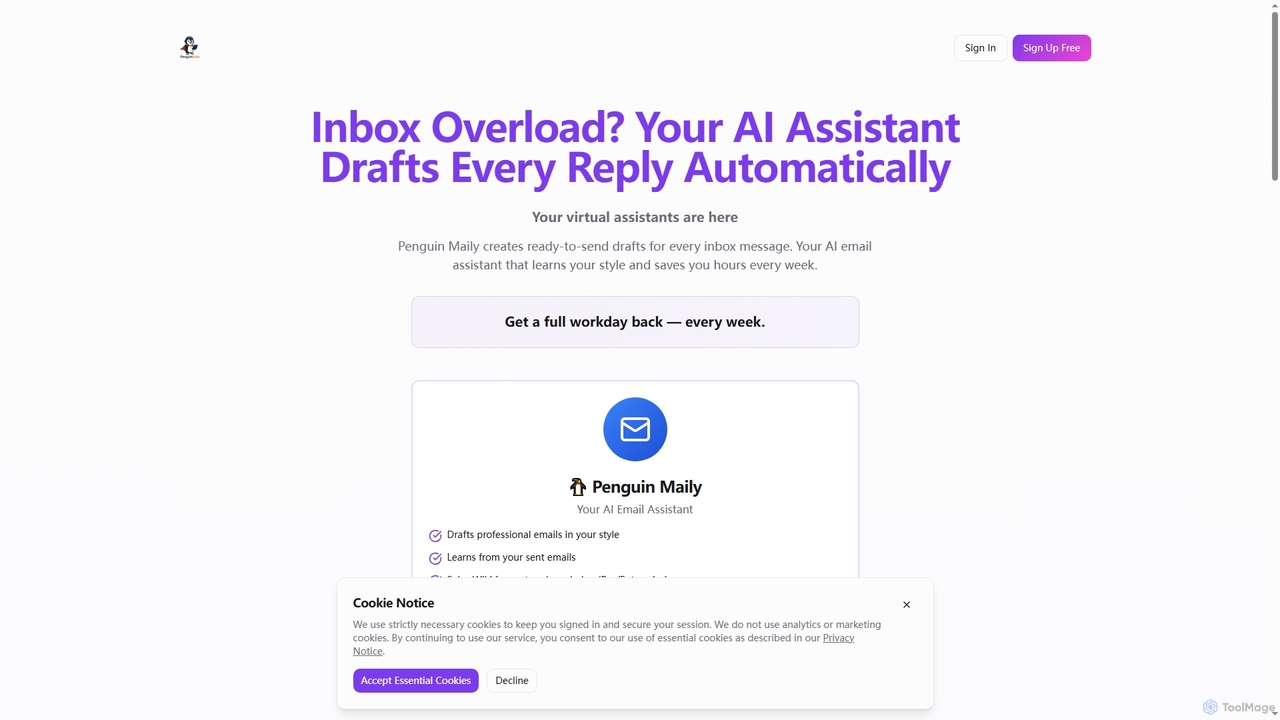
Penguin Maily

Penguin Maily is an AI-powered email assistant designed to streamline communication, generate professional email drafts in seconds, and learn your unique writing style. It helps individuals and teams save significant time weekly by automating routine email responses and enhancing productivity.

Sales Automation
Visits 4.7KFavorites 135Likes 125
Hiaireply
Freemium

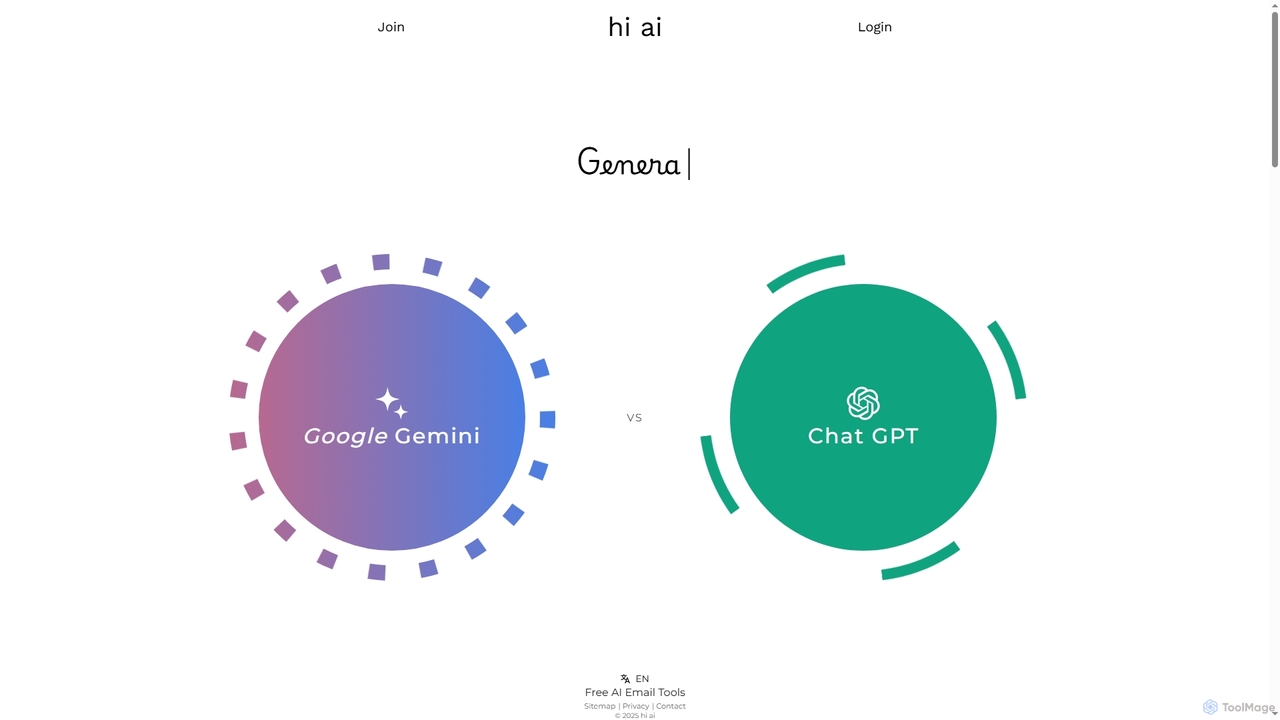
Hiaireply

Hiaireply is an AI-powered email client and generation tool designed to streamline customer service and professional communication. It leverages advanced AI models like GPT and Gemini to instantly draft personalized replies, generate emails from scratch, and even convert voice notes into professional messages. With features like a smart inbox and data synchronization, Hiaireply aims to enhance efficiency and consistency in email management.

Email Automation
Visits 4.8KFavorites 142Likes 139
Mail Hugs
Freemium

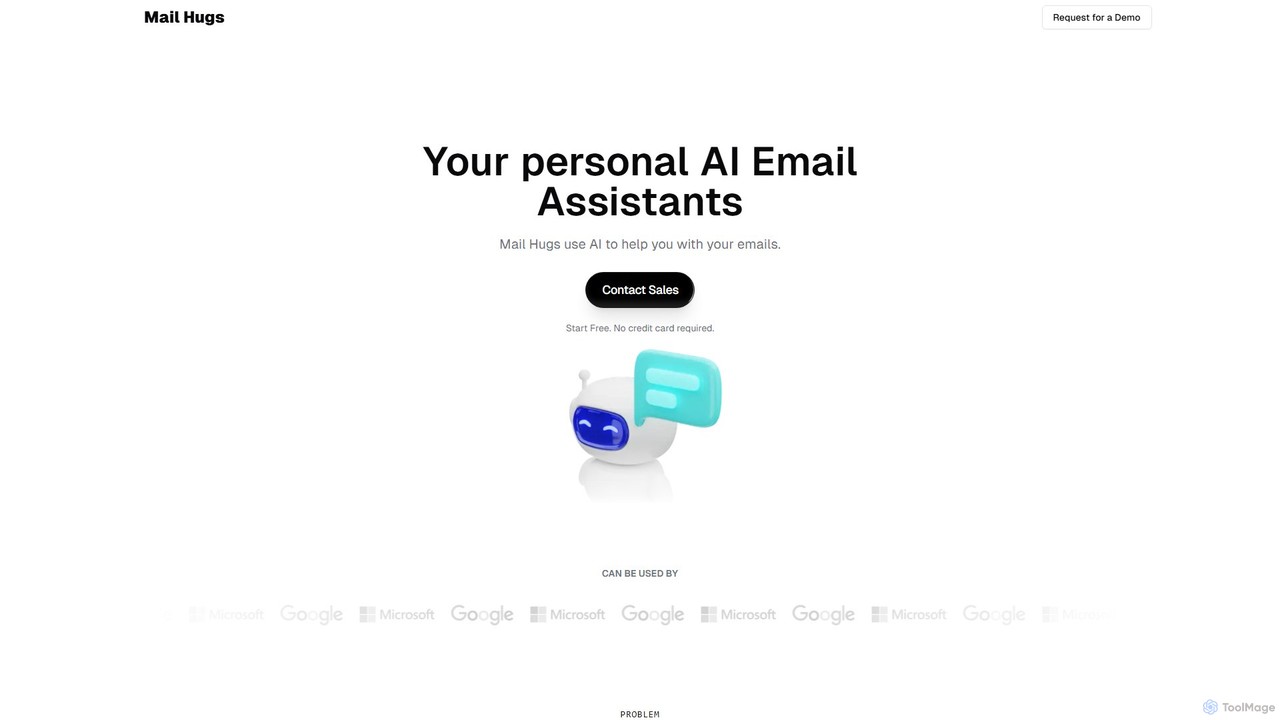
Mail Hugs

Mail Hugs is a personal AI email assistant designed to streamline your inbox management. It uses advanced AI to automatically draft responses, prioritize important messages, and summarize long email threads, helping you save time and focus on what matters most. It integrates seamlessly with Gmail and Microsoft Office.

Inbox Management
Visits 4.5KFavorites 97Likes 110

About Email Generation

Email Generation tools are a specialized category of AI writing assistants designed to automatically create, personalize, and optimize email content. Leveraging natural language processing (NLP), these tools analyze user prompts, contact data, and campaign goals to produce relevant and engaging copy for various audiences. They are widely used to accelerate sales outreach, enhance marketing campaigns, and streamline customer communication. Unlike general writing tools, they often include features specifically for email, such as tone adjustment, subject line optimization, and sequence generation.

Core Features

  • Subject Line Generation: Creates multiple compelling and high-open-rate subject lines based on email content.
  • Full Email Body Crafting: Generates complete, well-structured emails from brief prompts, bullet points, or keywords.
  • Personalization at Scale: Automatically inserts contact-specific details like names, companies, or custom fields into templates.
  • Tone and Style Adjustment: Modifies email copy to match specific tones, such as formal, casual, persuasive, or empathetic.
  • Follow-up Sequence Creation: Designs and writes a series of automated follow-up emails for sales or marketing campaigns.

Use Cases

These tools are invaluable for sales development representatives (SDRs) automating cold outreach, marketing managers crafting newsletters and drip campaigns, and customer support teams standardizing responses. HR professionals also use them for internal communications, while freelancers and job seekers leverage them for professional networking.

How to Choose

When selecting an Email Generation tool, consider its integration capabilities with your existing CRM or email client (e.g., Salesforce, Gmail). Evaluate the depth of its personalization features and the quality of the AI-generated copy. Also, assess the variety of available templates, supported languages, and whether the pricing model aligns with your usage volume.

Email Generation use cases

1

Automating Sales Outreach Campaigns

A Sales Development Representative (SDR) needs to contact over 100 new leads per week. Instead of manually writing each email, they use an AI Email Generation tool. The SDR uploads a lead list with names, companies, and job titles. They provide a prompt like 'Write a 5-email sequence to introduce our SaaS product, focusing on solving data analytics challenges.' The AI generates a personalized sequence for each lead, scheduling follow-ups automatically. This reduces manual writing time by over 90%, allowing the SDR to focus on qualified conversations and demos.

2

Enhancing Email Marketing Newsletters

A marketing manager is tasked with creating a weekly newsletter. To overcome writer's block and improve engagement, they use an AI email tool. They input the main topics for the week, such as a new blog post link and a product update. The AI generates several draft sections for the newsletter, including an engaging introduction and a compelling call-to-action. It also suggests ten different subject lines for A/B testing. This process not only speeds up content creation but also helps optimize open rates by identifying the most effective subject lines for their audience.

3

Streamlining Customer Support Responses

A customer support team receives hundreds of similar inquiries daily, such as 'How do I reset my password?' or 'Where is my order?'. To ensure fast and consistent replies, they integrate an AI Email Generation tool into their helpdesk software. When an agent opens a ticket, the AI suggests a complete, polite, and accurate response based on the ticket's content. The agent can then review, slightly edit if needed, and send the reply in seconds. This significantly reduces average response time and frees up agents to handle more complex customer issues.

4

Crafting Internal Corporate Communications

An HR manager needs to draft an email to all employees about a new remote work policy. The message must be clear, comprehensive, and maintain a professional yet supportive tone. Using an AI email tool, the manager inputs the key policy points: eligibility, communication expectations, and required equipment. The AI generates a well-structured draft that covers all points logically, suggests a clear subject line like 'Update on Our New Hybrid Work Policy,' and ensures the tone is appropriate. This saves the manager time and helps prevent misinterpretation of the new policy.

5

Generating Networking and Follow-up Emails

A freelancer meets a potential client at a conference. To make a strong impression, they need to send a timely and personalized follow-up email. Using an AI email generator, they input key details: 'Met Jane Doe from Acme Corp at the AI summit. Discussed their need for a content strategist.' The tool instantly drafts a professional email that references their conversation, reiterates the freelancer's value proposition, and suggests a specific time for a follow-up call. This allows the freelancer to quickly send a polished, context-aware email, increasing their chances of securing a new project.

6

Creating Content for Automated Drip Campaigns

A digital marketer wants to set up a 7-day onboarding email sequence for new app users. This requires a series of educational and engaging emails. They use an AI Email Generation tool and define the campaign goal: 'Onboard new users for our fitness app.' The AI generates a complete sequence, including a welcome email, a 'how-to' email for key features, an email sharing a user success story, and a final email encouraging a subscription upgrade. The marketer can then review, tweak the copy to match their brand voice, and load it into their automation platform, saving days of writing and planning.

Email Generation FAQ

What is an AI Email Generation tool?

An AI Email Generation tool is software that uses artificial intelligence to automatically write, personalize, and optimize emails. It goes beyond simple templates by using natural language processing (NLP) to understand user prompts and generate human-like text. Key functions include crafting subject lines, writing full email bodies, personalizing content for different recipients, and even creating entire follow-up sequences. These tools are designed to save time, improve communication quality, and increase the effectiveness of email campaigns.

How does an AI Email Generator differ from a general AI writer?

While both use similar core technology, AI Email Generators are highly specialized. Unlike general AI writers, they offer features tailored specifically for email communication:

  • Email-Specific Templates: Pre-built structures for sales outreach, newsletters, support tickets, etc.
  • Integrations: They often connect directly with email clients (Gmail, Outlook) and CRMs (Salesforce) to pull contact data for personalization.
  • Contextual Awareness: They are better trained on email etiquette, optimal lengths, and effective call-to-actions for different scenarios.
  • Sequence Generation: A key feature is the ability to create a series of connected follow-up emails, which general writers cannot do natively.

In short, a general AI writer is a versatile tool, while an AI Email Generator is a purpose-built solution for optimizing email workflows.

How do I choose the right AI Email Generation tool?

Choosing the right tool depends on your specific needs. Consider these key factors:

  • Primary Use Case: Are you focused on sales outreach, marketing automation, or customer support? Different tools specialize in different areas.
  • Integration Needs: Ensure the tool integrates seamlessly with your existing software, such as your CRM, email client, or helpdesk platform.
  • Personalization Capabilities: Check how well the tool can use custom data fields from your contact lists to create truly personalized messages.
  • Output Quality and Control: Test the tool to see if the generated text aligns with your brand voice. Look for features that allow you to adjust tone and style.
  • Ease of Use: A good tool should have an intuitive interface that simplifies your workflow, not complicates it.
What kind of emails can these tools generate?

AI Email Generation tools are versatile and can create a wide variety of email types across different professional contexts. Common examples include:

  • Sales: Cold outreach emails, follow-up sequences, proposal introductions, and demo request responses.
  • Marketing: Newsletters, promotional announcements, welcome series for new subscribers, and re-engagement campaigns.
  • Customer Support: Standard replies to common questions, ticket resolution summaries, and proactive support messages.
  • Internal Communications: Company-wide announcements, meeting summaries, and project update emails.
  • Personal/Professional: Networking requests, post-interview thank-you notes, and professional introductions.
Who can benefit from using AI Email Generation tools?

A wide range of professionals can benefit from these tools. Sales teams can automate and personalize outreach at scale, increasing their pipeline. Marketers can create content for campaigns faster and run more A/B tests to improve results. Customer support agents can reduce response times and ensure consistent service quality. HR and managers can streamline internal communications. Additionally, freelancers, consultants, and job seekers can use them to maintain professional and timely correspondence with clients and potential employers, saving valuable time and improving their professional image.