Scribblewise
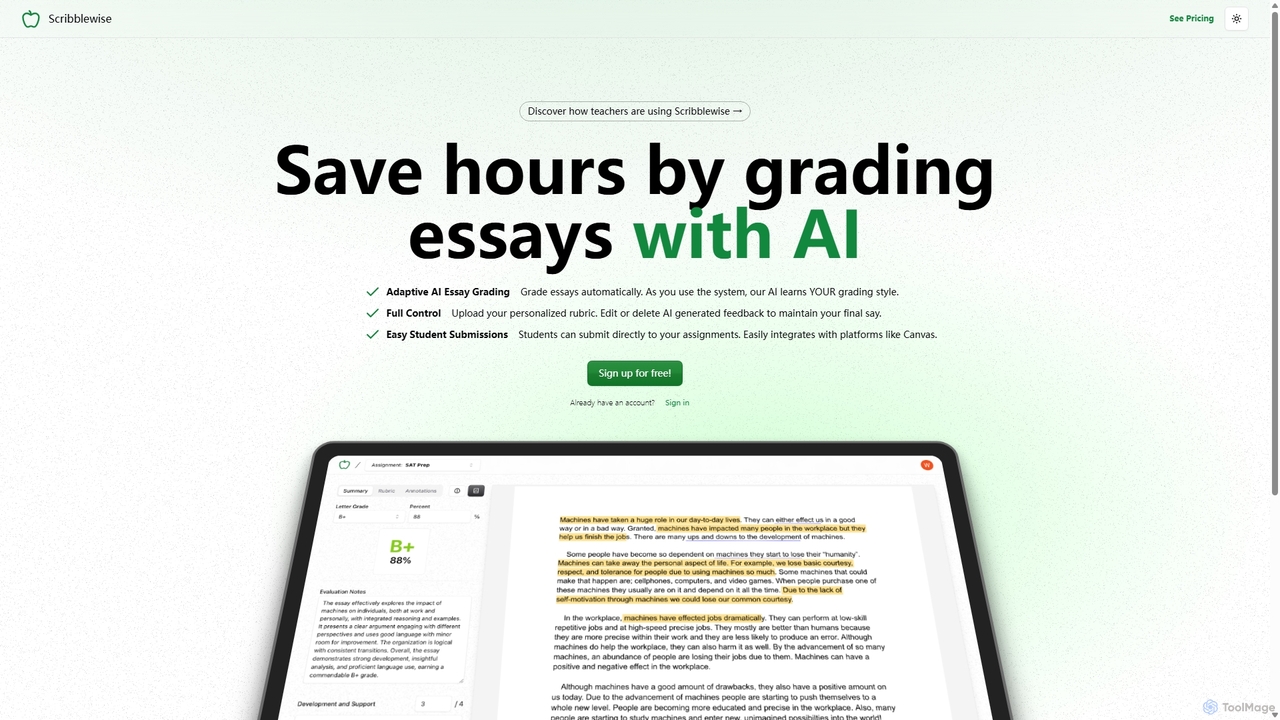
Scribblewise is an adaptive AI essay grading platform designed for educators. It saves teachers hours by automatically grading …
Scribblewise is an adaptive AI essay grading platform designed for educators. It saves teachers hours by automatically grading essays based on their personalized rubrics and unique grading style. The AI learns and adapts with each use, while teachers retain full control to edit and finalize feedback.
Tallyrus
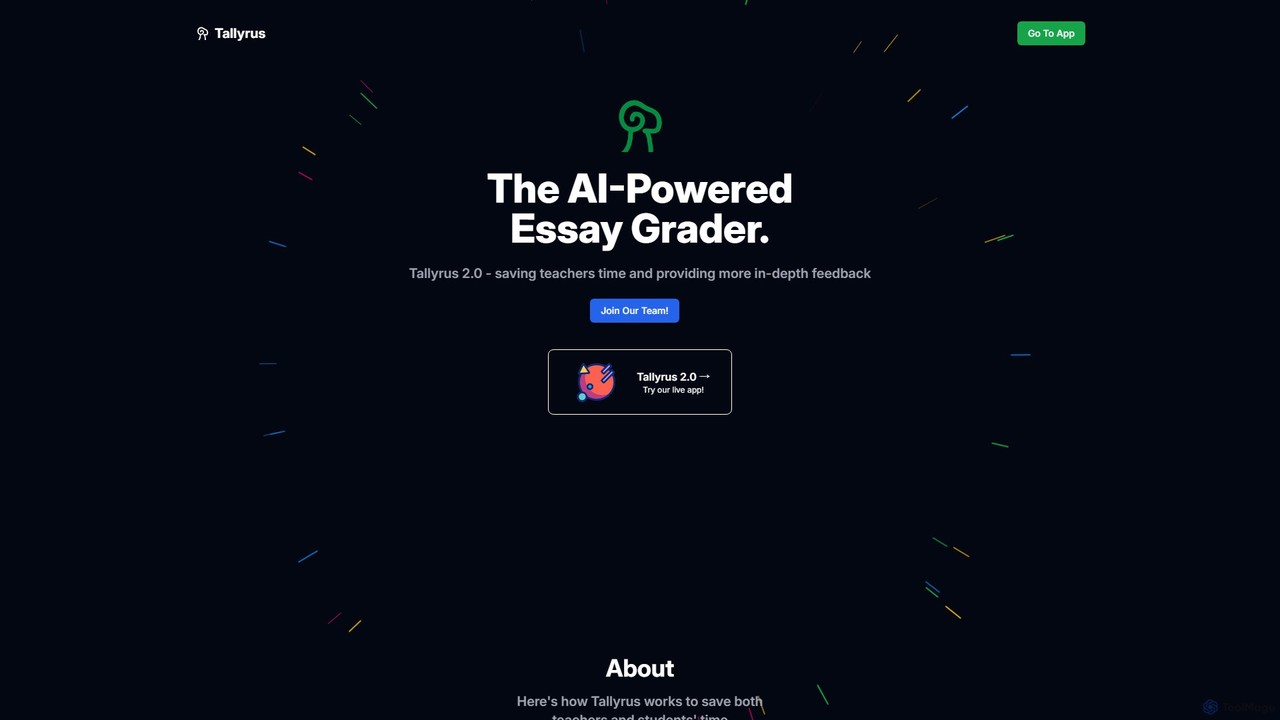
Tallyrus is an AI-powered essay grader designed for educators. It saves teachers significant time by automating the grading …
Tallyrus is an AI-powered essay grader designed for educators. It saves teachers significant time by automating the grading process, providing students with instant, personalized, and unbiased feedback. The platform also includes tools for streamlined classroom management, helping to create a more efficient and equitable learning environment.
TimelyGrader
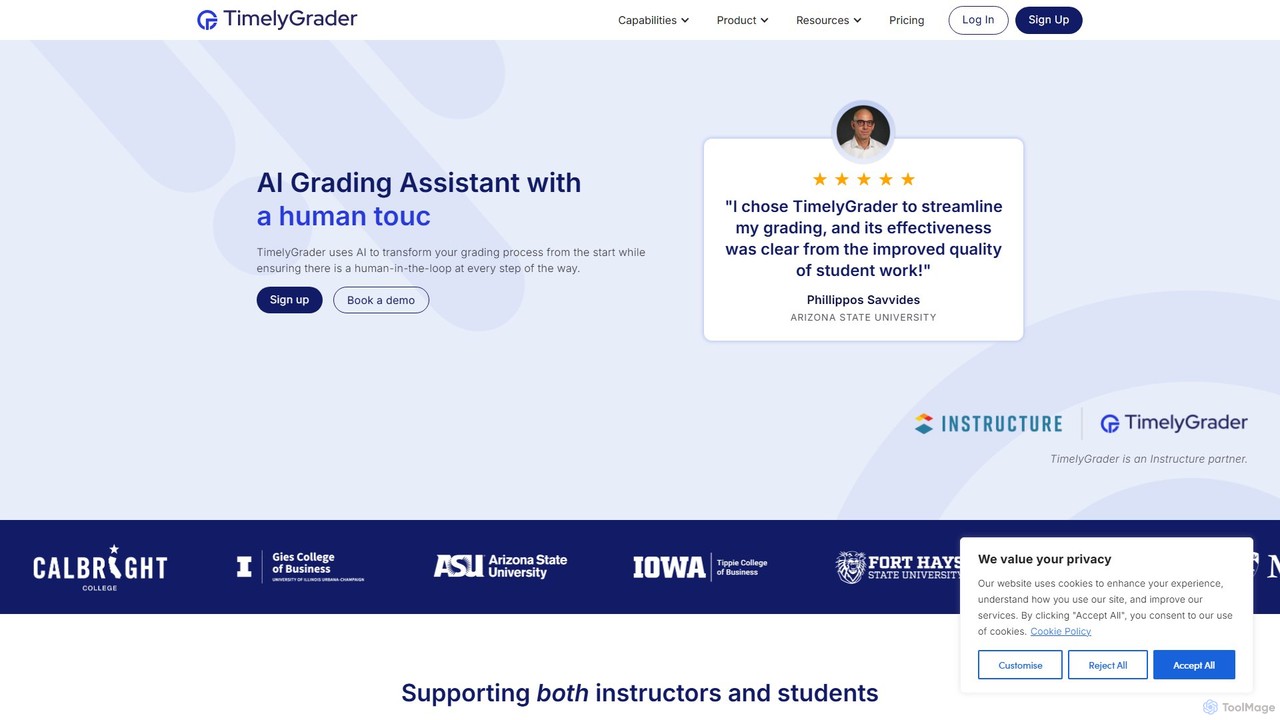
TimelyGrader is an AI-powered grading assistant designed for educators, featuring a unique 'human-in-the-loop' system. It automates the tedious …
TimelyGrader is an AI-powered grading assistant designed for educators, featuring a unique 'human-in-the-loop' system. It automates the tedious aspects of grading essays and papers against custom rubrics, providing detailed, consistent feedback while keeping the instructor in full control of the final evaluation and comments.
easymark
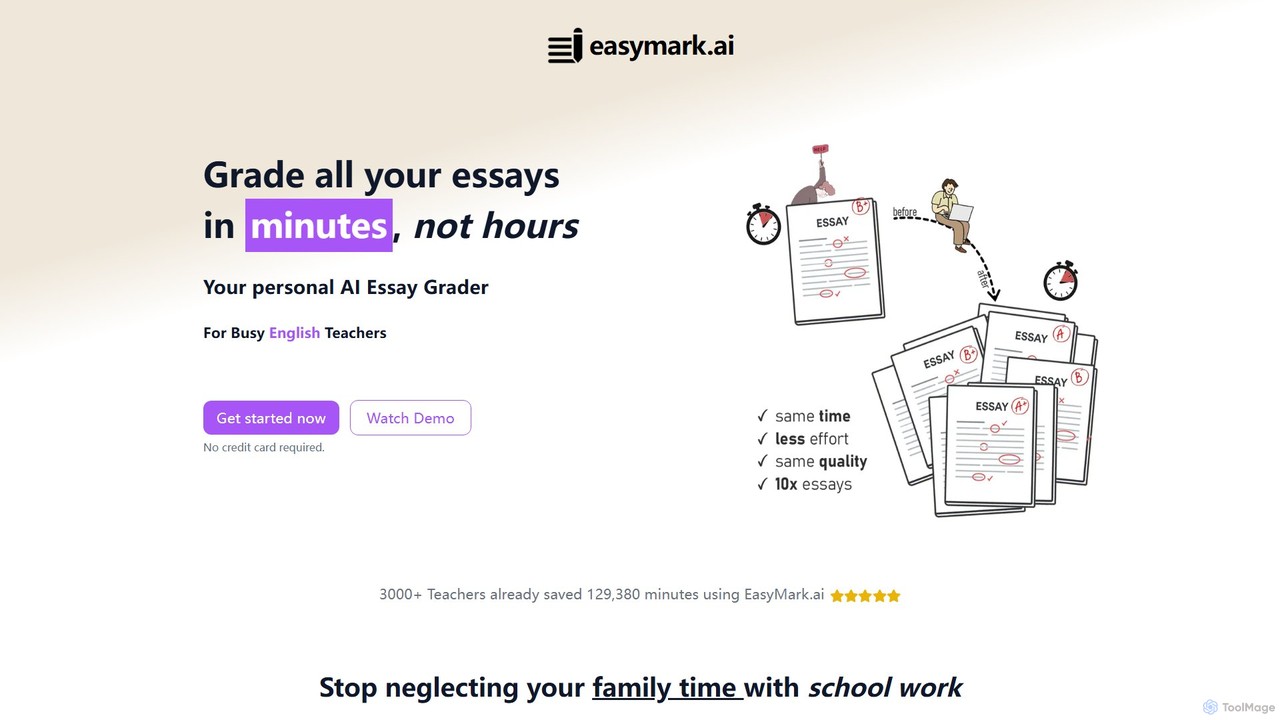
easymark is an AI-powered essay grader designed for busy English and ELA teachers. It dramatically reduces grading time, …
easymark is an AI-powered essay grader designed for busy English and ELA teachers. It dramatically reduces grading time, allowing educators to grade up to 10 times more essays. The tool provides personalized feedback, detailed error lists, and improvement suggestions based on custom rubrics, supporting various file formats like PDF and images.
Grader Good
Grader Good is an AI-powered grading tool for educators, designed to streamline the assessment process. It uses custom …
Grader Good is an AI-powered grading tool for educators, designed to streamline the assessment process. It uses custom rubrics to evaluate student papers, ensuring consistency and saving significant time. The platform is FERPA compliant, prioritizing student privacy, and supports various paper types like English essays and History reports, helping teachers focus on providing valuable feedback.
About Feedback
AI Feedback tools are a specialized category within AI writing tools designed to analyze existing written content and provide actionable suggestions for improvement. Leveraging advanced natural language processing (NLP) and machine learning, these tools go beyond basic grammar checks to evaluate style, tone, clarity, conciseness, and overall effectiveness. They empower writers, marketers, and professionals to refine their communication, ensuring their messages are impactful, error-free, and perfectly tailored to their intended audience and purpose.
Core Features
- Grammar & Spelling Correction: Identifies and suggests corrections for grammatical errors, punctuation mistakes, and spelling inaccuracies.
- Style & Tone Analysis: Evaluates the writing style and tone, offering suggestions to match specific brand voices or desired emotional impacts.
- Clarity & Conciseness Suggestions: Helps simplify complex sentences, eliminate jargon, and reduce wordiness for improved readability.
- Readability Scoring: Provides metrics and suggestions to make content easier to understand for the target audience.
- Audience-Specific Feedback: Tailors suggestions based on the intended audience, such as academic, business, creative, or casual writing.
Applicable Scenarios
These tools are invaluable for anyone looking to elevate their written communication. Content creators use them to optimize blog posts for engagement, while business professionals refine reports and emails for clarity and professionalism. Students leverage them to improve academic papers, ensuring proper structure and tone.
How to Choose
When selecting an AI feedback tool, consider its accuracy and comprehensiveness in identifying issues, the depth of its stylistic and tonal analysis, and its ability to adapt to specific writing guidelines or brand voices. Evaluate its integration capabilities with your existing writing platforms (e.g., browser extensions, word processors) and the range of languages it supports. User interface, ease of use, and pricing models are also crucial factors for long-term satisfaction.

FeedbackUse Cases
Refining Blog Posts for Engagement
Content creators and bloggers can use AI feedback tools to analyze their draft articles for readability, tone, and SEO-friendliness. By receiving suggestions on sentence structure, keyword density, and emotional impact, they can refine their posts to better engage their audience, improve search engine rankings, and ensure a consistent brand voice, ultimately leading to higher traffic and reader retention.
Improving Professional Emails and Reports
Business professionals can leverage AI feedback tools to ensure their emails, reports, and presentations are clear, concise, and professional. The tools identify awkward phrasing, passive voice, and overly complex sentences, providing suggestions that enhance clarity and impact. This helps in conveying messages effectively to colleagues, clients, and stakeholders, reducing misunderstandings and improving overall business communication efficiency.
Enhancing Academic Papers and Essays
Students and academics can utilize AI feedback tools to refine their research papers, essays, and dissertations. These tools provide critical feedback on academic tone, logical flow, citation consistency, and grammatical accuracy, helping to meet stringent academic standards. By identifying areas for improvement before submission, users can enhance the quality of their scholarly work, potentially leading to better grades and publication success.
Optimizing Marketing Copy for Conversion
Marketing professionals can employ AI feedback tools to optimize ad copy, social media posts, and website content for maximum impact and conversion. These tools analyze the persuasive power, emotional resonance, and clarity of marketing messages, suggesting improvements to headline effectiveness, call-to-action strength, and overall brand voice consistency. This leads to more compelling campaigns that resonate with target audiences and drive desired outcomes.
Streamlining Technical Documentation and User Manuals
Technical writers and developers can use AI feedback tools to ensure their documentation is clear, precise, and easy for users to understand. The tools help identify jargon, overly complex explanations, and inconsistencies in terminology, providing suggestions for simplification and improved flow. This results in higher quality user manuals, API documentation, and help articles, reducing support inquiries and enhancing user satisfaction with products and services.
Developing Creative Writing and Storytelling
Creative writers, novelists, and poets can benefit from AI feedback tools by receiving objective analysis of their narrative flow, character voice, and emotional impact. While not replacing human editors, these tools can highlight repetitive phrasing, suggest alternative word choices, and identify areas where the tone might deviate from the author's intent. This allows writers to refine their craft, experiment with different styles, and produce more polished and engaging literary works.