ToolMage
Sign in

Best 11 Grading AI tools for Education

Popular Grading AI tools in Education include EssayGrader, TimelyGrader, GradeWiz, essay_grader, GradeWrite, easymark, Edexia, Scribblewise, RubricPro, and Grader Good, helping you work more efficiently.

Scribblewise
Freemium

Scribblewise

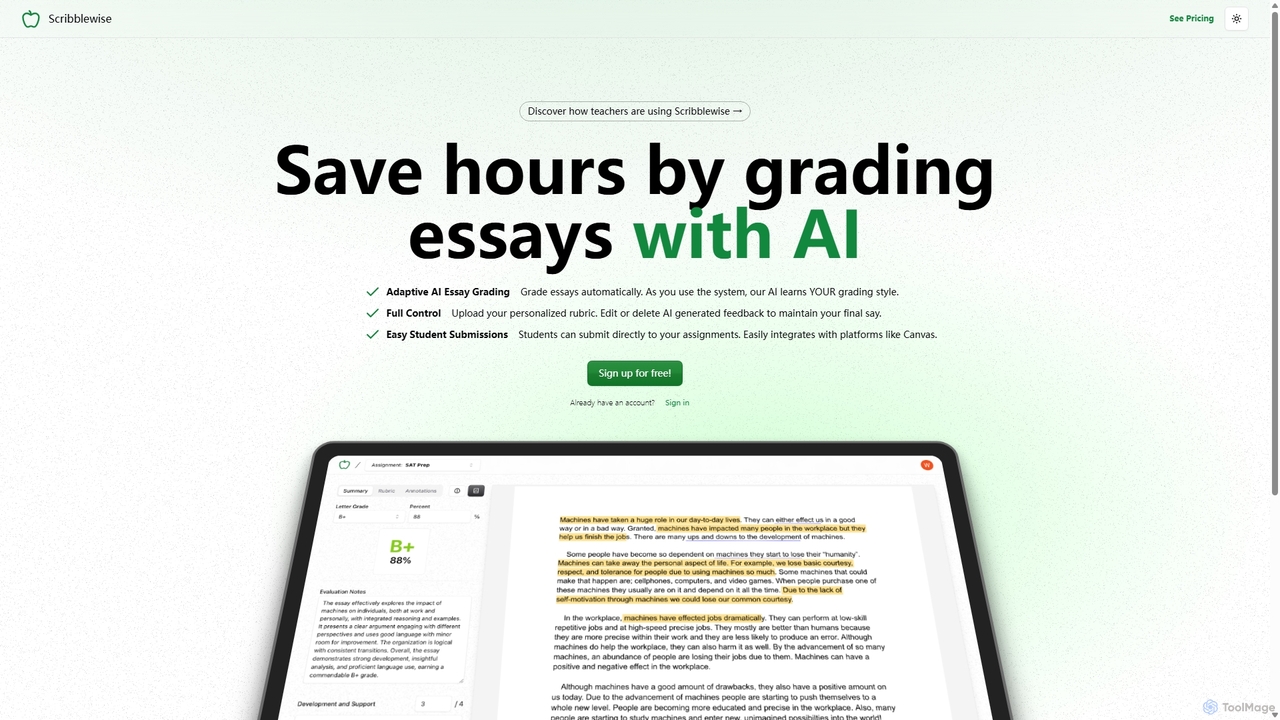
Scribblewise is an adaptive AI essay grading platform designed for educators. It saves teachers hours by automatically grading essays based on their personalized rubrics and unique grading style. The AI learns and adapts with each use, while teachers retain full control to edit and finalize feedback.

Grading
Visits 3.4KFavorites 102Likes 84
Edexia
Paid

Edexia

Edexia is a teacher-controlled AI grading assistant designed to save up to 80% of grading time. It learns from your corrections to accurately grade essays, math, diagrams, and more across all subjects. Edexia provides transparent, rubric-based feedback while ensuring robust data privacy and seamless LMS integration.

Grading
Visits 3.4KFavorites 99Likes 124
Tallyrus
Freemium

Tallyrus

Tallyrus is an AI-powered essay grader designed for educators. It saves teachers significant time by automating the grading process, providing students with instant, personalized, and unbiased feedback. The platform also includes tools for streamlined classroom management, helping to create a more efficient and equitable learning environment.

Grading
Visits 3.4KFavorites 131Likes 133
TimelyGrader
Paid

TimelyGrader

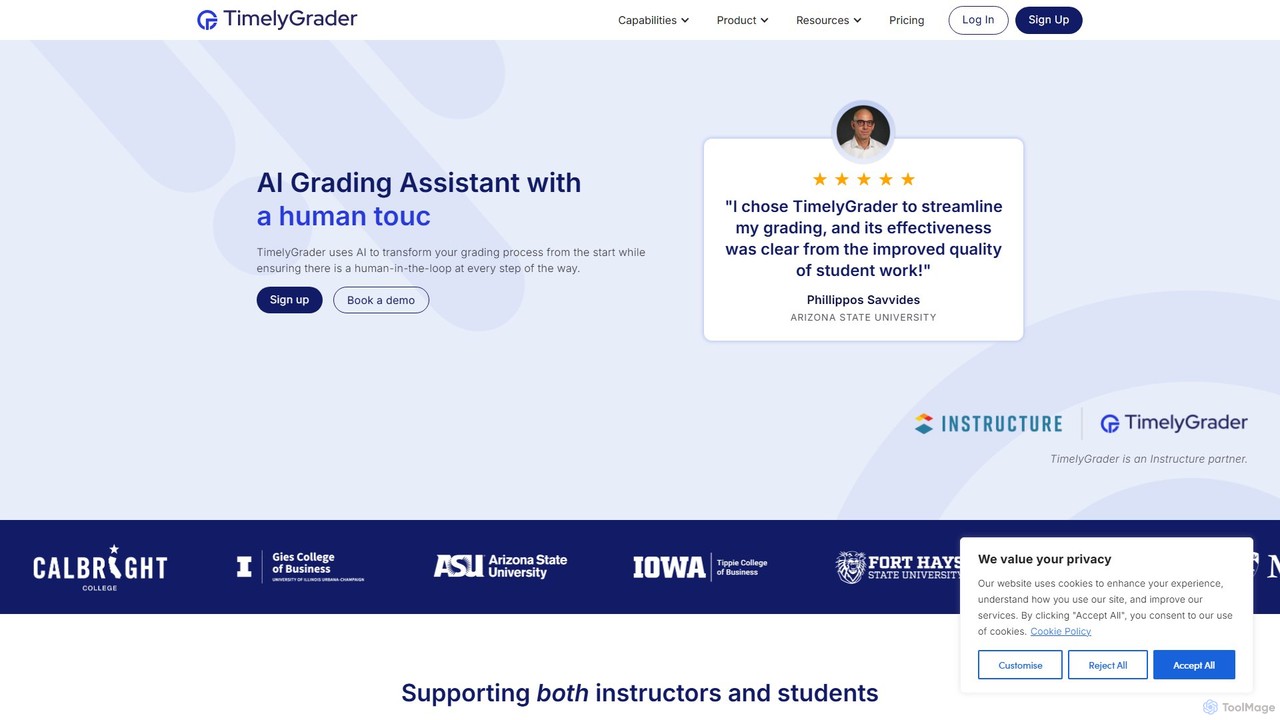
TimelyGrader is an AI-powered grading assistant designed for educators, featuring a unique 'human-in-the-loop' system. It automates the tedious aspects of grading essays and papers against custom rubrics, providing detailed, consistent feedback while keeping the instructor in full control of the final evaluation and comments.

Grading
Visits 8.9KFavorites 140Likes 114
easymark
Freemium

easymark

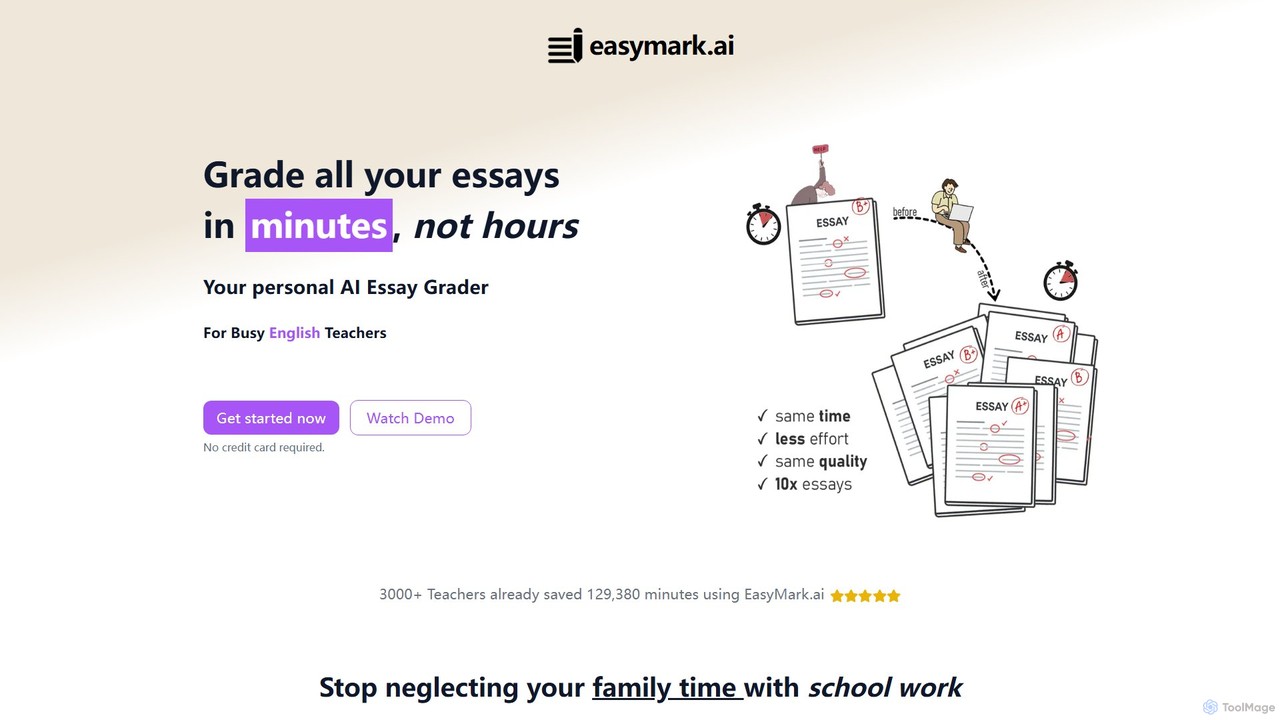
easymark is an AI-powered essay grader designed for busy English and ELA teachers. It dramatically reduces grading time, allowing educators to grade up to 10 times more essays. The tool provides personalized feedback, detailed error lists, and improvement suggestions based on custom rubrics, supporting various file formats like PDF and images.

Grading
Visits 4.1KFavorites 109Likes 114
GradeWrite
Freemium

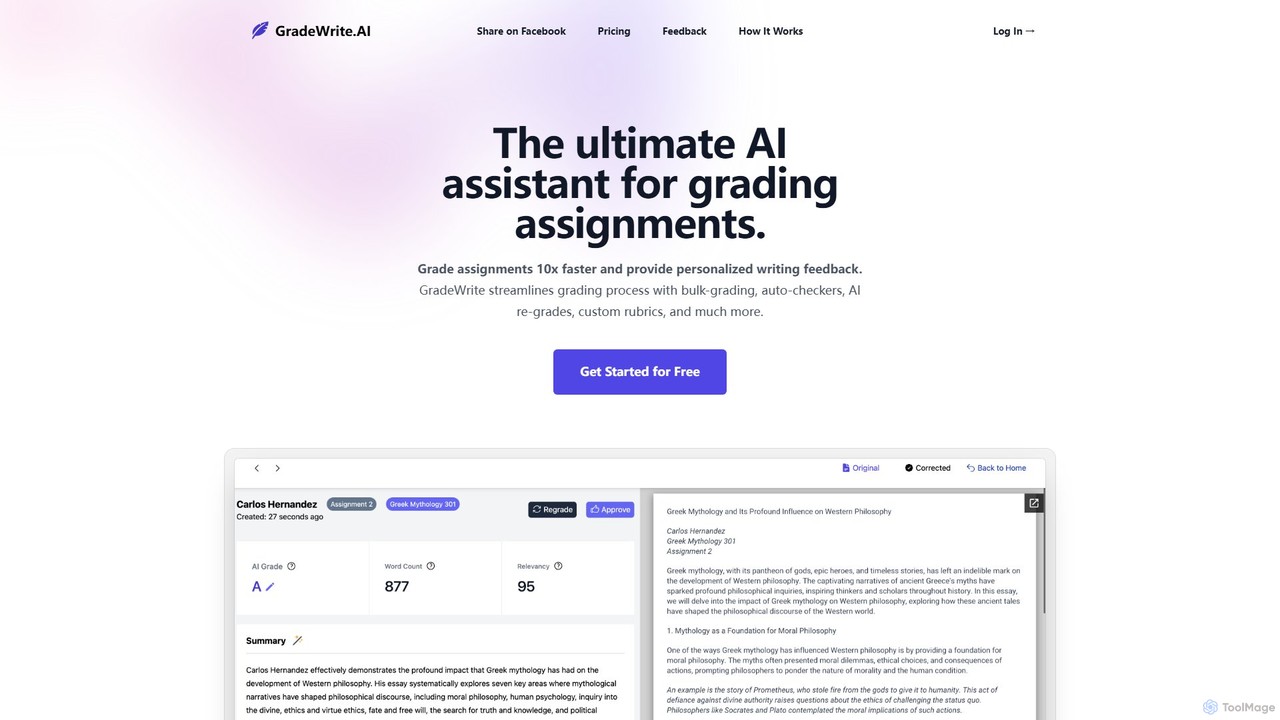
GradeWrite

GradeWrite is an AI-powered grading assistant designed for educators to grade assignments 10x faster. It provides personalized, human-like writing feedback, supports bulk uploads, and features custom rubrics, auto-checkers for word count and originality, and an interactive side-by-side grading experience to streamline the entire assessment process.

Grading
Visits 4.2KFavorites 108Likes 105
essay_grader
Freemium

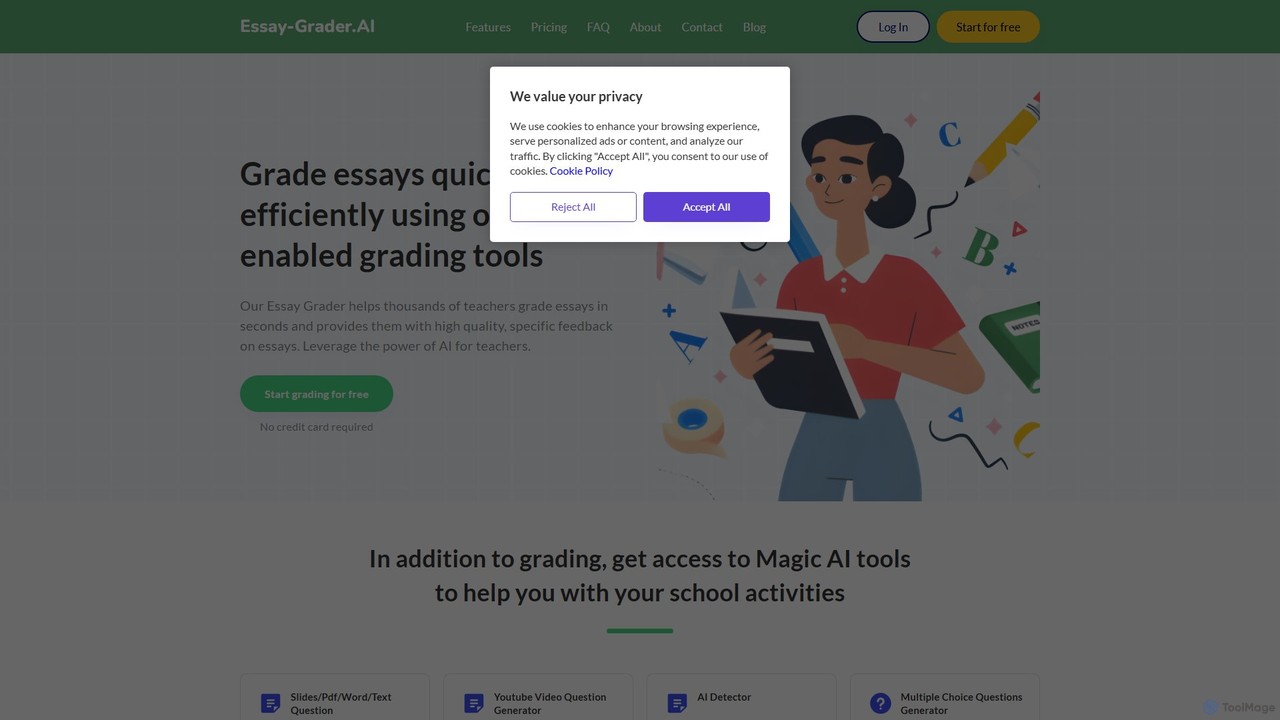
essay_grader

An AI-powered platform for educators to grade essays instantly, providing detailed, constructive feedback. It features customizable rubrics, an AI content detector, and a comprehensive suite of 'Magic School AI Tools' for lesson planning, question generation, and classroom activities, saving teachers valuable time.

Grading
Visits 5.6KFavorites 144Likes 137
RubricPro
Freemium

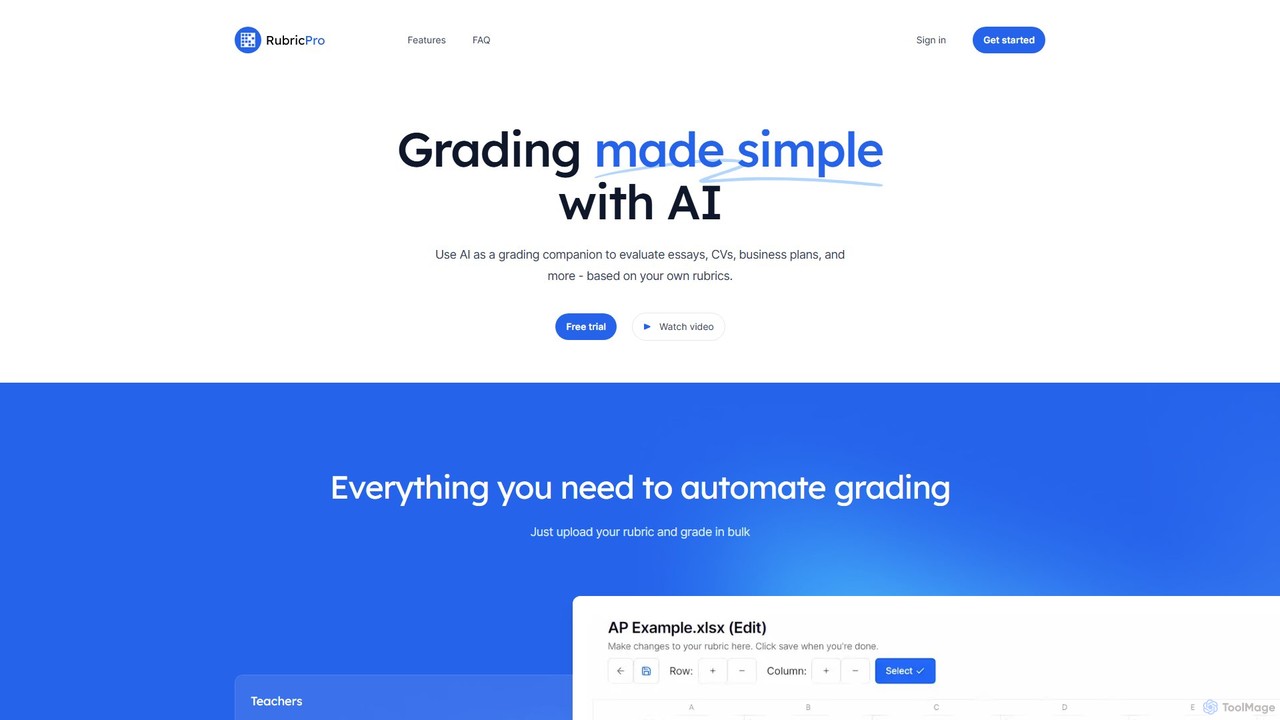
RubricPro

RubricPro is an AI-powered grading assistant that simplifies the evaluation of documents like essays, CVs, and business plans. Users can upload their own rubrics to get consistent, objective, and fast grading for documents in bulk. It's designed for teachers, students, and professionals to save time and improve feedback quality.

Grading
Visits 3.4KFavorites 92Likes 94
EssayGrader
Freemium

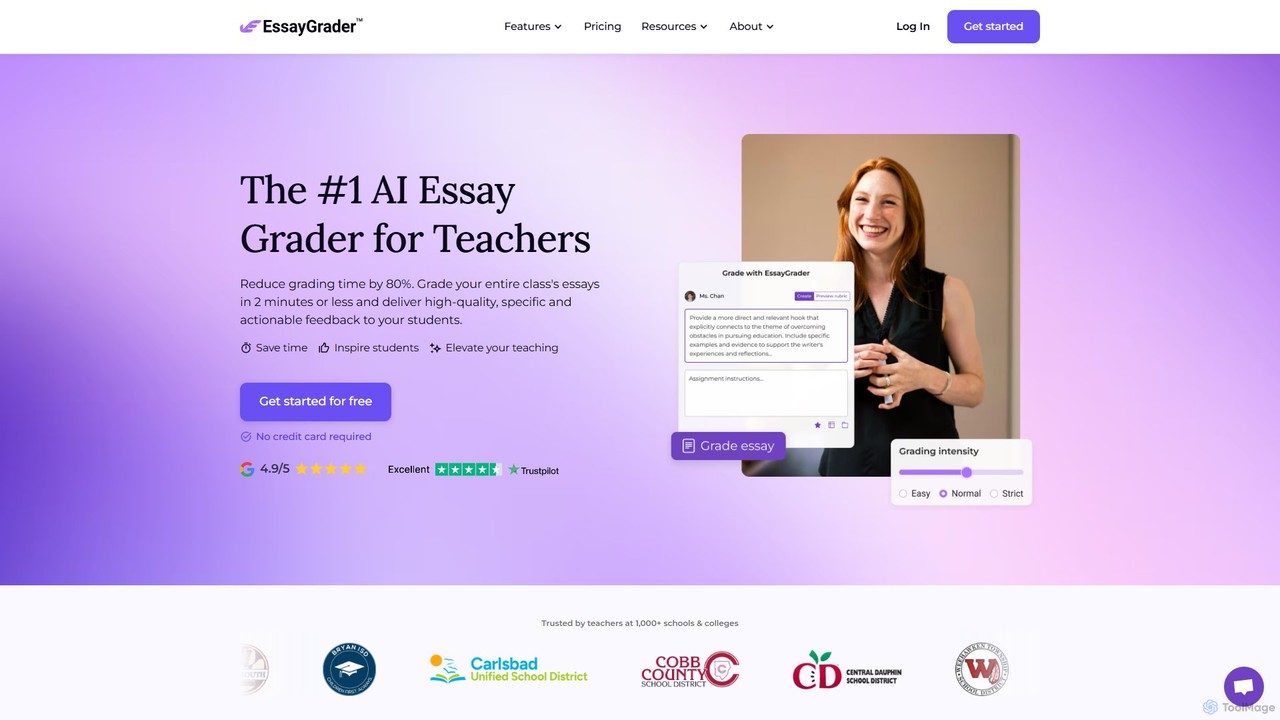
EssayGrader

EssayGrader is an AI-powered grading tool for educators that automates essay evaluation. It allows teachers to create custom rubrics, integrate with LMS like Canvas and Google Classroom, and receive instant, detailed feedback and accurate grades for student submissions, including handwritten work. It's designed to save time and streamline the grading process for teachers at all levels.

Grading
Visits 110.2KFavorites 110Likes 128
GradeWiz
Freemium

GradeWiz

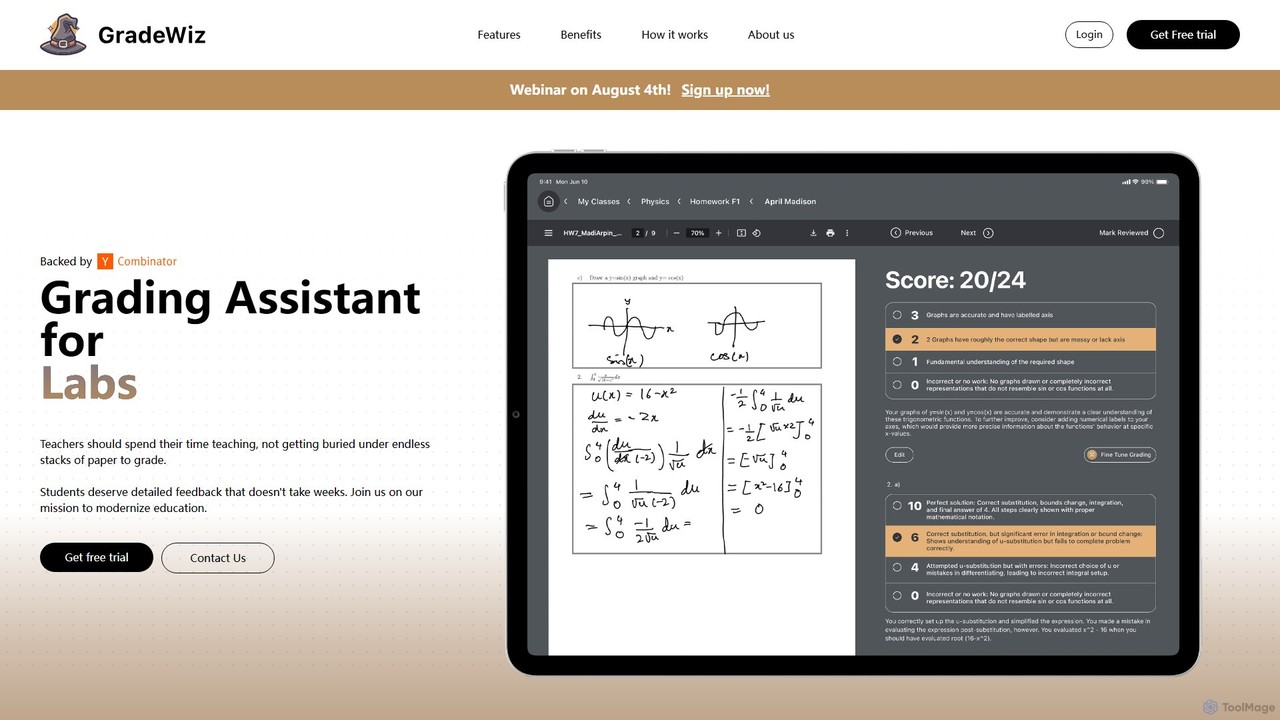
GradeWiz is an AI-powered grading assistant designed for educators. It automates the grading process, provides personalized and constructive feedback on student work, and helps teachers save significant time. By leveraging customizable rubrics, GradeWiz ensures consistent and fair evaluation across all assignments, allowing teachers to focus more on instruction and student engagement.

Grading
Visits 6KFavorites 99Likes 95
Grader Good
Freemium

Grader Good

Grader Good is an AI-powered grading tool for educators, designed to streamline the assessment process. It uses custom rubrics to evaluate student papers, ensuring consistency and saving significant time. The platform is FERPA compliant, prioritizing student privacy, and supports various paper types like English essays and History reports, helping teachers focus on providing valuable feedback.

Grading
Visits 3.4KFavorites 137Likes 127

About Grading

AI Grading tools are specialized applications that use artificial intelligence to automate the evaluation and scoring of student work. Leveraging natural language processing (NLP) and machine learning models, these tools analyze text, code, and other submissions to assess quality and accuracy against predefined criteria. They are designed to significantly reduce manual grading time for educators, provide instant and consistent feedback to learners, and offer data-driven insights into academic performance. This technology supports a wide range of subjects, from humanities essays to technical programming assignments.

Core Features

  • Automated Scoring: Automatically grades multiple-choice, short-answer, and even complex essay questions based on a rubric.
  • Feedback Generation: Provides targeted, constructive comments on grammar, structure, and content to help students improve.
  • Plagiarism Detection: Scans submissions against a vast database of sources to identify potential academic dishonesty.
  • Performance Analytics: Generates detailed reports on individual and class-wide performance, highlighting areas of strength and weakness.
  • Rubric Customization: Allows educators to define and apply specific, multi-level grading criteria for consistent evaluation.

Applicable Scenarios

These tools are widely used in academic institutions from K-12 to higher education, online course platforms like MOOCs, and corporate training departments. They are particularly effective for large-enrollment courses, standardized testing, writing-intensive classes, and coding bootcamps where timely and consistent feedback is crucial.

Selection Criteria

When choosing an AI Grading tool, consider its subject matter compatibility (e.g., STEM vs. humanities), its integration capabilities with your Learning Management System (LMS), the depth and customizability of the feedback it provides, and its data privacy and security protocols to protect student information.

Featured tool rankings

Grading use cases

1

Automating Final Exam Scoring for Large University Courses

A university professor teaching an introductory course with over 500 students uses an AI Grading tool to manage final exams. Instead of spending weeks manually grading, the professor uploads a digital version of the exam and a detailed rubric. The AI instantly scores all multiple-choice and fill-in-the-blank questions. For short-answer questions, it uses semantic analysis to compare student answers to ideal responses. This reduces the grading workload by over 90%, ensures every student is graded by the same standard, and allows final grades to be released much faster.

2

Providing Instant Feedback on Writing Assignments

A high school English teacher assigns weekly essays to improve students' writing skills. By using an AI Grading tool, students can submit their drafts and receive immediate feedback on grammar, spelling, sentence structure, and style. The AI highlights specific areas for improvement and suggests revisions. This allows students to iterate on their work before the final submission. The teacher can then focus on higher-level aspects like argumentation and critical thinking, rather than spending hours on basic proofreading.

3

Standardizing Coding Assignment Evaluation

Instructors at a coding bootcamp need a consistent way to grade hundreds of programming projects. They integrate an AI Grading tool into their platform. The tool automatically runs a suite of predefined tests on each student's code to check for functionality and correctness. It also analyzes code quality, checking for style consistency, efficiency, and documentation. The AI provides a detailed report and a score, ensuring that every project is evaluated against the exact same objective criteria, removing potential human bias.

4

Assessing Language Proficiency in Online Courses

An online language learning platform uses an AI tool to grade spoken and written proficiency tests. For written exams, the AI assesses grammar, vocabulary usage, and coherence. For spoken tests, it analyzes pronunciation, fluency, and intonation from audio recordings. This allows the platform to offer scalable, on-demand certification to thousands of users worldwide. The AI provides a consistent scoring model that is difficult to achieve with a large, distributed team of human assessors, ensuring fairness for all test-takers.

5

Facilitating Peer Review in Collaborative Projects

In a university business course, students work in teams and must review each other's contributions. The instructor uses an AI Grading tool to manage this peer review process. Students submit their feedback through the tool, which uses sentiment analysis to flag overly harsh or unconstructive comments. The AI also provides a preliminary grade based on the aggregated peer feedback and the instructor's rubric. This streamlines the process, encourages more thoughtful feedback, and gives the instructor a summarized, data-backed starting point for their final evaluation.

6

Assessing Employee Knowledge in Corporate Training

A large corporation's HR department implements a new compliance training module for all employees. To verify comprehension, they use an AI Grading tool to score the end-of-module assessments, which include scenario-based short-answer questions. The AI evaluates whether key concepts from the training are correctly applied in the employees' responses. This provides a scalable and objective way to certify thousands of employees, track completion rates, and identify knowledge gaps across the organization that may require further training.

Grading FAQ

What are AI Grading tools?

AI Grading tools are software applications that use machine learning and natural language processing (NLP) to automate the evaluation of student work. Unlike simple auto-checkers for multiple-choice questions, they can analyze more complex submissions like essays, reports, and code. Their primary functions are to score assignments against a rubric, provide targeted feedback, identify potential plagiarism, and generate performance analytics for educators.

How do I choose the right AI Grading tool?

To choose the right tool, consider these factors:

  • Subject Compatibility: Ensure the tool is optimized for your subject, whether it's humanities (essay analysis), STEM (mathematical formulas), or computer science (code execution).
  • LMS Integration: Check if it integrates smoothly with your existing Learning Management System (e.g., Canvas, Moodle, Blackboard) for seamless workflow.
  • Feedback Quality: Evaluate the depth and customizability of the feedback. Can you tailor it to your specific learning objectives?
  • Data Security: Verify that the tool complies with data privacy regulations like FERPA or GDPR to protect student data.
What's the difference between AI Grading and plagiarism checkers?

A plagiarism checker is a tool with a single function: to compare a submitted text against a database of existing content to detect similarities. An AI Grading tool is a much broader platform. While it often includes plagiarism detection as a feature, its primary purpose is to evaluate the quality of the work itself. It assesses factors like argumentation, structure, accuracy, and adherence to a rubric, providing a comprehensive grade and constructive feedback, which a simple plagiarism checker does not do.

Can AI accurately grade complex assignments like essays?

Yes, modern AI Grading tools have become highly proficient at grading essays and other complex assignments. They use advanced NLP models trained on vast datasets of academic texts. While they excel at assessing objective criteria like grammar, structure, and rubric adherence, they are not intended to fully replace human judgment on subjective elements like creativity or nuanced argumentation. Most educators use AI as a powerful assistant to handle the initial, time-consuming aspects of grading, allowing them to focus their expertise on higher-order feedback.

Who benefits most from using AI Grading tools?

Several groups benefit significantly:

  • Educators: They save a substantial amount of time on grading, allowing them to focus more on teaching, lesson planning, and providing personalized support to students.
  • Students: They receive immediate, consistent, and detailed feedback, enabling them to learn from their mistakes and improve their work more quickly.
  • Institutions: Schools and universities can ensure grading consistency across large courses, gather valuable performance data, and improve overall educational efficiency.
  • Corporate Trainers: They can efficiently assess the knowledge of a large workforce, ensuring compliance and identifying training needs at scale.