Writing Best in category 2 results Legal Writing AI Tool

Popular AI tools in the Legal Writing field of Writing include Law.co、CreateDraft, etc., helping you quickly improve efficiency.

Law.co

Law.co

Law.co is an AI-powered legal platform designed for lawyers and law firms. It automates document review, assists in …

5.8K
CreateDraft

CreateDraft

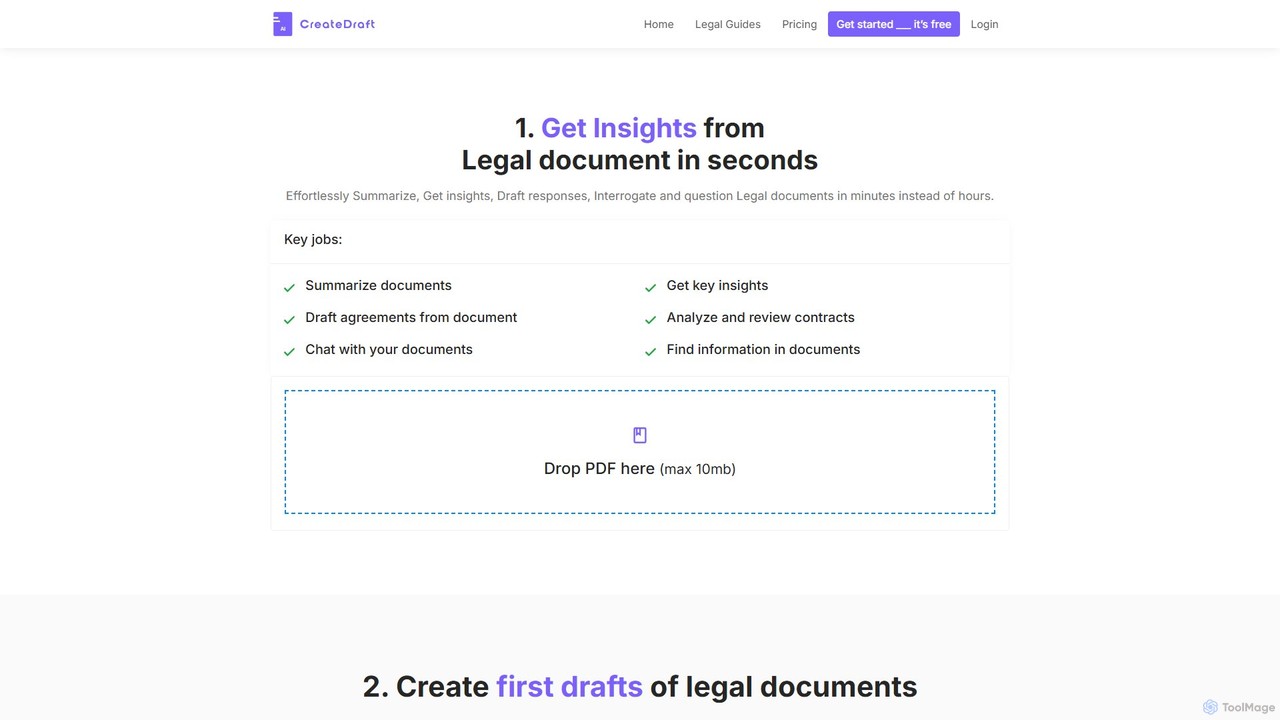
An AI-powered legal assistant that drafts, analyzes, and provides insights from legal documents in seconds. Features over 340 …

3.2K

About Legal Writing

AI Legal Writing tools are specialized platforms designed to assist lawyers, paralegals, and legal professionals in drafting, analyzing, and managing legal documents. These tools leverage large language models trained on vast legal corpora, including case law and statutes, to understand complex legal terminology and structures. They significantly enhance accuracy, ensure compliance with specific legal standards, and accelerate the entire document lifecycle. Unlike general writing assistants, they focus on precision, risk identification, and adherence to jurisdictional requirements.

Core Features

  • Contract Analysis & Drafting: Suggests relevant clauses, identifies potential risks or ambiguous language, and compares document versions to highlight changes.
  • Legal Research Assistance: Summarizes case law, finds relevant precedents, and extracts key arguments from lengthy legal texts to support legal reasoning.
  • Automated Citation & Formatting: Automatically formats citations according to specific legal standards (e.g., Bluebook, OSCOLA) and ensures document structure meets court requirements.
  • Compliance Checking: Scans documents to verify adherence to specific regulations, internal policies, or jurisdictional laws.
  • Document Automation: Generates standardized legal documents such as NDAs, employment agreements, or corporate resolutions from templates and user inputs.

Use Cases

These tools are primarily used in law firms, corporate legal departments, and by solo practitioners. Common applications include accelerating due diligence by analyzing large volumes of contracts, drafting consistent and compliant motions or briefs for litigation, and streamlining the creation of transactional agreements.

How to Choose

When selecting an AI Legal Writing tool, consider its jurisdictional coverage and specialization in your area of law (e.g., corporate, intellectual property). Evaluate its data security and confidentiality protocols, as client data is highly sensitive. Also, check for integration capabilities with your existing case management or legal research software and assess the quality of its legal language model.

Legal WritingUse Cases

1

Accelerate Contract Review and Redlining

An in-house counsel at a technology company receives a 30-page Master Service Agreement (MSA) from a new vendor. Instead of spending hours manually reading and comparing it to their standard template, they upload both documents to an AI Legal Writing tool. The AI instantly performs a comparison, highlighting clauses that deviate from the company's preferred terms, identifying missing clauses (like data privacy compliance), and flagging potentially high-risk language. This reduces the initial review time from over two hours to under 20 minutes, allowing the counsel to focus their expertise on negotiating the critical, flagged issues.

2

Drafting Initial Litigation Documents

A junior associate at a law firm is tasked with drafting a motion to dismiss. Using an AI Legal Writing tool, they input the case facts and the relevant jurisdiction. The tool generates a structured draft of the motion, complete with sections for the statement of facts, legal standard, and arguments. It also suggests relevant case law and statutes to support each argument, providing summaries for quick review. This AI-generated first draft serves as a robust starting point, saving the associate hours of foundational research and structuring, allowing them to focus on refining the legal arguments and tailoring the motion to the specific nuances of the case.

3

Automating Due Diligence Reporting

During a merger and acquisition (M&A) deal, a legal team must review hundreds of contracts from the target company. They use an AI tool to automatically scan and categorize these agreements. The AI extracts key data points like contract value, renewal dates, and change of control clauses. It then generates a summary report that flags non-standard terms, potential liabilities, and any contracts that require immediate attention. This automated process transforms due diligence from a weeks-long manual slog into a streamlined, data-driven analysis, enabling the team to provide faster, more accurate advice to their client.

4

Ensuring Consistent Citation Formatting

A paralegal is finalizing a 100-page appellate brief with over 200 citations. Manually checking each citation for compliance with the required style (e.g., Bluebook) is tedious and prone to error. They use an AI legal writing assistant to scan the entire document. The tool automatically identifies all citations, checks them against the correct format, and flags any inconsistencies or errors. With a single click, it can correct formatting, add missing information like page numbers or case reporters, and ensure uniformity throughout the brief. This guarantees compliance with court rules and frees up the paralegal's time for more substantive tasks.

5

Generating Standardized Legal Agreements

A solo practitioner needs to create a Non-Disclosure Agreement (NDA) for a new client. Instead of searching for a template online, they use their AI legal writing software. They answer a short questionnaire about the parties involved, the nature of the confidential information, and the jurisdiction. The tool then instantly generates a customized, compliant NDA. It also offers alternative clauses for different scenarios, such as a mutual or one-way NDA, allowing the practitioner to create a tailored, professional-grade document in minutes, ensuring their client is protected quickly and efficiently.

6

Summarizing Complex Legal Rulings

A corporate legal department needs to understand the implications of a new, lengthy Supreme Court ruling on their business operations. A lawyer uses an AI tool to process the entire 80-page ruling. Within minutes, the AI provides a concise summary, identifies the key legal principles established, outlines the majority and dissenting opinions, and extracts the most critical passages. This allows the legal team to quickly grasp the core aspects of the ruling and begin analyzing its specific impact on the company, without first needing to spend a full day reading and dissecting the original text.

Legal WritingFrequently Asked Questions