Writing Best in category 4 results Poetry AI Tool

Popular AI tools in the Poetry field of Writing include PoemGenerator.com、aipoemgenerator、poemgenerator.io、AIEpics, etc., helping you quickly improve efficiency.

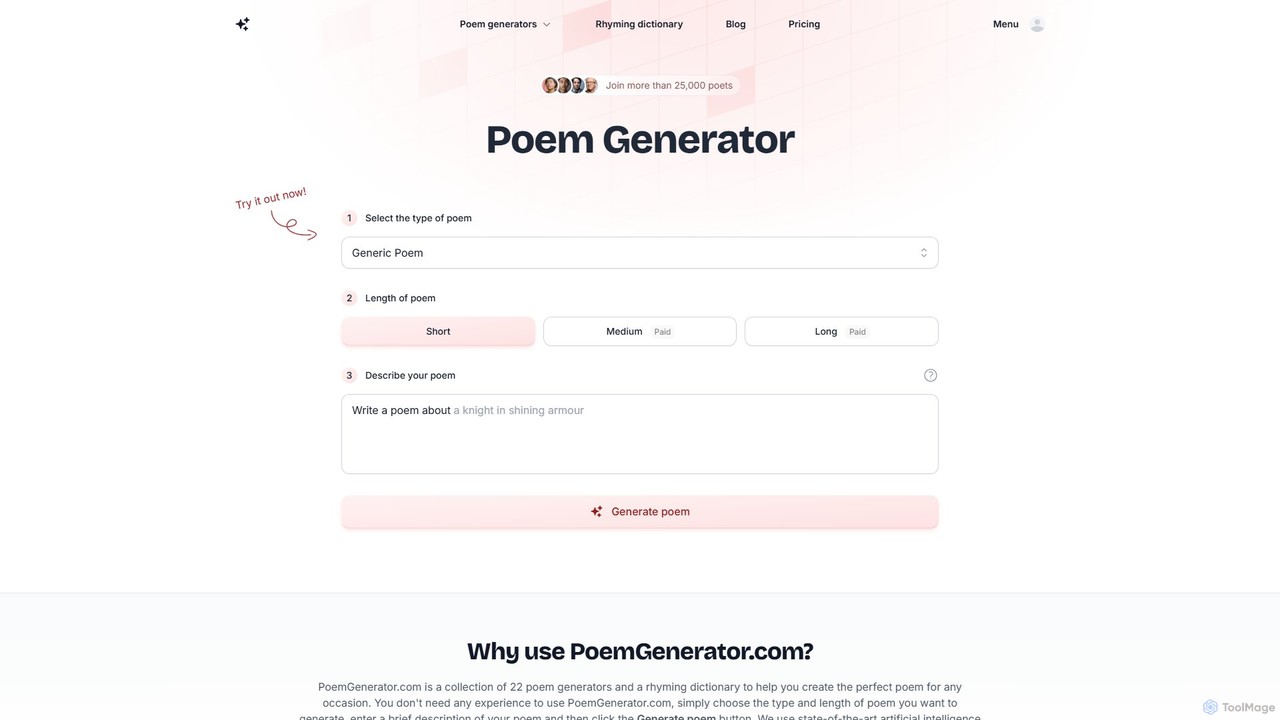
PoemGenerator.com

PoemGenerator.com

An AI-powered platform offering 22 distinct poem generators and a rhyming dictionary. Instantly create various poetic forms, from …

25.0K
Free
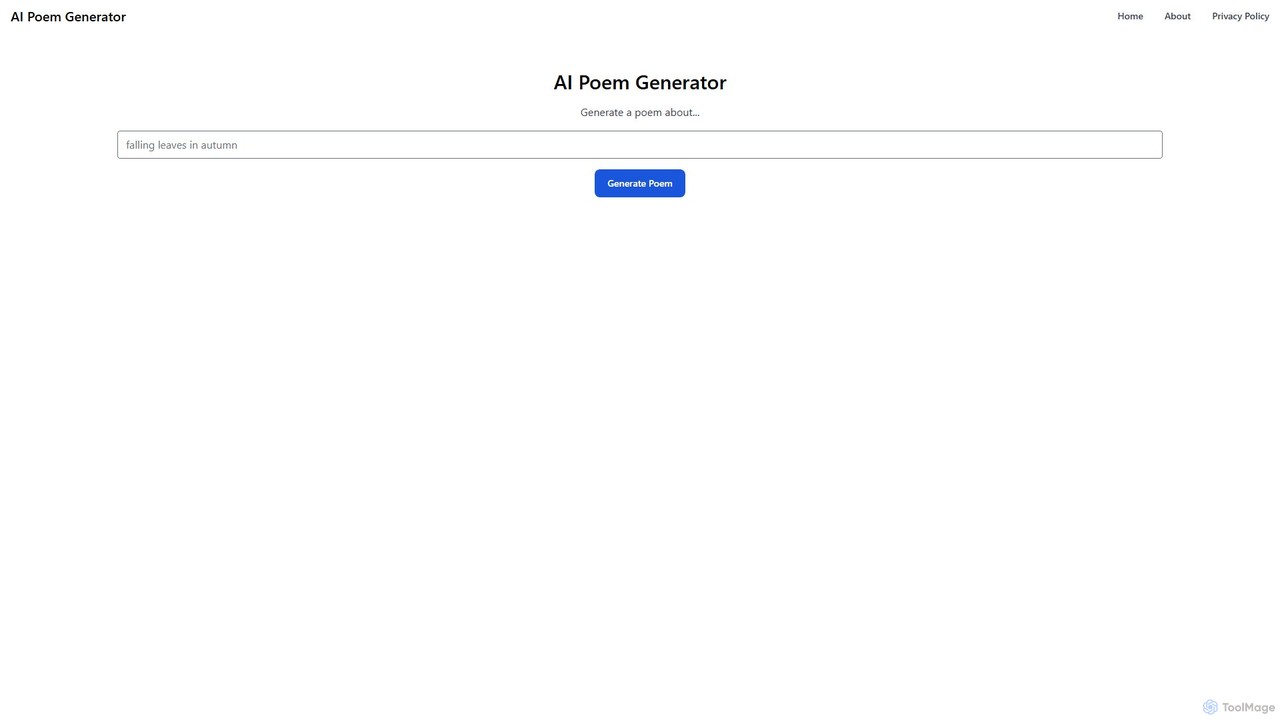
aipoemgenerator

aipoemgenerator

A free, AI-powered online tool that instantly generates rhyming poems from a simple text prompt. Powered by OpenAI, …

14.2K
Free
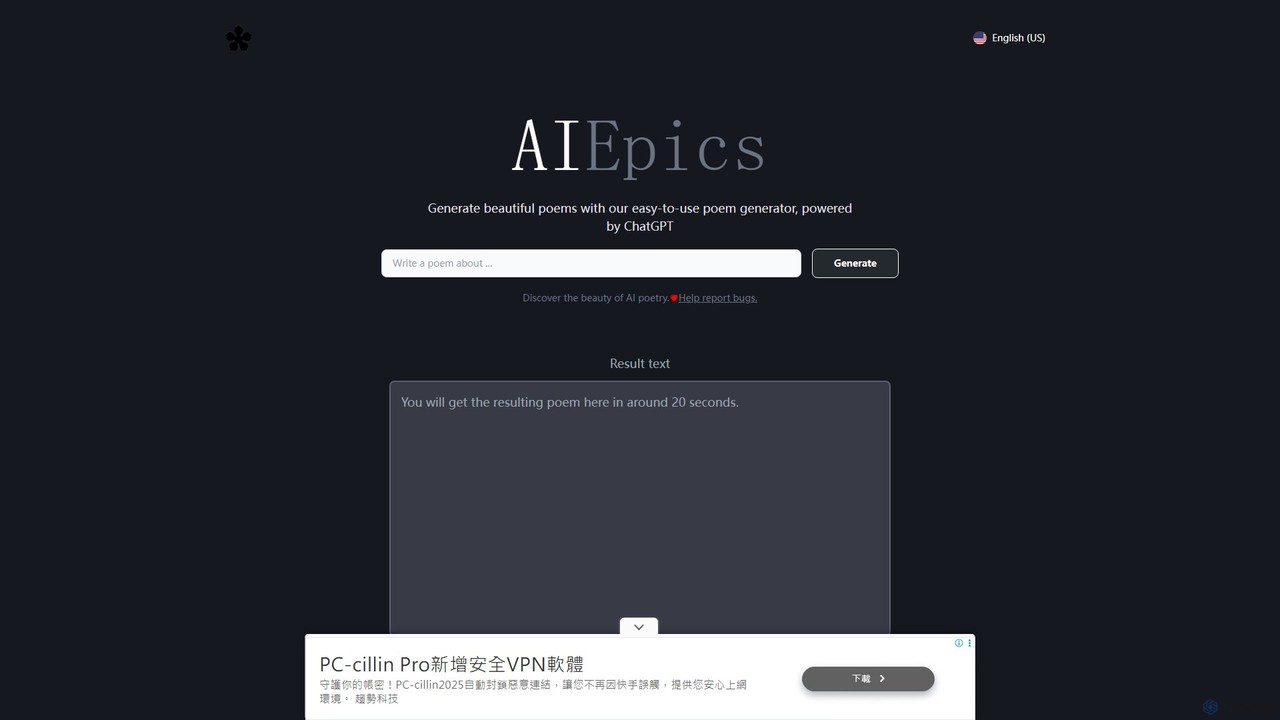
AIEpics

AIEpics

AIEpics is a free AI-powered poem generator that uses advanced models like ChatGPT to create beautiful and unique …

5.2K
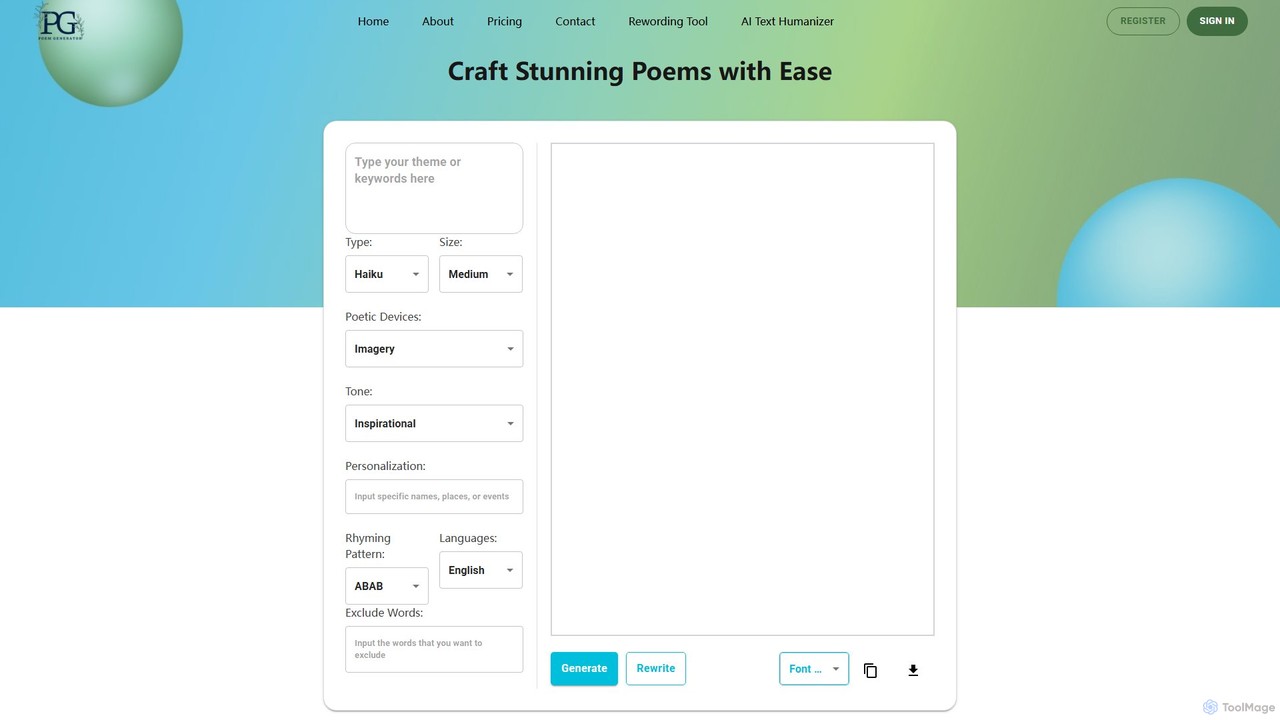
poemgenerator.io

poemgenerator.io

Poemgenerator.io is an AI-powered tool designed to effortlessly craft unique and beautiful poems. It caters to both seasoned …

13.7K

About Poetry

AI Poetry tools are specialized applications designed to assist in the creation and analysis of poetic verse. They leverage large language models trained on vast literary corpora to generate ideas, suggest rhymes, analyze meter, and craft figurative language. These tools serve as creative partners, helping poets overcome writer's block, explore complex forms, and refine their expressive language.

Core Features

  • Rhyme & Meter Suggestions: Provides rhyming words, near rhymes, and analyzes syllable counts and stress patterns to fit specific poetic meters.
  • Figurative Language Generation: Creates metaphors, similes, and other literary devices based on user prompts to enrich imagery.
  • Poetic Form Templates: Offers structures for various forms like sonnets, haikus, and villanelles, guiding the user's writing process.
  • Style Emulation: Generates text that mimics the style of famous poets or specific literary periods.
  • Thematic Idea Generation: Suggests concepts, imagery, and emotional tones based on a core theme to inspire new poems.

Applicable Scenarios

These tools are valuable for professional poets, students studying literature, songwriters crafting lyrics, and hobbyists exploring creative writing. They are also used by educators to demonstrate poetic structures and by content creators for producing unique, artistic social media posts or ad copy.

Selection Criteria

When selecting an AI Poetry tool, consider the depth of its poetic features, such as support for specific meters or rhyme schemes. Evaluate the quality and creativity of its language generation, the level of user control over style and tone, and whether its interface is intuitive for creative exploration.

PoetryUse Cases

1

Sparking Inspiration to Overcome Writer's Block

A poet is struggling to start a new piece about 'autumn loneliness.' They input the theme into an AI Poetry tool. The tool generates a list of evocative images like 'fading sunlight on cold stone,' 'the scent of damp earth,' and 'a single leaf skittering across pavement.' It also suggests opening lines in different meters. This burst of fresh imagery and structural ideas breaks the creative impasse, allowing the poet to begin drafting with a clear direction and renewed inspiration.

2

Analyzing Poetic Structure for Education

A literature student needs to write an essay on Shakespeare's use of iambic pentameter. They input a sonnet into an AI Poetry tool with analytical capabilities. The tool highlights the stressed and unstressed syllables in each line, visually demonstrating the iambic rhythm. It also identifies the rhyme scheme (ABAB CDCD EFEF GG) and flags any metrical variations. This automated analysis helps the student grasp the technical structure quickly, allowing them to focus on its literary effect.

3

Crafting Evocative Song Lyrics

A songwriter has a melody but needs lyrics that match its melancholic mood. Using an AI Poetry tool, they input their core theme, 'a long-distance relationship.' The tool suggests rhyming couplets and internal rhymes that fit the theme, such as 'miles apart' and 'aching heart.' It also generates metaphors like 'our love is a flickering signal' or 'a conversation across a sea of static,' providing unique, emotionally resonant language that elevates the song's lyrical quality.

4

Exploring and Mastering Complex Poetic Forms

A writer is fascinated by the villanelle, a highly structured 19-line poetic form with two repeating rhymes and two refrains. Manually tracking the repeating lines can be difficult. They use an AI Poetry tool with form templates. The tool sets up the structure, showing where the two repeating refrains (A1 and A2) and the rhyming lines (a and b) must be placed. As the writer fills in the lines, the AI ensures the form's strict rules are followed, making the complex structure accessible.

5

Creating Personalized Poems for Special Occasions

Someone wants to write a unique poem for their partner's anniversary but lacks confidence in their writing skills. They use an AI Poetry tool and provide key details: 'five years,' 'our first meeting in a coffee shop,' 'shared laughter,' and a 'warm, loving tone.' The AI generates several poetic drafts incorporating these elements. The user can then select the best lines, edit them to add a more personal touch, and create a heartfelt, customized poem that feels both polished and sincere.

6

Generating Creative Micro-Poetry for Social Media

A brand's social media manager wants to post engaging, artistic content on Instagram. They use an AI Poetry tool to create short, impactful poems related to their product, such as a coffee brand. They input prompts like 'morning ritual,' 'aroma,' and 'warmth.' The tool quickly generates several four-line poems. This allows the manager to produce a steady stream of unique, shareable content that builds a creative and sophisticated brand identity without spending hours on copywriting.

PoetryFrequently Asked Questions