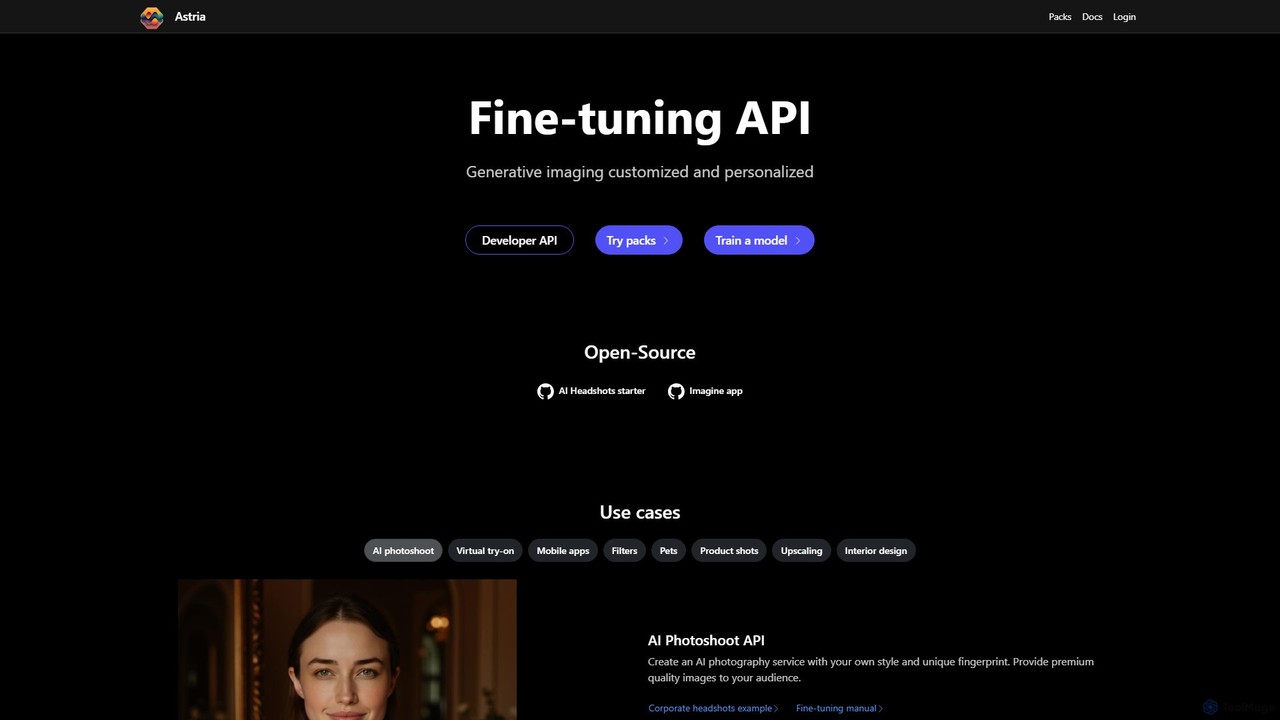
A developer-focused API platform for creating custom generative AI image models. Astria specializes in fine-tuning, allowing users to train AI on specific subjects like people, objects, or styles to produce highly personalized, high-quality images for various applications, including AI photoshoots, virtual try-on, and product photography.
TextSynth offers developers powerful, cost-effective access to a suite of AI models, including large language models (LLMs), text-to-image, text-to-speech, and speech-to-text, through a flexible REST API and an interactive playground. It features models like Llama, Mistral, Stable Diffusion, and Whisper, optimized for speed and affordability.
Product overview
Astria Product overview
A developer-focused API platform for creating custom generative AI image models. Astria specializes in fine-tuning, allowing users to train AI on specific subjects like people, objects, or styles to produce highly personalized, high-quality images for various applications, including AI photoshoots, virtual try-on, and product photography.
TextSynth Product overview
TextSynth offers developers powerful, cost-effective access to a suite of AI models, including large language models (LLMs), text-to-image, text-to-speech, and speech-to-text, through a flexible REST API and an interactive playground. It features models like Llama, Mistral, Stable Diffusion, and Whisper, optimized for speed and affordability.
Detailed feature comparison
| Feature | Astria | TextSynth |
|---|---|---|
| Primary category | Api | Speech Synthesis |
| Added | 2025-08-05 | 2025-08-12 |
| Pricing | Paid | Freemium |
| Official website | www.astria.ai | textsynth.com |
| Product type | Website | Website |
| Performance data | ||
| User rating | Not verified | Not verified |
| Comments | 0 | 0 |
| Monthly visits | 76.7K | 3.3K |
| Monthly growth | 2.5% | -40.1% |
| Favorites | 109 | 103 |
| Details | View details | View details |
Astria vs TextSynth monthly traffic
Compare Astria and TextSynth by monthly reach, traffic trend, visit depth, top regions, and acquisition sources.
How to interpret the traffic data
In the Astria vs TextSynth monthly traffic comparison, Astria currently shows 76.7K visits and TextSynth shows 3.3K; Astria has about 23.1 times the visible traffic of TextSynth, an absolute difference of about 73.4K visits. This reflects visible reach, not feature quality or paid users.
Both tools provide verified traffic details, so monthly trends, visit depth, regions, and acquisition sources can be compared on the same basis.
Astria monthly traffic:
Latest traffic
Monthly traffic trend
- 2025/9: 185.5K Monthly visits
- 2026/1: 148.6K Monthly visits
- 2026/2: 113.9K Monthly visits
- 2026/3: 114.8K Monthly visits
- 2026/4: 74.9K Monthly visits
- 2026/5: 76.7K Monthly visits
Top regions
Top 5 countries/regions
| Country/region | Percentage | Traffic |
|---|---|---|
| 🇺🇸United States | 32.88% | 25.2K |
| 🇧🇷Brazil | 19.18% | 14.7K |
| 🇮🇹Italy | 16.27% | 12.5K |
| 🇮🇱Israel | 16.19% | 12.4K |
| 🇩🇪Germany | 15.48% | 11.9K |
Traffic sources
| Source type | Percentage | Traffic |
|---|---|---|
| Direct | 85.44% | 65.6K |
| Referral | 13.24% | 10.2K |
| 1.32% | 1K |
Search keywords
TextSynth monthly traffic:
Latest traffic
Monthly traffic trend
- 2025/9: 5.8K Monthly visits
- 2026/1: 2.4K Monthly visits
- 2026/2: 2.8K Monthly visits
- 2026/3: 3.1K Monthly visits
- 2026/4: 5.6K Monthly visits
- 2026/5: 3.3K Monthly visits
Top regions
Top 5 countries/regions
| Country/region | Percentage | Traffic |
|---|---|---|
| 🇺🇸United States | 80.54% | 2.7K |
| 🇵🇱Poland | 11.07% | 369 |
| 🇮🇹Italy | 7.35% | 245 |
| 🇪🇸Spain | 1.04% | 35 |
Search keywords
Usage comparison
Compare the core capabilities of Astria and TextSynth
Astria Core features
TextSynth Core features
Use cases
Astria Use cases
TextSynth Use cases
Astria vs TextSynth:In-depth comparison and selection guidance
First decide whether the products solve the same kind of need
This in-depth Astria vs TextSynth comparison uses only the product records, taxonomy, audience, traffic, and community signals available on this page. Astria is primarily listed under “Api”, while TextSynth is primarily listed under “Speech Synthesis”, so the first decision is whether your actual task matches their recorded scope.
The structured fields currently show these decision-relevant differences: Primary category (Astria: Api; TextSynth: Speech Synthesis); Pricing (Astria: Paid; TextSynth: Freemium); Monthly visits (Astria: 76.7K; TextSynth: 3.3K); Monthly growth (Astria: 2.5%; TextSynth: -40.1%); Favorites (Astria: 109; TextSynth: 103). These facts are more useful for selection than brand visibility alone.
What market visibility and monthly traffic mean
In the Astria vs TextSynth monthly traffic comparison, Astria currently shows 76.7K visits and TextSynth shows 3.3K; Astria has about 23.1 times the visible traffic of TextSynth, an absolute difference of about 73.4K visits. This reflects visible reach, not feature quality or paid users.
Both tools provide verified traffic details, so monthly trends, visit depth, regions, and acquisition sources can be compared on the same basis.
If public market visibility is an important first-pass criterion, investigate Astria first. The final choice should still follow taxonomy, use case, and a real trial because higher traffic does not prove broader capabilities or better workflow fit.
Product positioning, use cases, and roles
Astria and TextSynth currently overlap in shared categories: Api and Image Generation; shared tags: API, developer tools, and image generation. This can place both on the same shortlist, but it does not prove equal implementation, depth, or cost.
Astria's unique categories/tags are Personalization, AI photoshoot, custom AI models, fine-tuning, generative AI, product photography, and virtual try-on; TextSynth's are Speech Synthesis, Transcription, Writing, large language model, Llama, llm, Mistral, and speech to text. These unique fields are the strongest differentiators: validate the product whose recorded scope matches the task instead of following traffic alone.
What ratings, comments, and favorites can tell you
Astria has no verified rating, 0 comments, 109 favorites, and 92 likes;TextSynth has no verified rating, 0 comments, 103 favorites, and 99 likes。
Neither product has enough rating or comment samples for a credible reputation ranking.
Selection guidance by actual need
When to evaluate Astria first
Put Astria on the priority trial list when the task aligns with “Api” and especially Personalization, AI photoshoot, custom AI models, fine-tuning, generative AI, and product photography. This follows recorded positioning and does not imply unlisted capabilities are absent.
Astria also currently records: pricing is paid, product type is website, 76.7K verified monthly visits, no verified user rating. Verify any hard requirement around price, platform, or reach before trial, and do not let sparse review data substitute for testing.
When to evaluate TextSynth first
Put TextSynth on the priority trial list when the task aligns with “Speech Synthesis” and especially Speech Synthesis, Transcription, Writing, large language model, Llama, and llm. This follows recorded positioning and does not imply unlisted capabilities are absent.
TextSynth also currently records: pricing is freemium, product type is website, 3.3K verified monthly visits, no verified user rating. Verify any hard requirement around price, platform, or reach before trial, and do not let sparse review data substitute for testing.
How to validate the recommendation before deciding
The available data describes positioning, public visibility, and community signals, but it cannot prove output quality, speed, integration effort, privacy, or long-term cost in your workflow. Before deciding, run the same representative tasks in Astria and TextSynth, then record completion time, accuracy, manual corrections, and the real paid threshold. A like-for-like trial turns this comparison into a defensible adoption decision.
Comparison FAQ
How should I choose between Astria and TextSynth?
Where does this comparison data come from?
What do unknown fields mean?
Related AI tools

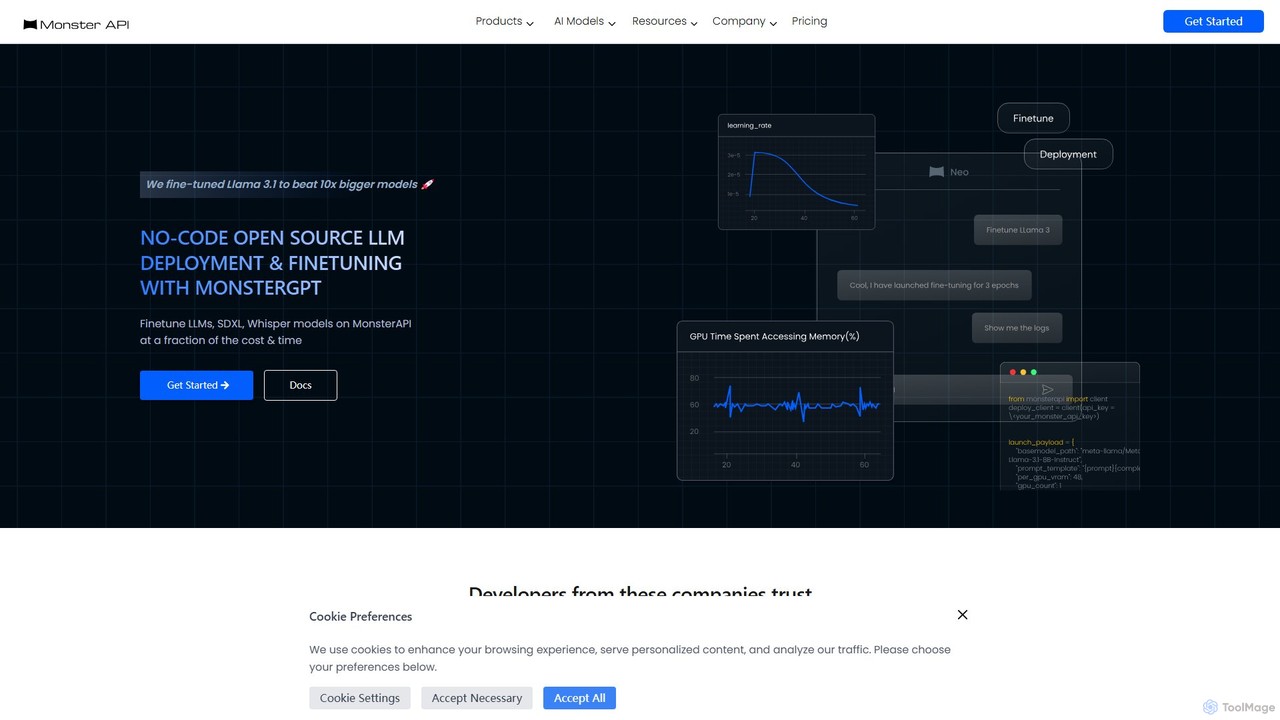
MonsterAPI
MonsterAPI is a developer-centric platform that simplifies the fine-tuning and deployment of open-source generative AI models. It offers a no-code chat interface, MonsterGPT, to manage complex tasks, supporting models like Llama, SDXL, and Whisper. The platform provides scalable API endpoints and enterprise-grade GPU infrastructure at a fraction of the typical cost and time, making advanced AI accessible to all developers.
Platform As A Service (Paas)
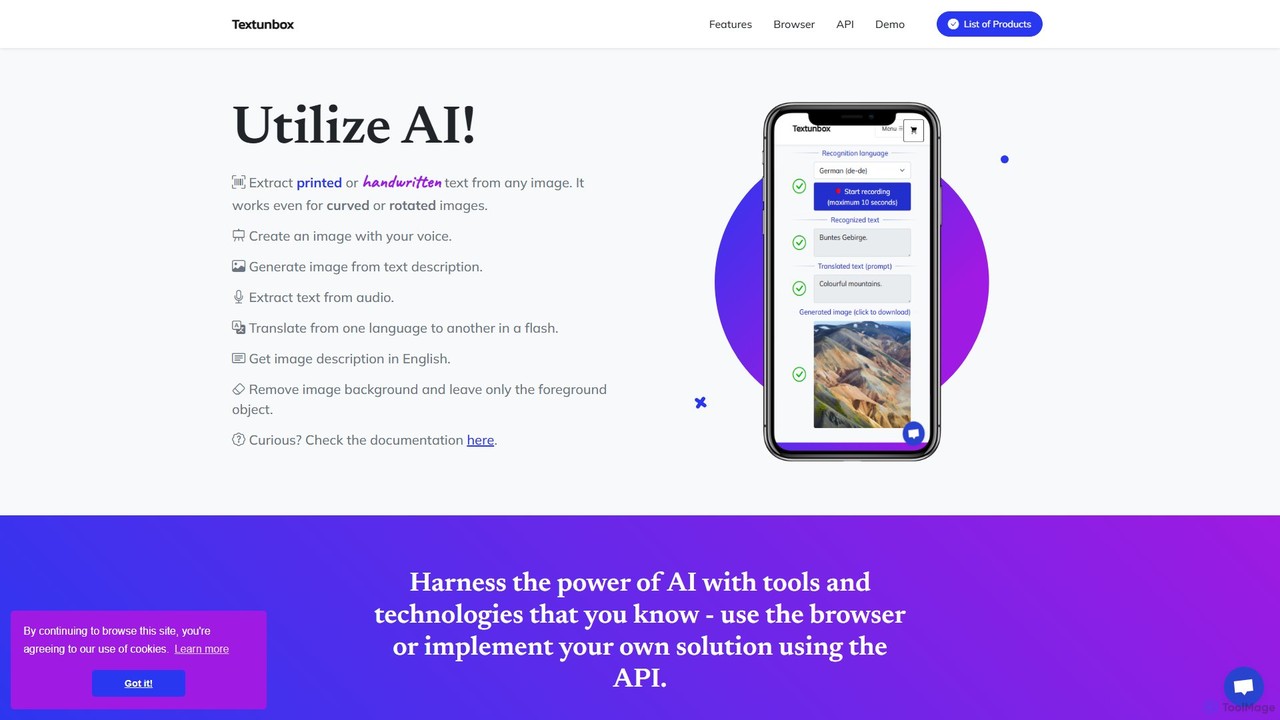
TextUnbox
TextUnbox is a versatile AI toolkit offering a suite of services including OCR for printed and handwritten text, DALL-E powered image generation, background removal, audio transcription, and multi-language translation. It provides both user-friendly web applications for direct use and a comprehensive REST API for developer integration, making it a flexible solution for various text, image, and audio processing needs.
Transcription
Groq
Groq is a revolutionary AI inference platform providing developers with unparalleled speed and cost-efficiency. Powered by its custom-built Language Processing Unit (LPU), Groq delivers real-time performance for large language models (LLMs), speech recognition, and text-to-speech applications. It offers a developer-friendly API, enabling seamless integration for building next-generation, low-latency AI solutions at scale.
Ai Services
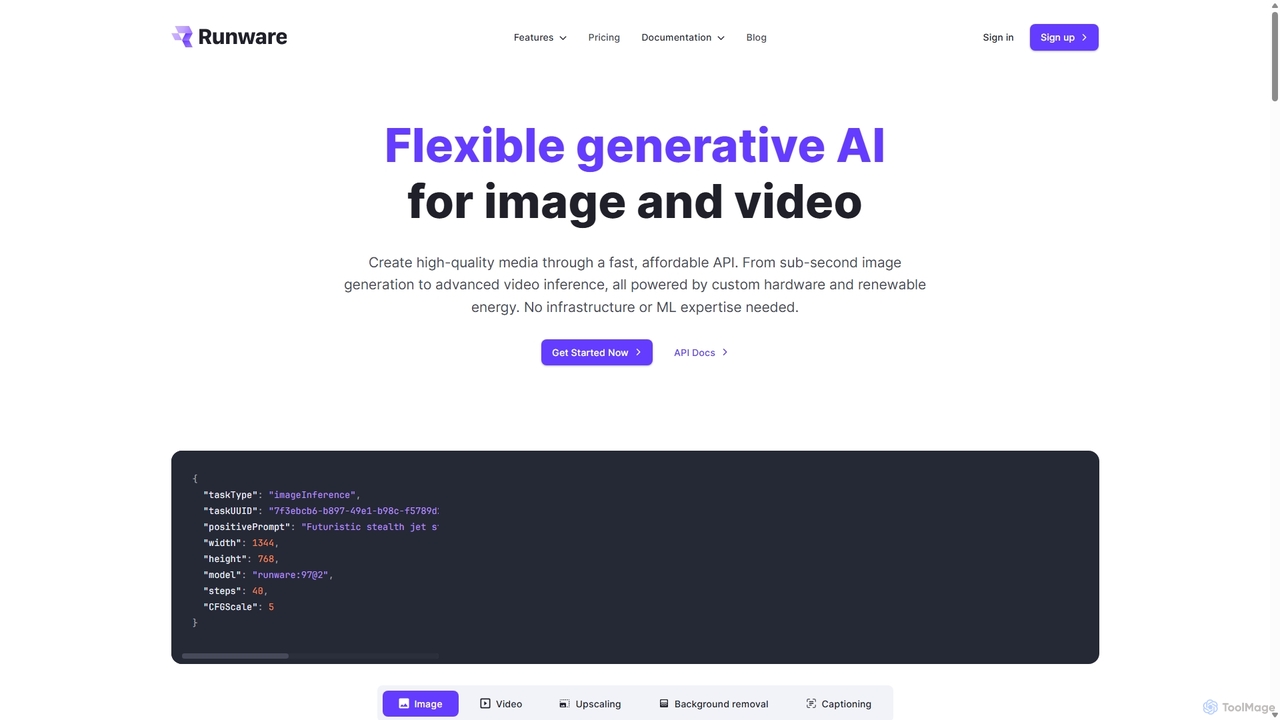
Runware
Runware provides a high-performance, low-cost API for developers to integrate generative AI for image and video creation. Leveraging custom hardware and renewable energy, it offers industry-leading inference speeds for over 300,000 models, including Stable Diffusion, FLUX.1, and Kling. It's a scalable, easy-to-use platform that requires no ML expertise, designed for building next-generation AI-native applications.
Api Platform
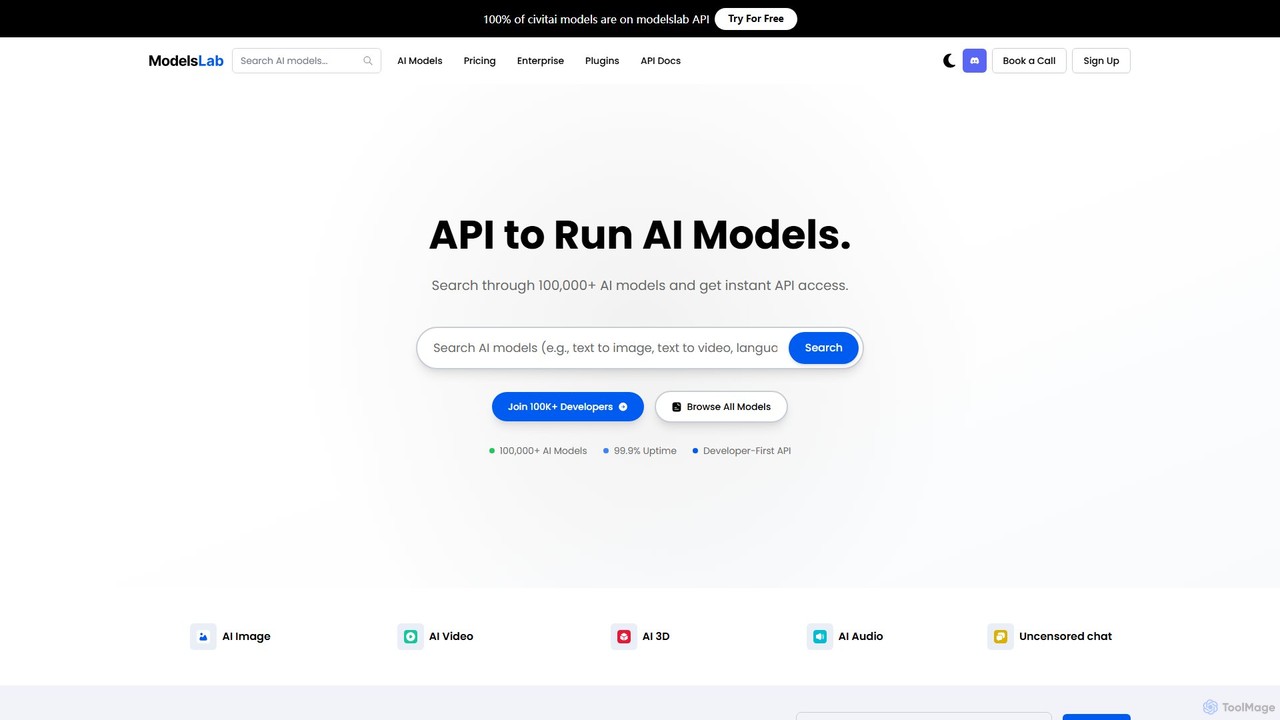
ModelsLab
A developer-first API platform offering unified access to over 100,000 AI models for image, video, audio, 3D, and text generation. It simplifies development with a single API, one subscription, and robust, scalable infrastructure for building advanced AI applications.
3D Model Generation
Bria
Bria is a developer-first visual generative AI platform, offering source-available models and APIs built on 100% licensed data. It enables businesses and developers to create, edit, and scale high-quality, commercially-safe visual content, with full legal indemnification. Bria provides flexible toolkits for custom AI solutions, including image generation, editing, product photography, and ad creation.
Api & Sdk
Leap
A developer-first platform offering a suite of generative AI APIs for image generation, model fine-tuning, and more. Easily integrate powerful AI capabilities like text-to-image and custom model training into your applications with scalable and easy-to-use tools.
Model Training
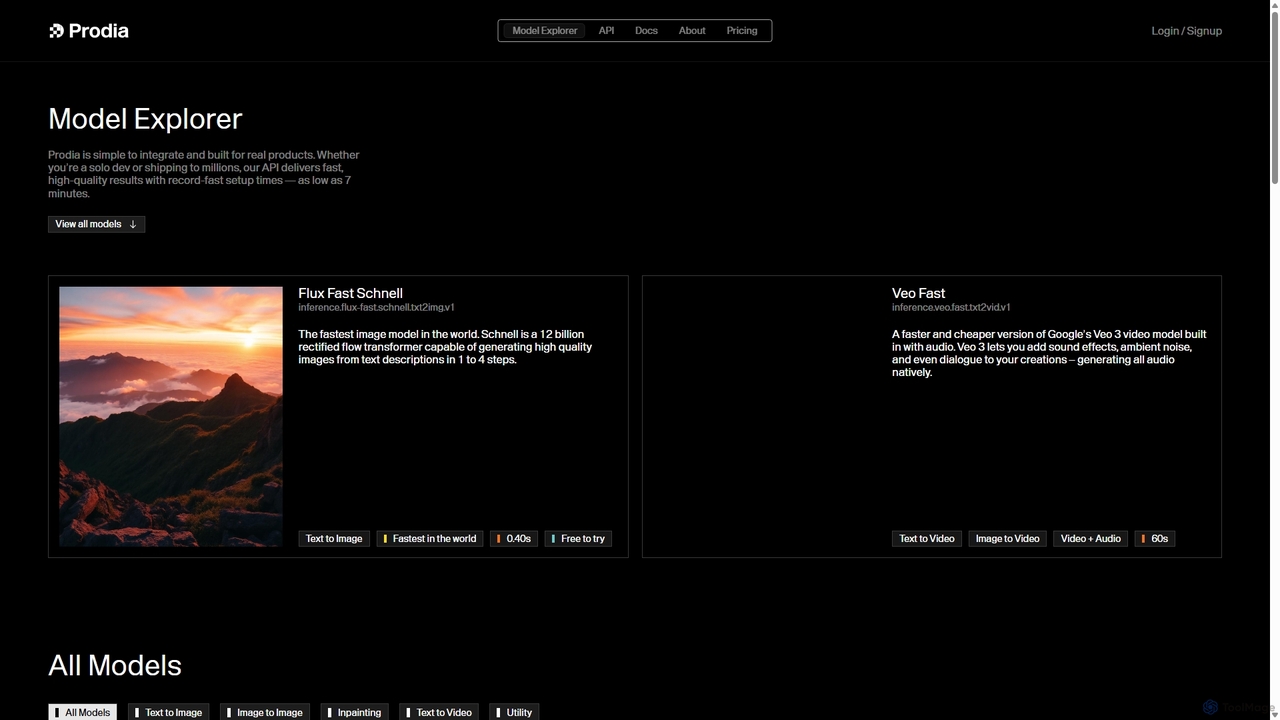
Prodia
Prodia is a developer-first API platform that enables seamless integration of fast, high-quality generative AI models into any application. It offers a diverse range of models for text-to-image, text-to-video, image editing, and more, designed for scalability and record-fast setup times.
Image Generation
Black Forest Labs FLUX.1
FLUX.1 by Black Forest Labs is an advanced AI model suite for context-aware image generation and editing. It allows users to modify images using both text and image prompts, ensuring character consistency, precise local edits, and style preservation. It offers open-weight models for developers and commercial licenses for businesses, redefining iterative creative workflows.
Api
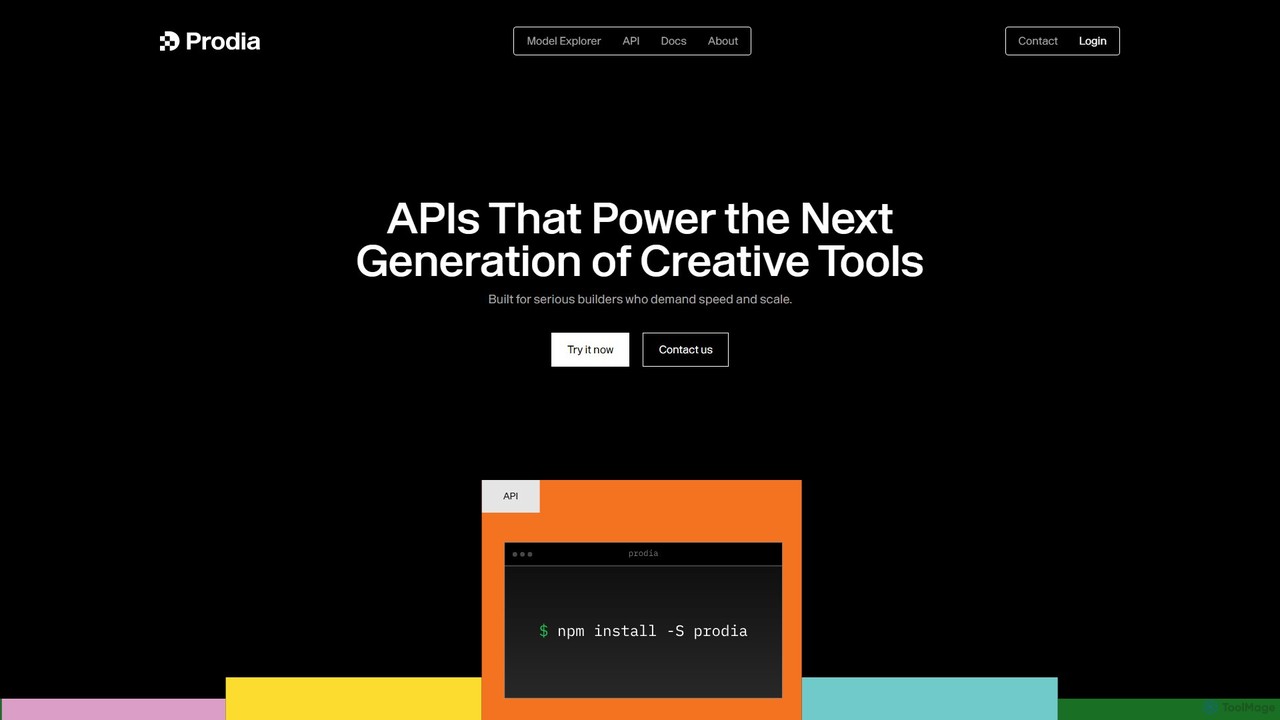
Prodia
Prodia is a high-speed, scalable generative AI API for developers. It enables seamless integration of image and video generation into applications, offering ultra-low latency and eliminating the need for GPU infrastructure management. Built for production, it powers the next generation of creative tools.
Api
Stable Horde
Stable Horde is a free, open-source, and crowd-sourced distributed cluster for AI image and text generation. It allows anyone to access powerful AI models by leveraging the volunteer-contributed computing power of a global community, without needing their own high-end hardware.
Api
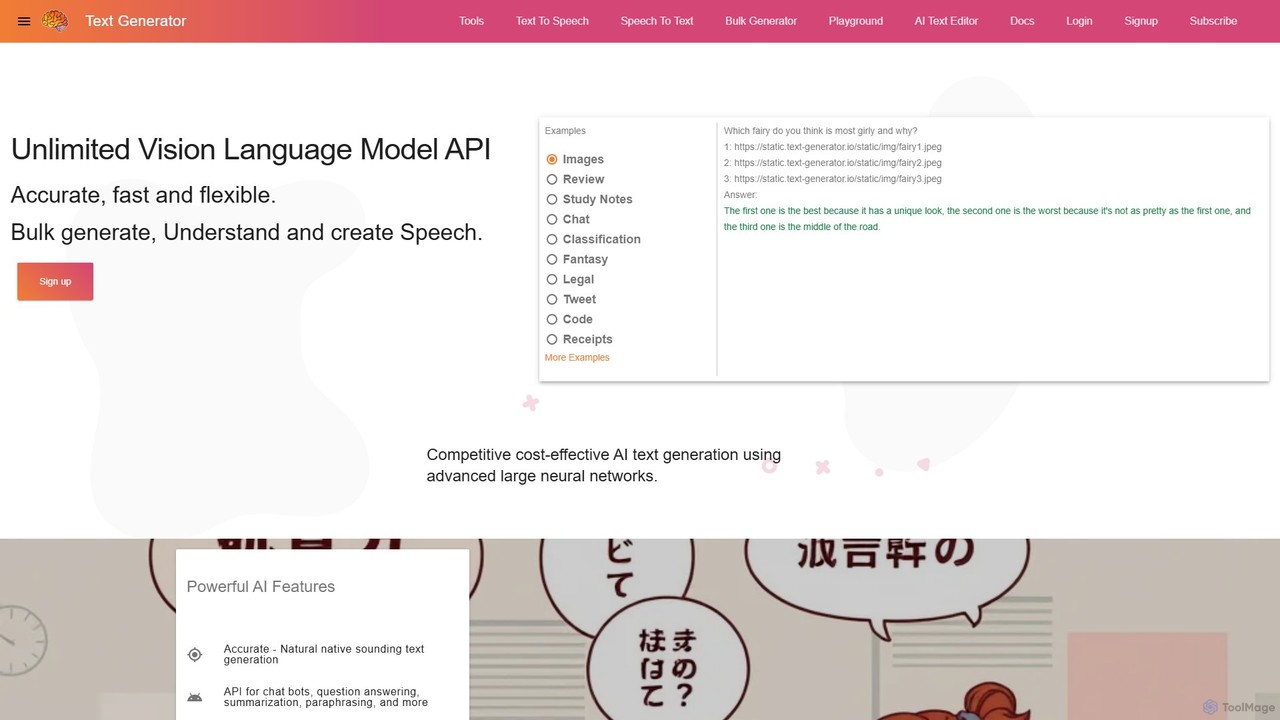
Text Generator
Text Generator is a versatile and highly affordable AI platform offering unlimited text, code, and speech generation. It provides a powerful API, including an OpenAI-compatible endpoint for easy migration, making it a cost-effective solution for developers, marketers, and content creators.
Speech Synthesis
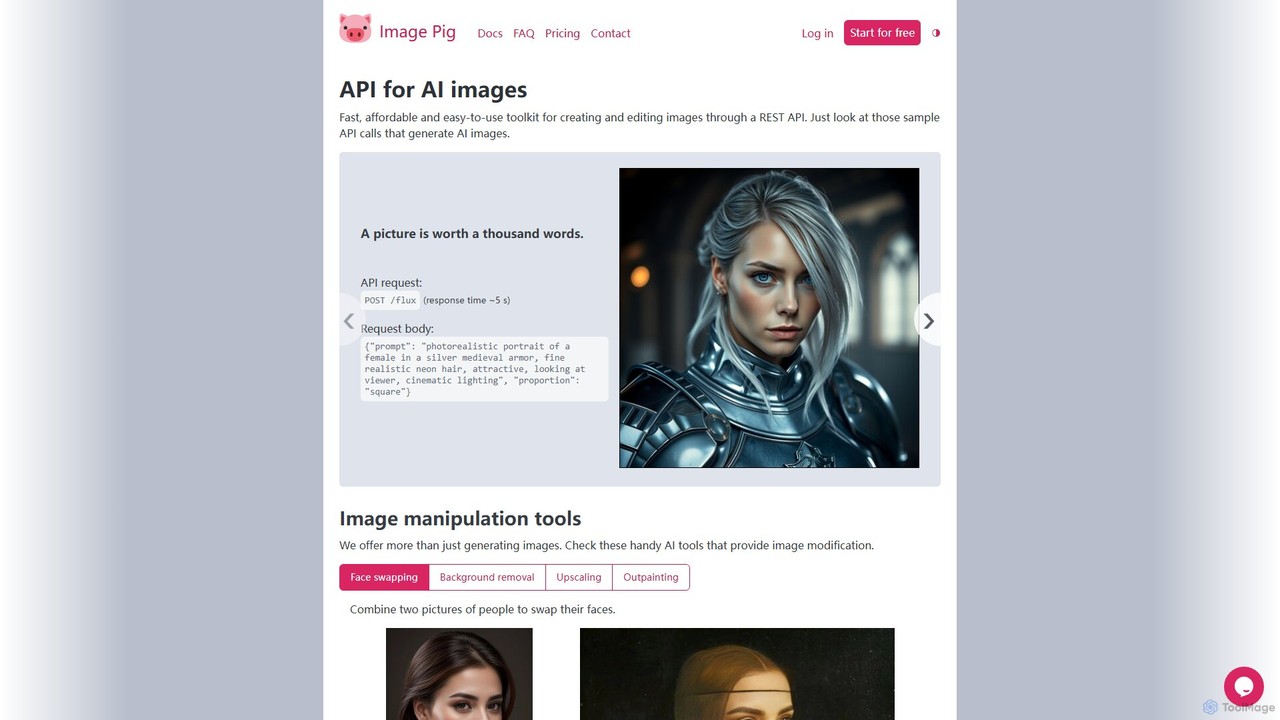
Image Pig
Image Pig is a developer-focused REST API for AI image generation and manipulation. It offers a fast, affordable, and easy-to-use toolkit for creating images from text, swapping faces, removing backgrounds, upscaling, and outpainting. With curated models like Stable Diffusion and FLUX, it allows developers to integrate powerful visual AI into their projects without managing complex hardware.
Api
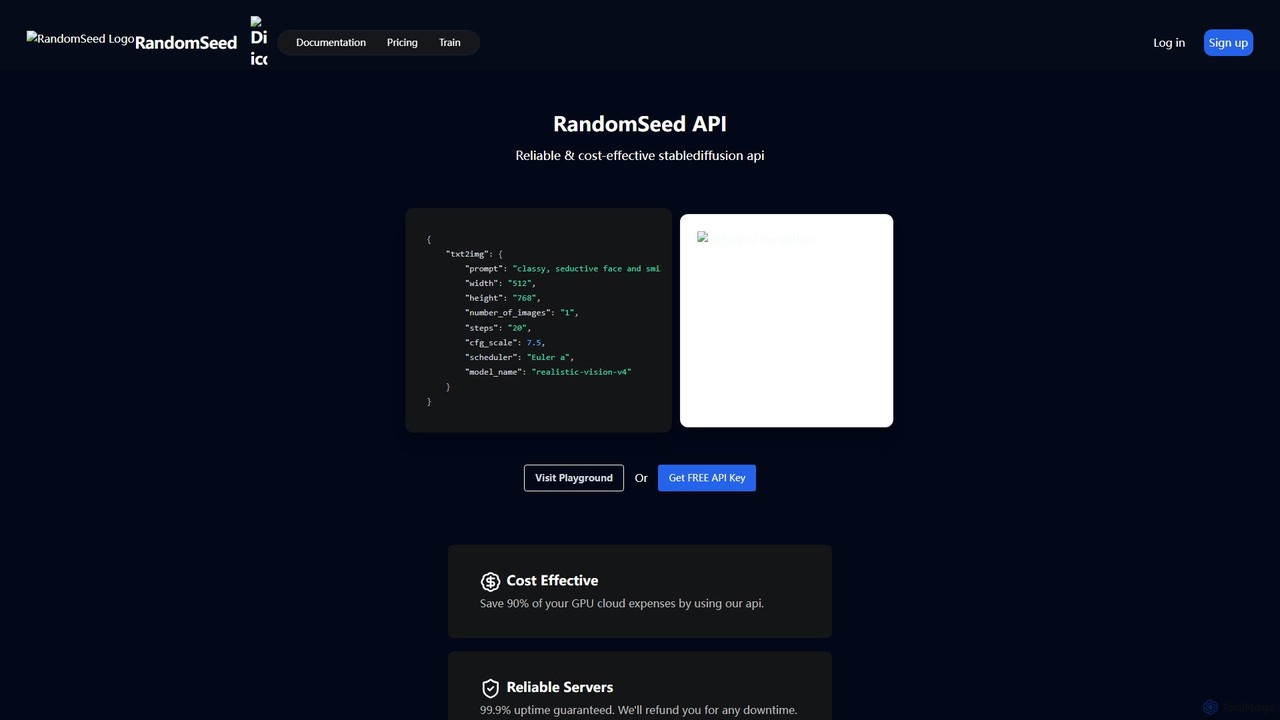
randomseed
randomseed offers a powerful and cost-effective Stable Diffusion API for developers and a user-friendly web playground for creators. It supports custom models from CivitAI and Hugging Face, LoRA training and usage, and guarantees high-speed, reliable image generation. This platform is ideal for integrating AI art into applications or creating unique visuals with maximum flexibility and control, saving up to 90% on GPU costs.
Ai Art
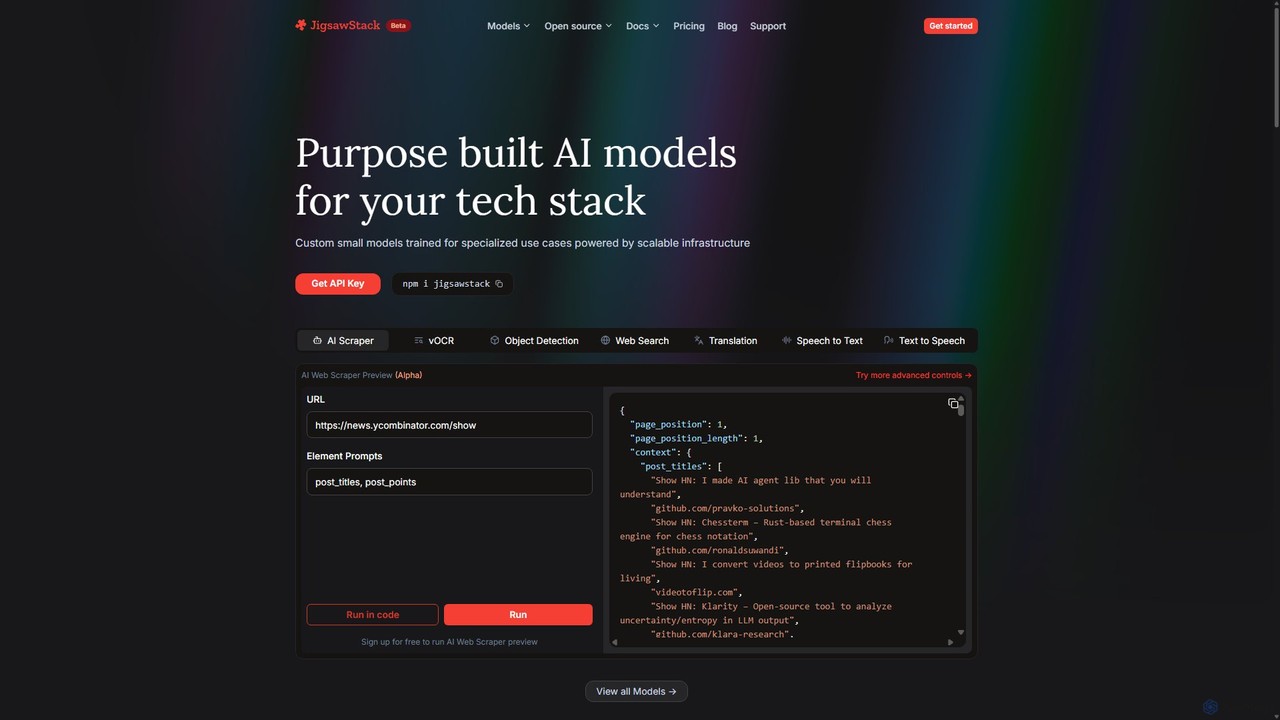
JigsawStack
JigsawStack offers a suite of purpose-built, small AI models for developers, accessible via a single API. It simplifies complex backend tasks like web scraping, OCR, translation, and speech-to-text with fast, reliable, and scalable infrastructure. Designed for seamless integration, it provides a developer-first experience with structured data output and global support, enabling teams to build and ship features faster.
Speech Synthesis