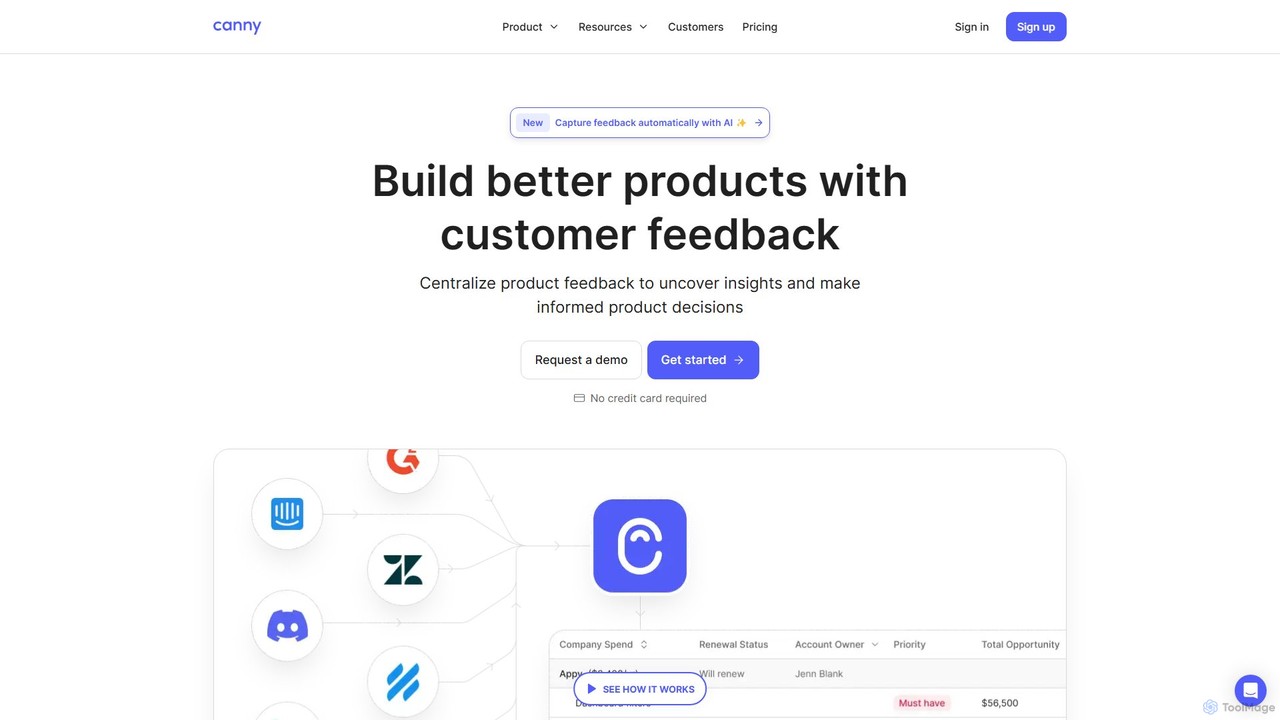
Canny is an AI-powered customer feedback management platform that helps businesses collect, analyze, and prioritize user feedback to build better products. It centralizes feedback, creates product roadmaps, and keeps users engaged with a public changelog.

Depth is an AI Product Manager that automates product analytics, user session analysis, and feedback processing. It delivers actionable insights, UX improvement suggestions, and new feature ideas, helping teams build better products faster by eliminating manual data analysis.
Product overview
Canny Product overview
Canny is an AI-powered customer feedback management platform that helps businesses collect, analyze, and prioritize user feedback to build better products. It centralizes feedback, creates product roadmaps, and keeps users engaged with a public changelog.
Depth Product overview
Depth is an AI Product Manager that automates product analytics, user session analysis, and feedback processing. It delivers actionable insights, UX improvement suggestions, and new feature ideas, helping teams build better products faster by eliminating manual data analysis.
Detailed feature comparison
| Feature | Canny | Depth |
|---|---|---|
| Primary category | Product Management | Product Management |
| Added | 2025-08-14 | 2025-08-11 |
| Pricing | Freemium | Freemium |
| Official website | canny.io | www.depth.io |
| Product type | Website | Website |
| Performance data | ||
| User rating | Not verified | Not verified |
| Comments | 0 | 0 |
| Monthly visits | 511.6K | 796 |
| Monthly growth | -3.2% | 100% |
| Favorites | 128 | 117 |
| Details | View details | View details |
Canny vs Depth monthly traffic
Compare Canny and Depth by monthly reach, traffic trend, visit depth, top regions, and acquisition sources.
How to interpret the traffic data
In the Canny vs Depth monthly traffic comparison, Canny currently shows 511.6K visits and Depth shows 796; Canny has about 642.8 times the visible traffic of Depth, an absolute difference of about 510.8K visits. This reflects visible reach, not feature quality or paid users.
Both tools provide verified traffic details, so monthly trends, visit depth, regions, and acquisition sources can be compared on the same basis.
Canny monthly traffic:
Latest traffic
Monthly traffic trend
- 2025/9: 704.6K Monthly visits
- 2026/1: 630.8K Monthly visits
- 2026/2: 556.3K Monthly visits
- 2026/3: 531.7K Monthly visits
- 2026/4: 528.6K Monthly visits
- 2026/5: 511.6K Monthly visits
Top regions
Top 5 countries/regions
| Country/region | Percentage | Traffic |
|---|---|---|
| 🇺🇸United States | 67.8% | 346.9K |
| 🇬🇧United Kingdom | 9.17% | 46.9K |
| 🇩🇪Germany | 8.87% | 45.4K |
| 🇮🇳India | 7.52% | 38.5K |
| 🇨🇦Canada | 6.64% | 34K |
Traffic sources
| Source type | Percentage | Traffic |
|---|---|---|
| Direct | 73.48% | 375.9K |
| Referral | 24% | 122.8K |
| 2.52% | 12.9K |
Search keywords
Depth monthly traffic:
Latest traffic
Monthly traffic trend
- 2025/9: 1.2K Monthly visits
- 2026/1: 757 Monthly visits
- 2026/2: 608 Monthly visits
- 2026/3: 869 Monthly visits
- 2026/4: 398 Monthly visits
- 2026/5: 796 Monthly visits
Top regions
Top 5 countries/regions
| Country/region | Percentage | Traffic |
|---|---|---|
| 🇧🇷Brazil | 71.24% | 567 |
| 🇹🇭Thailand | 28.76% | 229 |
Search keywords
Usage comparison
Compare the core capabilities of Canny and Depth
Canny Core features
Depth Core features
Use cases
Canny Use cases
Depth Use cases
Canny vs Depth:In-depth comparison and selection guidance
First decide whether the products solve the same kind of need
This in-depth Canny vs Depth comparison uses only the product records, taxonomy, audience, traffic, and community signals available on this page. Canny is primarily listed under “Product Management”, while Depth is primarily listed under “Product Management”, so the first decision is whether your actual task matches their recorded scope.
The structured fields currently show these decision-relevant differences: Monthly visits (Canny: 511.6K; Depth: 796); Monthly growth (Canny: -3.2%; Depth: 100%); Favorites (Canny: 128; Depth: 117); Website (Canny: canny.io; Depth: www.depth.io); Added (Canny: 2025-08-14; Depth: 2025-08-11). These facts are more useful for selection than brand visibility alone.
What market visibility and monthly traffic mean
In the Canny vs Depth monthly traffic comparison, Canny currently shows 511.6K visits and Depth shows 796; Canny has about 642.8 times the visible traffic of Depth, an absolute difference of about 510.8K visits. This reflects visible reach, not feature quality or paid users.
Both tools provide verified traffic details, so monthly trends, visit depth, regions, and acquisition sources can be compared on the same basis.
If public market visibility is an important first-pass criterion, investigate Canny first. The final choice should still follow taxonomy, use case, and a real trial because higher traffic does not prove broader capabilities or better workflow fit.
Product positioning, use cases, and roles
Canny and Depth currently overlap in shared categories: Product Management; shared tags: product management and user feedback. This can place both on the same shortlist, but it does not prove equal implementation, depth, or cost.
Canny's unique categories/tags are Customer Engagement, Feedback Management, AI, changelog, customer feedback, feature requests, prioritization, and release notes; Depth's are Testing, Analytics, A/B testing, AI product manager, automated reporting, conversion rate optimization, product analytics, and session replay. These unique fields are the strongest differentiators: validate the product whose recorded scope matches the task instead of following traffic alone.
What ratings, comments, and favorites can tell you
Canny has no verified rating, 0 comments, 128 favorites, and 133 likes;Depth has no verified rating, 0 comments, 117 favorites, and 131 likes。
Neither product has enough rating or comment samples for a credible reputation ranking.
Selection guidance by actual need
When to evaluate Canny first
Put Canny on the priority trial list when the task aligns with “Product Management” and especially Customer Engagement, Feedback Management, AI, changelog, customer feedback, and feature requests. This follows recorded positioning and does not imply unlisted capabilities are absent.
Canny also currently records: pricing is freemium, product type is website, 511.6K verified monthly visits, no verified user rating. Verify any hard requirement around price, platform, or reach before trial, and do not let sparse review data substitute for testing.
When to evaluate Depth first
Put Depth on the priority trial list when the task aligns with “Product Management” and especially Testing, Analytics, A/B testing, AI product manager, automated reporting, and conversion rate optimization. This follows recorded positioning and does not imply unlisted capabilities are absent.
Depth also currently records: pricing is freemium, product type is website, 796 verified monthly visits, no verified user rating. Verify any hard requirement around price, platform, or reach before trial, and do not let sparse review data substitute for testing.
How to validate the recommendation before deciding
The available data describes positioning, public visibility, and community signals, but it cannot prove output quality, speed, integration effort, privacy, or long-term cost in your workflow. Before deciding, run the same representative tasks in Canny and Depth, then record completion time, accuracy, manual corrections, and the real paid threshold. A like-for-like trial turns this comparison into a defensible adoption decision.
Comparison FAQ
How should I choose between Canny and Depth?
Where does this comparison data come from?
What do unknown fields mean?
Related AI tools

UserWatch
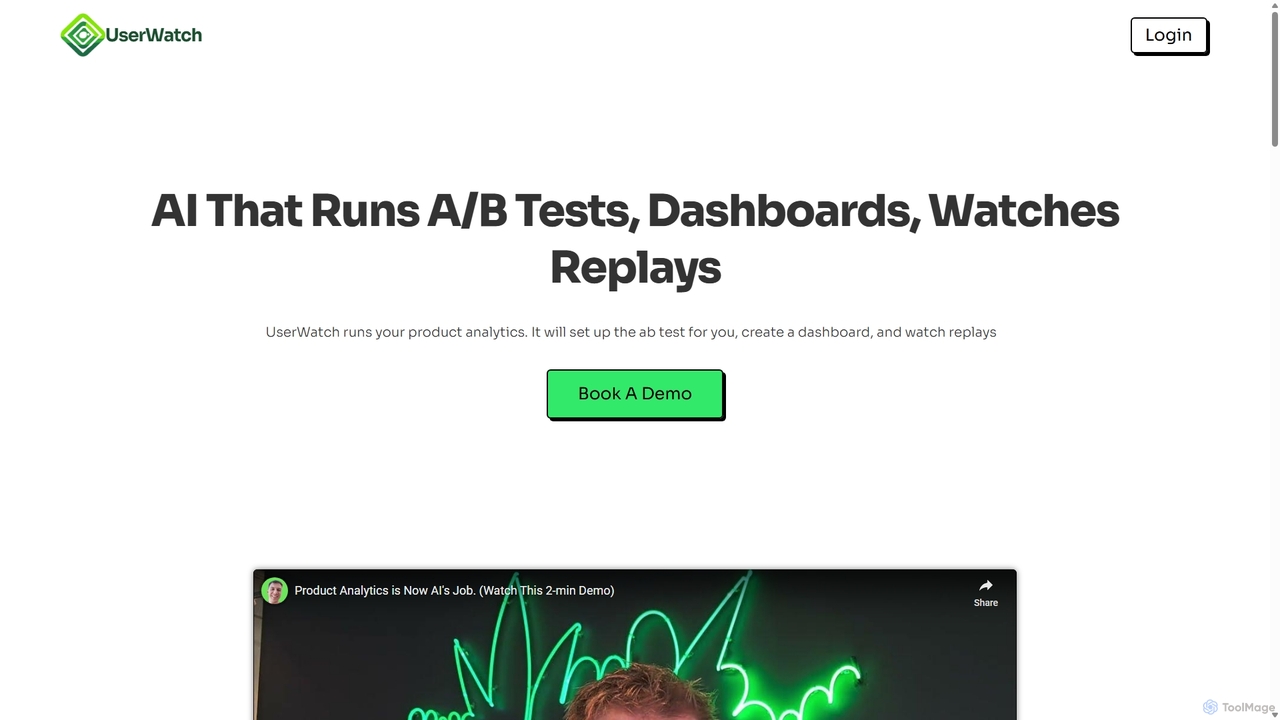
UserWatch is an AI-powered product analyst that automates complex analytics tasks. It runs A/B tests, creates dashboards, and analyzes session replays using simple prompts. This tool helps product teams identify user friction, get actionable UX insights, and directly link improvements to revenue impact, saving hours of manual work.
User Behavior
ProductLift
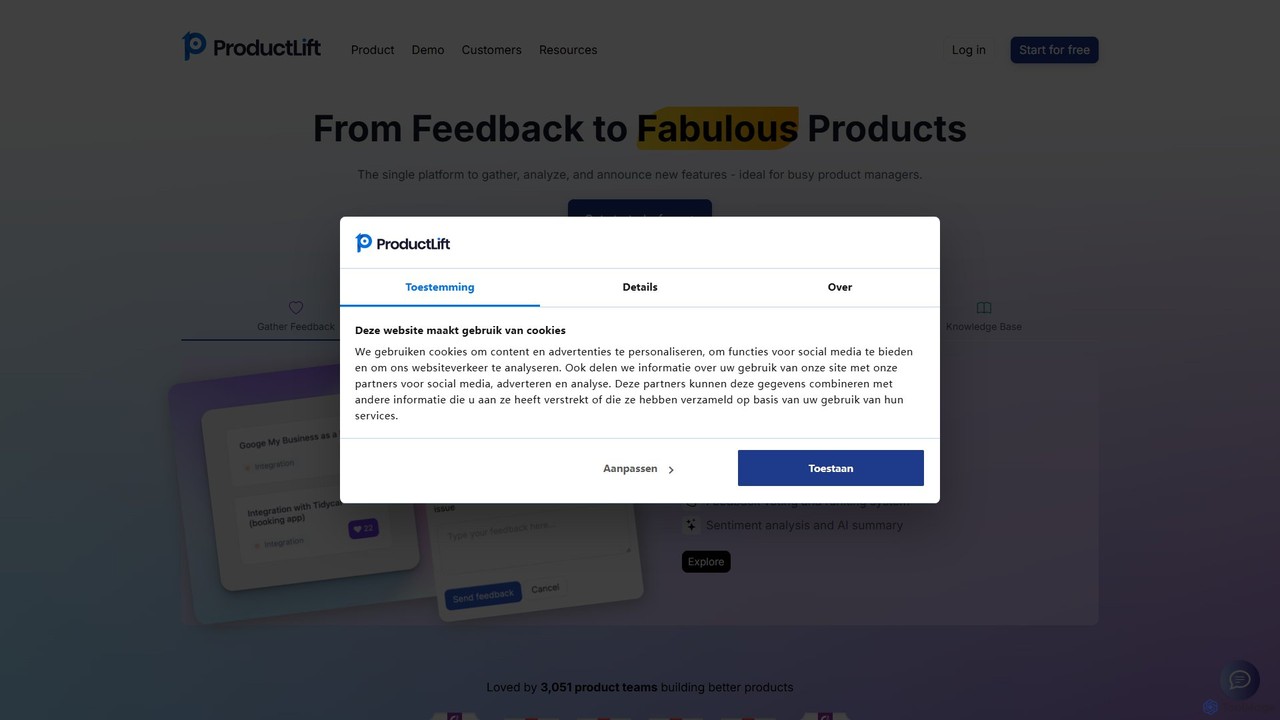
ProductLift is an all-in-one platform for product management, helping SaaS companies collect user feedback, build public roadmaps, and announce updates with a changelog. It streamlines the process from feedback to feature launch, fostering transparency and user engagement.
Customer Feedback
Iterato
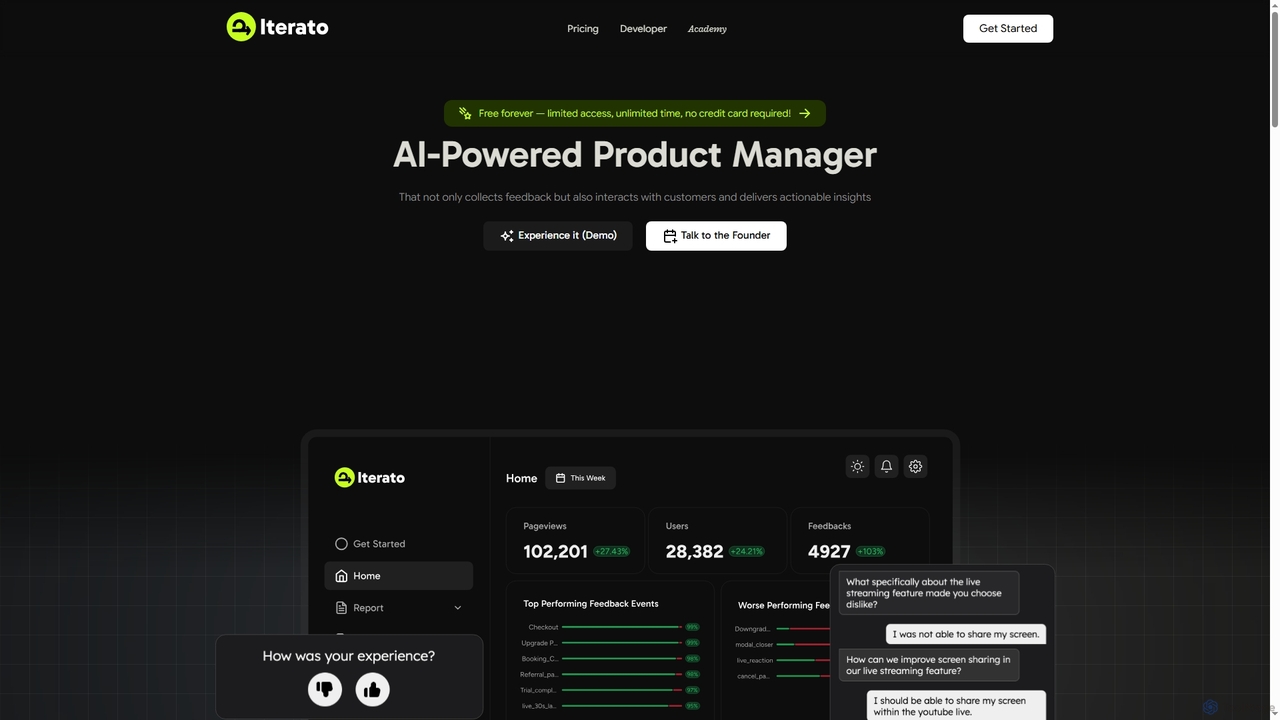
Iterato is an AI Product Manager that transforms user behavior into actionable feedback. It uses AI-driven insights, human-like conversations, and real-time sentiment analysis to help startups and solopreneurs build the right products by understanding their users deeply.
User Feedback
Eververse
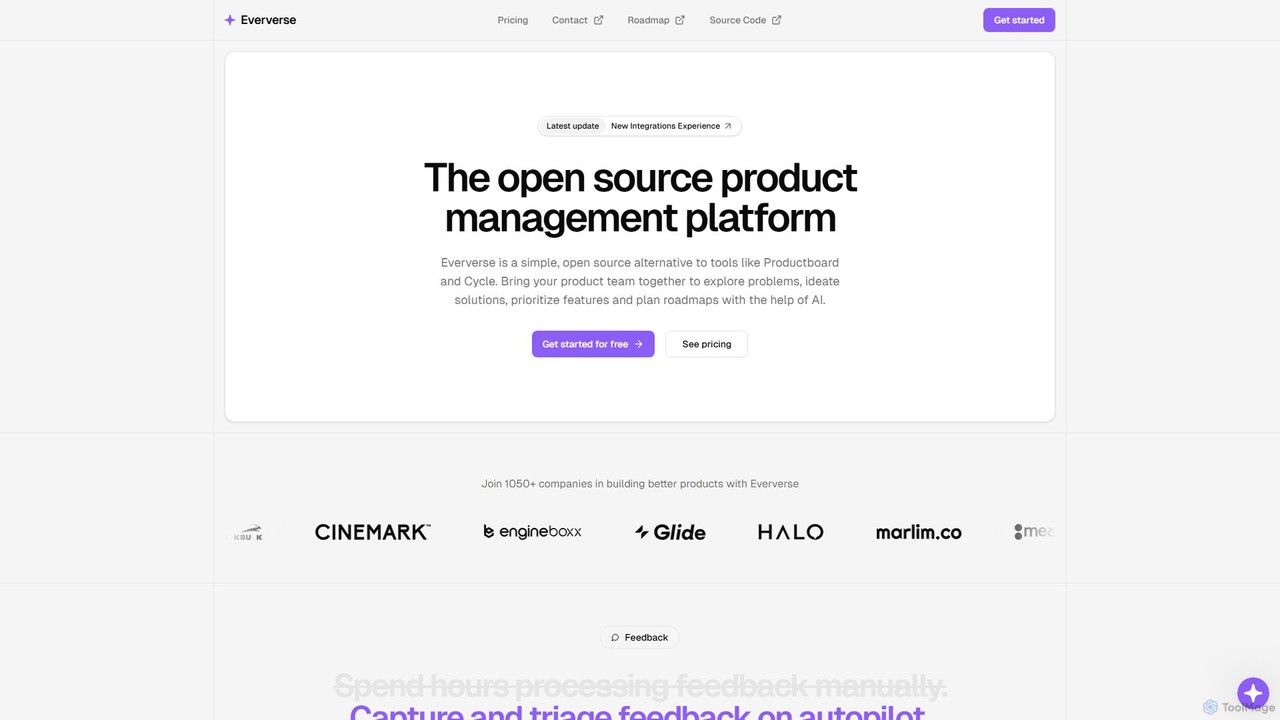
Eververse is an AI-powered, open-source product management platform designed to streamline your workflow. It helps teams analyze user feedback, prioritize features with AI-driven scoring, and build collaborative roadmaps at lightspeed. A powerful alternative to tools like Productboard and Cycle.
Product Management
Olvy
Olvy is an AI-powered platform that centralizes and analyzes user feedback from multiple channels. It transforms qualitative data from surveys, reviews, support tickets, and calls into actionable insights, helping product teams make smarter, data-driven decisions and build better products.
Customer Support
Signalsloop
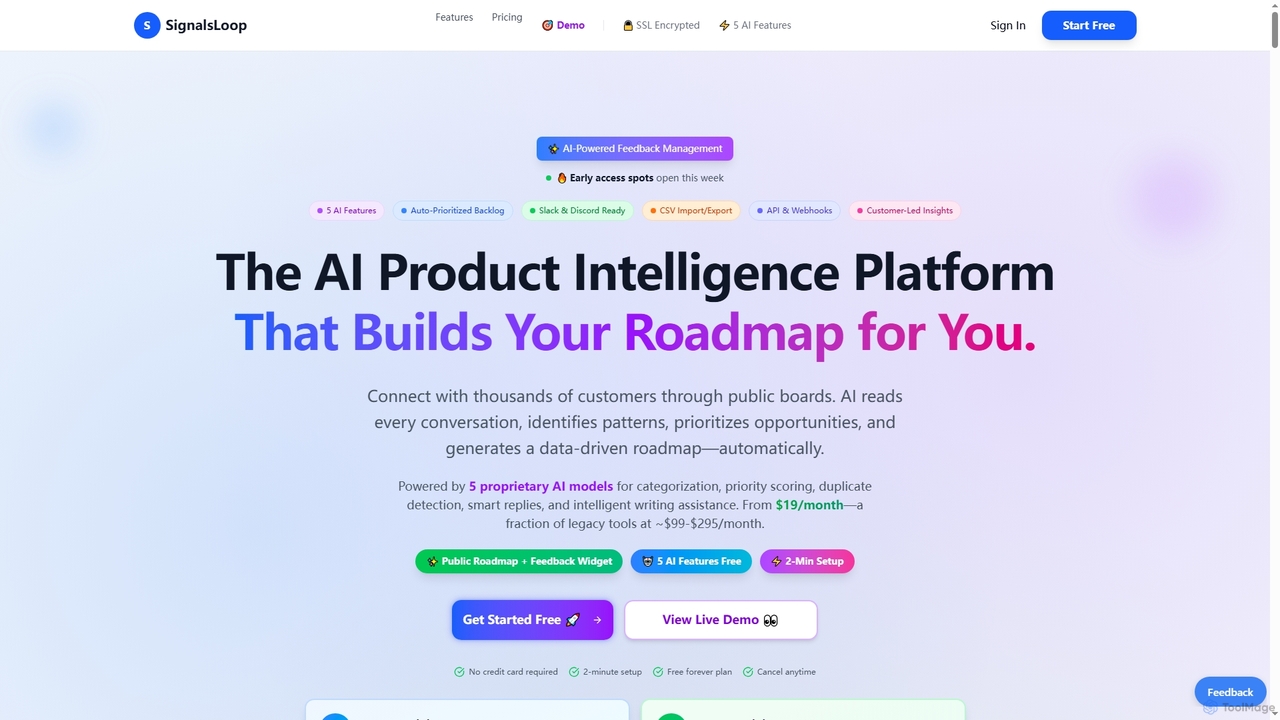
SignalsLoop is an AI-powered feedback management platform that automatically categorizes, prioritizes, and detects duplicate user feedback. It helps product teams build data-driven roadmaps by transforming scattered feedback from various channels into actionable insights, designed for startups and indie makers.
Roadmapping
Productboard
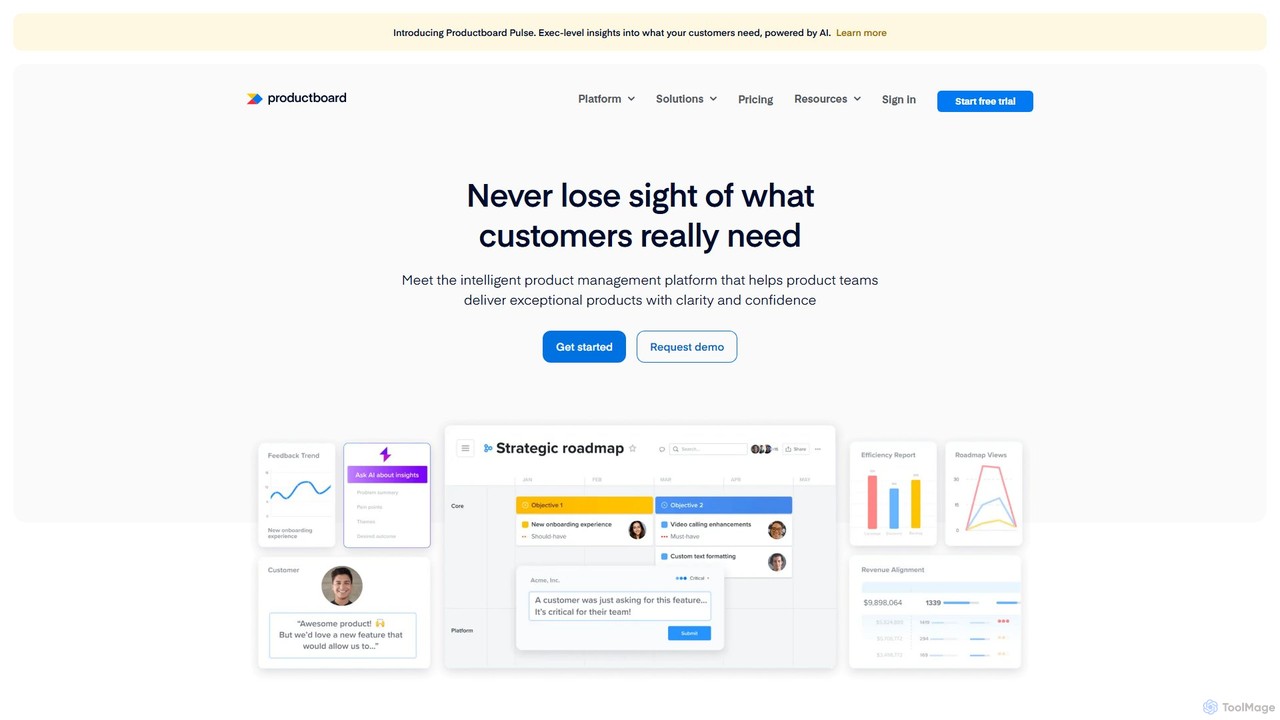
Productboard is an intelligent, AI-powered product management platform that helps teams understand customer needs, prioritize features, and align everyone around a collaborative roadmap. It centralizes feedback, automates insights, and streamlines the entire product development lifecycle.
Customer Relationship Management
Bagel AI
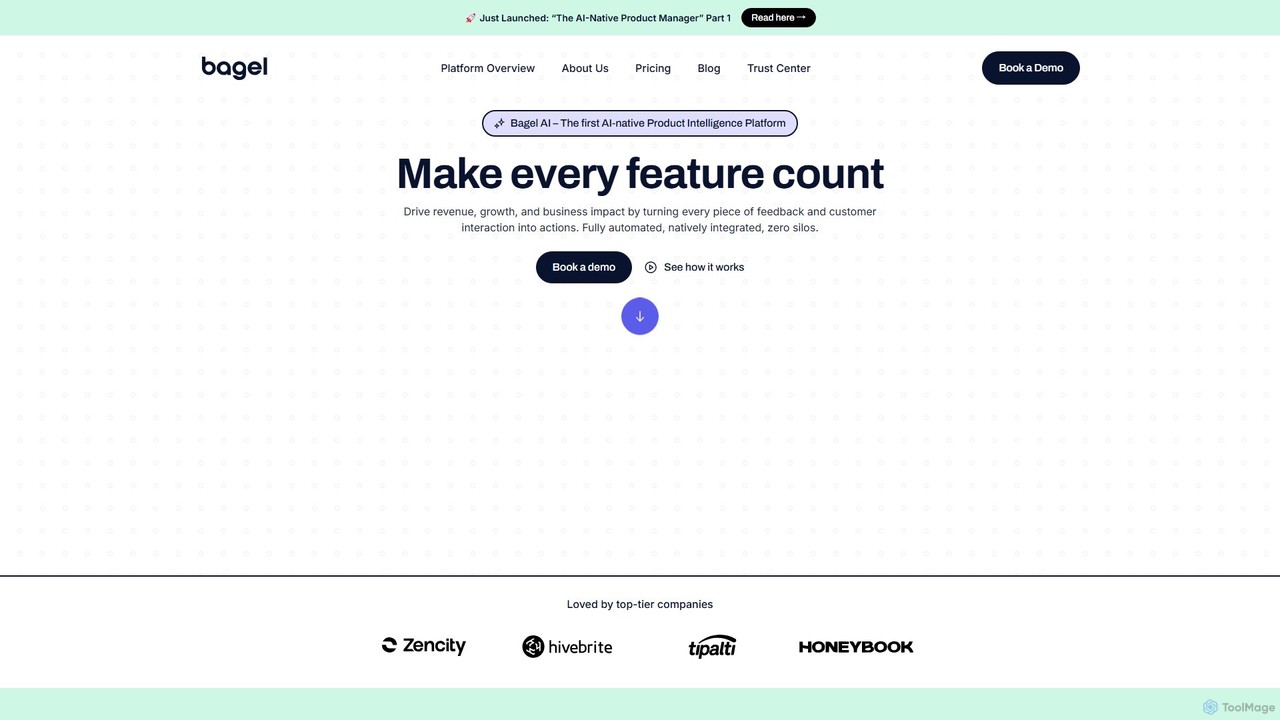
Bagel AI is an AI-native product intelligence platform that automatically consolidates customer feedback from all sources. It helps product teams identify high-impact features, align roadmaps with revenue goals, and bridge the gap between product, GTM teams, and customers, turning scattered insights into actionable growth strategies.
Customer Feedback Management
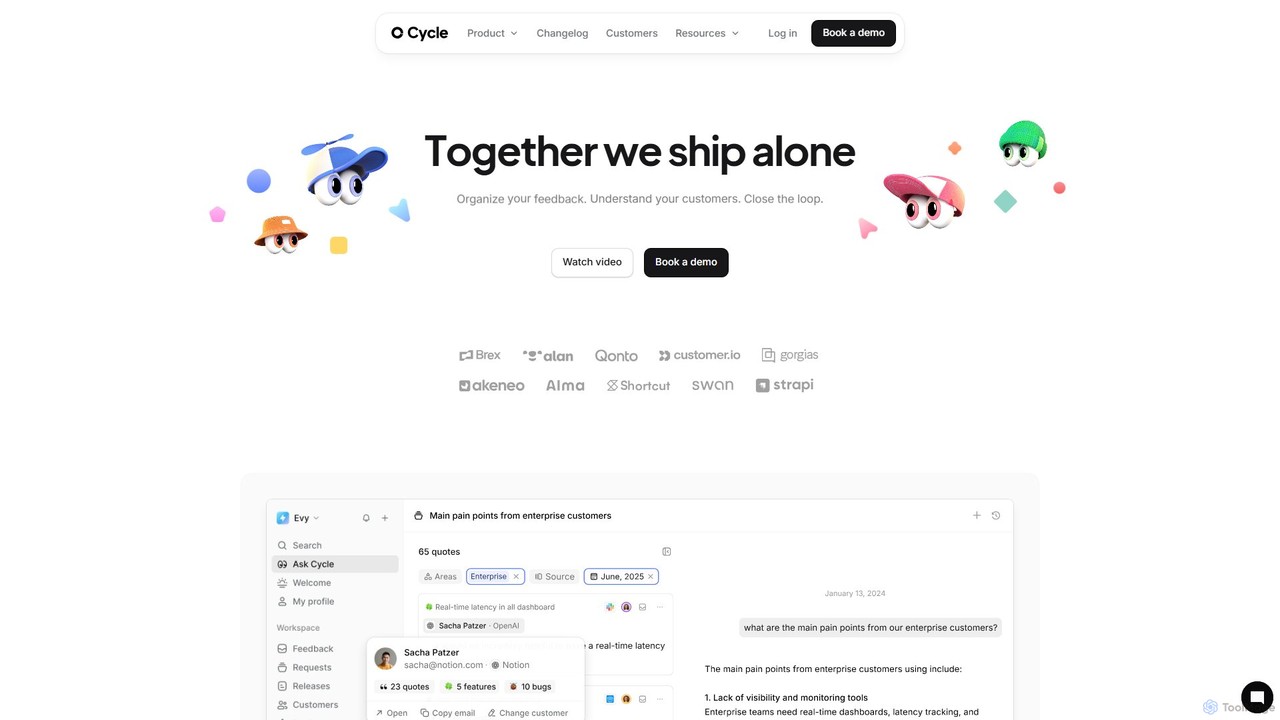
Cycle
Cycle is an AI-powered feedback hub designed for product teams. It automates the collection, organization, and analysis of customer feedback from various sources like Slack, Zendesk, and Intercom. With dedicated AI agents, Cycle helps teams understand customer needs, prioritize features, and close the feedback loop effectively, streamlining the entire product development lifecycle.
Voice Of The Customer
productlane
Productlane is an AI-powered customer support and feedback system designed for B2B SaaS companies. It unifies email, Slack, and live chat into a single inbox and features deep integration with Linear to streamline the feedback-to-development pipeline. With an AI assistant, a modern knowledge base, and a public roadmap, it helps teams build user-centric products efficiently.
Help Desk
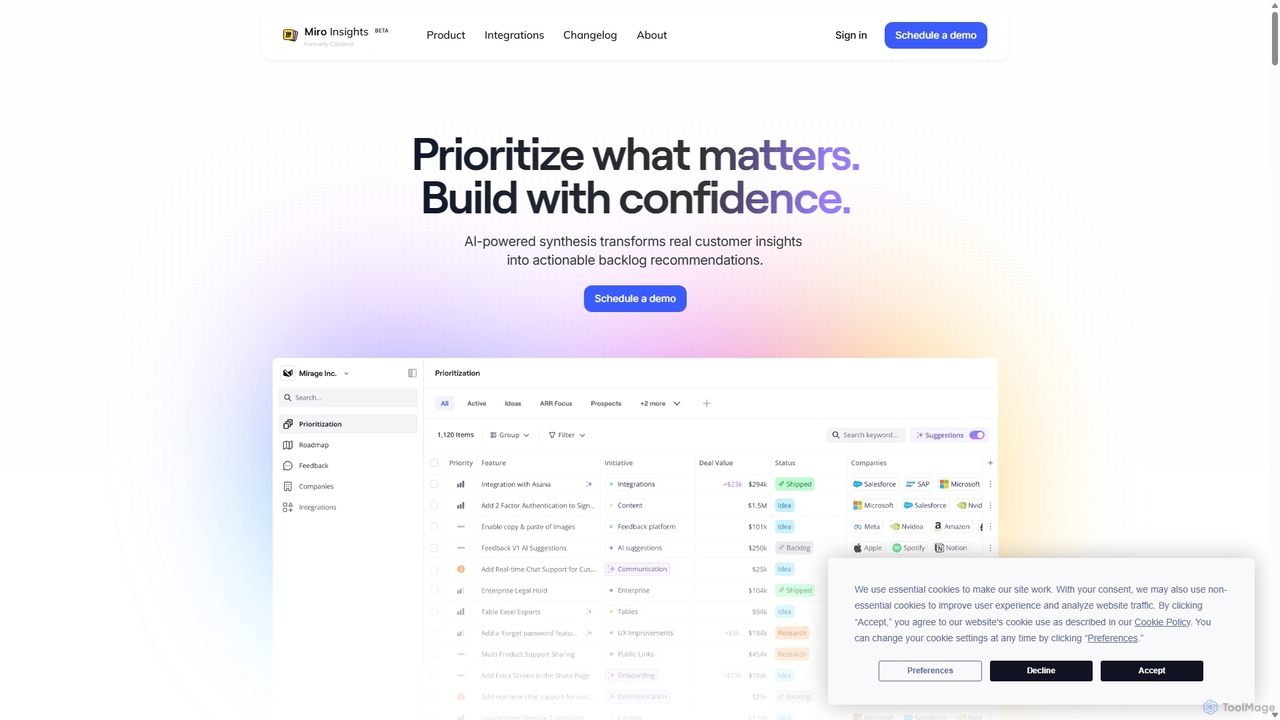
Miro Insights
Miro Insights is an AI-powered product management platform that helps teams build better products. It automatically synthesizes customer feedback from various sources like calls, tickets, and CRMs, transforming raw data into actionable insights. Teams can prioritize features based on revenue impact, align on a data-driven roadmap, and connect their product strategy directly to customer needs, all within the Miro collaborative workspace.
Customer Feedback Management
UserWise
UserWise is an AI-powered user analytics and feedback platform designed to help businesses understand their customers deeply. It consolidates user behavior data, feedback, and support tickets, using AI to uncover actionable insights, identify friction points, and predict user churn, enabling data-driven product development and enhanced user experience.
User Behavior
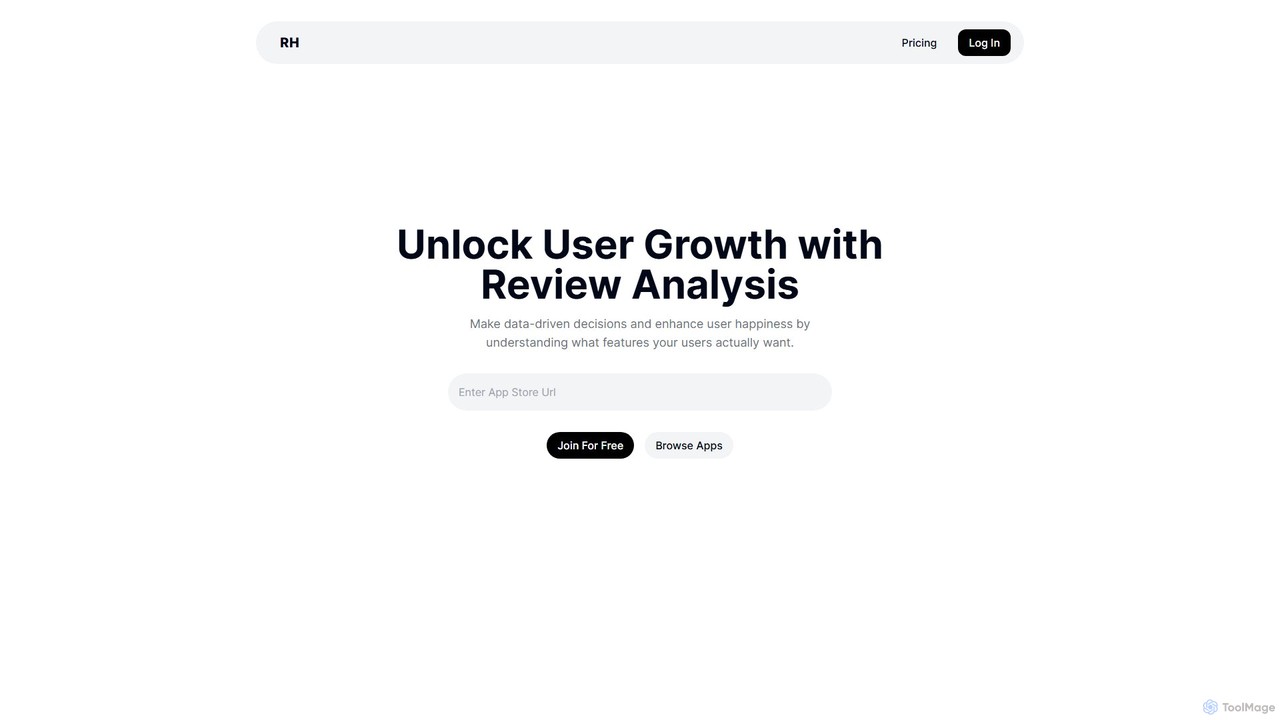
ReviewHawk
ReviewHawk is an AI-powered platform that analyzes app store reviews to help developers reduce user churn. It automatically identifies feature requests, pinpoints complaints, and provides actionable insights, enabling data-driven decisions to enhance user satisfaction and drive growth.
Analytics
Supascout
Supascout is an AI-powered tool that analyzes App Store reviews to provide actionable insights. It automatically categorizes user feedback into satisfactions, frustrations, and opportunities, helping developers and product managers make data-driven decisions for app improvement and competitor analysis.
Feedback Management
Painboard
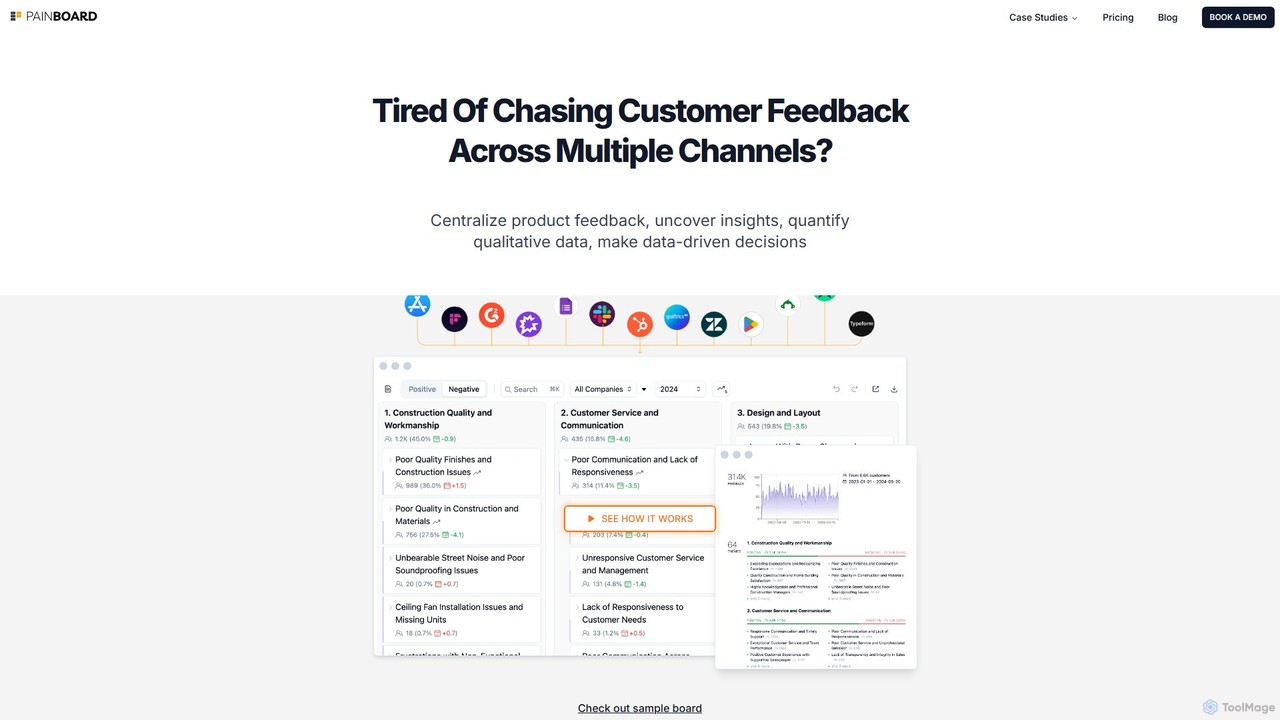
Painboard is an AI-powered platform that centralizes and analyzes unstructured customer feedback from multiple channels. It transforms qualitative data from NPS surveys, reviews, and support tickets into quantifiable, actionable insights, helping product and CX teams make data-driven decisions.
Business Intelligence