ChainGPT is an advanced AI infrastructure for the Web3, blockchain, and crypto space. It offers a suite of tools, including a no-code smart contract generator and auditor, an AI trading assistant, and an NFT generator, designed to make decentralized technology accessible to developers, businesses, and enthusiasts.

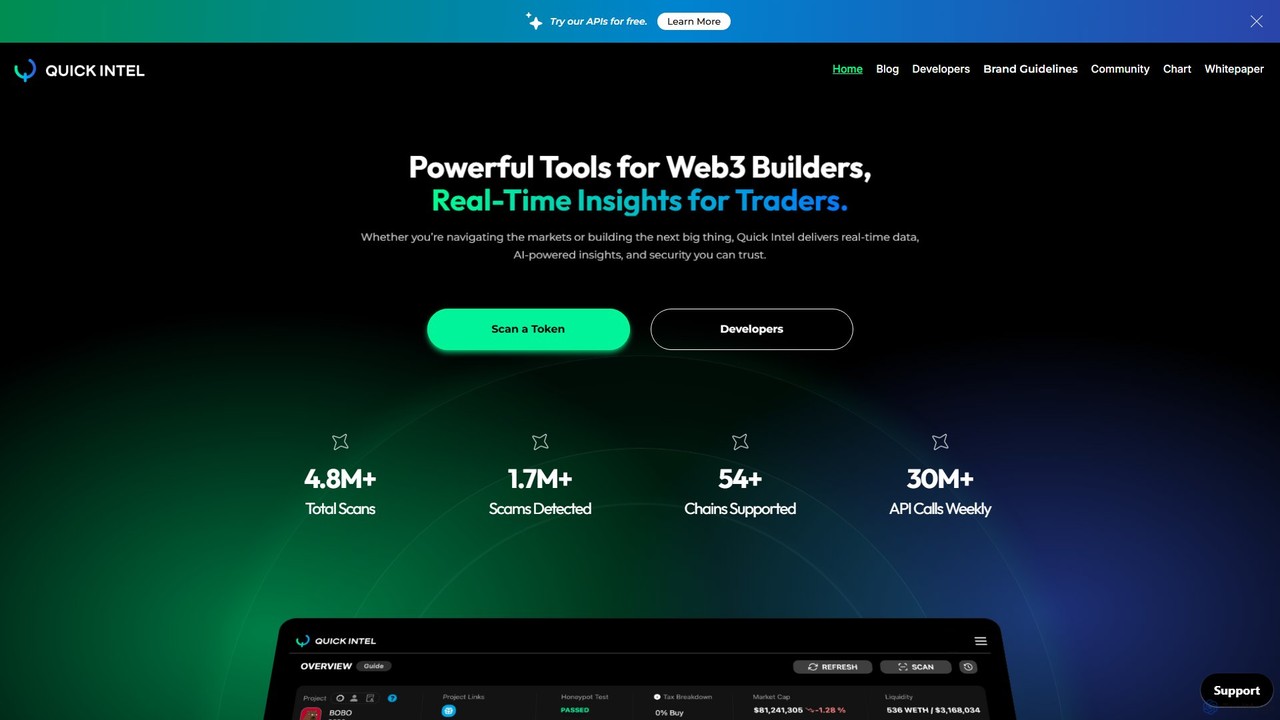
Quick Intel is an AI-powered security platform for the Web3 space, providing real-time smart contract analysis for crypto traders and developers. It scans contracts across dozens of blockchains to detect hidden risks, potential scams, and honeypots, empowering users to make safer investment decisions.
Product overview
ChainGPT Product overview
ChainGPT is an advanced AI infrastructure for the Web3, blockchain, and crypto space. It offers a suite of tools, including a no-code smart contract generator and auditor, an AI trading assistant, and an NFT generator, designed to make decentralized technology accessible to developers, businesses, and enthusiasts.

Quick Intel Product overview
Quick Intel is an AI-powered security platform for the Web3 space, providing real-time smart contract analysis for crypto traders and developers. It scans contracts across dozens of blockchains to detect hidden risks, potential scams, and honeypots, empowering users to make safer investment decisions.
Detailed feature comparison
| Feature | ChainGPT | Quick Intel |
|---|---|---|
| Primary category | Code Generation | Api |
| Added | 2025-08-14 | 2025-08-11 |
| Pricing | Freemium | Freemium |
| Official website | www.chaingpt.org | quickintel.io |
| Product type | Website | Website |
| Performance data | ||
| User rating | Not verified | Not verified |
| Comments | 0 | 0 |
| Monthly visits | 129.4K | 4.1K |
| Monthly growth | 27.2% | -61.3% |
| Favorites | 127 | 94 |
| Details | View details | View details |
ChainGPT vs Quick Intel monthly traffic
Compare ChainGPT and Quick Intel by monthly reach, traffic trend, visit depth, top regions, and acquisition sources.
How to interpret the traffic data
In the ChainGPT vs Quick Intel monthly traffic comparison, ChainGPT currently shows 129.4K visits and Quick Intel shows 4.1K; ChainGPT has about 31.2 times the visible traffic of Quick Intel, an absolute difference of about 125.3K visits. This reflects visible reach, not feature quality or paid users.
Both tools provide verified traffic details, so monthly trends, visit depth, regions, and acquisition sources can be compared on the same basis.
ChainGPT monthly traffic:
Latest traffic
Monthly traffic trend
- 2025/9: 235.7K Monthly visits
- 2026/1: 214.4K Monthly visits
- 2026/2: 137.4K Monthly visits
- 2026/3: 122K Monthly visits
- 2026/4: 101.8K Monthly visits
- 2026/5: 129.4K Monthly visits
Top regions
Top 5 countries/regions
| Country/region | Percentage | Traffic |
|---|---|---|
| 🇻🇳Vietnam | 28.38% | 36.7K |
| 🇺🇸United States | 24.86% | 32.2K |
| 🇮🇳India | 21.26% | 27.5K |
| 🇮🇩Indonesia | 14.41% | 18.7K |
| 🇵🇱Poland | 11.09% | 14.4K |
Traffic sources
| Source type | Percentage | Traffic |
|---|---|---|
| Direct | 66.81% | 86.5K |
| Referral | 32.6% | 42.2K |
| 0.59% | 764 |
Search keywords
Quick Intel monthly traffic:
Latest traffic
Monthly traffic trend
- 2025/9: 7.4K Monthly visits
- 2026/1: 8K Monthly visits
- 2026/2: 6.3K Monthly visits
- 2026/3: 13.7K Monthly visits
- 2026/4: 10.7K Monthly visits
- 2026/5: 4.1K Monthly visits
Top regions
Top 5 countries/regions
| Country/region | Percentage | Traffic |
|---|---|---|
| 🇮🇩Indonesia | 42.19% | 1.7K |
| 🇺🇸United States | 27% | 1.1K |
| 🇮🇳India | 18.17% | 753 |
| 🇺🇦Ukraine | 12.64% | 524 |
Traffic sources
| Source type | Percentage | Traffic |
|---|---|---|
| Direct | 69.95% | 2.9K |
| Referral | 30.05% | 1.2K |
Search keywords
Usage comparison
Compare the core capabilities of ChainGPT and Quick Intel
ChainGPT Core features
Quick Intel Core features
Use cases
ChainGPT Use cases
Quick Intel Use cases
ChainGPT vs Quick Intel:In-depth comparison and selection guidance
First decide whether the products solve the same kind of need
This in-depth ChainGPT vs Quick Intel comparison uses only the product records, taxonomy, audience, traffic, and community signals available on this page. ChainGPT is primarily listed under “Code Generation”, while Quick Intel is primarily listed under “Api”, so the first decision is whether your actual task matches their recorded scope.
The structured fields currently show these decision-relevant differences: Primary category (ChainGPT: Code Generation; Quick Intel: Api); Monthly visits (ChainGPT: 129.4K; Quick Intel: 4.1K); Monthly growth (ChainGPT: 27.2%; Quick Intel: -61.3%); Favorites (ChainGPT: 127; Quick Intel: 94); Website (ChainGPT: www.chaingpt.org; Quick Intel: quickintel.io). These facts are more useful for selection than brand visibility alone.
What market visibility and monthly traffic mean
In the ChainGPT vs Quick Intel monthly traffic comparison, ChainGPT currently shows 129.4K visits and Quick Intel shows 4.1K; ChainGPT has about 31.2 times the visible traffic of Quick Intel, an absolute difference of about 125.3K visits. This reflects visible reach, not feature quality or paid users.
Both tools provide verified traffic details, so monthly trends, visit depth, regions, and acquisition sources can be compared on the same basis.
If public market visibility is an important first-pass criterion, investigate ChainGPT first. The final choice should still follow taxonomy, use case, and a real trial because higher traffic does not prove broader capabilities or better workflow fit.
Product positioning, use cases, and roles
ChainGPT and Quick Intel currently overlap in shared categories: Crypto; shared tags: blockchain, crypto, developer tools, security, smart contract, and web3. This can place both on the same shortlist, but it does not prove equal implementation, depth, or cost.
ChainGPT's unique categories/tags are Code Generation, No Code, Blockchain, ai trading, auditor, NFT generator, no-code, and solidity; Quick Intel's are Api, Fraud Detection, API, audit, defi, ethereum, honeypot checker, and scam detection. These unique fields are the strongest differentiators: validate the product whose recorded scope matches the task instead of following traffic alone.
What ratings, comments, and favorites can tell you
ChainGPT has no verified rating, 0 comments, 127 favorites, and 139 likes;Quick Intel has no verified rating, 0 comments, 94 favorites, and 112 likes。
Neither product has enough rating or comment samples for a credible reputation ranking.
Selection guidance by actual need
When to evaluate ChainGPT first
Put ChainGPT on the priority trial list when the task aligns with “Code Generation” and especially Code Generation, No Code, Blockchain, ai trading, auditor, and NFT generator. This follows recorded positioning and does not imply unlisted capabilities are absent.
ChainGPT also currently records: pricing is freemium, product type is website, 129.4K verified monthly visits, no verified user rating. Verify any hard requirement around price, platform, or reach before trial, and do not let sparse review data substitute for testing.
When to evaluate Quick Intel first
Put Quick Intel on the priority trial list when the task aligns with “Api” and especially Api, Fraud Detection, API, audit, defi, and ethereum. This follows recorded positioning and does not imply unlisted capabilities are absent.
Quick Intel also currently records: pricing is freemium, product type is website, 4.1K verified monthly visits, no verified user rating. Verify any hard requirement around price, platform, or reach before trial, and do not let sparse review data substitute for testing.
How to validate the recommendation before deciding
The available data describes positioning, public visibility, and community signals, but it cannot prove output quality, speed, integration effort, privacy, or long-term cost in your workflow. Before deciding, run the same representative tasks in ChainGPT and Quick Intel, then record completion time, accuracy, manual corrections, and the real paid threshold. A like-for-like trial turns this comparison into a defensible adoption decision.
Comparison FAQ
How should I choose between ChainGPT and Quick Intel?
Where does this comparison data come from?
What do unknown fields mean?
Related AI tools

SolidityScan
SolidityScan is an AI-powered smart contract vulnerability scanner and auditing tool. It automates the security analysis of Solidity code, detecting vulnerabilities, suggesting gas optimizations, and ensuring compliance with best practices to secure Web3 applications.
Code Security
Code Genie
Code Genie is an AI-powered, one-click auditing tool for Ethereum-based smart contracts. It leverages Large Language Models (LLMs) to detect vulnerabilities, optimize gas usage, and provide real-time code fixes, making smart contract security fast, affordable, and accessible to all developers.
Code Auditing
Laika AI
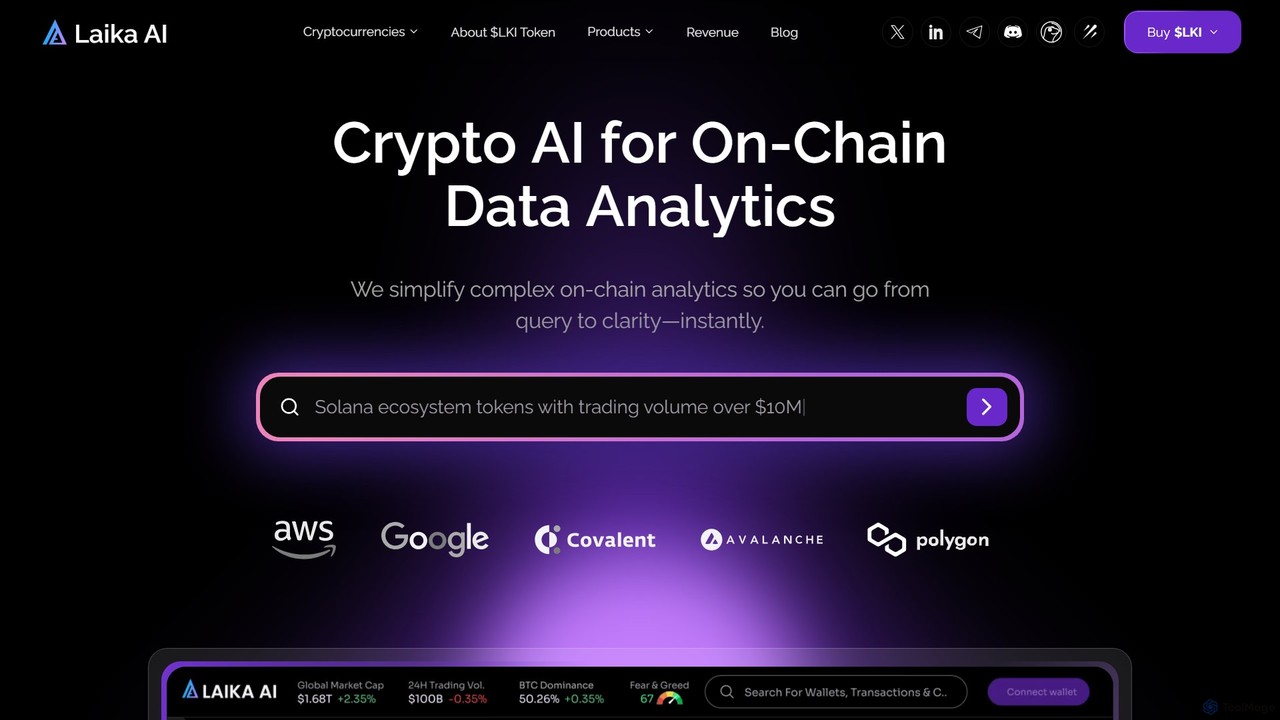
Laika AI is an advanced AI-powered platform for on-chain data analytics and crypto trading. It simplifies complex blockchain data, offers a trading bot with high-accuracy predictions, performs smart contract audits, and tracks whale movements. Accessible via Chrome Extension, Telegram, and API, it serves both retail and institutional traders by providing actionable insights across major blockchains like Ethereum, Solana, and BSC.
Api
ContractReader
ContractReader is an AI-powered tool designed for developers, auditors, and crypto enthusiasts to read, understand, and audit blockchain smart contracts. It enhances code readability with syntax highlighting, displays live on-chain data, and provides GPT-4 powered security reviews to identify potential vulnerabilities across multiple blockchain networks.
Blockchain
Enzyme
Enzyme is a no-code platform that empowers creators, developers, and brands to design, launch, and manage Web3 projects. It provides a vast library of pre-built, secure smart contracts for NFTs, DAOs, DeFi, and more, enabling instant deployment on multiple blockchains without writing a single line of code.
Blockchain
Third
Third is an AI-powered platform for instantly generating, debugging, and deploying Solidity smart contracts across all EVM-compatible blockchains. It simplifies Web3 development, allowing users to create complex contracts like ERC20 tokens, NFTs, DAOs, and DEXs from simple prompts, with one-click deployment.
Web3 Development
nifty_nft
An all-in-one AI-powered platform for creating, managing, and launching entire NFT collections. Generate unique art, automate metadata, and deploy smart contracts with no code required. Perfect for artists, brands, and creators entering the Web3 space.
Nft Generator
Tearline
Tearline is an AI-powered platform that simplifies Web3 interactions. It allows users to execute complex blockchain actions using natural language commands. The AI understands user intent, plans the optimal path across multiple DApps, and automates the execution, making Web3 accessible to everyone, regardless of technical expertise.
Crypto
Kritisi
Kritisi is an AI-powered security audit explorer for Solidity smart contracts. Powered by Google's Gemini AI, it scans code for vulnerabilities across Ethereum, Arbitrum, Base, and Optimism networks. It provides real-time analysis, intelligent security scores, and automated risk detection to help developers build more secure Web3 applications.
Code Auditing
ChainAware.ai
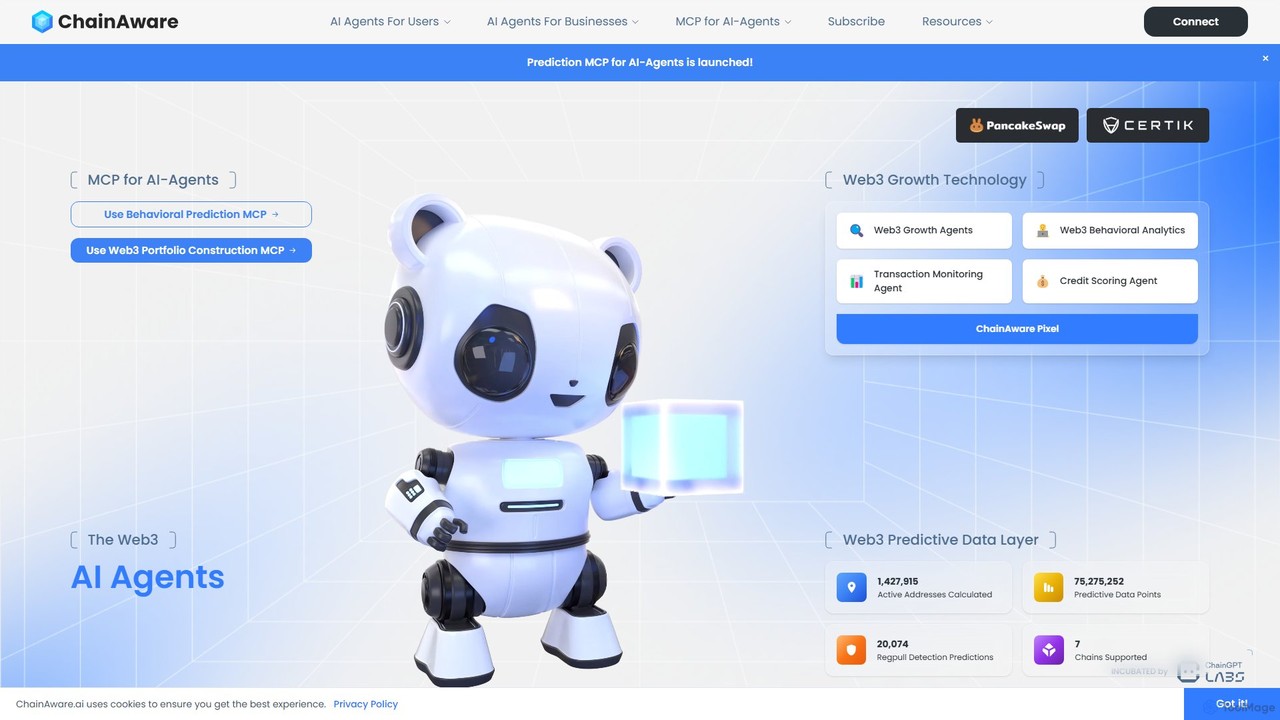
ChainAware.ai is a Web3 AI platform offering a suite of predictive agents for blockchain security and growth. It provides tools for fraud detection, rug pull alerts, wallet auditing, and user behavioral analytics, empowering both individual crypto users and businesses to operate securely and make data-driven decisions.
Api
SecuredAI
SecuredAI is an AI-powered Web3 security platform that provides professional smart contract security audits in minutes. It offers a complete security infrastructure, including real-time on-chain monitoring, exploit simulations, and on-chain verification, enabling developers to ship secure code 100x faster and protect their DeFi projects.
Code Security
Bueno
Bueno is a comprehensive no-code toolkit for NFT creators. It empowers artists and builders to generate art collections, deploy custom smart contracts, and create interactive worlds without writing any code. The platform supports multiple blockchains and offers a full suite of tools for the entire NFT project lifecycle.
Digital Art
Questflow
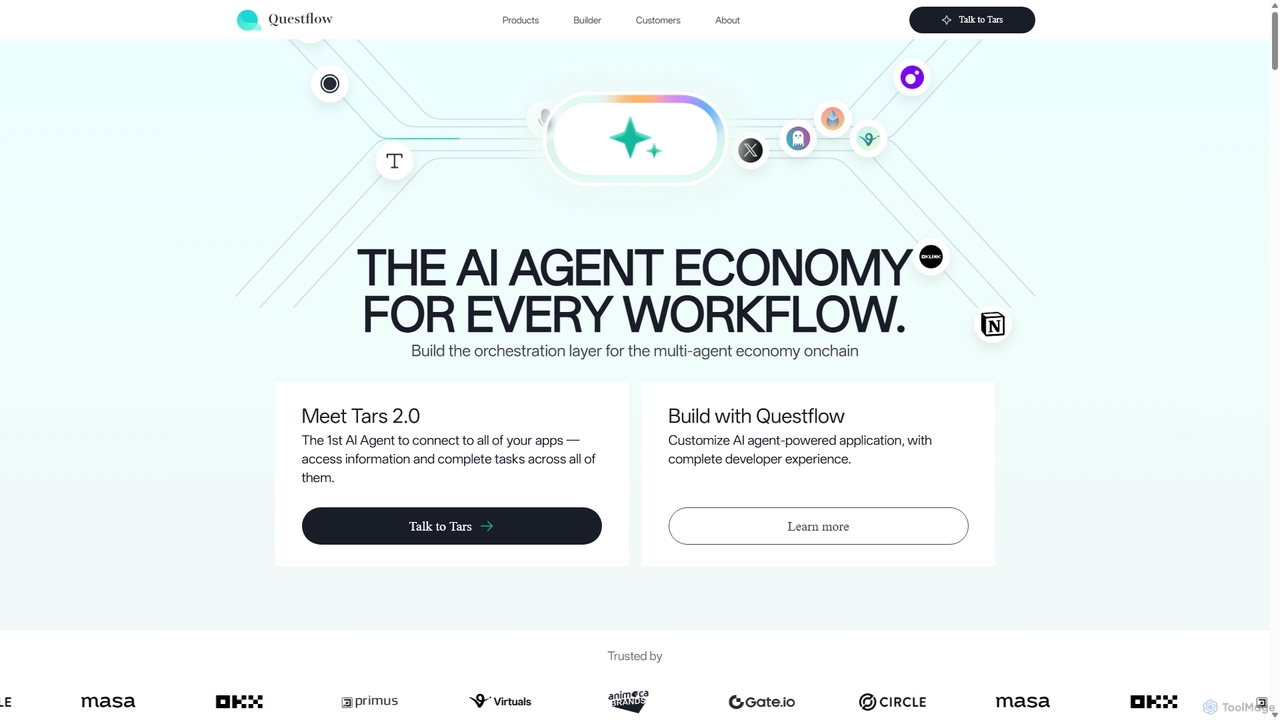
Questflow is a no-code platform for building, deploying, and monetizing autonomous AI agent swarms on-chain. It enables users to automate complex workflows across marketing, finance, and crypto by orchestrating multiple AI agents to work collaboratively. It features a pay-as-you-go model with a built-in crypto wallet.
No Code Platform
ChainIntel
ChainIntel is an AI-powered blockchain analytics platform that transforms complex on-chain data into actionable intelligence. It enables users to track wallets, analyze transactions, monitor DeFi and NFT markets, and identify emerging trends across multiple blockchains.
Intelligence
Namefi
Namefi is a pioneering platform that tokenizes traditional Web2 domain names into NFTs on the blockchain. It enables faster, safer, and more liquid trading of domains, integrates them into DeFi protocols, and uses AI to analyze and reveal their true potential value. Your domain becomes a verifiable, tradable digital asset.
Data Analysis