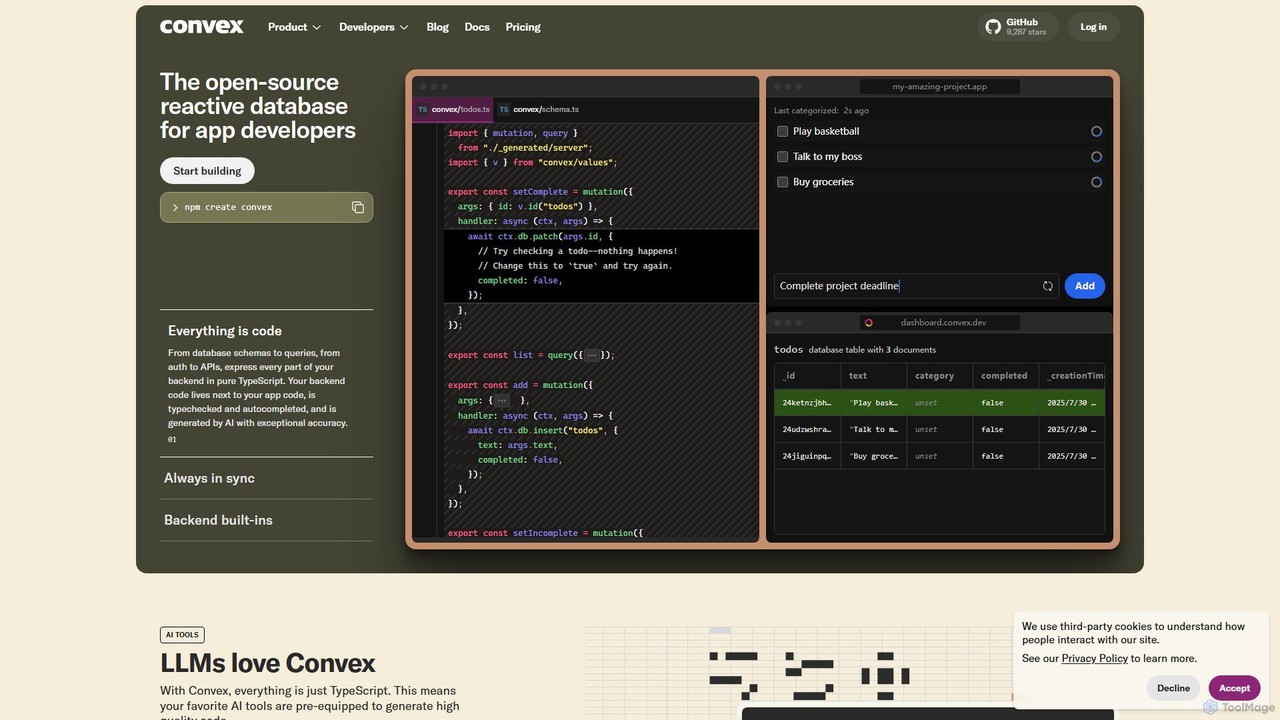
Convex is a backend-as-a-service platform for web developers, offering a reactive TypeScript database that simplifies building full-stack, real-time applications. It provides serverless functions, file storage, and vector search with end-to-end type safety, making it a powerful, developer-friendly alternative to Firebase.

Supabase is an open-source Firebase alternative, providing a complete backend solution built on Postgres. It offers a suite of tools including a database, authentication, instant APIs, edge functions, real-time subscriptions, storage, and vector embeddings to accelerate application development from prototype to production.
Product overview
Convex Product overview
Convex is a backend-as-a-service platform for web developers, offering a reactive TypeScript database that simplifies building full-stack, real-time applications. It provides serverless functions, file storage, and vector search with end-to-end type safety, making it a powerful, developer-friendly alternative to Firebase.
Supabase Product overview
Supabase is an open-source Firebase alternative, providing a complete backend solution built on Postgres. It offers a suite of tools including a database, authentication, instant APIs, edge functions, real-time subscriptions, storage, and vector embeddings to accelerate application development from prototype to production.
Detailed feature comparison
| Feature | Convex | Supabase |
|---|---|---|
| Primary category | Backend | Backend |
| Added | 2025-08-10 | 2025-08-10 |
| Pricing | Freemium | Freemium |
| Official website | www.convex.dev | supabase.com |
| Product type | Website | Website |
| Performance data | ||
| User rating | Not verified | Not verified |
| Comments | 0 | 0 |
| Monthly visits | 692.4K | 29.3M |
| Monthly growth | -14.9% | 11.7% |
| Favorites | 146 | 128 |
| Details | View details | View details |
Convex vs Supabase monthly traffic
Compare Convex and Supabase by monthly reach, traffic trend, visit depth, top regions, and acquisition sources.
How to interpret the traffic data
In the Convex vs Supabase monthly traffic comparison, Convex currently shows 692.4K visits and Supabase shows 29.3M; Supabase has about 42.2 times the visible traffic of Convex, an absolute difference of about 28.6M visits. This reflects visible reach, not feature quality or paid users.
Both tools provide verified traffic details, so monthly trends, visit depth, regions, and acquisition sources can be compared on the same basis.
Convex monthly traffic:
Latest traffic
Monthly traffic trend
- 2025/9: 735K Monthly visits
- 2026/1: 957.5K Monthly visits
- 2026/2: 947.1K Monthly visits
- 2026/3: 986.2K Monthly visits
- 2026/4: 813.5K Monthly visits
- 2026/5: 692.4K Monthly visits
Top regions
Top 5 countries/regions
| Country/region | Percentage | Traffic |
|---|---|---|
| 🇺🇸United States | 52.56% | 363.9K |
| 🇮🇳India | 20% | 138.5K |
| 🇫🇷France | 10.22% | 70.8K |
| 🇳🇬Nigeria | 9.74% | 67.4K |
| 🇰🇷Korea, Republic of | 7.48% | 51.8K |
Traffic sources
| Source type | Percentage | Traffic |
|---|---|---|
| Direct | 92.38% | 639.7K |
| Referral | 6.61% | 45.8K |
| 1.01% | 7K |
Search keywords
Supabase monthly traffic:
Latest traffic
Monthly traffic trend
- 2025/9: 13.8M Monthly visits
- 2026/1: 18.6M Monthly visits
- 2026/2: 20.1M Monthly visits
- 2026/3: 25.3M Monthly visits
- 2026/4: 26.2M Monthly visits
- 2026/5: 29.3M Monthly visits
Top regions
Top 5 countries/regions
| Country/region | Percentage | Traffic |
|---|---|---|
| 🇺🇸United States | 47.42% | 13.9M |
| 🇮🇳India | 23% | 6.7M |
| 🇧🇷Brazil | 13.44% | 3.9M |
| 🇬🇧United Kingdom | 8.16% | 2.4M |
| 🇵🇰Pakistan | 7.98% | 2.3M |
Traffic sources
| Source type | Percentage | Traffic |
|---|---|---|
| Direct | 94.28% | 27.6M |
| Referral | 3.43% | 1M |
| 2.29% | 669.9K |
Search keywords
Usage comparison
Compare the core capabilities of Convex and Supabase
Convex Core features
Supabase Core features
Use cases
Convex Use cases
Supabase Use cases
Convex vs Supabase:In-depth comparison and selection guidance
First decide whether the products solve the same kind of need
This in-depth Convex vs Supabase comparison uses only the product records, taxonomy, audience, traffic, and community signals available on this page. Convex is primarily listed under “Backend”, while Supabase is primarily listed under “Backend”, so the first decision is whether your actual task matches their recorded scope.
The structured fields currently show these decision-relevant differences: Monthly visits (Convex: 692.4K; Supabase: 29.3M); Monthly growth (Convex: -14.9%; Supabase: 11.7%); Favorites (Convex: 146; Supabase: 128); Website (Convex: www.convex.dev; Supabase: supabase.com). These facts are more useful for selection than brand visibility alone.
What market visibility and monthly traffic mean
In the Convex vs Supabase monthly traffic comparison, Convex currently shows 692.4K visits and Supabase shows 29.3M; Supabase has about 42.2 times the visible traffic of Convex, an absolute difference of about 28.6M visits. This reflects visible reach, not feature quality or paid users.
Both tools provide verified traffic details, so monthly trends, visit depth, regions, and acquisition sources can be compared on the same basis.
If public market visibility is an important first-pass criterion, investigate Supabase first. The final choice should still follow taxonomy, use case, and a real trial because higher traffic does not prove broader capabilities or better workflow fit.
Product positioning, use cases, and roles
Convex and Supabase currently overlap in shared categories: Backend and Database; shared tags: BaaS, database, developer tools, firebase alternative, and serverless. This can place both on the same shortlist, but it does not prove equal implementation, depth, or cost.
Convex's unique categories/tags are Developer Tools, backend, full-stack, react, real-time, typescript, and vector search; Supabase's are Platform As A Service, No Code & Low Code, AI, authentication, backend as a service, open source, postgres, and vector database. These unique fields are the strongest differentiators: validate the product whose recorded scope matches the task instead of following traffic alone.
What ratings, comments, and favorites can tell you
Convex has no verified rating, 0 comments, 146 favorites, and 137 likes;Supabase has no verified rating, 0 comments, 128 favorites, and 137 likes。
Neither product has enough rating or comment samples for a credible reputation ranking.
Selection guidance by actual need
When to evaluate Convex first
Put Convex on the priority trial list when the task aligns with “Backend” and especially Developer Tools, backend, full-stack, react, real-time, and typescript. This follows recorded positioning and does not imply unlisted capabilities are absent.
Convex also currently records: pricing is freemium, product type is website, 692.4K verified monthly visits, no verified user rating. Verify any hard requirement around price, platform, or reach before trial, and do not let sparse review data substitute for testing.
When to evaluate Supabase first
Put Supabase on the priority trial list when the task aligns with “Backend” and especially Platform As A Service, No Code & Low Code, AI, authentication, backend as a service, and open source. This follows recorded positioning and does not imply unlisted capabilities are absent.
Supabase also currently records: pricing is freemium, product type is website, 29.3M verified monthly visits, no verified user rating. Verify any hard requirement around price, platform, or reach before trial, and do not let sparse review data substitute for testing.
How to validate the recommendation before deciding
The available data describes positioning, public visibility, and community signals, but it cannot prove output quality, speed, integration effort, privacy, or long-term cost in your workflow. Before deciding, run the same representative tasks in Convex and Supabase, then record completion time, accuracy, manual corrections, and the real paid threshold. A like-for-like trial turns this comparison into a defensible adoption decision.
Comparison FAQ
How should I choose between Convex and Supabase?
Where does this comparison data come from?
What do unknown fields mean?
Related AI tools

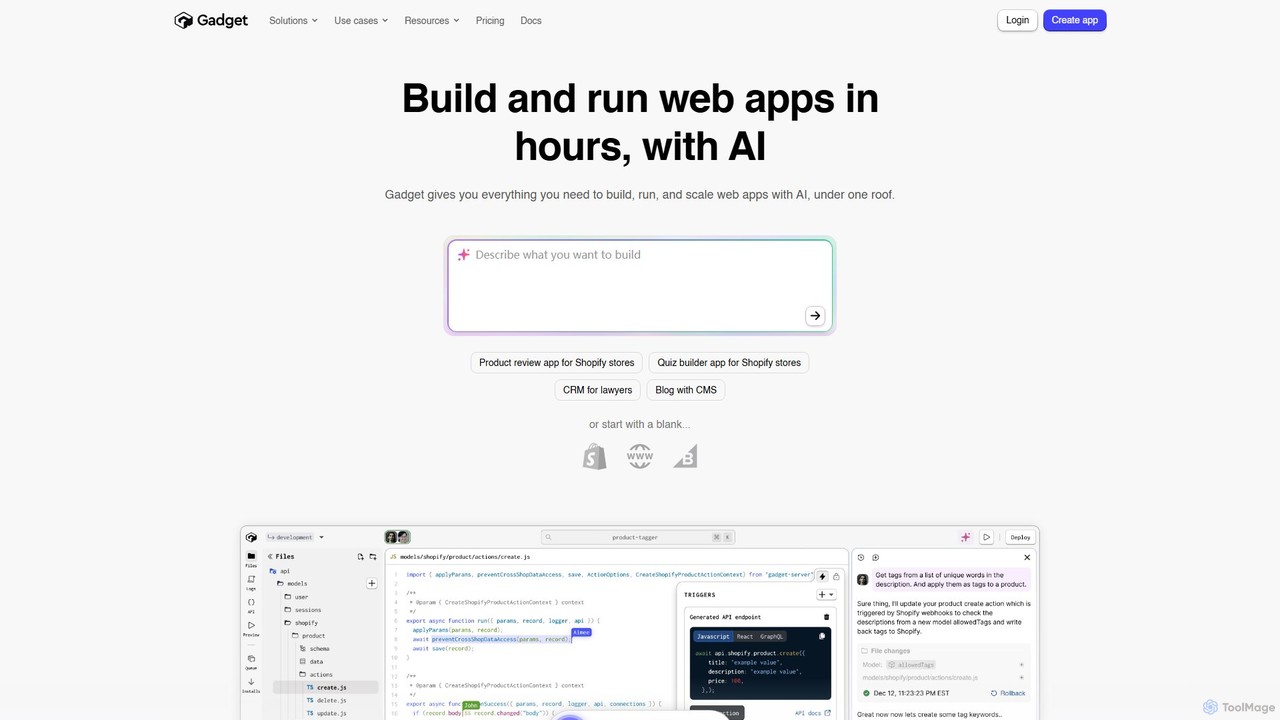
Gadget
Gadget is an all-in-one, serverless development platform designed to accelerate full-stack web application development, especially for the Shopify ecosystem. It automates backend infrastructure, including databases, APIs, and authentication, allowing developers to build and launch scalable apps, like Shopify apps, significantly faster. An integrated AI assistant further streamlines the coding process.
Backend
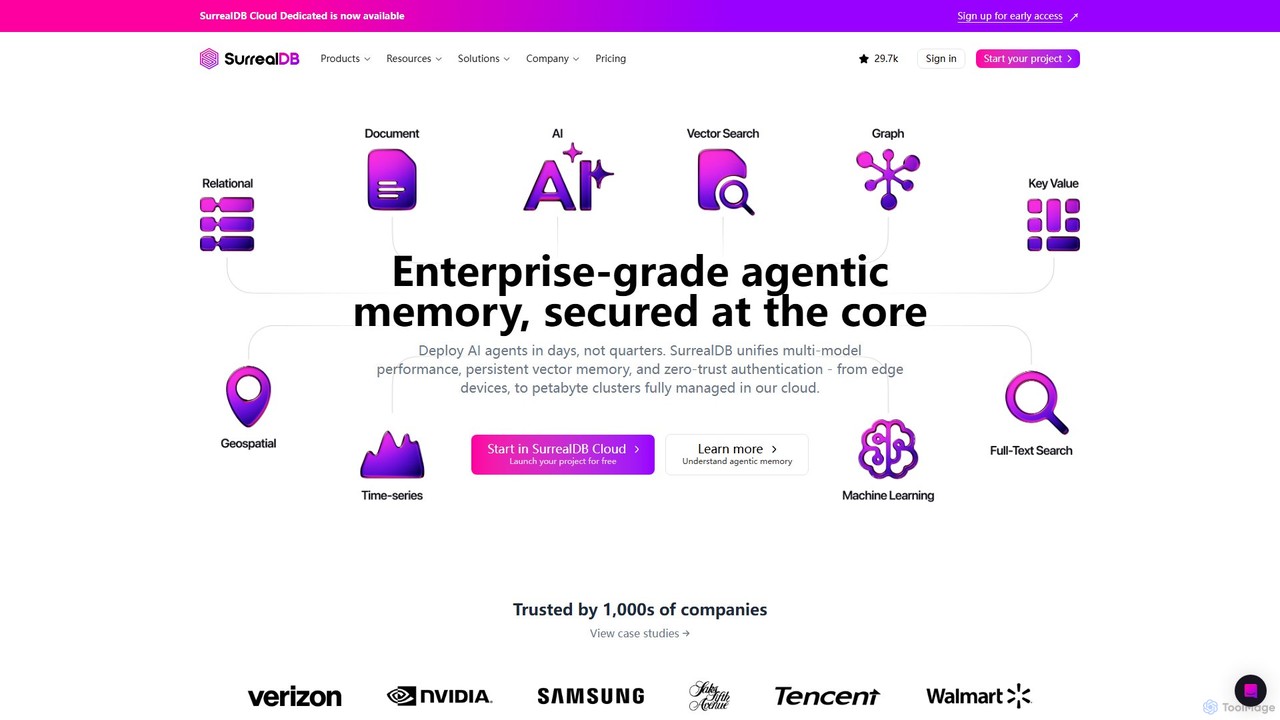
SurrealDB
SurrealDB is a next-generation, multi-model cloud database designed for modern applications. It simplifies backend development by unifying document, relational, graph, and time-series models with built-in full-text search, vector search, and in-database machine learning. Built for scalability and real-time data, it empowers developers to build complex, AI-powered applications with unprecedented ease and speed.
Vector Database
Hypi
Hypi is a low-code platform designed to accelerate application development. It provides a serverless backend, instant GraphQL APIs, and real-time data synchronization, enabling developers and businesses to build and scale applications faster and more efficiently without managing infrastructure.
Backend As A Service (Baas)
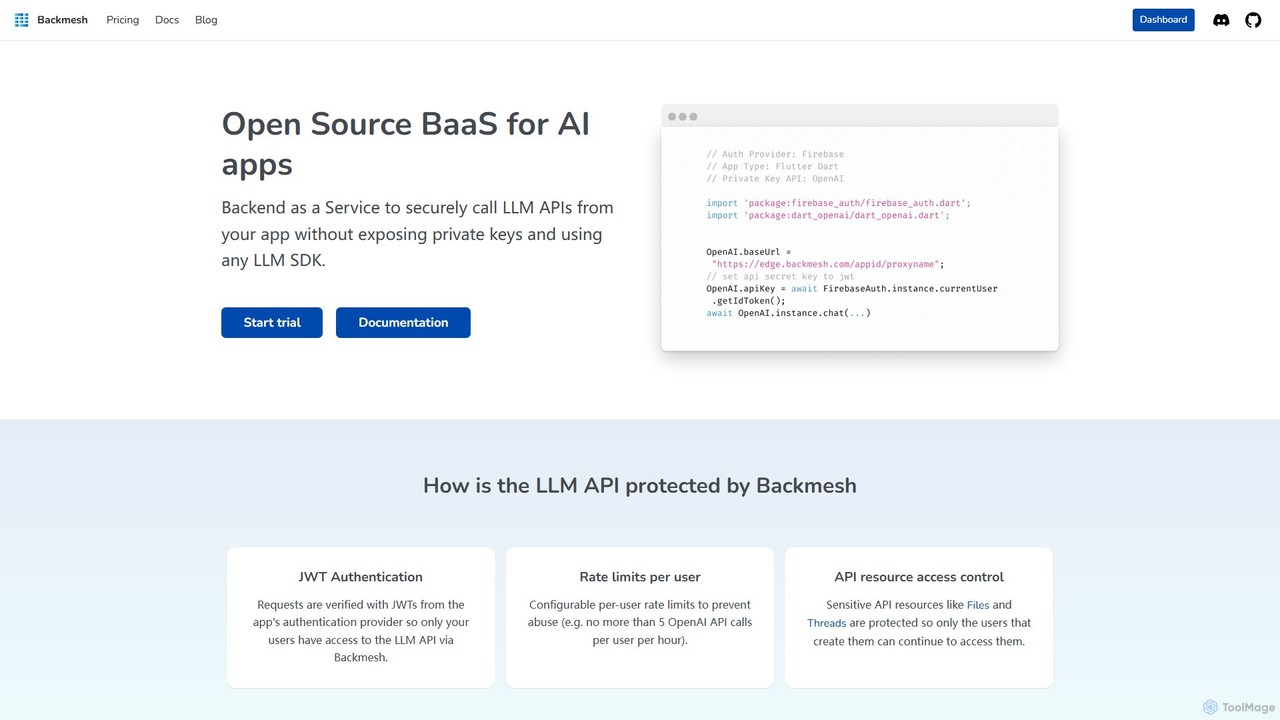
Backmesh
Backmesh is an open-source Backend as a Service (BaaS) designed for AI applications. It acts as a secure LLM API Gatekeeper, allowing developers to call LLM APIs like OpenAI and Gemini directly from web or mobile apps without exposing private keys. It offers features like JWT authentication, per-user rate limiting, and built-in analytics to manage and monitor API usage effectively.
Api
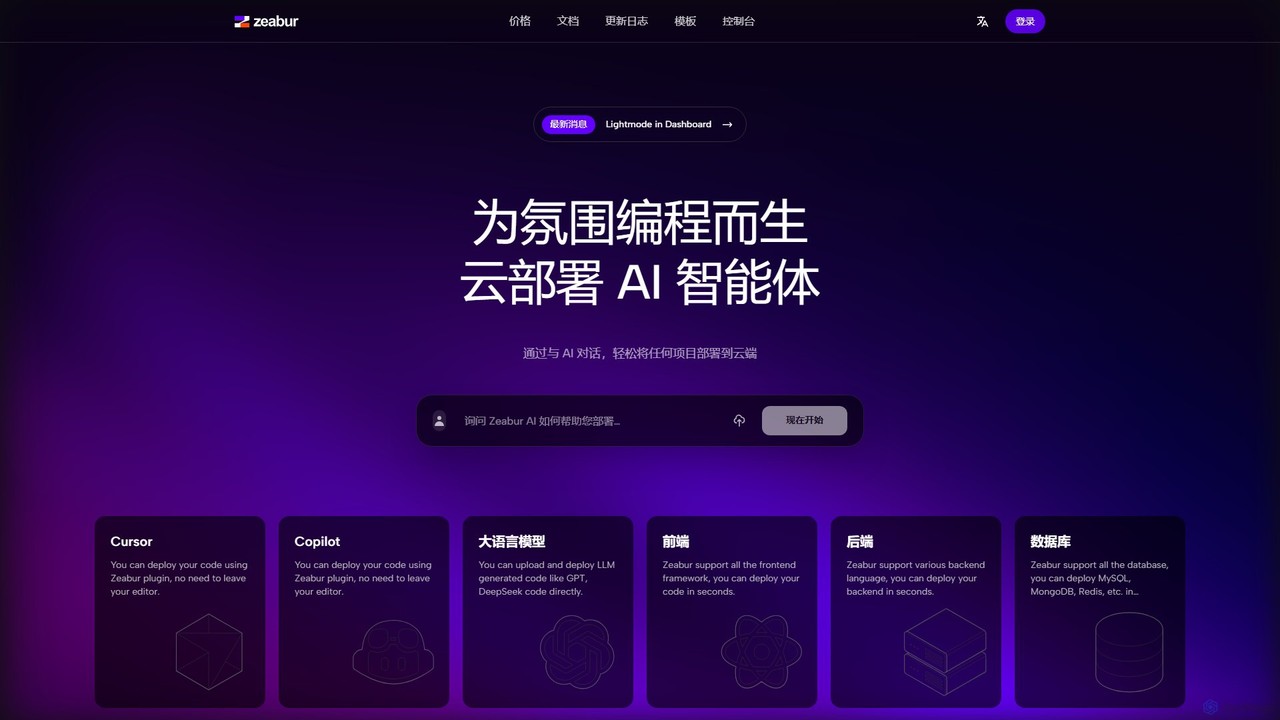
Zeabur
Zeabur is an AI-powered deployment platform (PaaS) designed for developers. It enables one-click deployment for any project, including front-end, back-end, databases, and AI agents, directly from code or through conversational AI. Featuring a pay-as-you-go model, automatic configuration, and auto-scaling, Zeabur simplifies cloud infrastructure, allowing developers to focus solely on coding.
Deployment
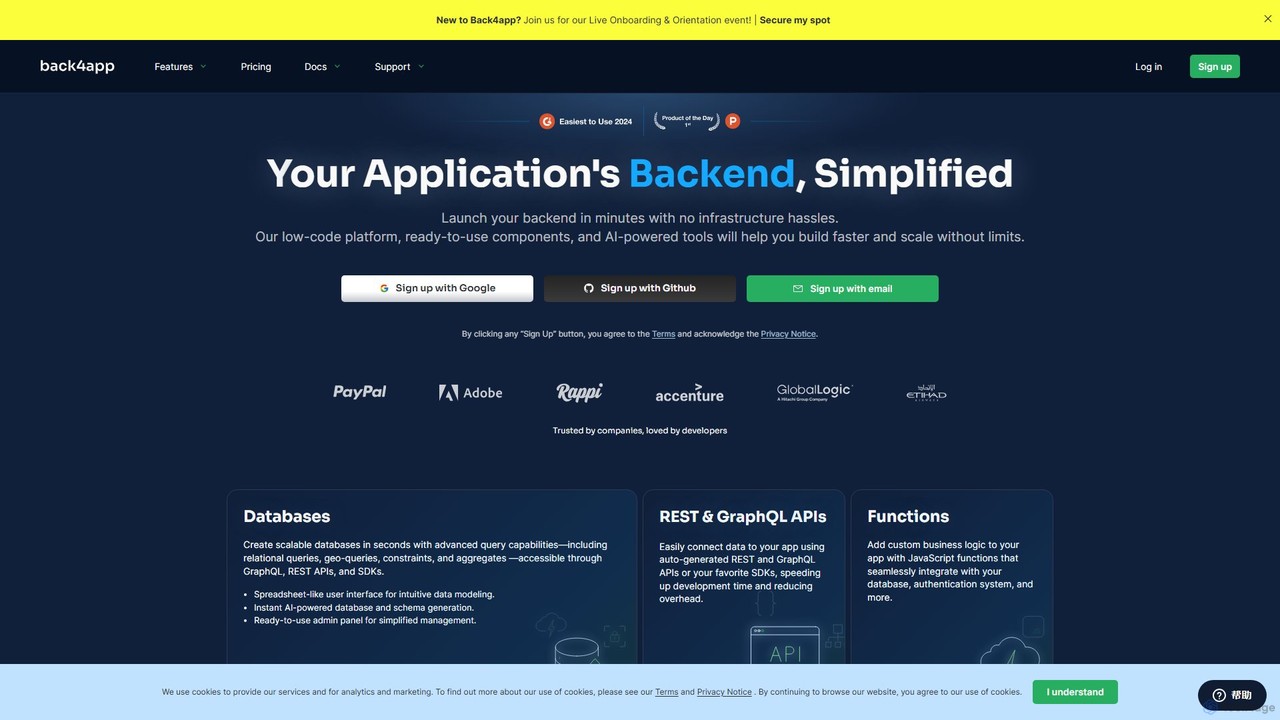
Back4app
Back4app is an AI-powered, low-code Backend-as-a-Service (BaaS) platform that simplifies application development. It enables developers to launch scalable backends in minutes, handling infrastructure complexities like databases, APIs, authentication, and storage. With its AI Agent, ready-to-use components, and extensive SDK support, Back4app accelerates the development process, allowing teams to build faster and scale without limits for both web and mobile applications.
Backend As A Service (Baas)
Neurelo
Neurelo was an innovative AI-powered Backend-as-a-Service (BaaS) platform designed to drastically simplify and accelerate backend development. It automatically generated production-ready REST and GraphQL APIs from a database schema, empowering developers to build scalable applications in a fraction of the time by handling database management, migrations, and API creation.
Api
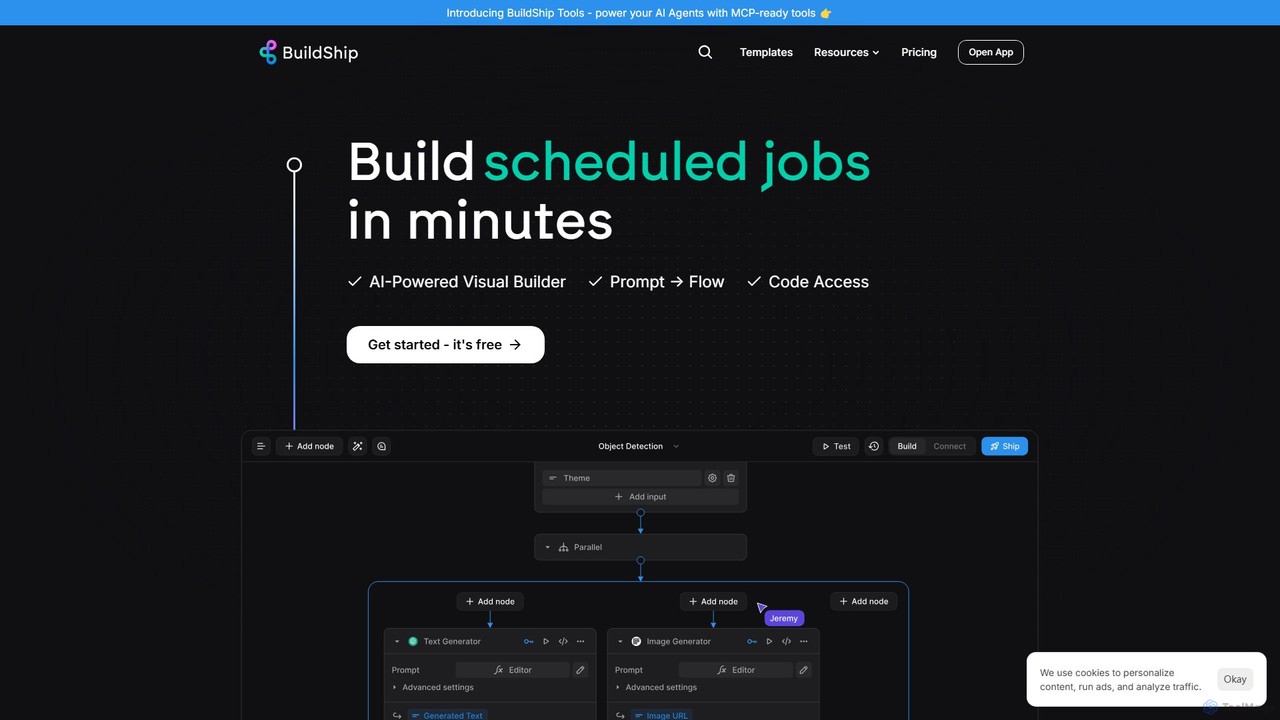
BuildShip
BuildShip is a low-code, AI-powered platform for visually building backend workflows, APIs, and scheduled jobs. Connect any AI model, database, or tool using a drag-and-drop interface or natural language prompts. Go from idea to a scalable, production-ready backend in minutes, with the flexibility to use JavaScript/TypeScript for advanced customization. Ideal for developers and creators alike.
Api
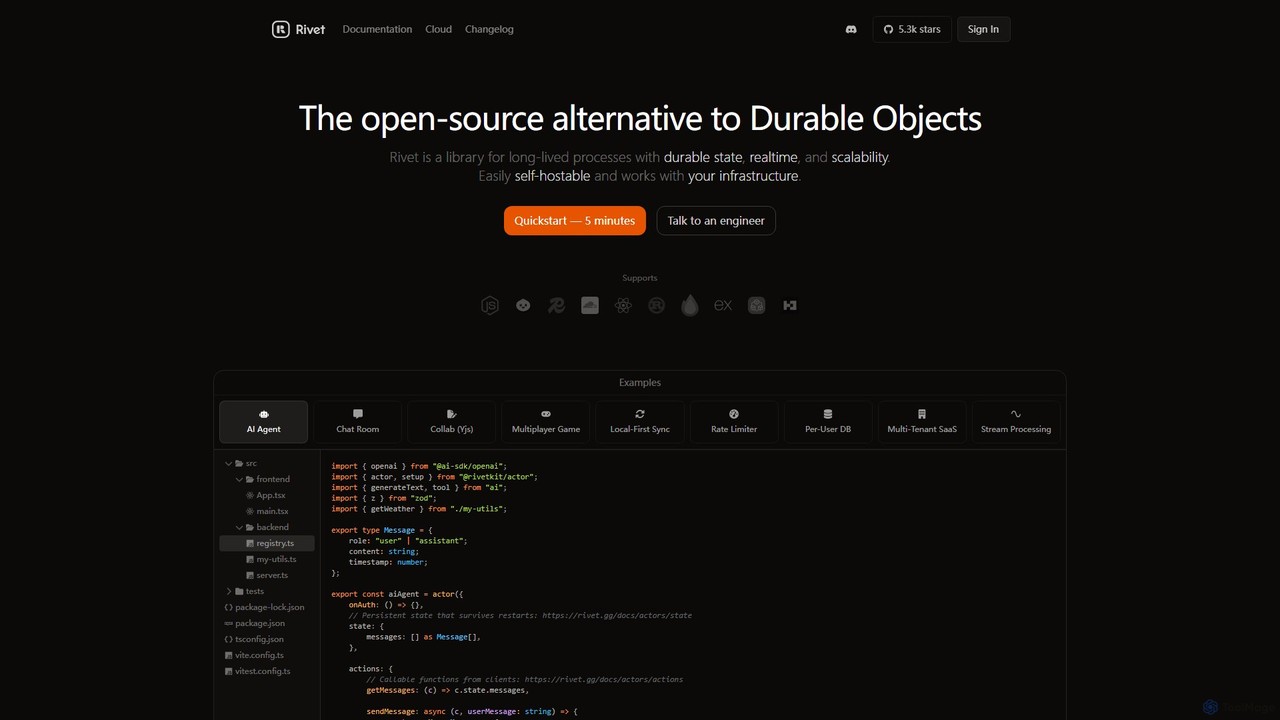
Rivet
Rivet is an open-source library for developers building scalable, real-time applications with durable state. It provides long-lived, stateful compute "actors" that simplify complex tasks like creating AI agents, collaborative apps, and multiplayer games. With features like built-in real-time communication, fault tolerance, and edge deployment, Rivet offers a powerful, self-hostable alternative to services like Cloudflare Durable Objects.
Backend
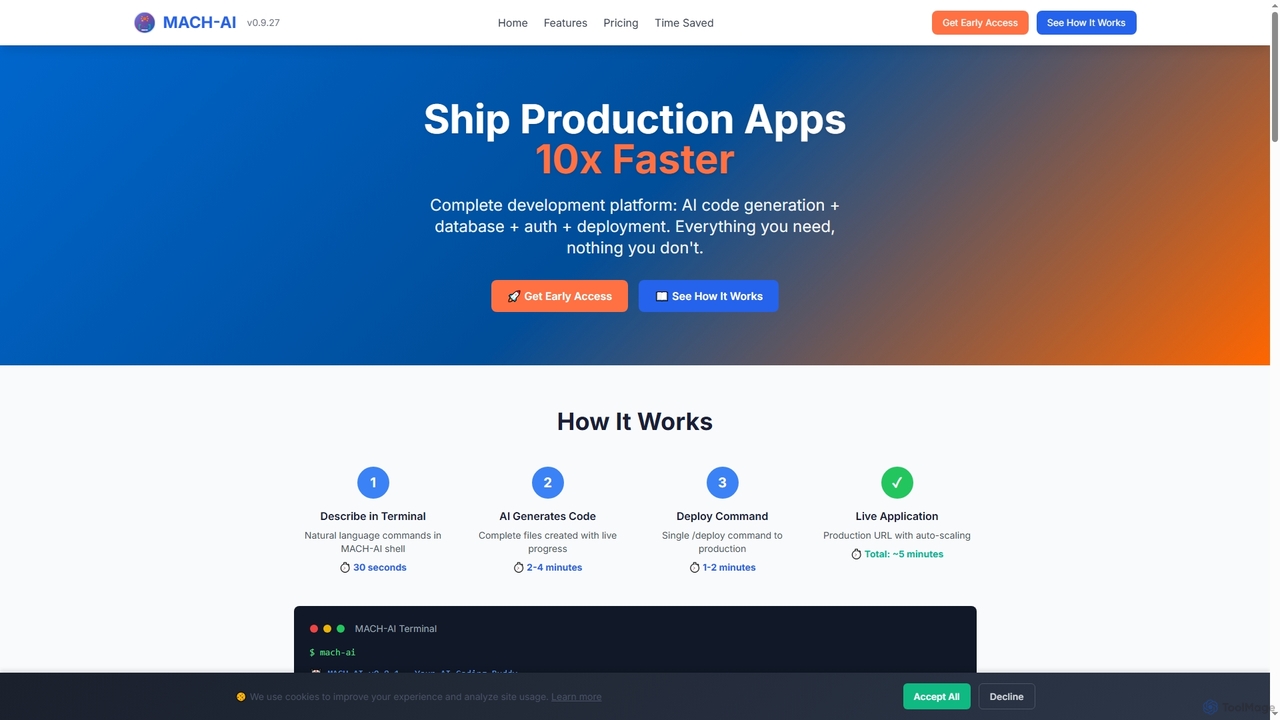
MACH-AI
MACH-AI is an AI coding assistant and complete development platform that transforms concepts into production-ready cloud applications in minutes. It integrates AI code generation, built-in database, authentication, and one-command deployment, enabling developers to build and launch scalable web applications 10x faster across Python, JavaScript, and TypeScript.
Application Deployment
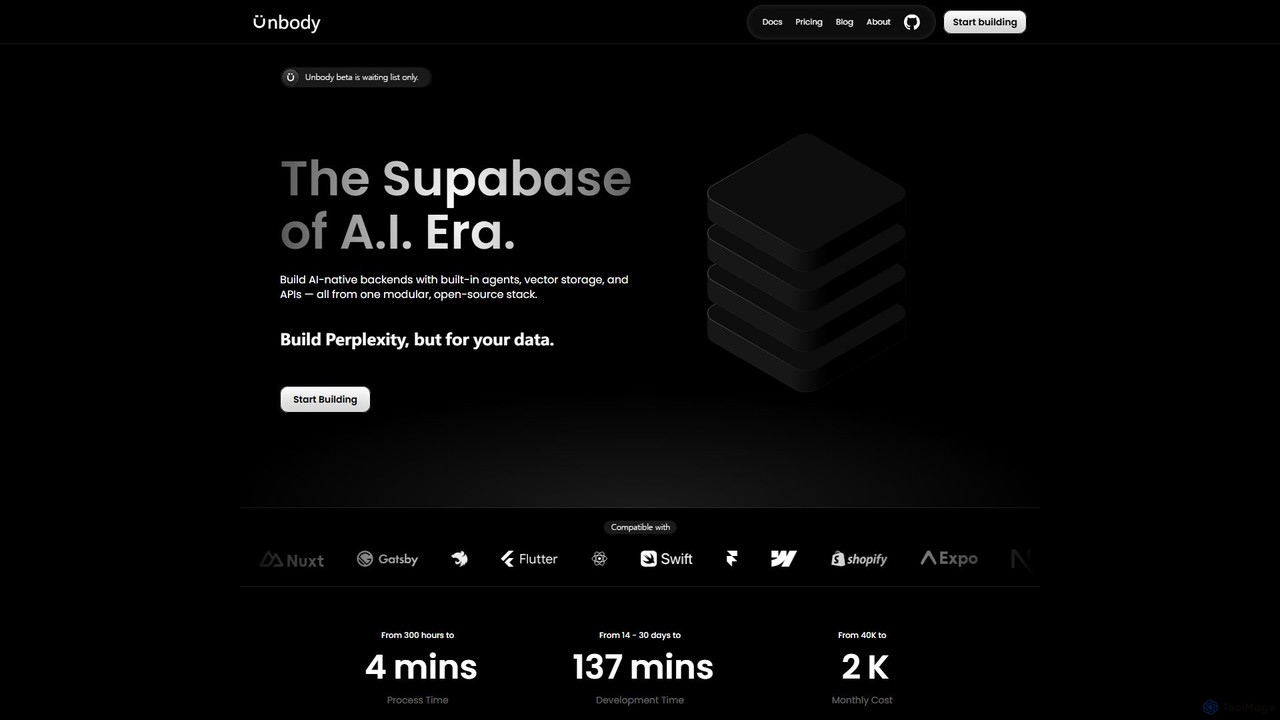
Unbody
Unbody is an AI-native development stack, described as the "Supabase of the AI Era." It provides developers with a modular, open-source backend featuring built-in agents, vector storage, and a unified API. This allows for the rapid and cost-effective creation of intelligent, adaptive applications by transforming any data into a queryable knowledge base, eliminating the need for fragmented systems and complex AI pipelines.
Vector Database
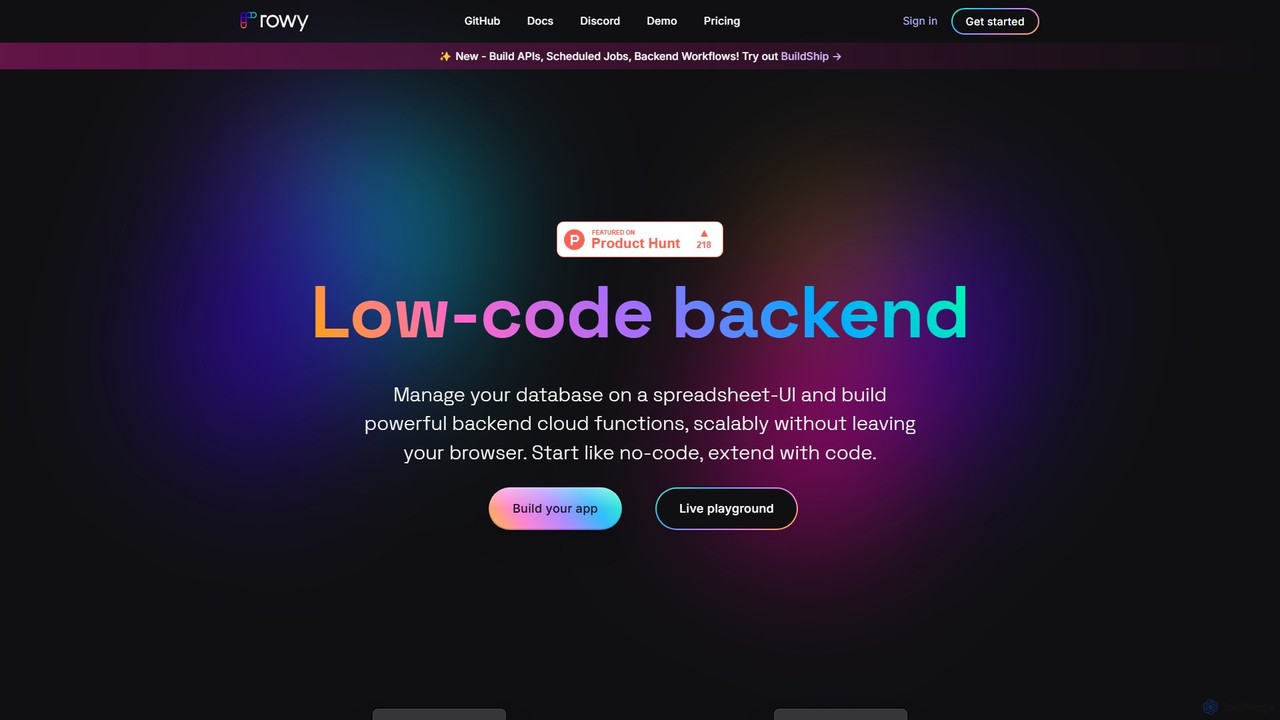
Rowy
Rowy is an open-source, low-code platform that provides an Airtable-like UI for Firebase and Google Cloud. It empowers users to manage databases, build cloud functions, and automate workflows with the simplicity of a spreadsheet, combined with the power of custom code.
Backend
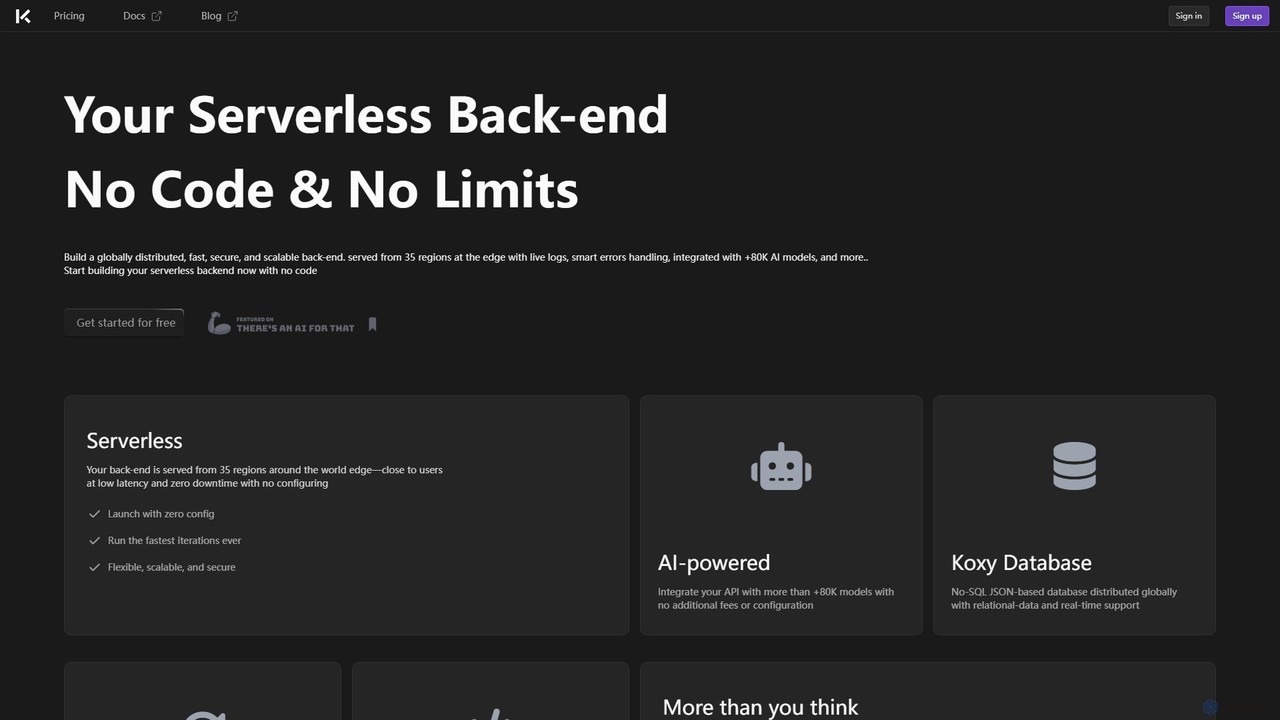
Koxy AI
Koxy AI is a no-code platform for building AI-powered, serverless back-ends. It enables developers and creators to build globally distributed, fast, and scalable applications by integrating with over 80,000 AI models, a real-time No-SQL database, and custom cloud functions without writing complex back-end code.
Backend
FireCMS
FireCMS is an open-source, headless CMS and admin panel builder for Firebase and MongoDB. It enables developers and startups to instantly create flexible, powerful back-office applications with an intuitive, Airtable-like interface. Featuring AI-powered data queries, automatic schema detection, extensive customization with React, and a rich content editor, FireCMS streamlines development and content management, offering both cloud and self-hosted solutions.
Content Management System
Sanity
Sanity is a composable content platform, often called a "Content Operating System," designed for developers and content creators. It provides a customizable, real-time backend with a powerful query language (GROQ), serverless functions, and integrated AI capabilities. It enables teams to build scalable, content-driven experiences for any channel, from websites to AI applications.
Headless Cms