
Best 10 Deployment AI tools for Developer Tools
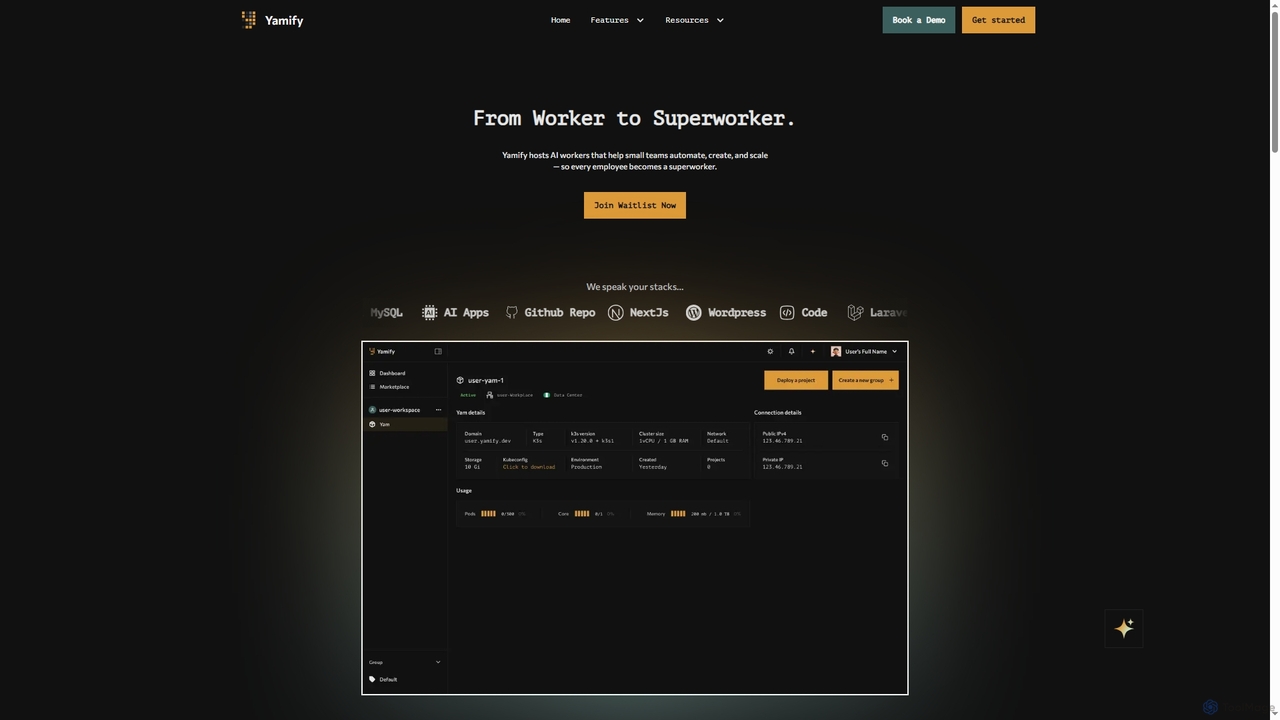
Popular Deployment AI tools in Developer Tools include Spaceship, Zeabur, Wasmer, Ploomber, Shuttle, Zeet, Convox, Movestax, Yamify, and Prodvana, helping you work more efficiently.
Freemium
Ploomber
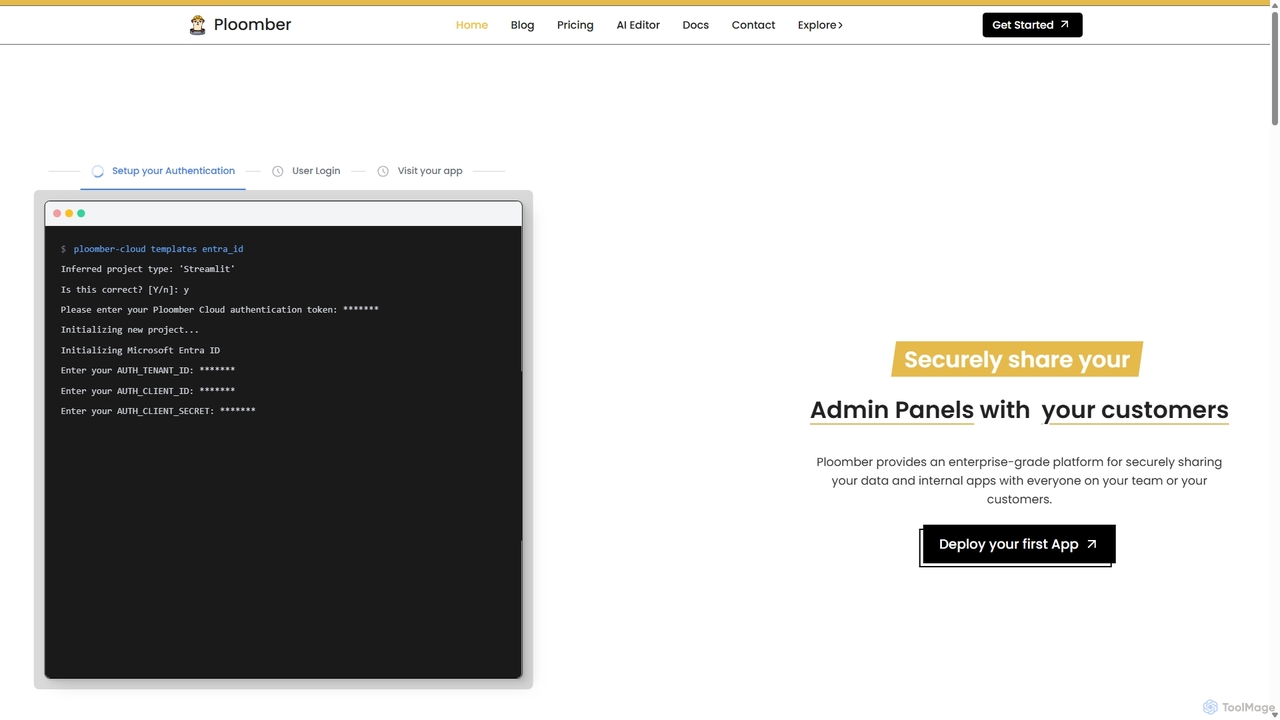
Ploomber is an enterprise-grade platform for deploying, managing, and scaling data applications. It simplifies the deployment of frameworks like Streamlit, Dash, and FastAPI, offering robust features such as automated DevOps, advanced security, auto-scaling, and flexible deployment options from cloud to on-premise, tailored for data science and AI teams.
Machine LearningVisits 48.4KFavorites 146Likes 157
Paid
Prodvana
Prodvana is an intelligent, intent-based deployment platform designed for modern software delivery. It helps engineering teams accelerate deployment frequency, enhance reliability, and reduce operational overhead by automating release paths, providing pre-deployment insights, and seamlessly integrating with existing infrastructure like Kubernetes, Terraform, and serverless providers.
Infrastructure ManagementVisits 6.5KFavorites 107Likes 104
Freemium
Shuttle
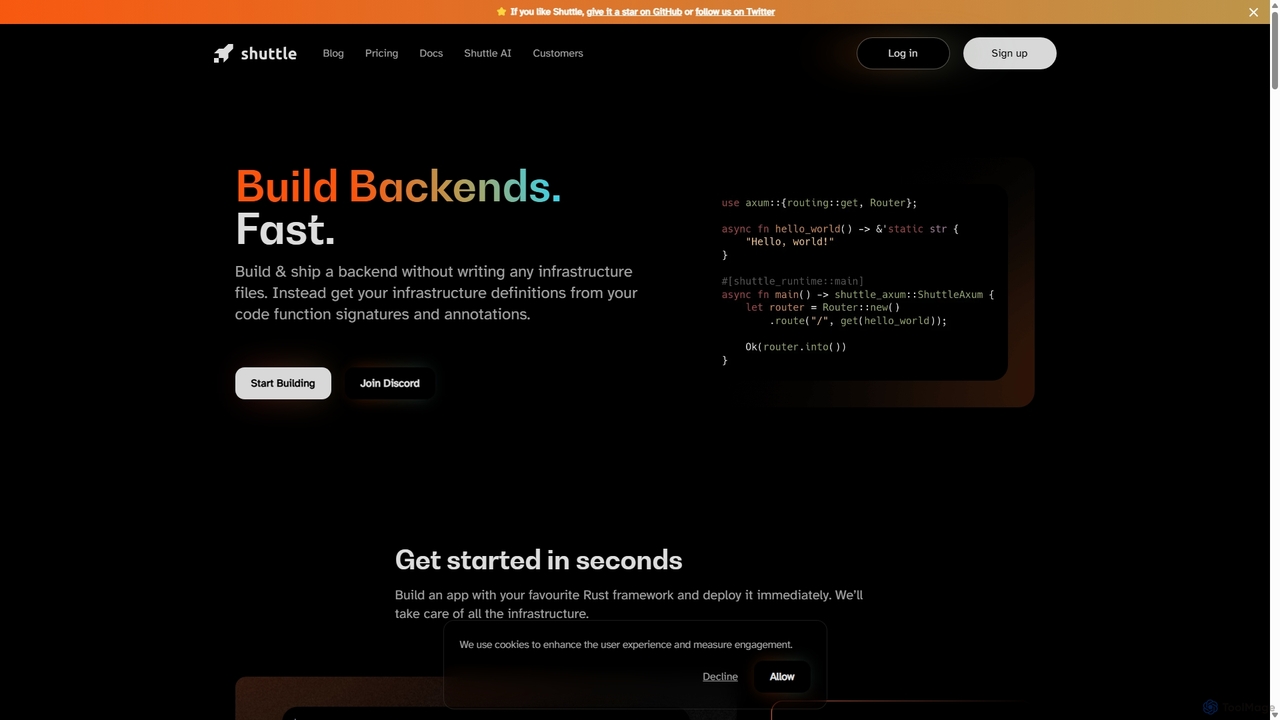
Shuttle is an open-source cloud platform designed to accelerate backend development in Rust. It eliminates infrastructure management by allowing developers to provision resources like databases and secrets directly within their code using simple annotations. Focus on building your application, and let Shuttle handle the deployment and scaling.
Backend DevelopmentVisits 41.6KFavorites 169Likes 176
Freemium
Convox
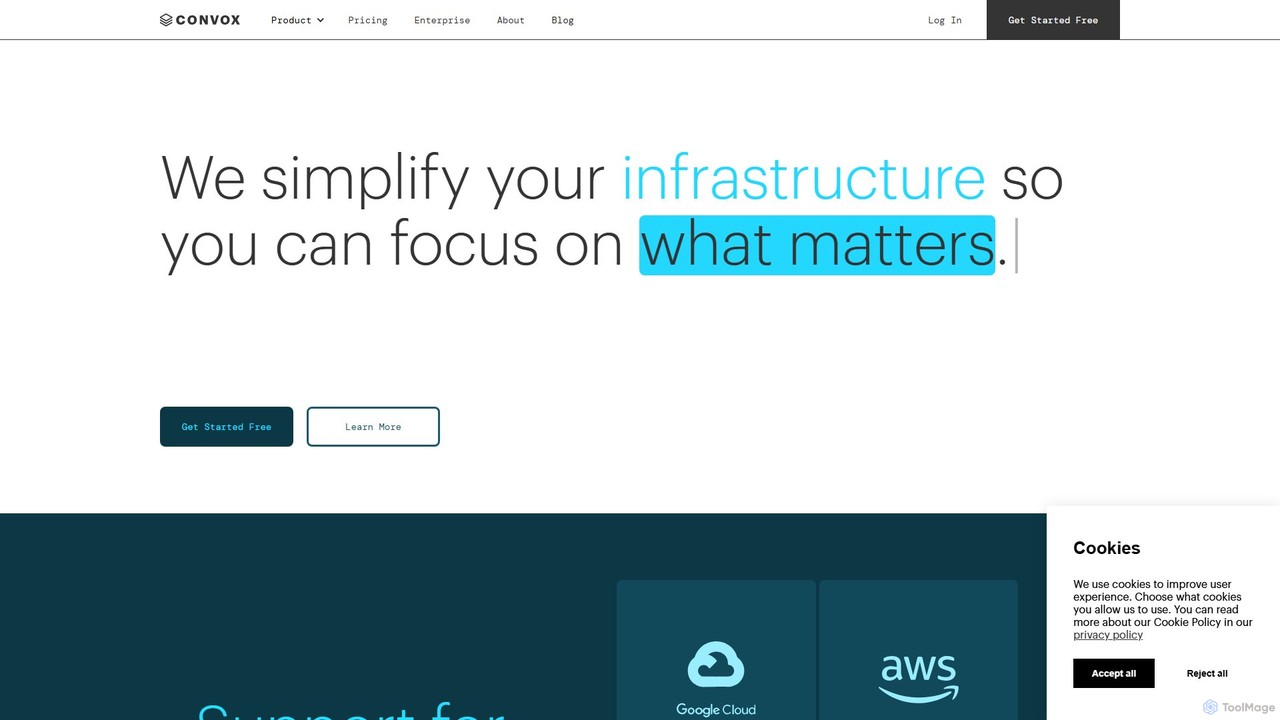
Convox is a Platform as a Service (PaaS) that automates cloud infrastructure management. It simplifies application deployment, scaling, monitoring, and CI/CD on major cloud providers like AWS and GCP, allowing development teams to focus on writing code instead of managing complex operations.
PaasVisits 11KFavorites 140Likes 115
Freemium
Movestax
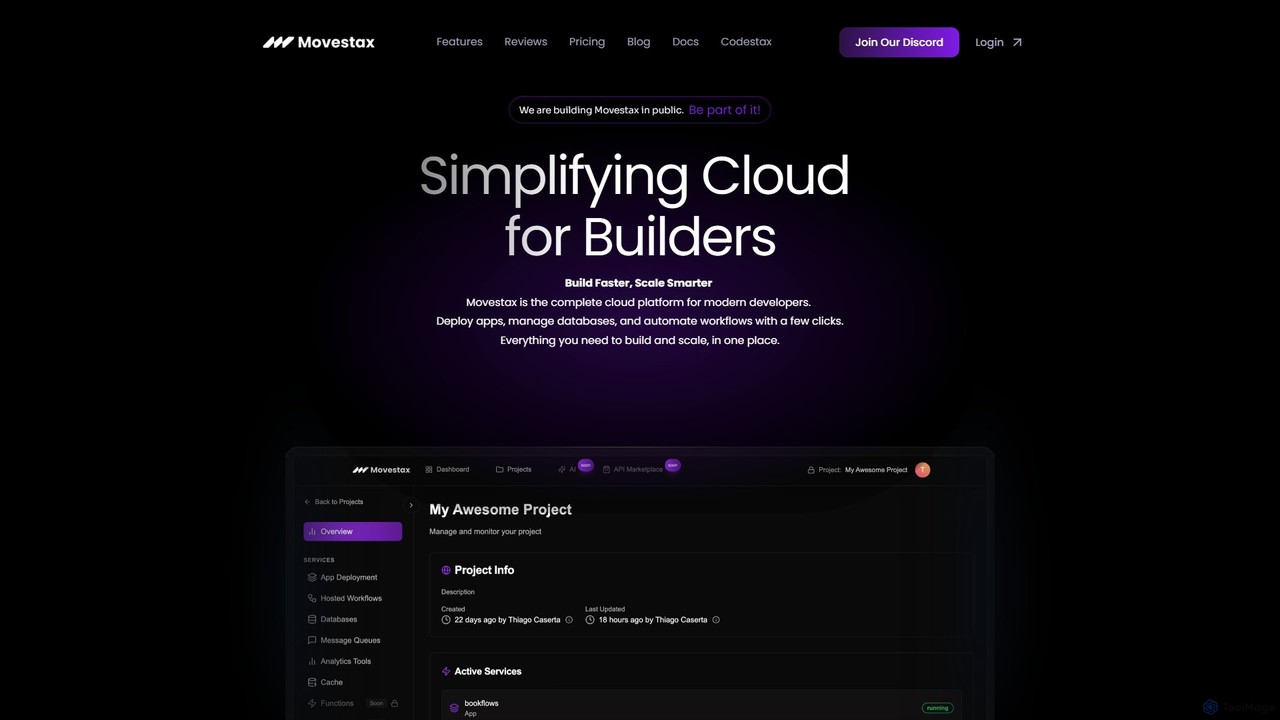
Movestax is an AI-powered, serverless-first cloud platform designed for modern developers. It simplifies infrastructure management by unifying app deployment, serverless databases, and automated workflows. With its integrated AI assistant, CodeStax, you can generate and deploy full-stack applications from natural language prompts, drastically accelerating the development lifecycle from idea to production.
Code GenerationVisits 8.8KFavorites 117Likes 105
Freemium
Zeabur
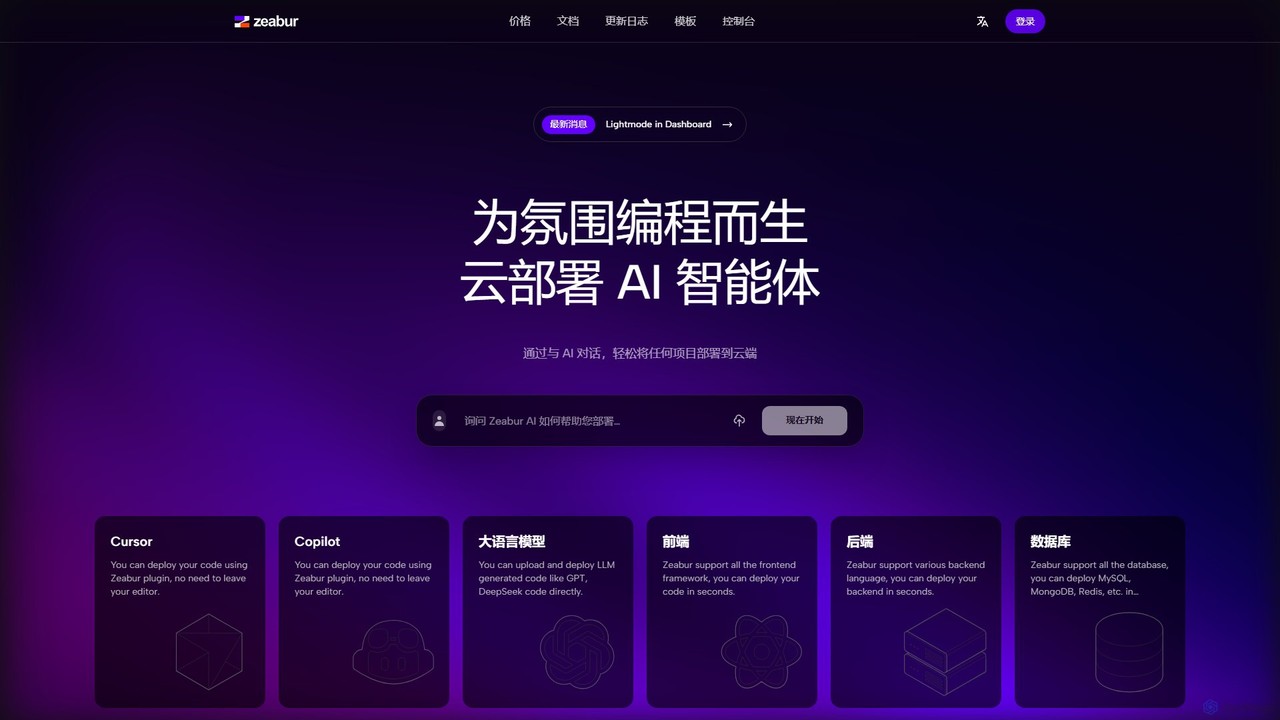
Zeabur is an AI-powered deployment platform (PaaS) designed for developers. It enables one-click deployment for any project, including front-end, back-end, databases, and AI agents, directly from code or through conversational AI. Featuring a pay-as-you-go model, automatic configuration, and auto-scaling, Zeabur simplifies cloud infrastructure, allowing developers to focus solely on coding.
DeploymentVisits 461.7KFavorites 154Likes 161
Freemium
Zeet
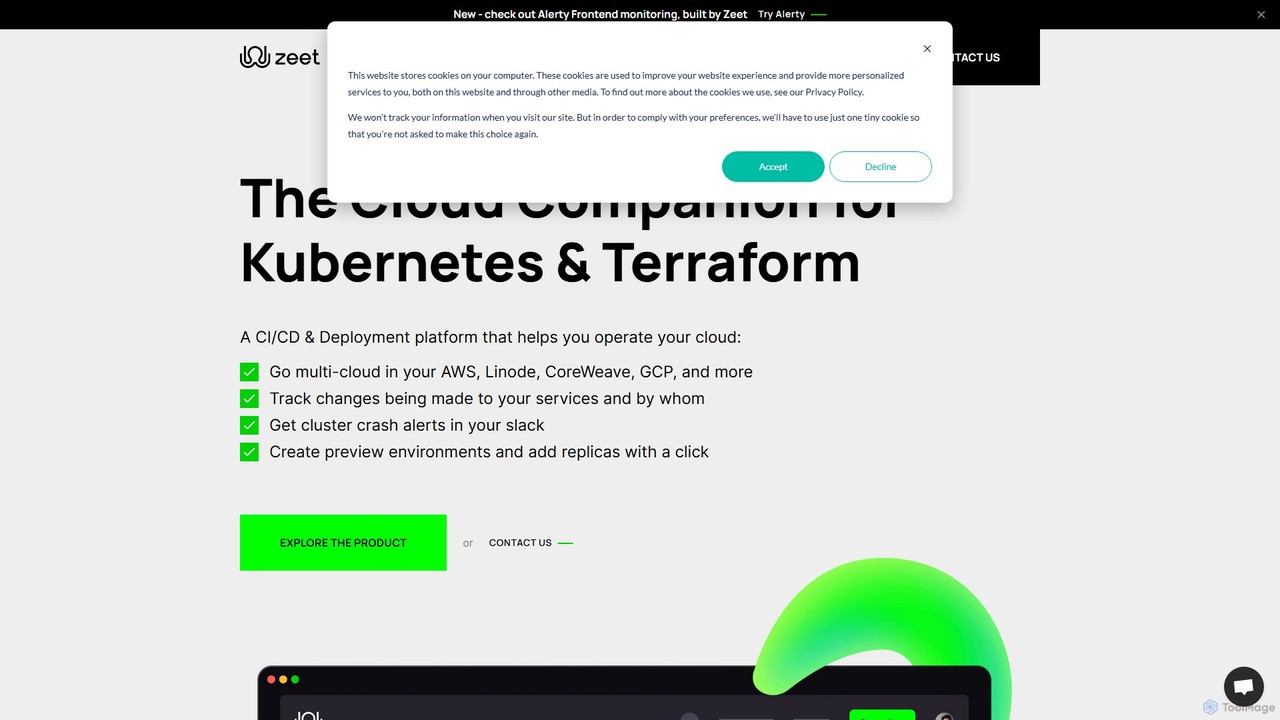
Zeet is a comprehensive DevOps and cloud operations platform designed to simplify the deployment and management of cloud services and infrastructure. It empowers developers, SREs, and DevOps teams by automating CI/CD, Kubernetes management, and multi-cloud operations, allowing them to focus on building applications rather than managing complex infrastructure.
DeploymentVisits 15.4KFavorites 168Likes 153
Freemium

Freemium
Wasmer
Wasmer is a universal WebAssembly runtime that enables you to run any code, anywhere. It functions as a next-generation container technology, offering blazing-fast, secure, and scalable deployment for applications, from websites and AI agents to serverless functions, without the overhead of traditional containers.
Cloud ComputingVisits 226.9KFavorites 152Likes 163
About Deployment
AI Deployment tools are specialized platforms designed to take trained machine learning models and make them operational in production environments. As a critical component of Developer Tools, they bridge the gap between model development and real-world application by handling the complexities of serving, scaling, and managing models. These tools typically package models into optimized, containerized formats and expose them via secure API endpoints. This ensures high availability, low latency, and reliable performance, allowing developers to integrate AI capabilities into their applications seamlessly.
Core Features
- Model Serving Infrastructure: Provides optimized environments, including GPU and CPU support, to run model inference efficiently.
- Auto-Scaling and Load Balancing: Automatically adjusts computing resources based on real-time traffic to handle demand spikes and control costs.
- API Endpoint Generation: Simplifies the creation of secure, scalable, and documented REST APIs for any trained model.
- Containerization and Dependency Management: Uses technologies like Docker to package models and their dependencies, ensuring consistent execution across different environments.
- Performance Monitoring and Logging: Offers dashboards and alerts for tracking key metrics like latency, throughput, error rates, and resource utilization.
Use Cases
These tools are essential for MLOps engineers, data scientists, and developers tasked with productionizing AI. They are widely used in industries like tech, e-commerce, finance, and healthcare to deploy applications such as real-time recommendation engines, fraud detection systems, and diagnostic imaging analysis tools.
How to Choose
When selecting an AI Deployment tool, consider its support for your specific ML frameworks (e.g., TensorFlow, PyTorch), scalability requirements, and latency needs. Evaluate the balance between ease of use (managed platforms) and control (configurable infrastructure). Also, assess the pricing model (pay-per-use vs. fixed) and its integration capabilities with your existing CI/CD and MLOps pipelines.
Featured tool rankings
Most popular





Most favorited
Most liked
Deployment use cases
1
Deploying a Real-time Recommendation Engine
An e-commerce platform's ML engineer needs to launch a new product recommendation model. The model must respond to user requests in milliseconds to enhance the shopping experience. Using an AI Deployment tool, the engineer packages the model, defines the required hardware (like a GPU), and exposes it as a REST API. The platform's auto-scaling feature automatically provisions more resources during peak shopping seasons like Black Friday and scales down during quiet periods, ensuring a responsive user experience while optimizing infrastructure costs.
2
Serving a Computer Vision Model for Quality Control
A manufacturing company wants to automate defect detection on its production line. A DevOps engineer uses a deployment platform to containerize a computer vision model and deploy it to edge devices located next to the conveyor belts. The tool manages the deployment lifecycle, allowing for remote updates and monitoring of the models across hundreds of devices from a central dashboard. This ensures consistent performance and allows for rapid rollout of improved model versions without halting production.
3
Launching a SaaS with a Generative AI Feature
A startup is building a writing assistant application powered by a large language model (LLM). A full-stack developer uses a managed deployment service to host the model. The service provides a secure API gateway with built-in authentication and rate limiting. This allows the startup to easily integrate the AI feature into their web application and create tiered subscription plans based on API usage, without having to build and maintain complex serving infrastructure from scratch.
4
A/B Testing Fraud Detection Models
A fintech company's data science team has developed a new, more accurate fraud detection model. To validate its real-world performance without risk, they use a deployment tool to perform an A/B test. The platform allows them to deploy the new model alongside the existing one and route 10% of live transaction data to it. By comparing performance metrics like latency and prediction accuracy in the tool's dashboard, the team can make a data-driven decision to fully replace the old model.
5
Automating Model Retraining and Deployment
An MLOps team aims to create a fully automated pipeline where their customer churn prediction model is retrained on new data every week. They integrate their AI deployment tool with their CI/CD system (e.g., Jenkins). Once a new model is trained and passes automated tests, the CI/CD pipeline triggers an API call to the deployment tool. The tool then performs a "blue-green" deployment, seamlessly switching traffic to the new model version with zero downtime for the end-users.
6
Running Batch Inference for Financial Reporting
An analytics team at a financial firm needs to run a complex forecasting model on terabytes of market data at the end of each quarter. This is a short-lived but computationally intensive task. They use a deployment platform to schedule a batch inference job. The platform automatically provisions a large cluster of machines to process the data in parallel, completes the job in a few hours instead of days, and then terminates all resources. This approach provides massive computational power on-demand while minimizing costs.
Related categories
Deployment FAQ
What are AI Deployment tools?
AI Deployment tools are platforms that operationalize trained machine learning models for real-world use. They automate the complex process of packaging a model, provisioning server infrastructure (CPU/GPU), and exposing it as a scalable, reliable API. Their primary function is to bridge the gap between data science and production software, handling tasks like auto-scaling, monitoring, and versioning so developers can focus on building applications.
How do I choose the right AI Deployment tool?
Choosing the right tool depends on several factors. First, ensure it supports your model's framework (like PyTorch or TensorFlow). Next, consider your performance needs: do you require real-time, low-latency responses or is batch processing sufficient? Evaluate the trade-off between managed platforms (easier, less flexible) and self-hosted solutions (more control, more work). Finally, assess the cost structure, security features, and how well it integrates with your existing MLOps and CI/CD workflows.
What is the difference between AI Deployment and Model Training?
Model Training and AI Deployment are two distinct stages in the machine learning lifecycle. Training is the process of teaching an algorithm by feeding it large datasets, which is typically a long, computationally-intensive process done offline. Deployment is the process of taking the trained, static model and making it available to serve live requests in a production environment. Deployment focuses on operational concerns like efficiency, latency, scalability, and reliability.
What does "serverless deployment" mean for AI models?
Serverless deployment for AI models means you can run your model without provisioning or managing any underlying server infrastructure. You simply upload your model code, and the platform automatically handles everything needed to run and scale it in response to requests. A key benefit is the "scale-to-zero" capability, where you pay nothing when the model is not in use, making it highly cost-effective for applications with intermittent or unpredictable traffic.
Why not just use a simple web framework like Flask to deploy a model?
While using a web framework like Flask is excellent for prototyping and simple projects, it lacks the features required for a robust production environment. Professional deployment tools provide critical functionalities that are difficult to build and maintain yourself, including:
- Automatic Scaling: Handling thousands of concurrent requests.
- High Availability: Ensuring the model is always online with failover mechanisms.
- Optimized Performance: Leveraging hardware like GPUs for low-latency inference.
- Security and Monitoring: Protecting endpoints and providing insights into model performance.