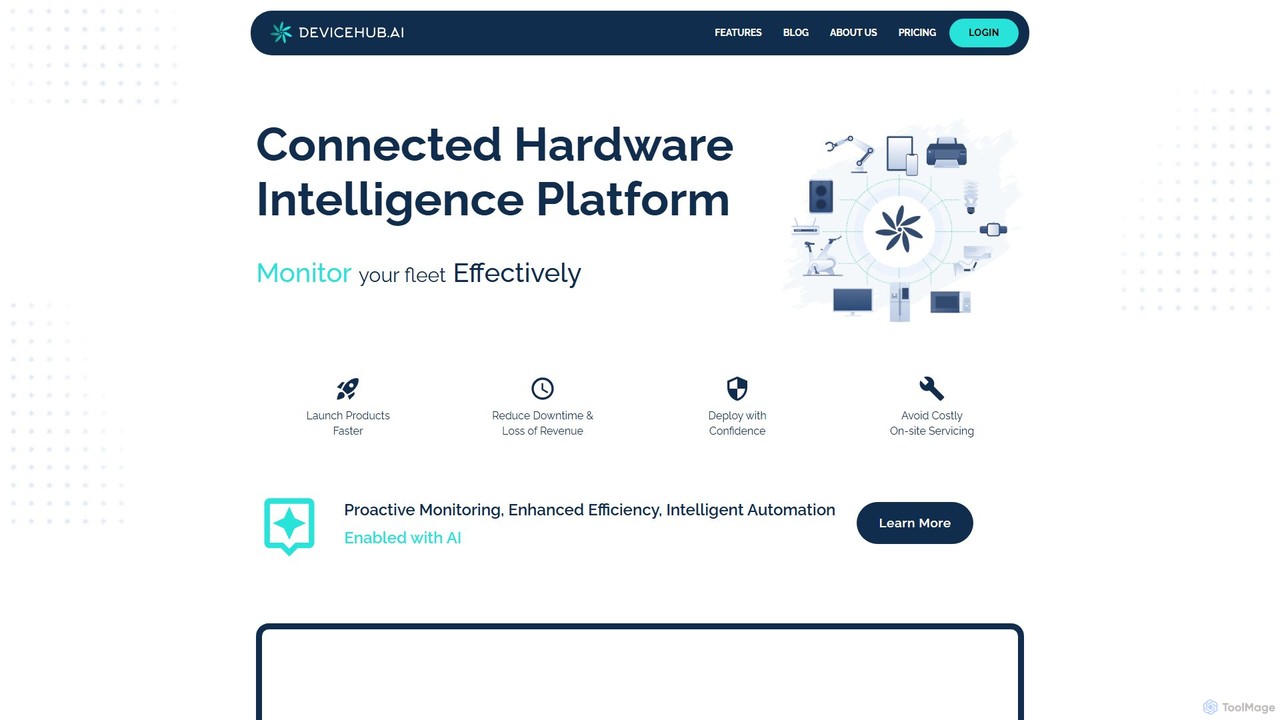
DeviceHub is an AI-powered intelligence platform for connected hardware. It enables companies to monitor, analyze, and deploy software to large-scale IoT device fleets, reducing downtime, accelerating product launches, and providing actionable insights through advanced AI and automation.

Quantifind is an AI-powered risk intelligence platform designed for financial crime automation. Its Graphyte™ solution helps banks, financial institutions, and government agencies automate Anti-Money Laundering (AML) and Know Your Customer (KYC) processes. By leveraging advanced data science, it streamlines screening and investigations, significantly reduces false positives, and enhances risk detection accuracy across vast datasets.
Product overview
DeviceHub Product overview
DeviceHub is an AI-powered intelligence platform for connected hardware. It enables companies to monitor, analyze, and deploy software to large-scale IoT device fleets, reducing downtime, accelerating product launches, and providing actionable insights through advanced AI and automation.
Quantifind Product overview
Quantifind is an AI-powered risk intelligence platform designed for financial crime automation. Its Graphyte™ solution helps banks, financial institutions, and government agencies automate Anti-Money Laundering (AML) and Know Your Customer (KYC) processes. By leveraging advanced data science, it streamlines screening and investigations, significantly reduces false positives, and enhances risk detection accuracy across vast datasets.
Detailed feature comparison
| Feature | DeviceHub | Quantifind |
|---|---|---|
| Primary category | Data Analysis | Data Analysis |
| Added | 2025-08-10 | 2025-08-03 |
| Pricing | Freemium | Paid |
| Official website | devicehub.ai | www.quantifind.com |
| Product type | Website | Website |
| Performance data | ||
| User rating | Not verified | Not verified |
| Comments | 0 | 0 |
| Monthly visits | 2.7K | 10.3K |
| Monthly growth | -33.8% | 6.3% |
| Favorites | 139 | 123 |
| Details | View details | View details |
DeviceHub vs Quantifind monthly traffic
Compare DeviceHub and Quantifind by monthly reach, traffic trend, visit depth, top regions, and acquisition sources.
How to interpret the traffic data
In the DeviceHub vs Quantifind monthly traffic comparison, DeviceHub currently shows 2.7K visits and Quantifind shows 10.3K; Quantifind has about 3.9 times the visible traffic of DeviceHub, an absolute difference of about 7.6K visits. This reflects visible reach, not feature quality or paid users.
Both tools provide verified traffic details, so monthly trends, visit depth, regions, and acquisition sources can be compared on the same basis.
DeviceHub monthly traffic:
Latest traffic
Monthly traffic trend
- 2025/9: 2.1K Monthly visits
- 2026/1: 1K Monthly visits
- 2026/2: 525 Monthly visits
- 2026/3: 2.1K Monthly visits
- 2026/4: 4K Monthly visits
- 2026/5: 2.7K Monthly visits
Top regions
Top 5 countries/regions
| Country/region | Percentage | Traffic |
|---|---|---|
| 🇺🇸United States | 77.65% | 2.1K |
| 🇬🇧United Kingdom | 22.35% | 595 |
Search keywords
Quantifind monthly traffic:
Latest traffic
Monthly traffic trend
- 2025/9: 5.9K Monthly visits
- 2026/1: 12.5K Monthly visits
- 2026/2: 16.5K Monthly visits
- 2026/3: 15.3K Monthly visits
- 2026/4: 9.7K Monthly visits
- 2026/5: 10.3K Monthly visits
Top regions
Top 5 countries/regions
| Country/region | Percentage | Traffic |
|---|---|---|
| 🇺🇸United States | 84.63% | 8.7K |
| 🇮🇳India | 9.41% | 966 |
| 🇦🇺Australia | 3.83% | 393 |
| 🇬🇧United Kingdom | 2% | 205 |
| 🇩🇪Germany | 0.13% | 13 |
Traffic sources
| Source type | Percentage | Traffic |
|---|---|---|
| Direct | 78.45% | 8.1K |
| Referral | 21.55% | 2.2K |
Search keywords
Usage comparison
Compare the core capabilities of DeviceHub and Quantifind
DeviceHub Core features
Quantifind Core features
Use cases
DeviceHub Use cases
Quantifind Use cases
DeviceHub vs Quantifind:In-depth comparison and selection guidance
First decide whether the products solve the same kind of need
This in-depth DeviceHub vs Quantifind comparison uses only the product records, taxonomy, audience, traffic, and community signals available on this page. DeviceHub is primarily listed under “Data Analysis”, while Quantifind is primarily listed under “Data Analysis”, so the first decision is whether your actual task matches their recorded scope.
The structured fields currently show these decision-relevant differences: Pricing (DeviceHub: Freemium; Quantifind: Paid); Monthly visits (DeviceHub: 2.7K; Quantifind: 10.3K); Monthly growth (DeviceHub: -33.8%; Quantifind: 6.3%); Favorites (DeviceHub: 139; Quantifind: 123); Website (DeviceHub: devicehub.ai; Quantifind: www.quantifind.com). These facts are more useful for selection than brand visibility alone.
What market visibility and monthly traffic mean
In the DeviceHub vs Quantifind monthly traffic comparison, DeviceHub currently shows 2.7K visits and Quantifind shows 10.3K; Quantifind has about 3.9 times the visible traffic of DeviceHub, an absolute difference of about 7.6K visits. This reflects visible reach, not feature quality or paid users.
Both tools provide verified traffic details, so monthly trends, visit depth, regions, and acquisition sources can be compared on the same basis.
If public market visibility is an important first-pass criterion, investigate Quantifind first. The final choice should still follow taxonomy, use case, and a real trial because higher traffic does not prove broader capabilities or better workflow fit.
Product positioning, use cases, and roles
DeviceHub and Quantifind currently overlap in shared categories: Data Analysis and Automation; shared tags: data analysis. This can place both on the same shortlist, but it does not prove equal implementation, depth, or cost.
DeviceHub's unique categories/tags are Monitoring, Iot, AI copilot, anomaly detection, developer tools, device management, fleet management, and hardware; Quantifind's are Risk Management, Compliance, AML, background check, compliance, financial crime, fraud detection, and investigation. These unique fields are the strongest differentiators: validate the product whose recorded scope matches the task instead of following traffic alone.
What ratings, comments, and favorites can tell you
DeviceHub has no verified rating, 0 comments, 139 favorites, and 141 likes;Quantifind has no verified rating, 0 comments, 123 favorites, and 129 likes。
Neither product has enough rating or comment samples for a credible reputation ranking.
Selection guidance by actual need
When to evaluate DeviceHub first
Put DeviceHub on the priority trial list when the task aligns with “Data Analysis” and especially Monitoring, Iot, AI copilot, anomaly detection, developer tools, and device management. This follows recorded positioning and does not imply unlisted capabilities are absent.
DeviceHub also currently records: pricing is freemium, product type is website, 2.7K verified monthly visits, no verified user rating. Verify any hard requirement around price, platform, or reach before trial, and do not let sparse review data substitute for testing.
When to evaluate Quantifind first
Put Quantifind on the priority trial list when the task aligns with “Data Analysis” and especially Risk Management, Compliance, AML, background check, compliance, and financial crime. This follows recorded positioning and does not imply unlisted capabilities are absent.
Quantifind also currently records: pricing is paid, product type is website, 10.3K verified monthly visits, no verified user rating. Verify any hard requirement around price, platform, or reach before trial, and do not let sparse review data substitute for testing.
How to validate the recommendation before deciding
The available data describes positioning, public visibility, and community signals, but it cannot prove output quality, speed, integration effort, privacy, or long-term cost in your workflow. Before deciding, run the same representative tasks in DeviceHub and Quantifind, then record completion time, accuracy, manual corrections, and the real paid threshold. A like-for-like trial turns this comparison into a defensible adoption decision.
Comparison FAQ
How should I choose between DeviceHub and Quantifind?
Where does this comparison data come from?
What do unknown fields mean?
Related AI tools

Sphinx
Sphinx is an AI-powered compliance platform designed for financial institutions and fintechs. It automates and streamlines KYC, AML, and fraud detection processes by providing real-time adverse media screening, PEP and sanctions checks, and ultimate beneficial owner (UBO) verification. The platform uses AI agents to eliminate compliance bottlenecks, reduce risk, and ensure regulatory adherence with deep, explainable insights.
Compliance
Complif
Complif is an AI-powered platform that automates end-to-end compliance processes for financial institutions. It specializes in Anti-Money Laundering (AML) and Know Your Customer (KYC) workflows, offering seamless digital onboarding, real-time transaction monitoring, and automated risk management to ensure regulatory adherence and operational efficiency.
Regulatory Technology
Diligent
Diligent is an AI-powered platform for fintechs and banks, designed to automate and enhance due diligence on business customers. It leverages Generative AI to investigate online presence, uncover network connections to high-risk entities, and monitor for emerging risks, strengthening fraud and AML compliance.
Compliance
autogon
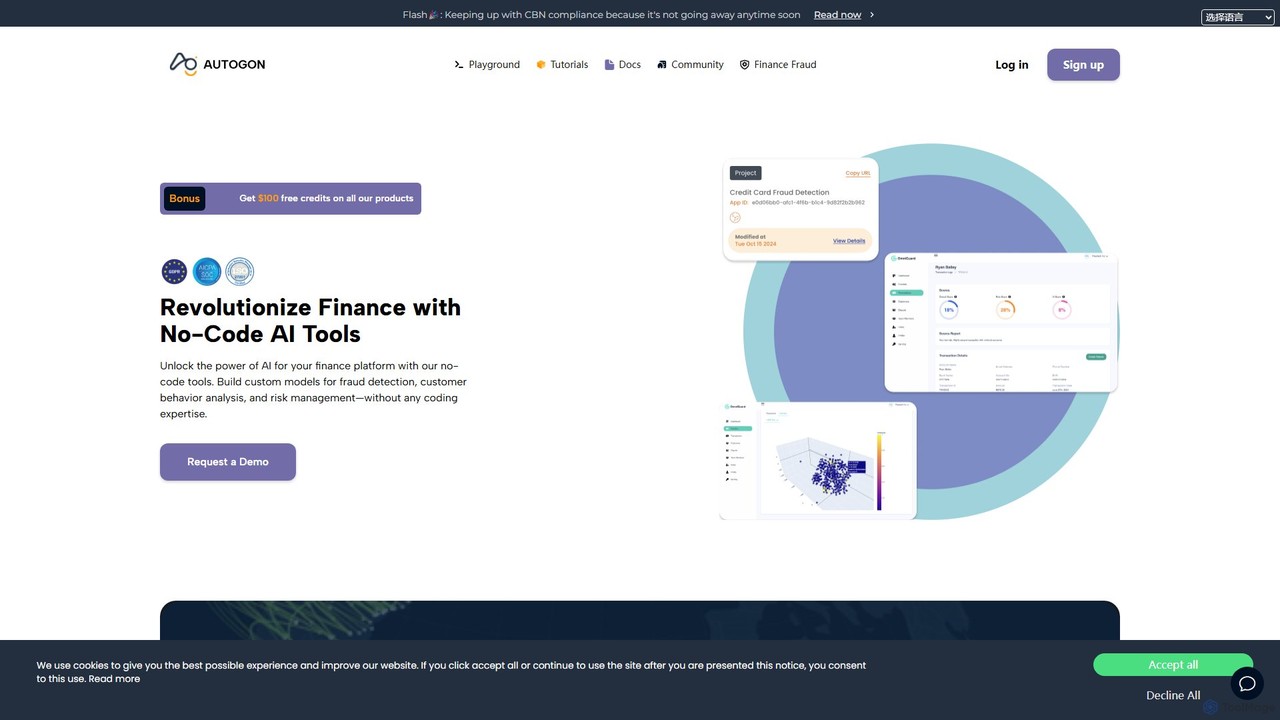
Autogon is a powerful no-code AI platform designed to democratize artificial intelligence, especially for the finance sector. It enables users to build, deploy, and manage custom AI models for fraud detection, risk management, customer analytics, and automated chatbots without writing a single line of code. It also offers a versatile AI playground for various other industries.
Machine Learning
Greenlite
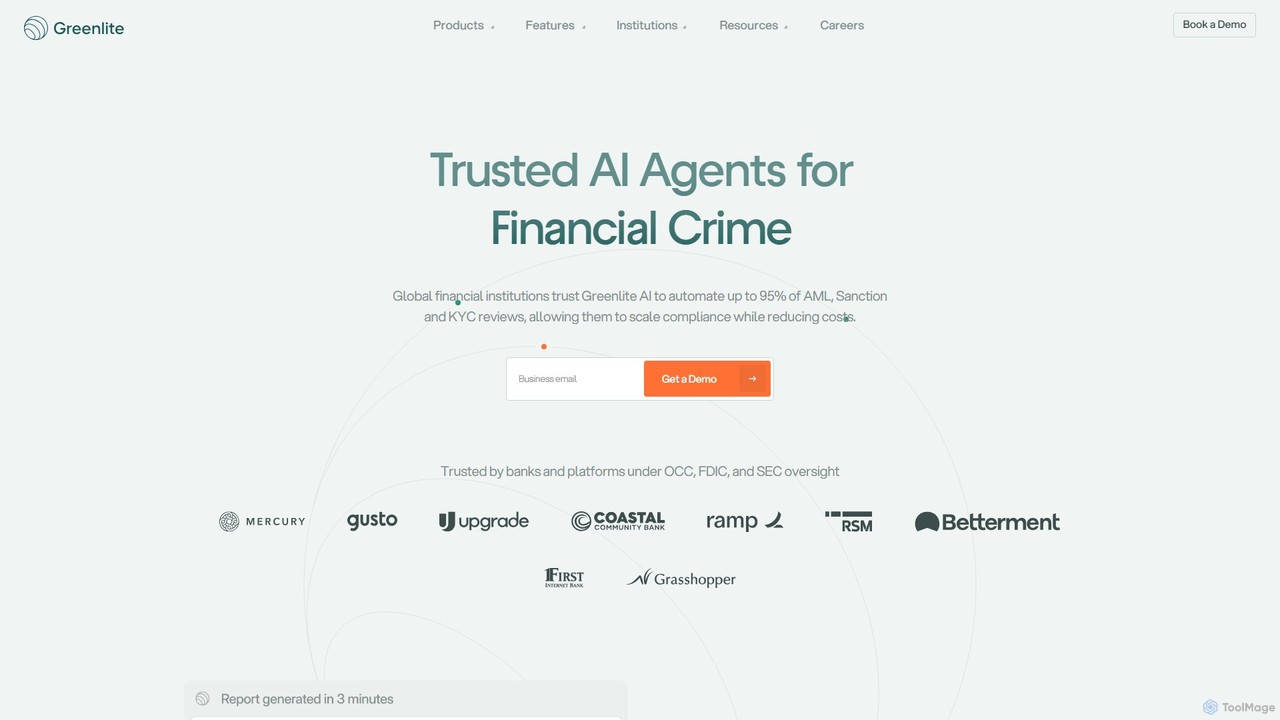
Greenlite is an AI-powered platform for financial crime compliance. It provides trusted AI agents to automate and enhance processes like transaction monitoring, customer due diligence, and alert investigations. By leveraging advanced AI for data enrichment, financial analysis, and narrative writing, Greenlite helps banks, fintechs, and credit unions improve efficiency, reduce false positives, and allow compliance teams to focus on high-risk decision-making.
Risk Management
Babel Street
Babel Street is an AI-powered data analytics and threat intelligence platform. It analyzes vast amounts of multilingual, publicly available information (PAI) to help government and commercial organizations identify threats, mitigate risk, and ensure compliance. The platform provides actionable insights for security, investigations, and strategic decision-making.
Data Analysis
DataVisor
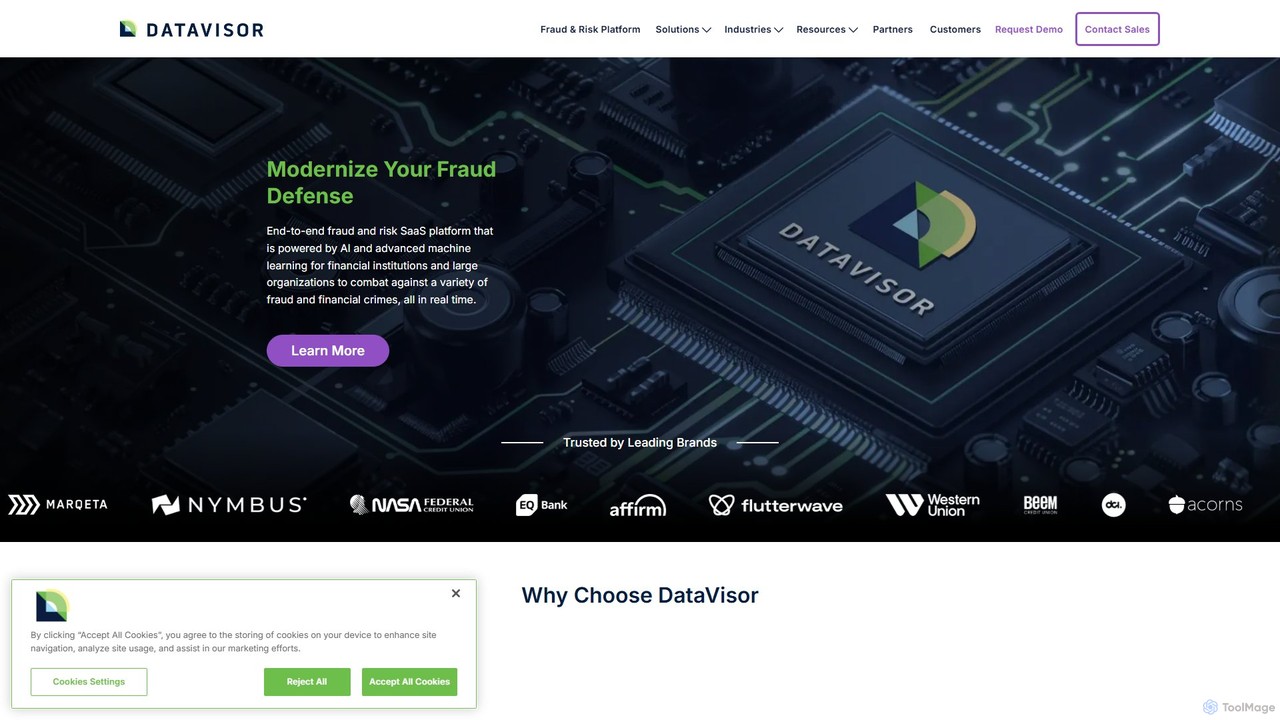
DataVisor is an enterprise-grade AI-powered fraud and risk platform. It utilizes patented machine learning and generative AI to provide real-time fraud detection and prevention. The platform helps businesses in finance, fintech, and digital payments to reduce fraud losses, increase operational efficiency, and improve approval rates by accurately identifying malicious actors while minimizing false positives.
Risk Management
gueno
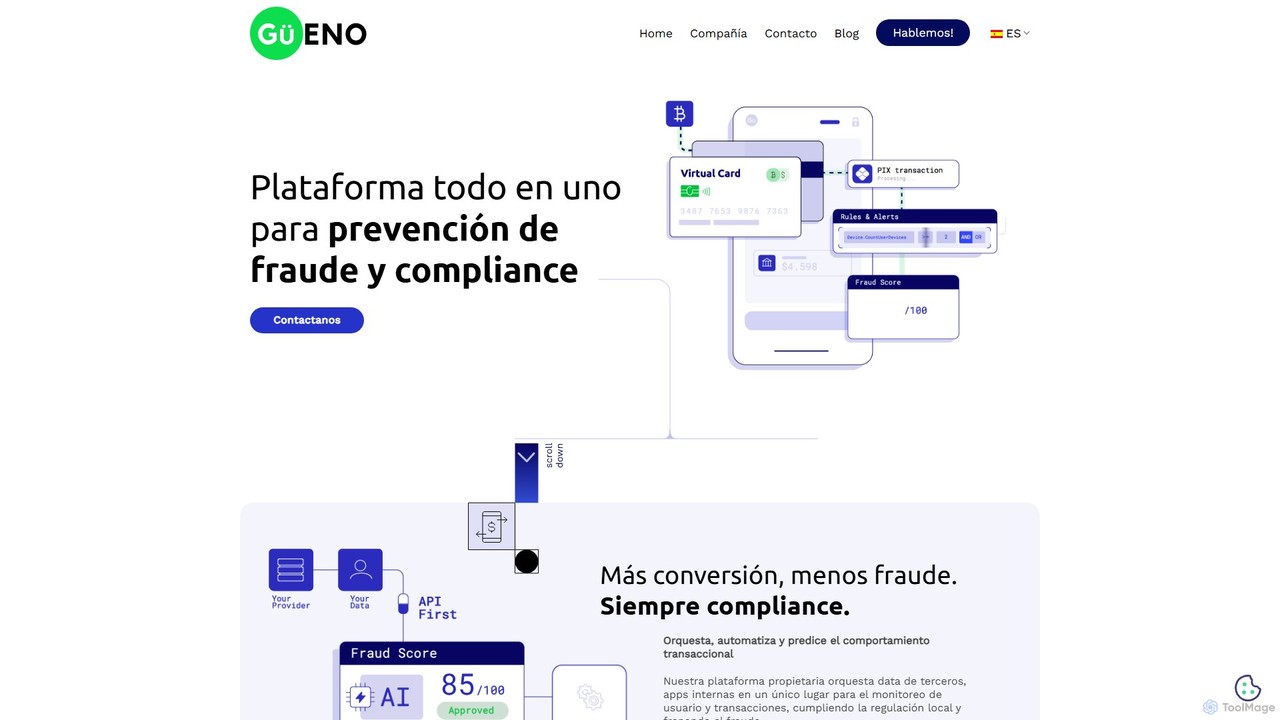
gueno is an all-in-one, AI-powered platform for fraud prevention and compliance, specifically designed for Fintech and Crypto companies operating in Latin America. It provides real-time monitoring, user onboarding, and transaction validation for both FIAT and crypto through a single, easy-to-integrate API, helping businesses increase conversion while minimizing risk.
Fraud Detection
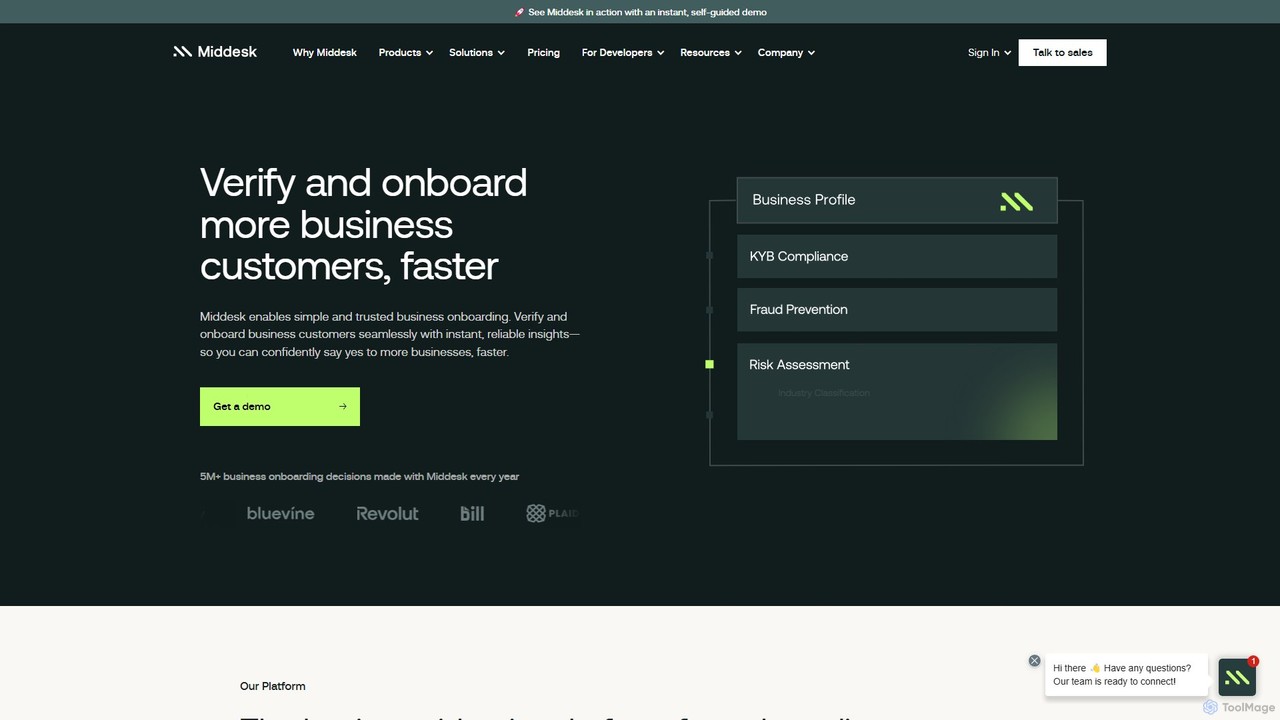
Middesk
Middesk is a leading business identity platform that automates KYB/KYC compliance, risk assessment, and underwriting. It enables businesses to seamlessly verify and onboard commercial customers using direct, real-time data from government sources, reducing fraud and accelerating growth.
Verification
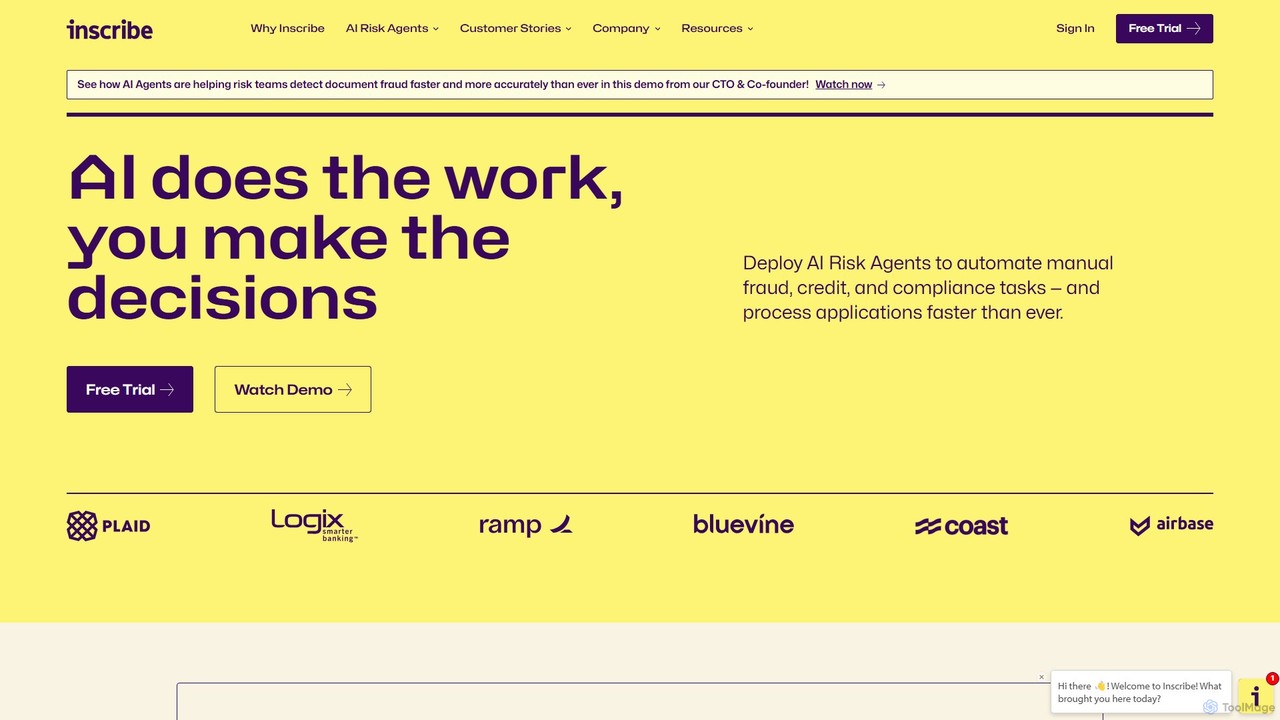
Inscribe
Inscribe is an AI-powered platform for risk teams in finance and fintech. It uses AI Risk Agents to automate fraudulent document detection, compliance checks (KYB), and credit analysis. Inscribe helps businesses speed up application processing, reduce manual workloads, and make faster, more accurate risk decisions.
Credit Analysis
Roboto
Roboto is an advanced analytics engine designed for physical AI and robotics. It empowers robotics teams to organize, search, analyze, and automate workflows on vast amounts of multimodal data, including logs, video, and sensor data. This platform accelerates development, enhances system reliability, and helps uncover critical edge cases before deployment.
Robotics
Electe
Electe is an AI-powered data analytics platform designed to help businesses of all sizes unlock the potential of their data. It automates data connection, analysis, and reporting, enabling teams to gain valuable insights, forecast sales trends, and make informed decisions without requiring deep technical expertise. The platform aims to enhance efficiency, drive innovation, and boost profitability through accessible and powerful data tools.
Business Intelligence
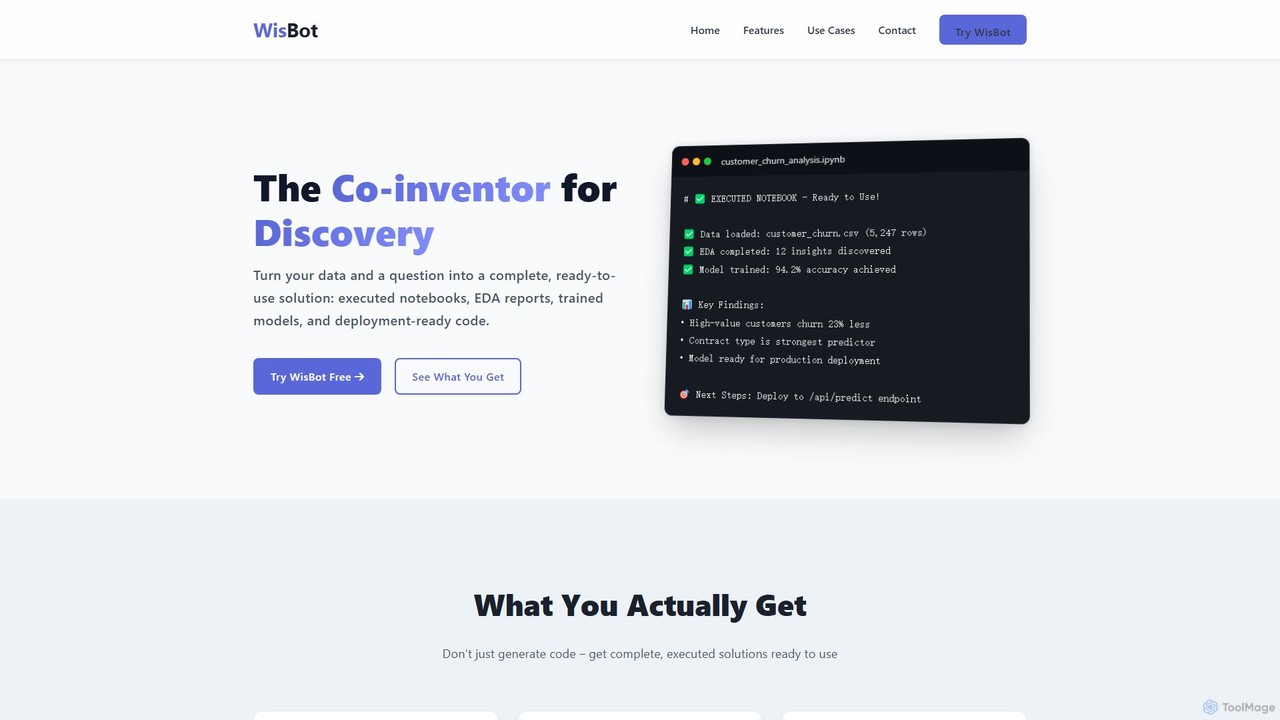
WisBot
WisBot is an AI co-inventor that accelerates data science and software development. It goes beyond code generation by delivering complete, executed Jupyter notebooks for data analysis and production-ready Python project scaffolds. Simply upload your data and a prompt to receive fully tested, documented, and deployable solutions, streamlining your workflow from discovery to production.
Machine Learning
Devath
Devath is the world's first AI-powered, no-code platform for smart home development. It enables developers and hobbyists to create, test, and publish IoT applications using natural language instructions, drastically simplifying hardware integration and automation.
No Code & Low Code
osfin
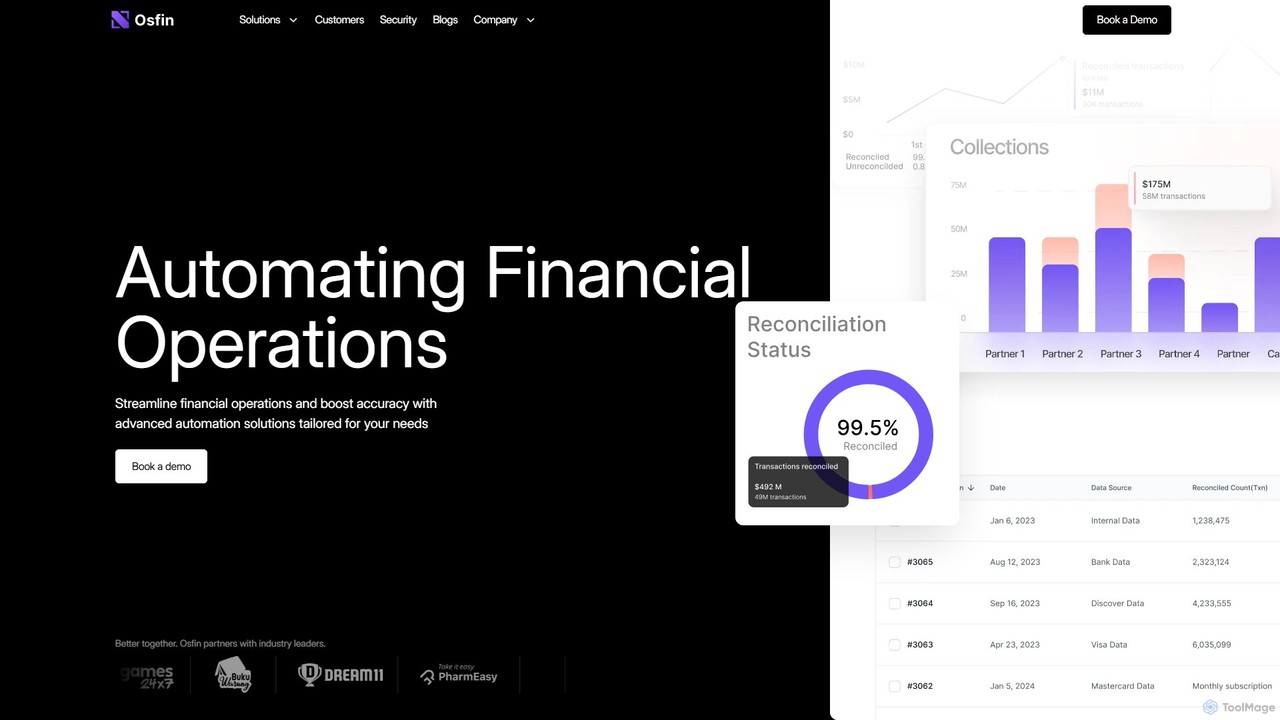
Osfin is an AI-powered financial automation platform designed to streamline and automate high-volume transaction reconciliation. It offers tailored solutions for industries like Fintech, Insurance, Gaming, and Retail, enhancing accuracy, efficiency, and cash flow visibility.
Data Analysis