Finance Best in category 1 results Credit Analysis AI Tool

Popular AI tools in the Credit Analysis field of Finance include Inscribe, etc., helping you quickly improve efficiency.

Inscribe

Inscribe

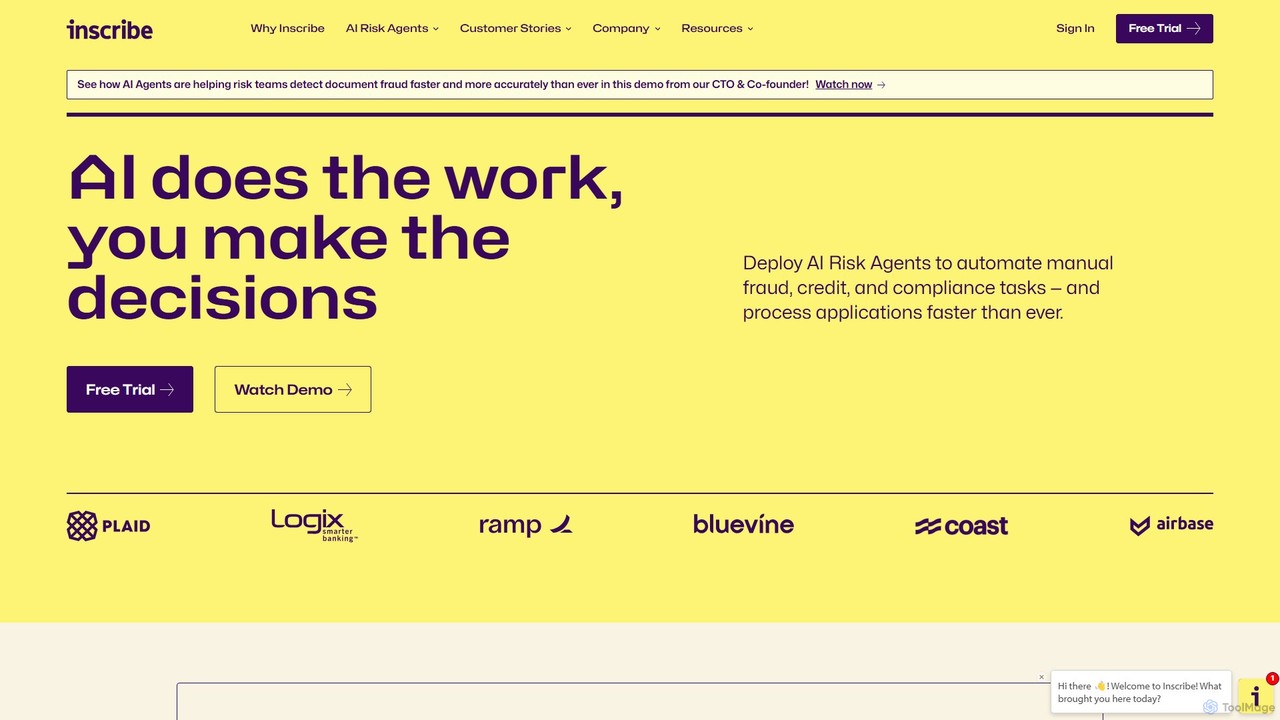
Inscribe is an AI-powered platform for risk teams in finance and fintech. It uses AI Risk Agents to …

20.5K

About Credit Analysis

AI Credit Analysis tools are specialized platforms that use machine learning algorithms to evaluate the creditworthiness of individuals and businesses. These tools process vast amounts of traditional and alternative data, such as financial history and transaction patterns, to generate predictive risk scores. Their primary value lies in delivering faster, more accurate, and less biased credit decisions, enabling lenders to reduce default rates and improve financial inclusion. As a key component of modern finance, they automate and enhance the entire credit lifecycle, from application to portfolio management.

Core Features

  • Predictive Risk Scoring: Utilizes machine learning models to generate a precise probability of default, going beyond traditional credit scores.
  • Automated Data Aggregation: Connects to various data sources like bank accounts, accounting software, and credit bureaus to automatically collect and standardize applicant information.
  • Bias Detection & Explainability (XAI): Provides insights into the model's decision-making process and helps identify and mitigate potential biases to ensure fair lending.
  • Real-time Decisioning: Enables instant credit assessments, crucial for point-of-sale financing, digital lending, and fraud prevention.
  • Portfolio Monitoring: Continuously tracks the credit health of existing borrowers, alerting lenders to changes in risk levels.

Use Cases

These tools are essential for financial institutions, including banks and credit unions, for underwriting personal and commercial loans. Fintech companies and 'Buy Now, Pay Later' (BNPL) providers rely on them for instant, automated eligibility checks. They are also used by B2B companies to assess trade credit risk and by investment firms to analyze the credit risk of corporate bonds.

How to Choose

When selecting an AI Credit Analysis tool, consider its data integration capabilities with your existing systems. Evaluate the accuracy and, crucially, the explainability of its predictive models to meet regulatory requirements. Assess its scalability to handle your application volume and ensure it complies with relevant financial regulations in your jurisdiction, such as GDPR or the Equal Credit Opportunity Act (ECOA).

Credit AnalysisUse Cases

1

Automating Personal Loan Approvals

A loan officer at a regional bank uses an AI credit analysis tool to streamline the personal loan application process. Instead of manually reviewing bank statements and credit reports, the officer uploads the applicant's documents to the platform. The AI automatically extracts relevant data, analyzes spending habits, verifies income, and generates a comprehensive risk score in under five minutes. This allows the bank to provide applicants with a decision almost instantly, significantly reducing processing time from days to minutes and improving the customer experience.

2

Assessing SME Business Loan Risk

A commercial lender at a financial institution evaluates a loan application from a small-to-medium enterprise (SME). The AI tool connects directly to the SME's accounting software and bank accounts. It analyzes cash flow trends, profitability ratios, and industry benchmarks in real-time. The platform provides a detailed report highlighting potential risks and strengths, offering a much deeper analysis than a static balance sheet. This enables the lender to make a more informed decision on a complex business loan, balancing risk and opportunity effectively.

3

Instant Eligibility Checks for BNPL Services

A 'Buy Now, Pay Later' (BNPL) provider integrated into an e-commerce checkout process needs to make instant credit decisions. When a customer selects the BNPL option, the AI credit analysis tool performs a real-time assessment using minimal customer information and alternative data points. It evaluates the risk of the small, short-term loan within seconds, allowing for a seamless and frictionless checkout experience. This high-speed capability is critical for converting sales without introducing significant default risk.

4

Proactive Portfolio Risk Management

A risk manager at a credit union is responsible for monitoring the health of the entire loan portfolio. The AI credit analysis tool continuously ingests new data on all existing borrowers, such as changes in payment behavior or public financial records. The system flags accounts with an increasing risk of default, allowing the risk management team to proactively engage with these customers to offer assistance or restructure loans. This shifts the process from reactive loss mitigation to proactive risk management, reducing overall portfolio losses.

5

Evaluating B2B Trade Credit Applications

A credit manager for a large manufacturing company needs to decide whether to extend 30-day payment terms to a new business customer. The AI tool analyzes the applicant company's financial health, payment history with other suppliers (if available), and industry-specific risk factors. It generates a recommended credit limit and payment terms based on a comprehensive risk assessment. This automates a traditionally manual and slow process, enabling the sales team to onboard new customers faster while protecting the company from potential bad debt.

6

Enhancing Financial Inclusion with Alternative Data

A fintech startup focused on micro-lending aims to serve individuals with limited or no traditional credit history. Their AI credit analysis platform uses alternative data, such as utility payment history, mobile phone usage, and rent payments, to build a credit profile. The machine learning model is trained to find creditworthiness indicators in this non-traditional data, allowing the company to safely extend credit to underserved populations that would typically be rejected by conventional scoring systems. This opens up new markets while promoting financial inclusion.

Credit AnalysisFrequently Asked Questions