Dynamo AI is an enterprise platform for deploying secure, compliant, and reliable Generative AI. It offers AI guardrails, hallucination detection, red-teaming, and observability to manage AI risks and accelerate production at scale.
Robust Intelligence, now a Cisco company, is an end-to-end AI risk management platform. It secures AI models throughout their lifecycle with a real-time AI Firewall and automated testing, helping enterprises mitigate security, ethical, and operational risks to deploy AI safely and responsibly.
Product overview
Dynamo AI Product overview
Dynamo AI is an enterprise platform for deploying secure, compliant, and reliable Generative AI. It offers AI guardrails, hallucination detection, red-teaming, and observability to manage AI risks and accelerate production at scale.
Robust Intelligence Product overview
Robust Intelligence, now a Cisco company, is an end-to-end AI risk management platform. It secures AI models throughout their lifecycle with a real-time AI Firewall and automated testing, helping enterprises mitigate security, ethical, and operational risks to deploy AI safely and responsibly.
Detailed feature comparison
| Feature | Dynamo AI | Robust Intelligence |
|---|---|---|
| Primary category | Model Management | Mlops |
| Added | 2025-08-03 | 2025-08-11 |
| Pricing | Paid | Paid |
| Official website | www.dynamo.ai | www.robustintelligence.com |
| Product type | Website | Website |
| Performance data | ||
| User rating | Not verified | Not verified |
| Comments | 0 | 0 |
| Monthly visits | 11.8K | 1.1K |
| Monthly growth | -1.3% | -35.2% |
| Favorites | 140 | 140 |
| Details | View details | View details |
Dynamo AI vs Robust Intelligence monthly traffic
Compare Dynamo AI and Robust Intelligence by monthly reach, traffic trend, visit depth, top regions, and acquisition sources.
How to interpret the traffic data
In the Dynamo AI vs Robust Intelligence monthly traffic comparison, Dynamo AI currently shows 11.8K visits and Robust Intelligence shows 1.1K; Dynamo AI has about 10.3 times the visible traffic of Robust Intelligence, an absolute difference of about 10.7K visits. This reflects visible reach, not feature quality or paid users.
Both tools provide verified traffic details, so monthly trends, visit depth, regions, and acquisition sources can be compared on the same basis.
Robust Intelligence is registered at the www.robustintelligence.com/jp subpage. Because the current data does not state whether other host pages are excluded, treat this as domain-level context rather than independent traffic for one product or project.

Dynamo AI monthly traffic:
Latest traffic
Monthly traffic trend
- 2025/9: 24.4K Monthly visits
- 2026/1: 13.9K Monthly visits
- 2026/2: 13.8K Monthly visits
- 2026/3: 17.6K Monthly visits
- 2026/4: 12K Monthly visits
- 2026/5: 11.8K Monthly visits
Top regions
Top 5 countries/regions
| Country/region | Percentage | Traffic |
|---|---|---|
| 🇺🇸United States | 54.33% | 6.4K |
| 🇮🇳India | 20% | 2.4K |
| 🇬🇧United Kingdom | 15.77% | 1.9K |
| 🇫🇷France | 6.46% | 763 |
| 🇯🇵Japan | 3.44% | 406 |
Search keywords
Robust Intelligence monthly traffic:
Latest traffic
Monthly traffic trend
- 2026/1: 4.6K Monthly visits
- 2026/2: 2.6K Monthly visits
- 2026/3: 1.3K Monthly visits
- 2026/4: 1.8K Monthly visits
- 2026/5: 1.1K Monthly visits
Top regions
Top 5 countries/regions
| Country/region | Percentage | Traffic |
|---|---|---|
| 🇺🇸United States | 89.58% | 1K |
| 🇮🇳India | 10.42% | 119 |
Search keywords
Usage comparison
Compare the core capabilities of Dynamo AI and Robust Intelligence
Dynamo AI Core features
Robust Intelligence Core features
Use cases
Dynamo AI Use cases
Robust Intelligence Use cases
Dynamo AI vs Robust Intelligence:In-depth comparison and selection guidance
First decide whether the products solve the same kind of need
This in-depth Dynamo AI vs Robust Intelligence comparison uses only the product records, taxonomy, audience, traffic, and community signals available on this page. Dynamo AI is primarily listed under “Model Management”, while Robust Intelligence is primarily listed under “Mlops”, so the first decision is whether your actual task matches their recorded scope.
The structured fields currently show these decision-relevant differences: Primary category (Dynamo AI: Model Management; Robust Intelligence: Mlops); Monthly visits (Dynamo AI: 11.8K; Robust Intelligence: 1.1K); Monthly growth (Dynamo AI: -1.3%; Robust Intelligence: -35.2%); Website (Dynamo AI: www.dynamo.ai; Robust Intelligence: www.robustintelligence.com); Added (Dynamo AI: 2025-08-03; Robust Intelligence: 2025-08-11). These facts are more useful for selection than brand visibility alone.
What market visibility and monthly traffic mean
In the Dynamo AI vs Robust Intelligence monthly traffic comparison, Dynamo AI currently shows 11.8K visits and Robust Intelligence shows 1.1K; Dynamo AI has about 10.3 times the visible traffic of Robust Intelligence, an absolute difference of about 10.7K visits. This reflects visible reach, not feature quality or paid users.
Both tools provide verified traffic details, so monthly trends, visit depth, regions, and acquisition sources can be compared on the same basis.
Robust Intelligence is registered at the www.robustintelligence.com/jp subpage. Because the current data does not state whether other host pages are excluded, treat this as domain-level context rather than independent traffic for one product or project.

If public market visibility is an important first-pass criterion, investigate Dynamo AI first. The final choice should still follow taxonomy, use case, and a real trial because higher traffic does not prove broader capabilities or better workflow fit.
Product positioning, use cases, and roles
Dynamo AI and Robust Intelligence currently overlap in shared categories: Ai Security; shared tags: AI security, compliance, enterprise AI, LLM security, and red teaming. This can place both on the same shortlist, but it does not prove equal implementation, depth, or cost.
Dynamo AI's unique categories/tags are Model Management, Compliance, data privacy, guardrails, hallucination detection, model observability, and prompt injection; Robust Intelligence's are Mlops, Risk Management, AI firewall, Cisco, generative AI, MLOps, model validation, and risk management. These unique fields are the strongest differentiators: validate the product whose recorded scope matches the task instead of following traffic alone.
What ratings, comments, and favorites can tell you
Dynamo AI has no verified rating, 0 comments, 140 favorites, and 134 likes;Robust Intelligence has no verified rating, 0 comments, 140 favorites, and 141 likes。
Neither product has enough rating or comment samples for a credible reputation ranking.
Selection guidance by actual need
When to evaluate Dynamo AI first
Put Dynamo AI on the priority trial list when the task aligns with “Model Management” and especially Model Management, Compliance, data privacy, guardrails, hallucination detection, and model observability. This follows recorded positioning and does not imply unlisted capabilities are absent.
Dynamo AI also currently records: pricing is paid, product type is website, 11.8K verified monthly visits, no verified user rating. Verify any hard requirement around price, platform, or reach before trial, and do not let sparse review data substitute for testing.
When to evaluate Robust Intelligence first
Put Robust Intelligence on the priority trial list when the task aligns with “Mlops” and especially Mlops, Risk Management, AI firewall, Cisco, generative AI, and MLOps. This follows recorded positioning and does not imply unlisted capabilities are absent.
Robust Intelligence also currently records: pricing is paid, product type is website, 1.1K monthly visits shown for the registered host (subpage scope unknown), no verified user rating. Verify any hard requirement around price, platform, or reach before trial, and do not let sparse review data substitute for testing.
How to validate the recommendation before deciding
The available data describes positioning, public visibility, and community signals, but it cannot prove output quality, speed, integration effort, privacy, or long-term cost in your workflow. Before deciding, run the same representative tasks in Dynamo AI and Robust Intelligence, then record completion time, accuracy, manual corrections, and the real paid threshold. A like-for-like trial turns this comparison into a defensible adoption decision.
Comparison FAQ
How should I choose between Dynamo AI and Robust Intelligence?
Where does this comparison data come from?
What do unknown fields mean?
Related AI tools

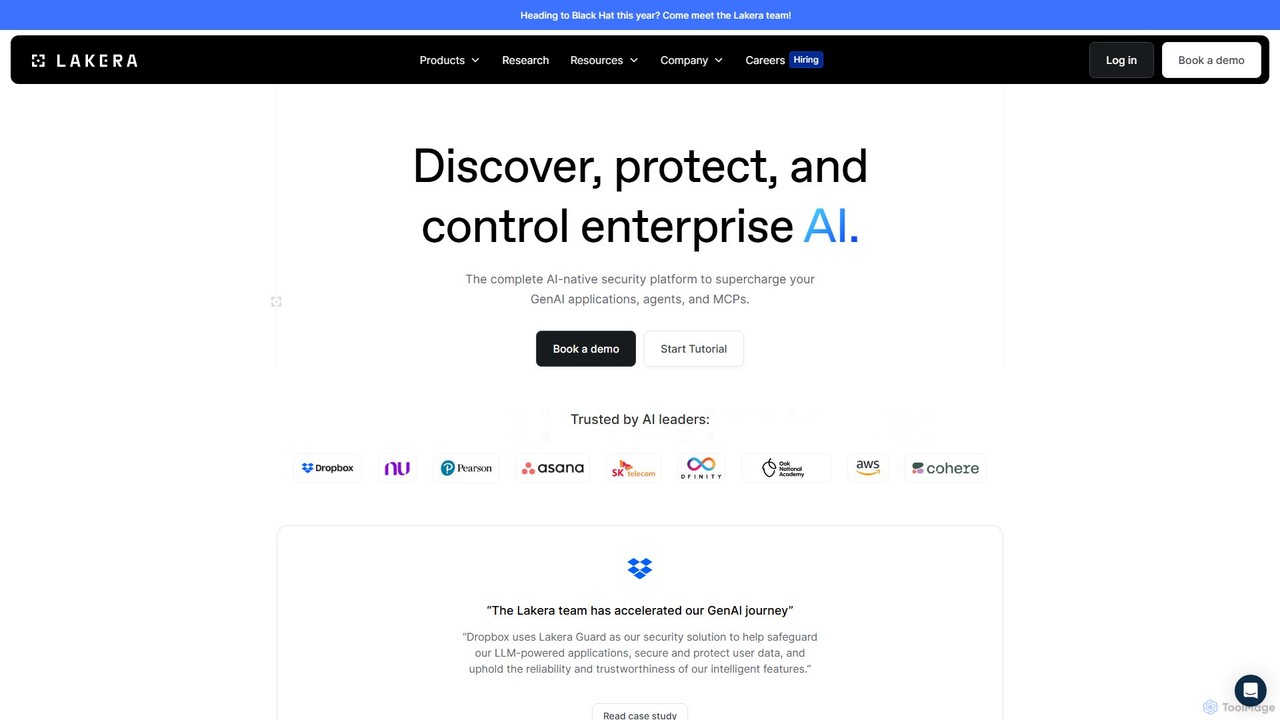
Lakera
Lakera is an AI-native security platform designed to protect Generative AI applications from threats like prompt injection, data leakage, and compliance violations. It offers real-time runtime protection, continuous threat intelligence powered by the world's largest AI red team, and easy integration with a single line of code. Trusted by enterprises like Dropbox, Lakera secures AI agents and applications across all major models and languages with ultra-low latency.
Api
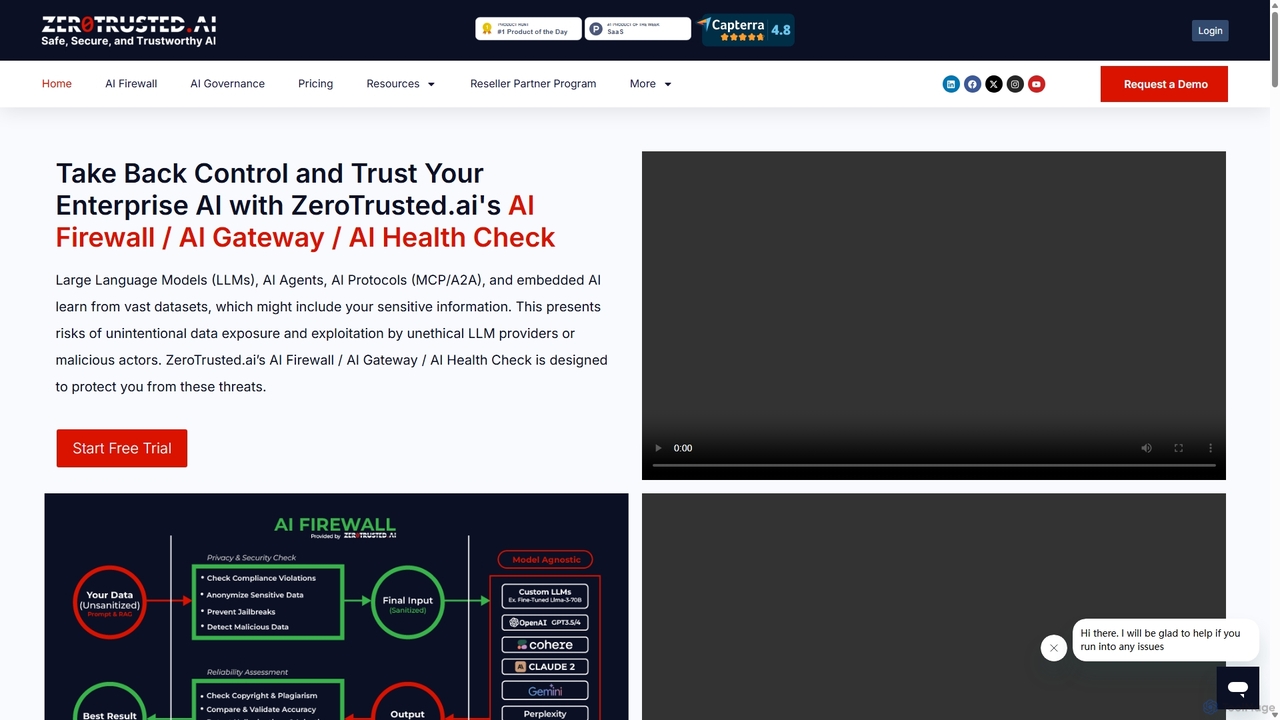
ZeroTrusted.ai
ZeroTrusted.ai is an advanced AI security platform offering an AI Firewall, Gateway, and Health Check to protect enterprise AI ecosystems. It enforces Zero Trust principles to safeguard against data leaks, ensure compliance, and secure Large Language Models (LLMs), AI agents, and RAG systems from threats.
Compliance
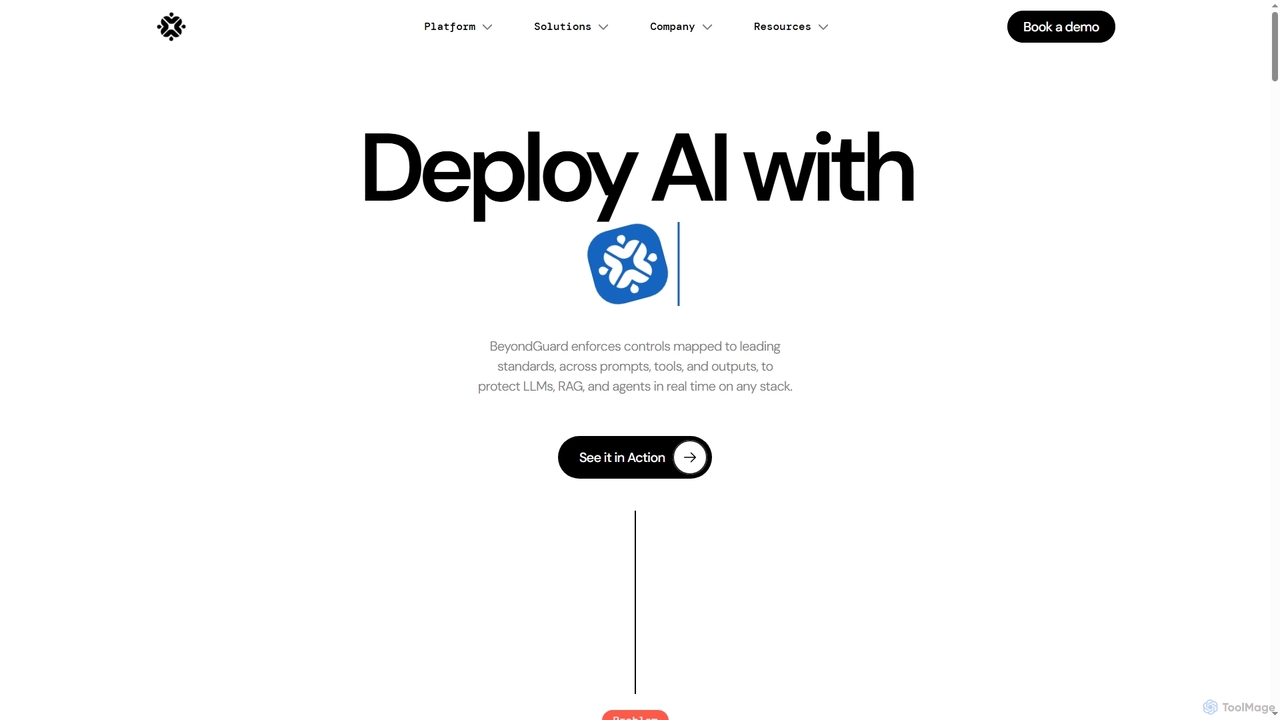
BeyondGuard
BeyondGuard is an enterprise AI security platform providing real-time threat blocking, low-code policy control, and unified risk visibility for LLMs, RAG, and AI agents. It protects against prompt injection, data leakage, jailbreaks, and unauthorized tool use, ensuring compliant and safe AI deployment across any stack.
Data Governance
Mindgard
Mindgard is an advanced AI security platform specializing in automated red teaming and continuous security testing for AI models. It helps organizations identify and mitigate unique AI vulnerabilities like prompt injection, data poisoning, and model evasion. Designed for enterprises, Mindgard supports a wide range of models, including LLMs and generative AI, ensuring AI systems are secure, compliant, and trustworthy throughout their lifecycle.
Testing
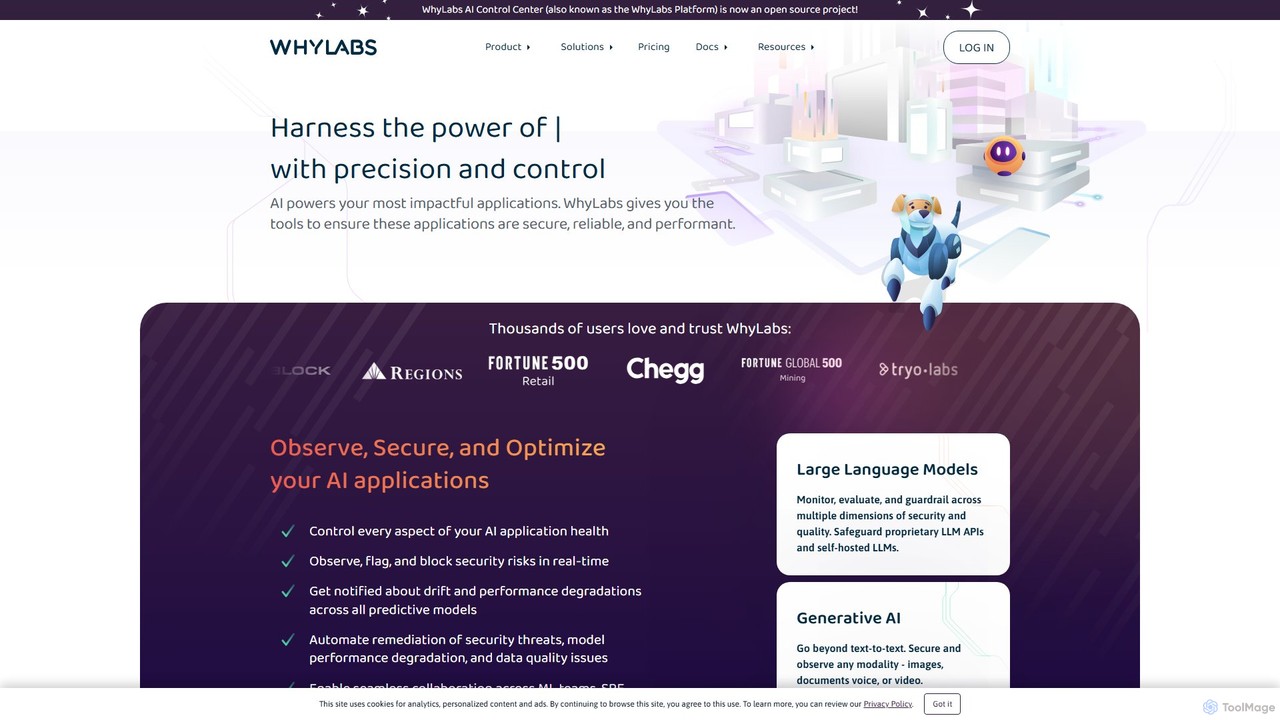
WhyLabs
WhyLabs is an AI observability and security platform designed for MLOps, SRE, and security teams. It provides tools to monitor, secure, and optimize AI applications, including LLMs and predictive models. The platform detects data drift, performance degradation, and security threats like prompt injections in real-time, all while using a privacy-preserving architecture that never moves or duplicates raw data.
Mlops
Adversa AI
Adversa AI is a leading AI security platform specializing in making AI, ML, and LLM systems secure, trusted, and responsible. It offers continuous AI Red Teaming, vulnerability assessment, and hardening solutions to protect against cyber threats, privacy issues, and safety incidents. Recognized by Gartner and numerous industry awards, Adversa AI helps organizations across various sectors secure their AI transformation.
Testing
Liminal
Liminal is an enterprise-grade security platform designed to help organizations safely adopt and leverage generative AI. It provides a secure gateway that protects sensitive data, ensures compliance, and offers comprehensive governance and observability across all AI interactions, integrating seamlessly into existing workflows.
Compliance
Wald.ai
Wald.ai is an enterprise-grade security platform that enables teams to use powerful AI assistants like ChatGPT, Claude, and Gemini without leaking sensitive data. It provides a unified interface with advanced Data Loss Prevention (DLP), contextual data redaction, and end-to-end encryption to ensure security and compliance.
Api
Aporia
Aporia is an enterprise-grade platform providing AI Guardrails and Observability for any AI workload. It ensures AI applications are secure, reliable, and compliant by preventing issues like prompt injections, data leakage, and hallucinations, while also offering detailed cost management for LLMs.
Monitoring
Maihem
Maihem is an advanced platform for AI security and robotics, specializing in automated red teaming and vulnerability testing for Large Language Model (LLM) applications. It systematically tests for the OWASP Top 10 LLM vulnerabilities, such as prompt injection and data poisoning, to ensure the safe, reliable, and compliant deployment of AI systems.
Testing
Credo AI
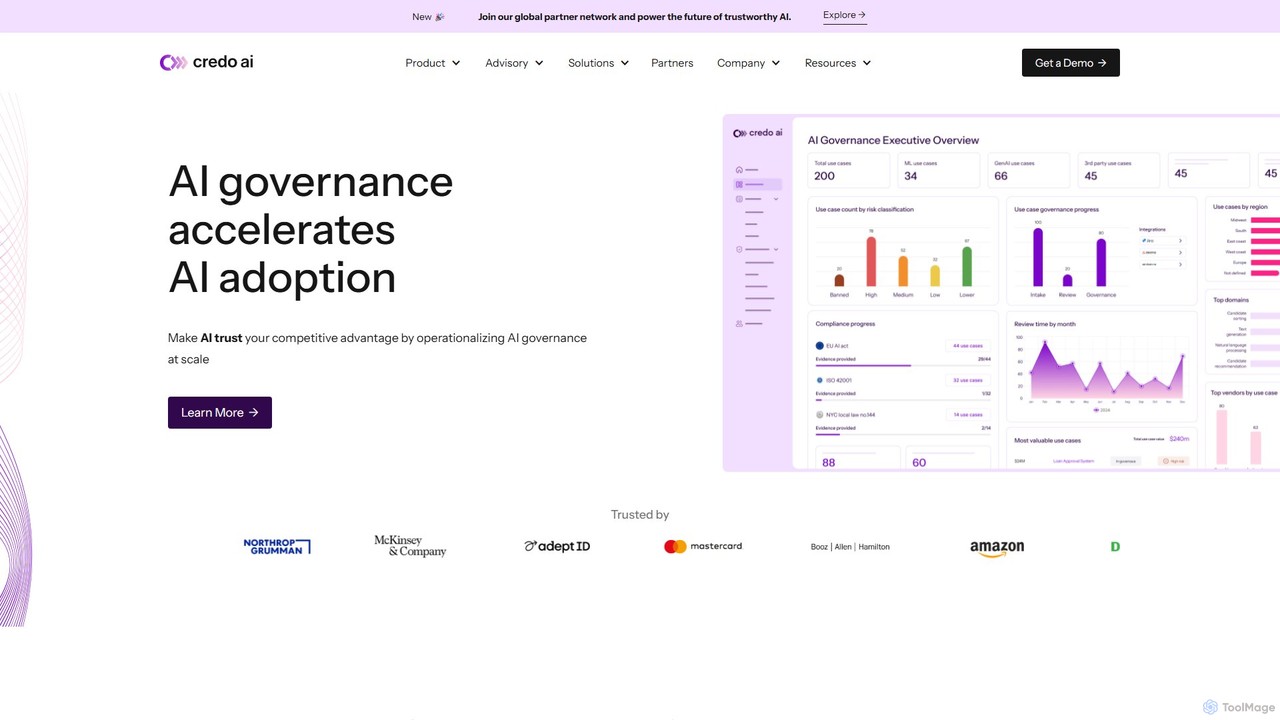
Credo AI is an enterprise-grade AI governance platform that helps organizations operationalize Responsible AI (RAI). It enables businesses to manage AI risks, ensure compliance with global regulations, and build trust by providing tools for inventory, assessment, and monitoring of all AI systems, including generative AI.
Governance
ModelOp
ModelOp is a leading enterprise AI Governance software platform designed to help organizations accelerate AI innovation responsibly. It provides a centralized system to manage, monitor, and govern all AI initiatives, including generative AI, LLMs, in-house models, and third-party systems, ensuring compliance, mitigating risk, and maximizing value.
Risk Management
Protevia
Protevia is an AI-powered platform designed to automate data privacy, security, and compliance. It helps businesses discover, classify, and protect sensitive data across their entire digital ecosystem, ensuring adherence to global regulations like GDPR, CCPA, and HIPAA.
Risk Management
Aleph Alpha
Aleph Alpha is a leading European AI company providing sovereign, explainable, and trustworthy generative AI solutions. Its PhariaAI suite offers a full-stack platform for enterprises and governments to build and deploy custom AI applications, ensuring data privacy, no vendor lock-in, and full control. Specializing in complex, critical environments, Aleph Alpha enables secure human-machine collaboration with its advanced multimodal and multilingual large language models.
Data Sovereignty
Casco
Casco is an autonomous security testing platform for AI systems. It acts as a continuous, always-on AI red team, proactively identifying and helping to fix vulnerabilities in AI agents, applications, and infrastructure before malicious attackers can exploit them, replacing periodic penetration testing with year-round automated monitoring.
Model Security