ToolMage
Sign in
Maestro
Automation · 183.2K monthly visits

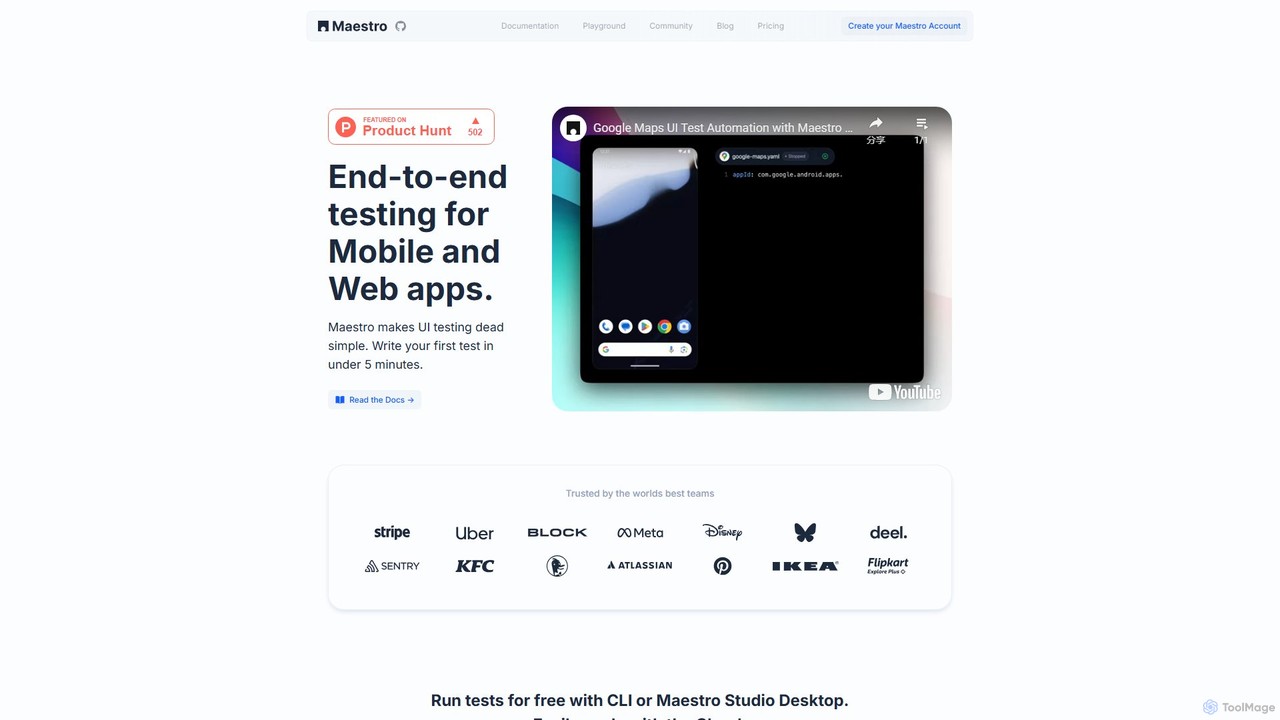
Maestro is an AI-powered, end-to-end UI testing framework that simplifies testing for mobile and web applications. With its intuitive syntax, visual test creation via Maestro Studio, and an AI assistant (MaestroGPT), it enables developers and testers to write reliable tests in minutes. It supports a wide range of frameworks like iOS, Android, React Native, and Flutter, offering both a free local environment and a scalable cloud platform for CI/CD integration.

VS
Reflect
Automation · 44.4K monthly visits

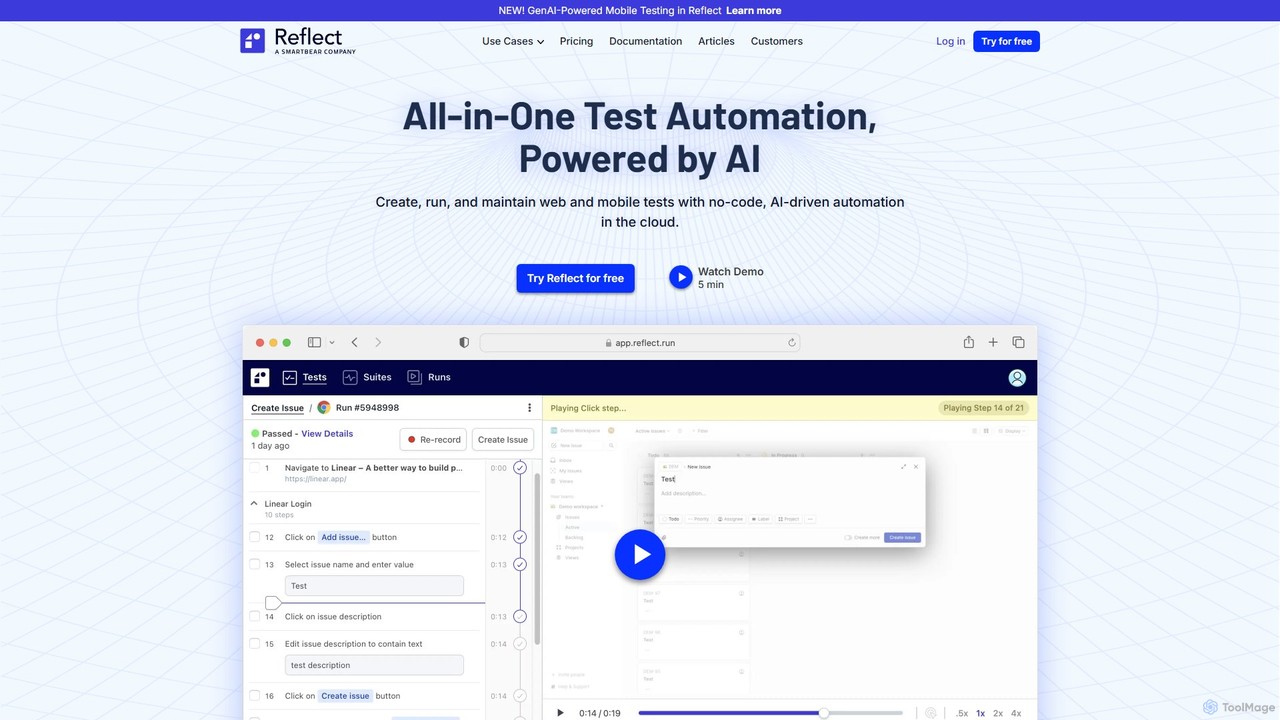
Reflect is an AI-powered, no-code automated web testing platform. It uses generative AI to convert plain English instructions into robust tests, eliminating the need for fragile selectors. Reflect accelerates testing by 10x, automatically adapting to UI changes and reducing maintenance. It supports web, mobile, API, and visual testing, integrating seamlessly with existing CI/CD and project management workflows to enhance test coverage and development speed.

Maestro vs Reflect: pricing, features, traffic, and use cases

Compare Maestro and Reflect across positioning, pricing, traffic, and user feedback using structured factual data.

Updated Aug 18, 2026

Product overview

Maestro Product overview

Maestro is an AI-powered, end-to-end UI testing framework that simplifies testing for mobile and web applications. With its intuitive syntax, visual test creation via Maestro Studio, and an AI assistant (MaestroGPT), it enables developers and testers to write reliable tests in minutes. It supports a wide range of frameworks like iOS, Android, React Native, and Flutter, offering both a free local environment and a scalable cloud platform for CI/CD integration.
Preview

Reflect Product overview

Reflect is an AI-powered, no-code automated web testing platform. It uses generative AI to convert plain English instructions into robust tests, eliminating the need for fragile selectors. Reflect accelerates testing by 10x, automatically adapting to UI changes and reducing maintenance. It supports web, mobile, API, and visual testing, integrating seamlessly with existing CI/CD and project management workflows to enhance test coverage and development speed.

Preview

Detailed feature comparison

FeatureMaestroReflect
Primary categoryAutomationAutomation
Added2025-08-102025-08-09
PricingFreemiumFreemium
Official websitemaestro.devreflect.run
Product typeAppWebsite
Performance data
User ratingNot verifiedNot verified
Comments00
Monthly visits183.2K44.4K
Monthly growth5.1%11.1%
Favorites93104
DetailsView detailsView details

Maestro vs Reflect monthly traffic

Compare Maestro and Reflect by monthly reach, traffic trend, visit depth, top regions, and acquisition sources.

How to interpret the traffic data

In the Maestro vs Reflect monthly traffic comparison, Maestro currently shows 183.2K visits and Reflect shows 44.4K; Maestro has about 4.1 times the visible traffic of Reflect, an absolute difference of about 138.8K visits. This reflects visible reach, not feature quality or paid users.

Both tools provide verified traffic details, so monthly trends, visit depth, regions, and acquisition sources can be compared on the same basis.

Maestro monthly traffic:

Latest traffic

Monthly visits
183.2K
Avg. visit duration
2:03
Pages per visit
2.87
Bounce rate
40.07%
Data updated 2026-06-11

Monthly traffic trend

  • 2025/9: 25.3K Monthly visits
  • 2026/1: 154.5K Monthly visits
  • 2026/2: 154.4K Monthly visits
  • 2026/3: 176.4K Monthly visits
  • 2026/4: 174.4K Monthly visits
  • 2026/5: 183.2K Monthly visits

Top regions

Top 5 countries/regions
Country/regionPercentageTraffic
🇺🇸United States28.69%52.6K
🇮🇳India23.88%43.7K
🇻🇳Vietnam17.47%32K
🇷🇺Russia15.91%29.1K
🇸🇪Sweden14.05%25.7K

Traffic sources

Source typePercentageTraffic
Direct82.06%150.3K
Referral17.4%31.9K
Email0.54%989

Search keywords

maestromaestro mcpmaestro studiomaestro testmaestro testing

Reflect monthly traffic:

Latest traffic

Monthly visits
44.4K
Avg. visit duration
5:19
Pages per visit
7.72
Bounce rate
34.11%
Data updated 2026-06-15

Monthly traffic trend

  • 2025/9: 75.3K Monthly visits
  • 2026/1: 62.8K Monthly visits
  • 2026/2: 54K Monthly visits
  • 2026/3: 50.4K Monthly visits
  • 2026/4: 40K Monthly visits
  • 2026/5: 44.4K Monthly visits

Top regions

Top 5 countries/regions
Country/regionPercentageTraffic
🇬🇧United Kingdom44.81%19.9K
🇮🇳India26.46%11.7K
🇧🇷Brazil10.62%4.7K
🇻🇳Vietnam9.24%4.1K
🇺🇸United States8.87%3.9K

Traffic sources

Source typePercentageTraffic
Direct97.74%43.4K
Referral2.26%1K

Search keywords

apikey = "paste_your_api_key_herereflectreflect.run statussmartbear reflect parameterstest my reflect
Traffic-based selection guidance: If public market visibility is an important first-pass criterion, investigate Maestro first. The final choice should still follow taxonomy, use case, and a real trial because higher traffic does not prove broader capabilities or better workflow fit.

Usage comparison

Compare the core capabilities of Maestro and Reflect

Maestro Core features

Testing
No Code
Automation

Reflect Core features

Testing
No Code
Automation

Use cases

Maestro Use cases

CI/CD
web testing
AI-powered testing
Android
developer tools
end-to-end testing
flutter
iOS
mobile testing
QA automation
react native
test automation
UI testing

Reflect Use cases

CI/CD
web testing
ai testing
automated testing
E2E testing
no-code
Q&A
quality assurance
regression testing
SmartBear
software development

Maestro vs Reflect:In-depth comparison and selection guidance

First decide whether the products solve the same kind of need

This in-depth Maestro vs Reflect comparison uses only the product records, taxonomy, audience, traffic, and community signals available on this page. Maestro is primarily listed under “Automation”, while Reflect is primarily listed under “Automation”, so the first decision is whether your actual task matches their recorded scope.

The structured fields currently show these decision-relevant differences: Primary category (Maestro: Automation; Reflect: Automation); Product type (Maestro: App; Reflect: Website); Monthly visits (Maestro: 183.2K; Reflect: 44.4K); Monthly growth (Maestro: 5.1%; Reflect: 11.1%); Favorites (Maestro: 93; Reflect: 104). These facts are more useful for selection than brand visibility alone.

What market visibility and monthly traffic mean

In the Maestro vs Reflect monthly traffic comparison, Maestro currently shows 183.2K visits and Reflect shows 44.4K; Maestro has about 4.1 times the visible traffic of Reflect, an absolute difference of about 138.8K visits. This reflects visible reach, not feature quality or paid users.

Both tools provide verified traffic details, so monthly trends, visit depth, regions, and acquisition sources can be compared on the same basis.

If public market visibility is an important first-pass criterion, investigate Maestro first. The final choice should still follow taxonomy, use case, and a real trial because higher traffic does not prove broader capabilities or better workflow fit.

Product positioning, use cases, and roles

Maestro and Reflect currently overlap in shared categories: Testing and No Code; shared tags: CI/CD and web testing. This can place both on the same shortlist, but it does not prove equal implementation, depth, or cost.

Maestro's unique categories/tags are Automation, AI-powered testing, Android, developer tools, end-to-end testing, flutter, iOS, and mobile testing; Reflect's are Automation, ai testing, automated testing, E2E testing, no-code, Q&A, quality assurance, and regression testing. These unique fields are the strongest differentiators: validate the product whose recorded scope matches the task instead of following traffic alone.

What ratings, comments, and favorites can tell you

Maestro has no verified rating, 0 comments, 93 favorites, and 92 likes;Reflect has no verified rating, 0 comments, 104 favorites, and 107 likes。

Neither product has enough rating or comment samples for a credible reputation ranking.

Selection guidance by actual need

When to evaluate Maestro first

Put Maestro on the priority trial list when the task aligns with “Automation” and especially Automation, AI-powered testing, Android, developer tools, end-to-end testing, and flutter. This follows recorded positioning and does not imply unlisted capabilities are absent.

Maestro also currently records: pricing is freemium, product type is app, 183.2K verified monthly visits, no verified user rating. Verify any hard requirement around price, platform, or reach before trial, and do not let sparse review data substitute for testing.

When to evaluate Reflect first

Put Reflect on the priority trial list when the task aligns with “Automation” and especially Automation, ai testing, automated testing, E2E testing, no-code, and Q&A. This follows recorded positioning and does not imply unlisted capabilities are absent.

Reflect also currently records: pricing is freemium, product type is website, 44.4K verified monthly visits, no verified user rating. Verify any hard requirement around price, platform, or reach before trial, and do not let sparse review data substitute for testing.

How to validate the recommendation before deciding

The available data describes positioning, public visibility, and community signals, but it cannot prove output quality, speed, integration effort, privacy, or long-term cost in your workflow. Before deciding, run the same representative tasks in Maestro and Reflect, then record completion time, accuracy, manual corrections, and the real paid threshold. A like-for-like trial turns this comparison into a defensible adoption decision.

Comparison FAQ

How should I choose between Maestro and Reflect?
Compare positioning, pricing, taxonomy, and traffic maturity, then verify the latest details on each official website.
Where does this comparison data come from?
The factual baseline is derived from product, taxonomy, traffic, and community data. Reviewed editorial conclusions show their source and verification date.
What do unknown fields mean?
Unknown means there is not enough reliable evidence; the page does not fill gaps with assumptions.

Related AI tools

Autonoma AI
Paid

Autonoma AI

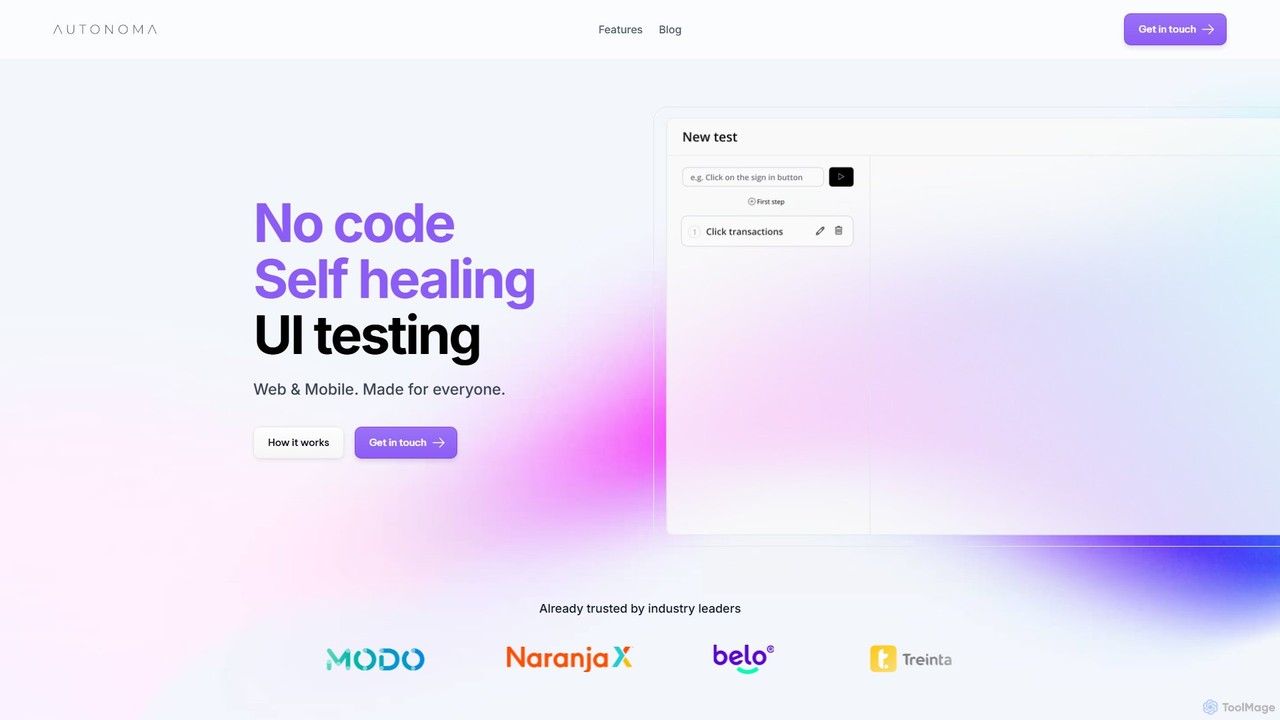
Autonoma AI is a no-code, self-healing UI testing platform for web and mobile applications. It uses AI to automatically record user interactions, convert them into robust tests, and adapt to UI changes, eliminating test maintenance. This allows teams to ship products faster and with greater confidence by automating regression testing and integrating seamlessly into CI/CD pipelines.

Testing
Visits 76.8KFavorites 131Likes 132
Katalon
Freemium

Katalon

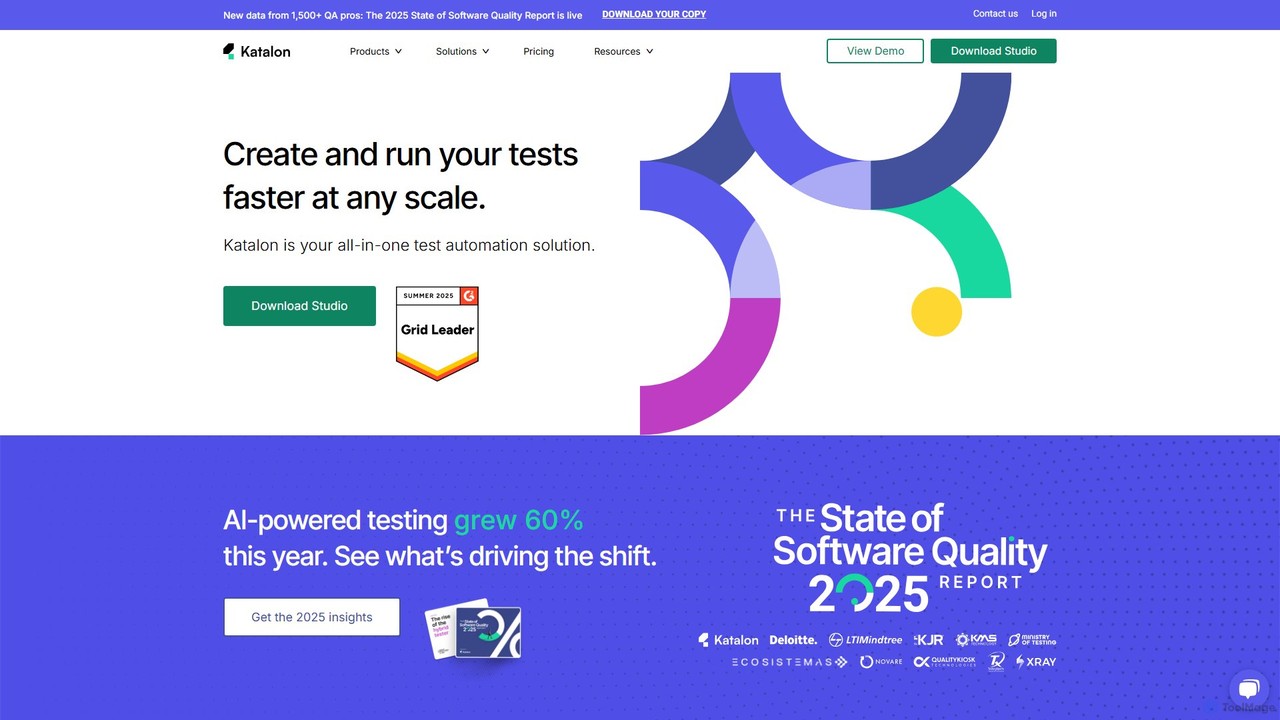
Katalon is a comprehensive, AI-augmented test automation platform for web, API, mobile, and desktop applications. It empowers teams of all sizes with low-code, full-code, and no-code solutions, streamlining the entire quality lifecycle from test creation and execution to analysis and management.

Code Generation
Visits 250.2KFavorites 128Likes 128
Momentic
Paid

Momentic

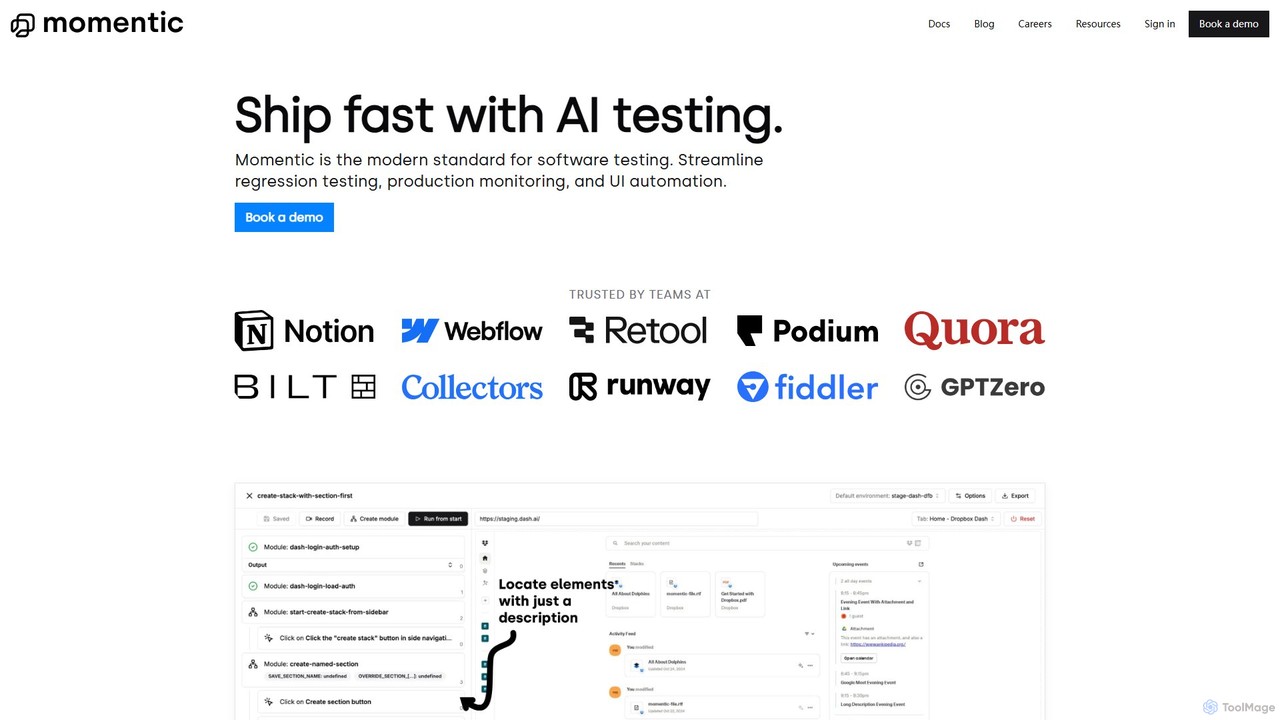
Momentic is an AI-powered software testing platform that accelerates development cycles. It enables teams to create, run, and maintain robust end-to-end tests using natural language, eliminating flaky scripts and reducing manual QA overhead. It features a low-code editor, auto-healing locators, and seamless CI/CD integration.

No Code
Visits 46.5KFavorites 98Likes 99
Virtuoso
Paid

Virtuoso

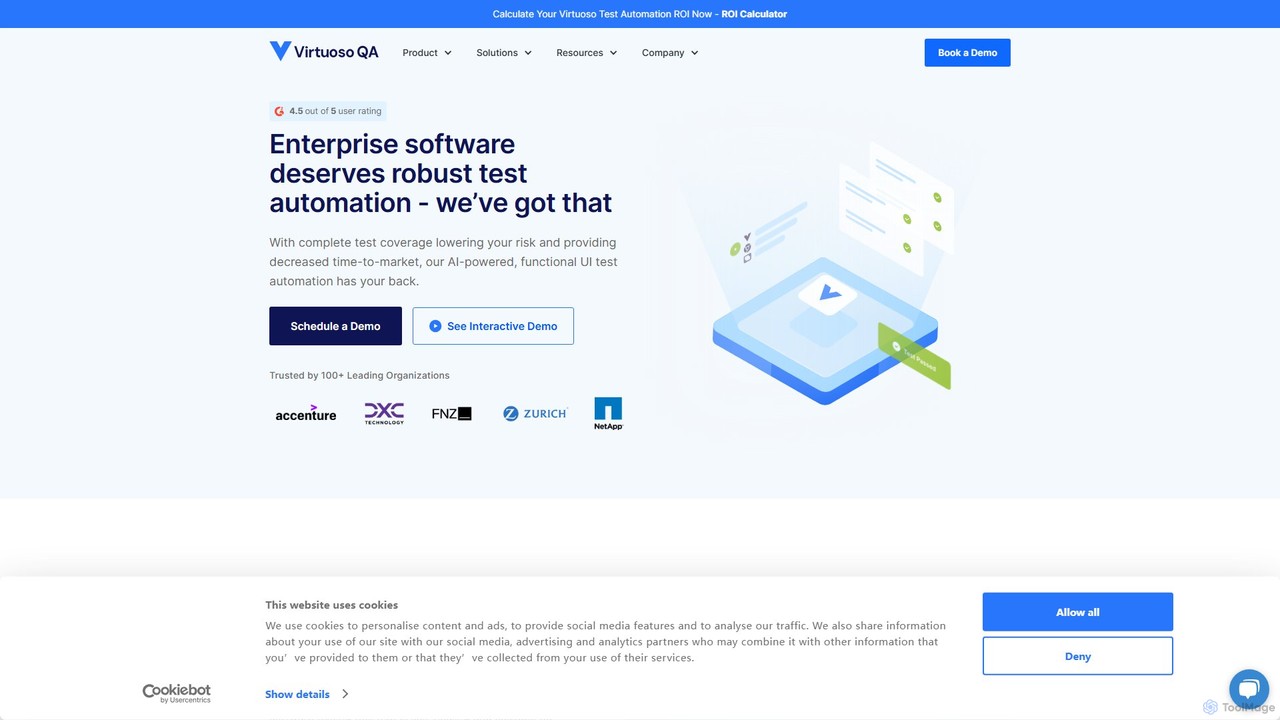
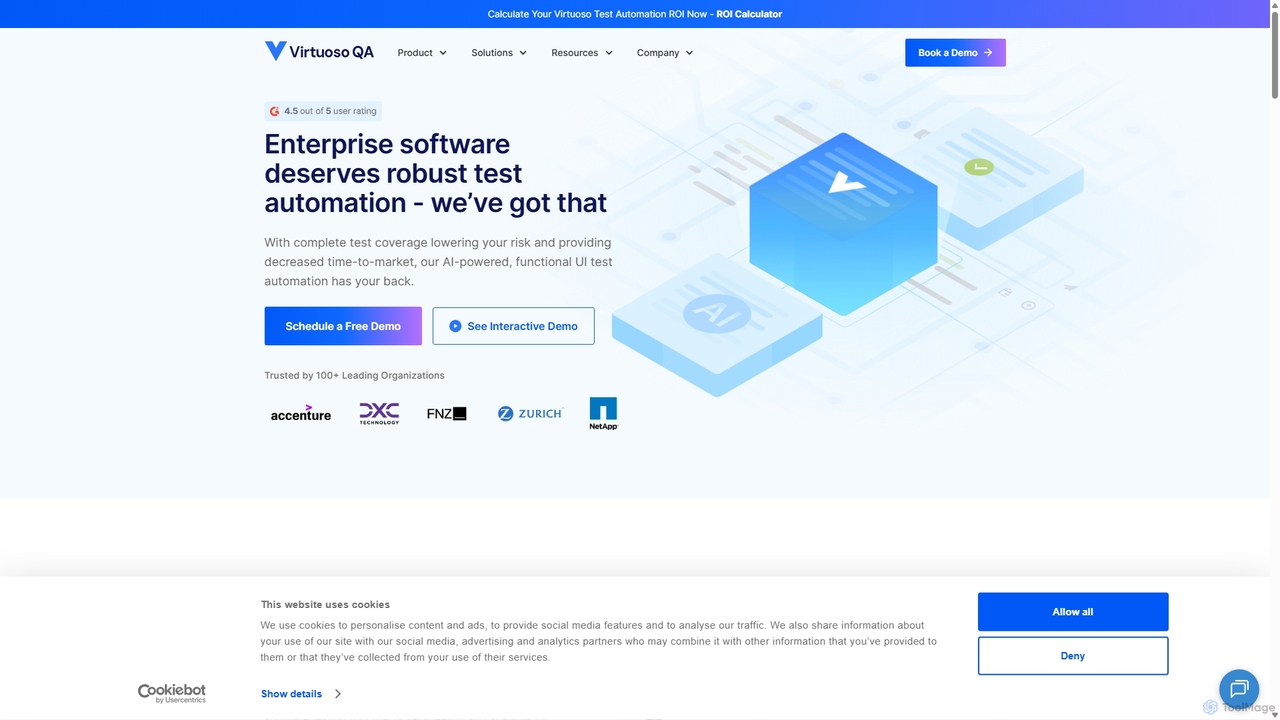
Virtuoso is an AI-powered, codeless test automation platform for web applications. It enables QA teams and developers to create, execute, and maintain end-to-end tests using natural language. Its intelligent bots navigate applications like a human, while its self-healing capabilities automatically adapt to UI changes, significantly reducing test maintenance and accelerating software delivery cycles.

Quality Assurance
Visits 64.4KFavorites 105Likes 96
Virtuoso
Paid

Virtuoso

Virtuoso is an AI-powered test automation platform for enterprises, enabling teams to write self-healing, functional UI and end-to-end tests in plain English. It combines Natural Language Programming (NLP) and Generative AI to accelerate software delivery, reduce test maintenance costs, and improve overall quality.

Testing
Visits 13.3KFavorites 121Likes 120
Docket

Docket

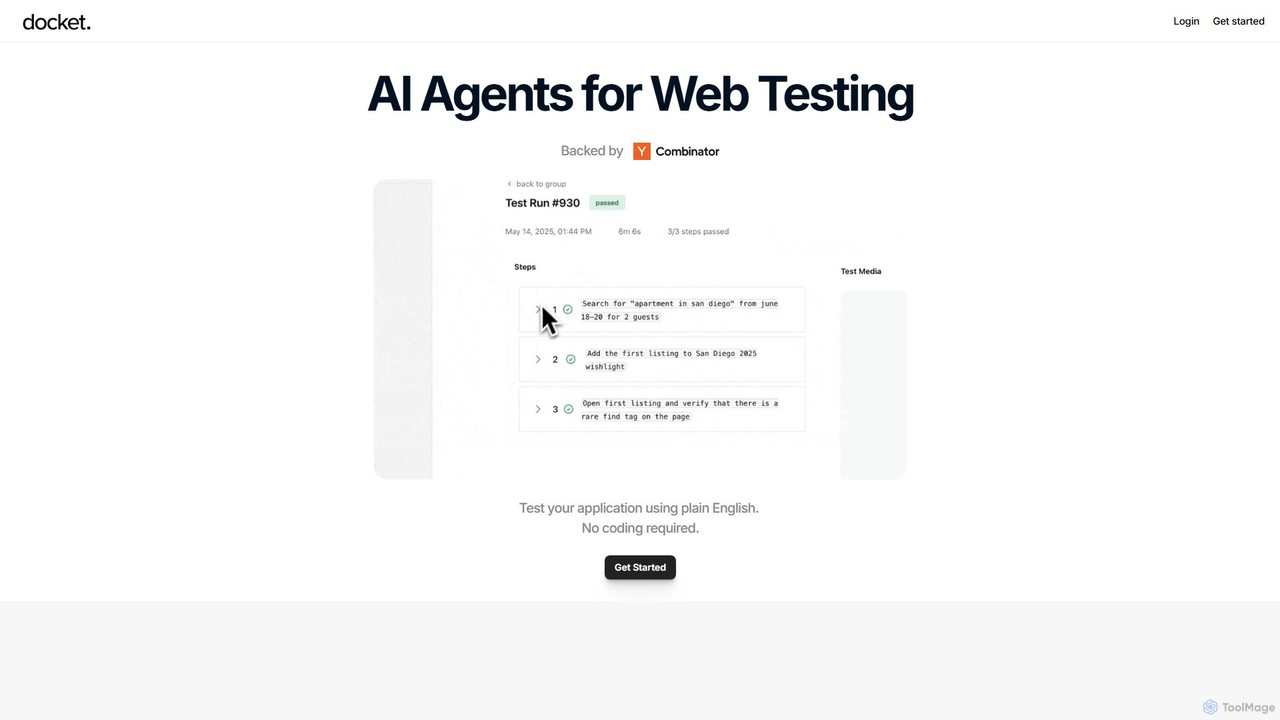
Docket is an AI-powered testing platform that uses intelligent agents to automate web application testing. It allows teams to create, maintain, and run tests using natural language, eliminating the need for complex code and brittle selectors. It visually interacts with applications, just like a human user.

Quality Assurance
Visits 8.9KFavorites 120Likes 116
Autoflow
Freemium

Autoflow

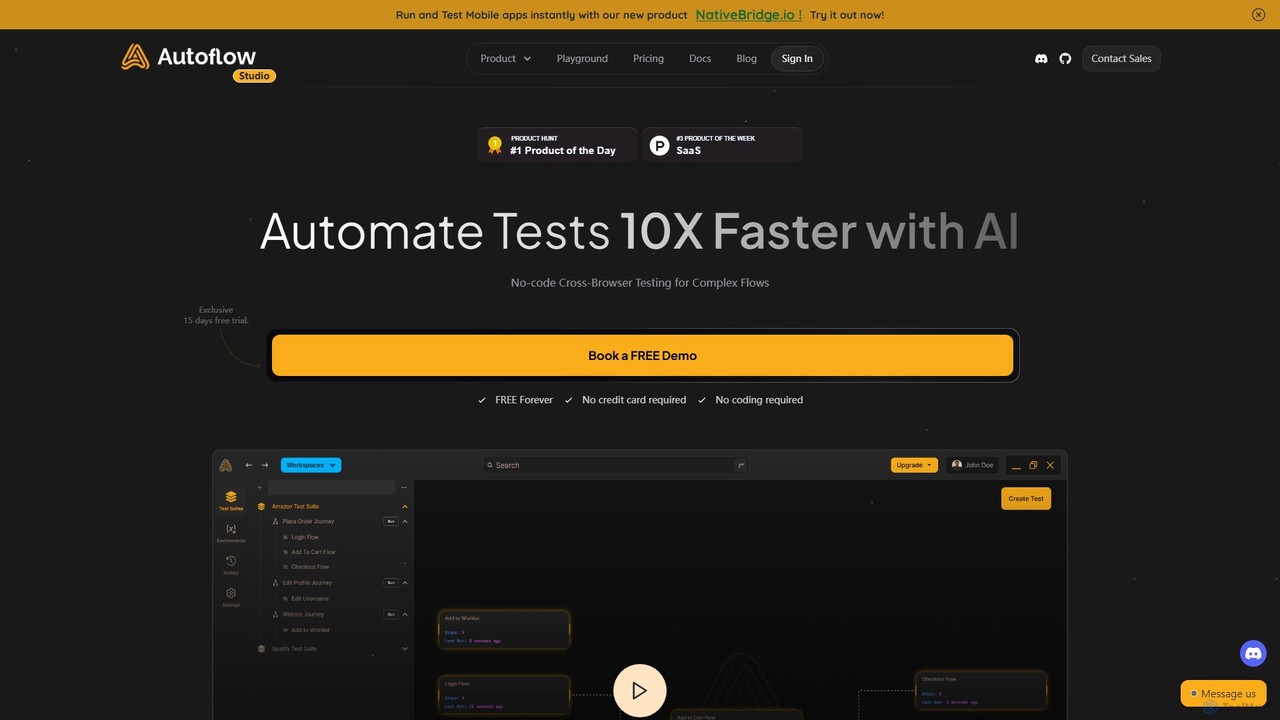
Autoflow is an AI-powered, no-code automated testing tool designed for modern QA teams, developers, and product managers. It enables 10x faster cross-browser testing for complex web application flows without writing a single line of code. It streamlines test creation, execution, and maintenance, fostering collaboration and accelerating release cycles.

Testing
Visits 5.5KFavorites 127Likes 122
Reliv

Reliv

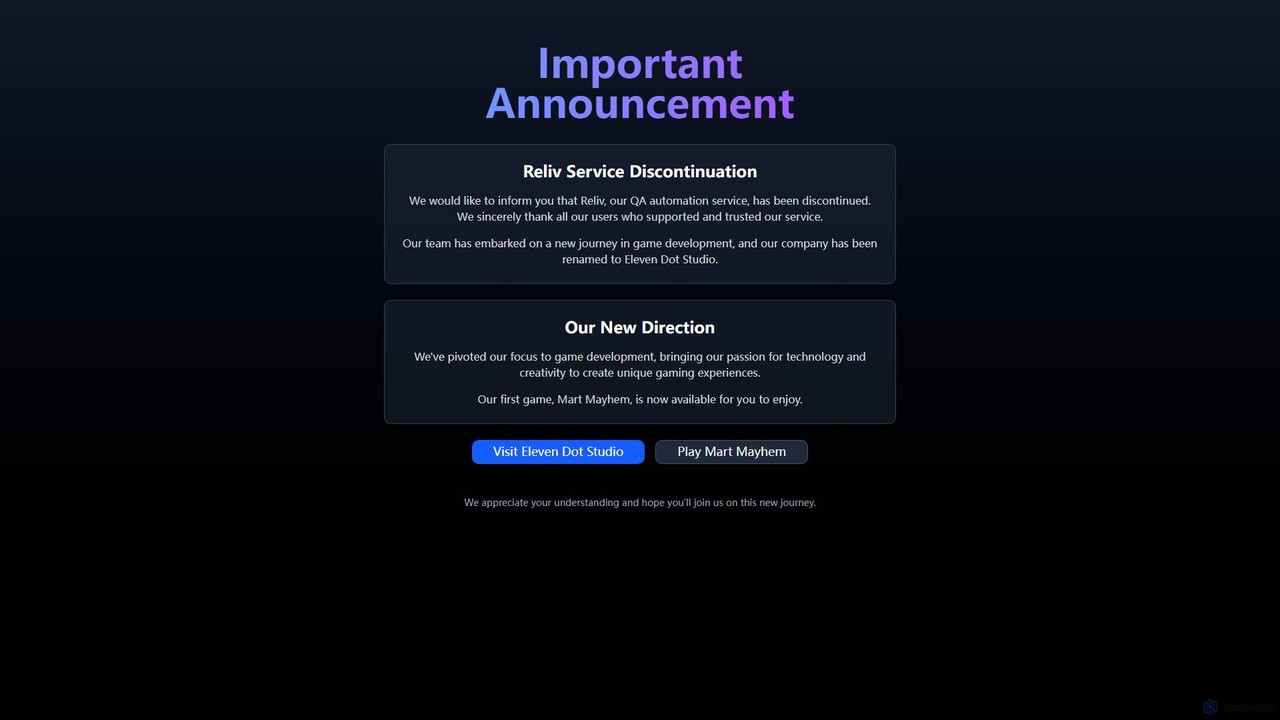
Reliv was an AI-powered QA automation service designed to streamline software testing. It enabled teams to create, manage, and execute automated tests without extensive coding, accelerating development cycles and improving application quality. The service has since been discontinued.

No Code
Visits 4.2KFavorites 111Likes 110
AI Web Test Aitida
Freemium

AI Web Test Aitida

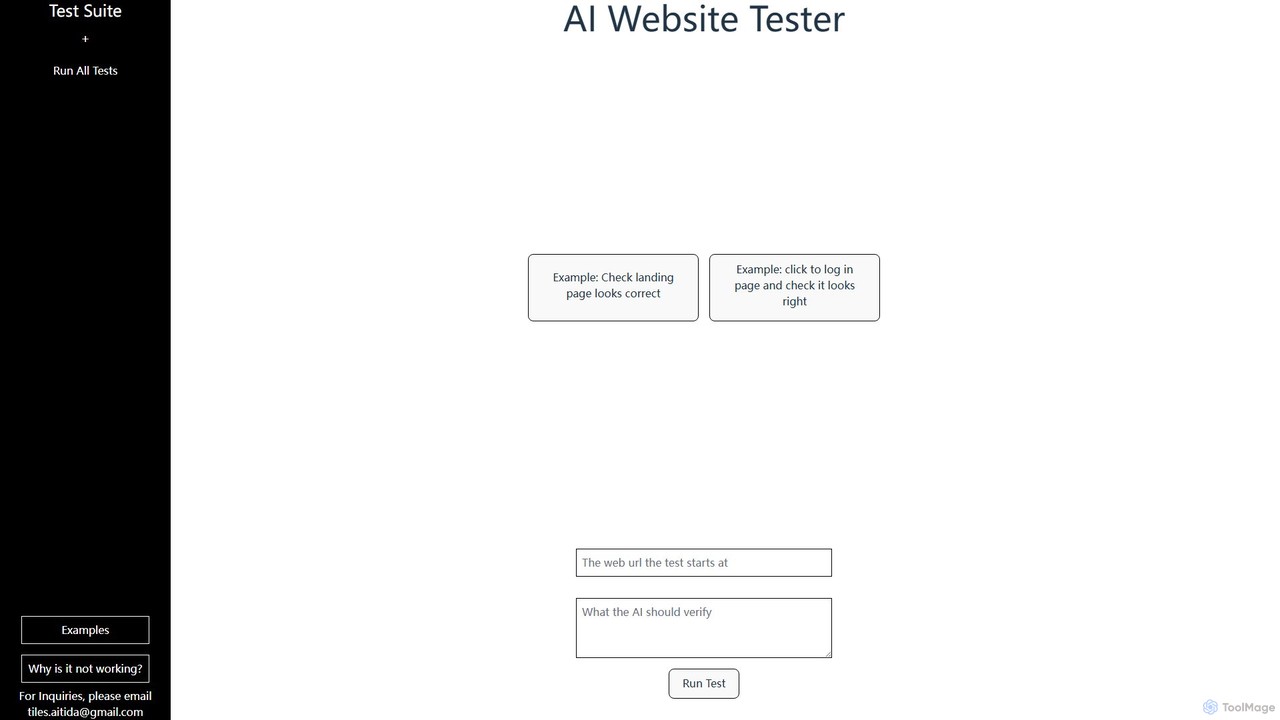
AI Web Test Aitida is an AI-powered platform for automated website testing. It simplifies quality assurance by allowing users to create, run, and manage complex test suites using natural language. The tool specializes in visual regression and end-to-end user flow testing, helping teams catch bugs faster and ensure a flawless user experience across all browsers and devices.

Quality Assurance
Visits 4.1KFavorites 100Likes 108
Playrun
Freemium

Playrun

Playrun is an AI-powered, no-code platform that automatically generates tests for your web application's user flows. It proactively catches bugs and regressions by running tests periodically, alerting you before your users are affected. This helps improve software quality and user retention without manual test scripting.

Testing
Visits 4KFavorites 121Likes 116
TestSprite
Freemium

TestSprite

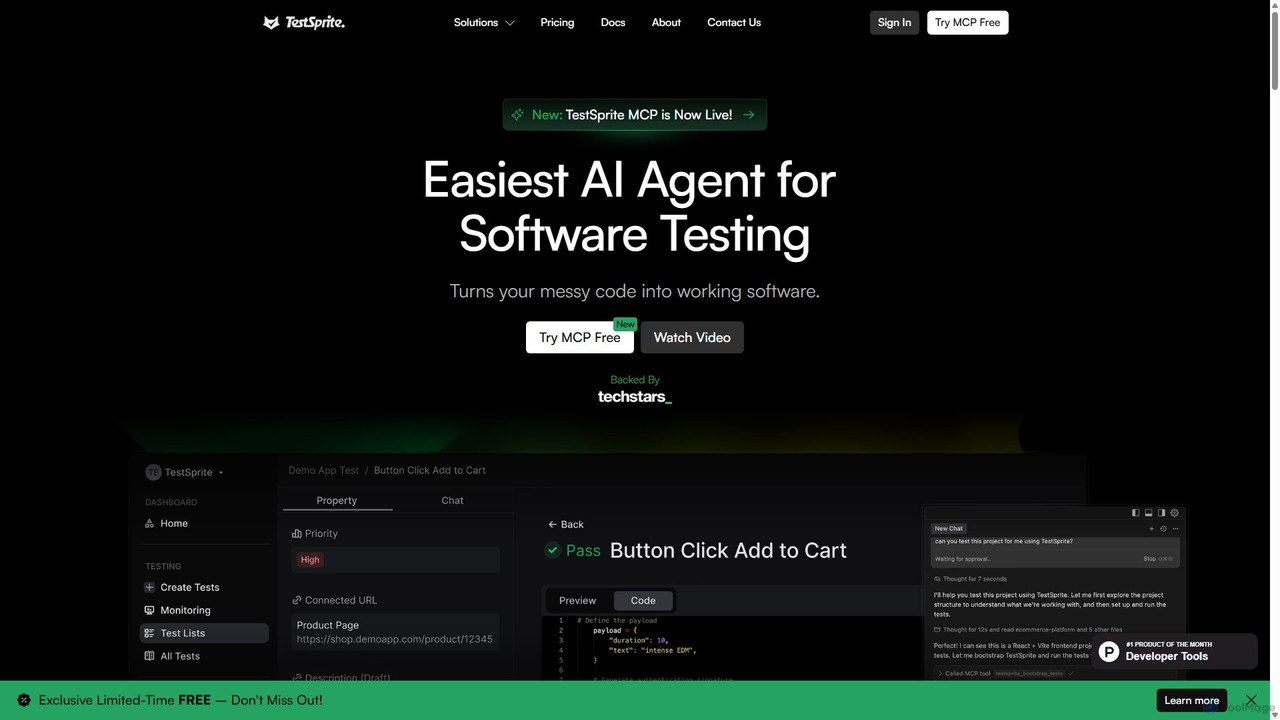
TestSprite is an AI-powered test automation platform designed to streamline UI and visual regression testing. It helps development and QA teams accelerate their testing cycles, improve accuracy, and reduce maintenance overhead with intelligent, self-healing tests and a codeless interface.

Testing
Visits 235.4KFavorites 91Likes 86
testRigor
Freemium

testRigor

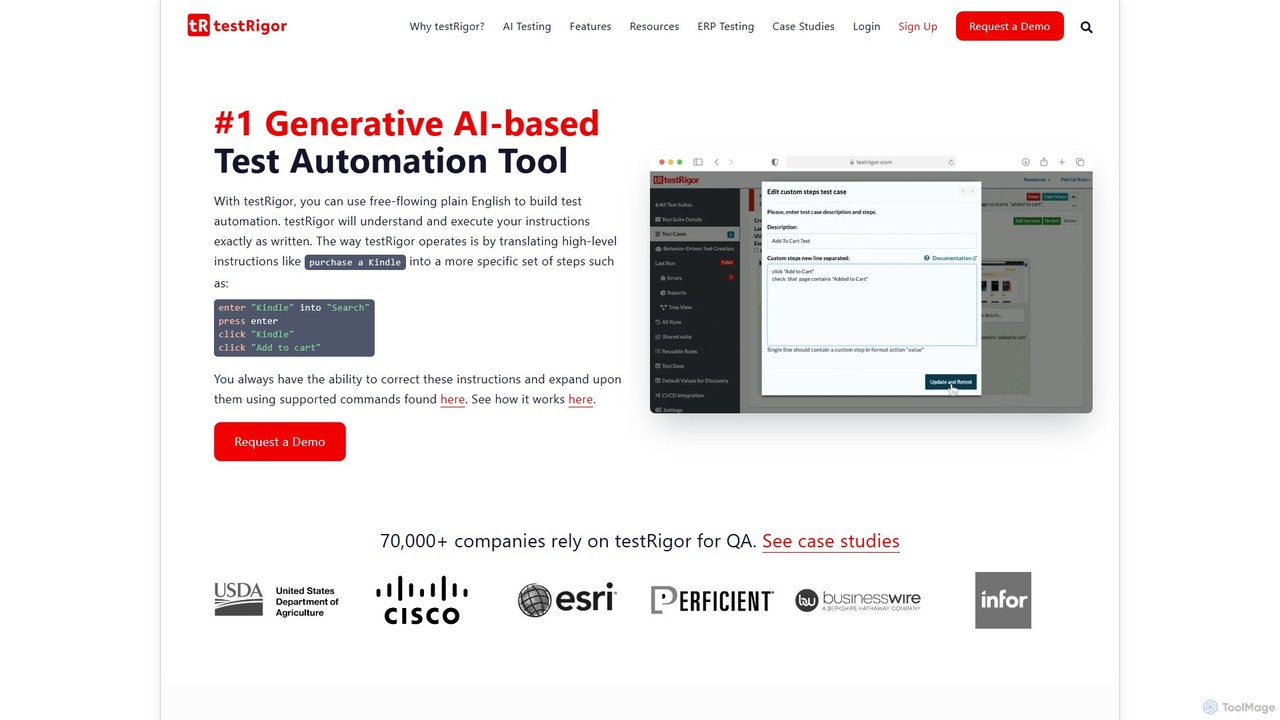
testRigor is a generative AI-powered test automation platform that allows users to create complex end-to-end tests using plain English. It supports web, mobile, API, and desktop testing, drastically reducing test maintenance and enabling non-technical team members to contribute to QA, accelerating development cycles.

Automation
Visits 163.6KFavorites 128Likes 126
Testsigma
Freemium

Testsigma

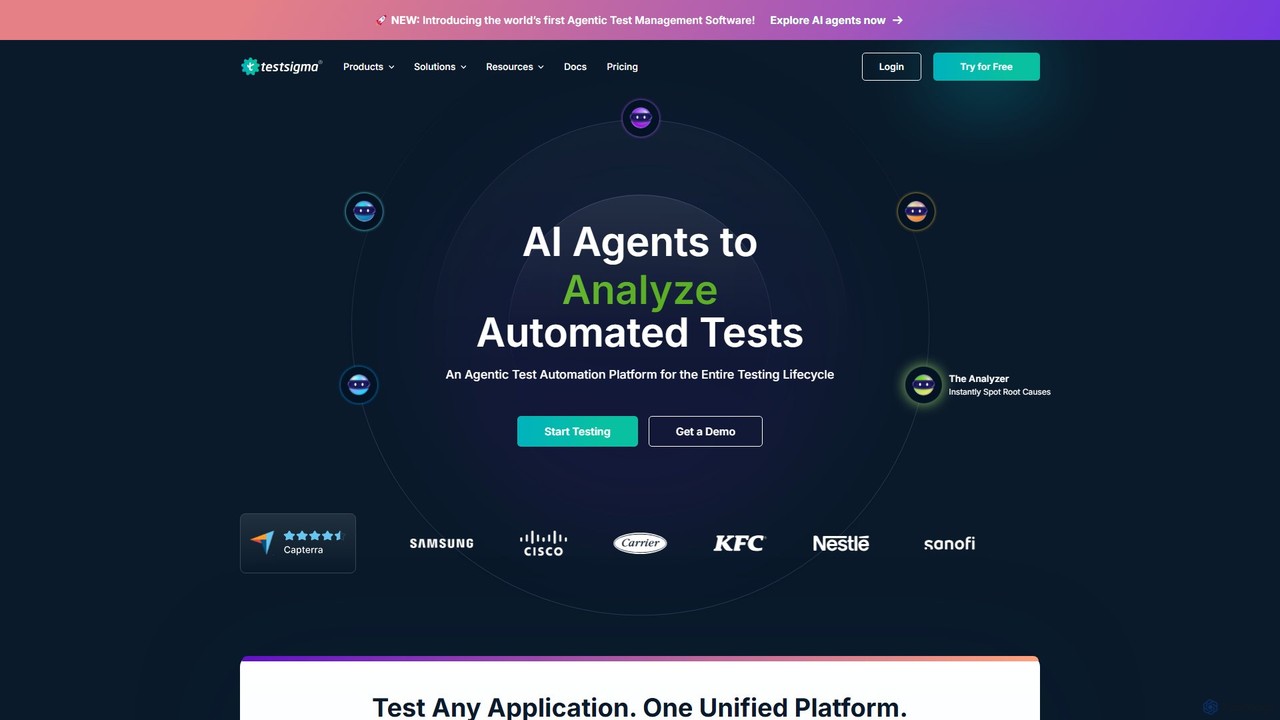
Testsigma is a unified, AI-powered test automation platform that enables teams to create, run, and maintain tests for web, mobile, API, and ERP applications without code. It uses AI agents to accelerate test generation, reduce maintenance by 90%, and achieve end-to-end testing on a massive scale.

Quality Assurance
Visits 198.7KFavorites 103Likes 95
mabl
Paid

mabl

mabl is an AI-powered test automation platform that simplifies end-to-end testing for web applications. It uses AI to accelerate test creation, execution, and maintenance, enabling agile and DevOps teams to deliver high-quality software faster. With features like self-healing tests and AI-driven root cause analysis, mabl reduces the effort of maintaining brittle test suites.

Testing
Visits 112.7KFavorites 131Likes 117
Qodex
Freemium

Qodex

Qodex is an AI-powered platform that simplifies and accelerates API testing and security. It automatically discovers your APIs, generates comprehensive tests from plain English prompts, and integrates seamlessly into your developer workflow. Reduce test creation time by 80% and ship bug-free software faster.

Security
Visits 108.4KFavorites 127Likes 131