Netomi is an enterprise-grade Agentic AI platform designed to automate and enhance customer experience (CX). It leverages 'Sanctioned Generative AI' to provide proactive, personalized, and secure support across all channels, including chat, email, voice, and social media. Trusted by global brands, Netomi helps businesses increase efficiency, reduce costs, and build deeper customer relationships through intelligent automation.

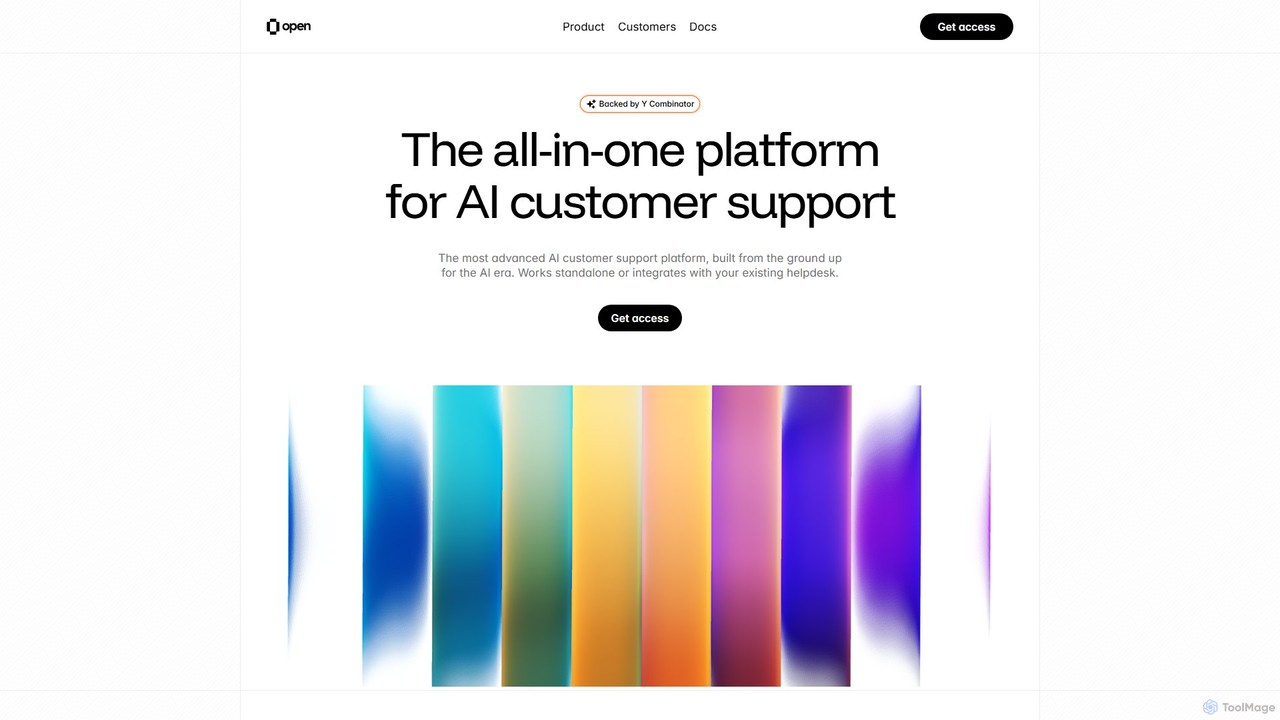
Open is an enterprise-grade, all-in-one AI platform for customer support, backed by Y Combinator. It automates complex support requests across web, phone, and email, acting as a powerful AI agent that can be trained on your business data and integrated with existing helpdesks like Zendesk and Salesforce.
Product overview
Netomi Product overview
Netomi is an enterprise-grade Agentic AI platform designed to automate and enhance customer experience (CX). It leverages 'Sanctioned Generative AI' to provide proactive, personalized, and secure support across all channels, including chat, email, voice, and social media. Trusted by global brands, Netomi helps businesses increase efficiency, reduce costs, and build deeper customer relationships through intelligent automation.
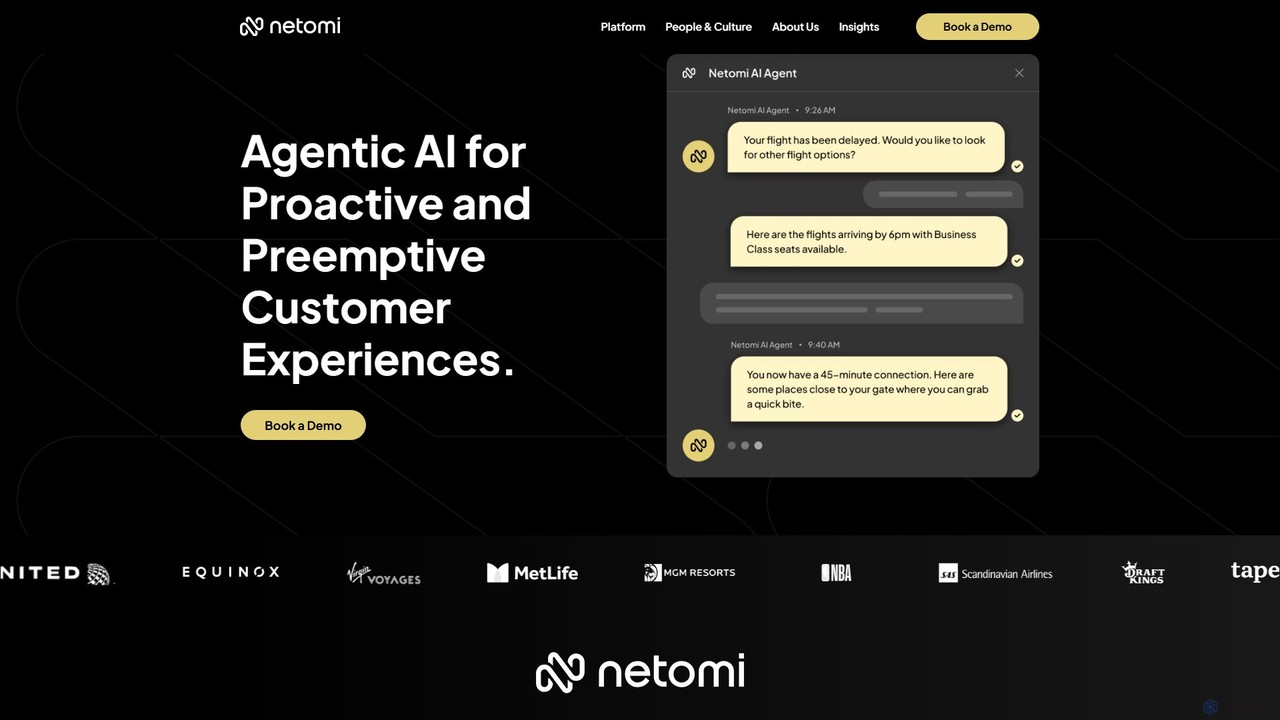
Open Product overview
Open is an enterprise-grade, all-in-one AI platform for customer support, backed by Y Combinator. It automates complex support requests across web, phone, and email, acting as a powerful AI agent that can be trained on your business data and integrated with existing helpdesks like Zendesk and Salesforce.
Detailed feature comparison
| Feature | Netomi | Open |
|---|---|---|
| Primary category | Enterprise Solutions | Enterprise Solutions |
| Added | 2025-08-03 | 2025-08-11 |
| Pricing | Paid | Paid |
| Official website | www.netomi.com | open.cx |
| Product type | Website | Website |
| Performance data | ||
| User rating | Not verified | Not verified |
| Comments | 0 | 0 |
| Monthly visits | 66.3K | 22.4K |
| Monthly growth | 59.9% | 6.3% |
| Favorites | 115 | 113 |
| Details | View details | View details |
Netomi vs Open monthly traffic
Compare Netomi and Open by monthly reach, traffic trend, visit depth, top regions, and acquisition sources.
How to interpret the traffic data
In the Netomi vs Open monthly traffic comparison, Netomi currently shows 66.3K visits and Open shows 22.4K; Netomi has about 3 times the visible traffic of Open, an absolute difference of about 43.9K visits. This reflects visible reach, not feature quality or paid users.
Both tools provide verified traffic details, so monthly trends, visit depth, regions, and acquisition sources can be compared on the same basis.
Netomi monthly traffic:
Latest traffic
Monthly traffic trend
- 2025/9: 32.6K Monthly visits
- 2026/1: 62.5K Monthly visits
- 2026/2: 50.6K Monthly visits
- 2026/3: 45.5K Monthly visits
- 2026/4: 41.4K Monthly visits
- 2026/5: 66.3K Monthly visits
Top regions
Top 5 countries/regions
| Country/region | Percentage | Traffic |
|---|---|---|
| 🇮🇳India | 53.33% | 35.3K |
| 🇺🇸United States | 36.94% | 24.5K |
| 🇨🇦Canada | 5.88% | 3.9K |
| 🇳🇬Nigeria | 2.09% | 1.4K |
| 🇲🇽Mexico | 1.76% | 1.2K |
Traffic sources
| Source type | Percentage | Traffic |
|---|---|---|
| Direct | 87.8% | 58.2K |
| Referral | 9.39% | 6.2K |
| 2.81% | 1.9K |
Search keywords
Open monthly traffic:
Latest traffic
Monthly traffic trend
- 2025/9: 6.7K Monthly visits
- 2026/1: 7.4K Monthly visits
- 2026/2: 14.5K Monthly visits
- 2026/3: 20.5K Monthly visits
- 2026/4: 21.1K Monthly visits
- 2026/5: 22.4K Monthly visits
Top regions
Top 5 countries/regions
| Country/region | Percentage | Traffic |
|---|---|---|
| 🇻🇳Vietnam | 37.67% | 8.4K |
| 🇺🇸United States | 21.7% | 4.9K |
| 🇩🇪Germany | 14.96% | 3.4K |
| 🇳🇱Netherlands | 14.3% | 3.2K |
| 🇧🇷Brazil | 11.37% | 2.5K |
Search keywords
Usage comparison
Compare the core capabilities of Netomi and Open
Netomi Core features
Open Core features
Use cases
Netomi Use cases
Open Use cases
Netomi vs Open:In-depth comparison and selection guidance
First decide whether the products solve the same kind of need
This in-depth Netomi vs Open comparison uses only the product records, taxonomy, audience, traffic, and community signals available on this page. Netomi is primarily listed under “Enterprise Solutions”, while Open is primarily listed under “Enterprise Solutions”, so the first decision is whether your actual task matches their recorded scope.
The structured fields currently show these decision-relevant differences: Monthly visits (Netomi: 66.3K; Open: 22.4K); Monthly growth (Netomi: 59.9%; Open: 6.3%); Favorites (Netomi: 115; Open: 113); Website (Netomi: www.netomi.com; Open: open.cx); Added (Netomi: 2025-08-03; Open: 2025-08-11). These facts are more useful for selection than brand visibility alone.
What market visibility and monthly traffic mean
In the Netomi vs Open monthly traffic comparison, Netomi currently shows 66.3K visits and Open shows 22.4K; Netomi has about 3 times the visible traffic of Open, an absolute difference of about 43.9K visits. This reflects visible reach, not feature quality or paid users.
Both tools provide verified traffic details, so monthly trends, visit depth, regions, and acquisition sources can be compared on the same basis.
If public market visibility is an important first-pass criterion, investigate Netomi first. The final choice should still follow taxonomy, use case, and a real trial because higher traffic does not prove broader capabilities or better workflow fit.
Product positioning, use cases, and roles
Netomi and Open currently overlap in shared categories: Enterprise Solutions, Chatbot, and Automation; shared tags: customer service and customer support. This can place both on the same shortlist, but it does not prove equal implementation, depth, or cost.
Netomi's unique categories/tags are agentic AI, automation, chatbot, conversational AI, CX, enterprise, generative AI, and helpdesk; Open's are AI agent, AI chatbot, enterprise AI, helpdesk automation, multi-channel support, Y Combinator, and Zendesk integration. These unique fields are the strongest differentiators: validate the product whose recorded scope matches the task instead of following traffic alone.
What ratings, comments, and favorites can tell you
Netomi has no verified rating, 0 comments, 115 favorites, and 122 likes;Open has no verified rating, 0 comments, 113 favorites, and 120 likes。
Neither product has enough rating or comment samples for a credible reputation ranking.
Selection guidance by actual need
When to evaluate Netomi first
Put Netomi on the priority trial list when the task aligns with “Enterprise Solutions” and especially agentic AI, automation, chatbot, conversational AI, CX, and enterprise. This follows recorded positioning and does not imply unlisted capabilities are absent.
Netomi also currently records: pricing is paid, product type is website, 66.3K verified monthly visits, no verified user rating. Verify any hard requirement around price, platform, or reach before trial, and do not let sparse review data substitute for testing.
When to evaluate Open first
Put Open on the priority trial list when the task aligns with “Enterprise Solutions” and especially AI agent, AI chatbot, enterprise AI, helpdesk automation, multi-channel support, and Y Combinator. This follows recorded positioning and does not imply unlisted capabilities are absent.
Open also currently records: pricing is paid, product type is website, 22.4K verified monthly visits, no verified user rating. Verify any hard requirement around price, platform, or reach before trial, and do not let sparse review data substitute for testing.
How to validate the recommendation before deciding
The available data describes positioning, public visibility, and community signals, but it cannot prove output quality, speed, integration effort, privacy, or long-term cost in your workflow. Before deciding, run the same representative tasks in Netomi and Open, then record completion time, accuracy, manual corrections, and the real paid threshold. A like-for-like trial turns this comparison into a defensible adoption decision.
Comparison FAQ
How should I choose between Netomi and Open?
Where does this comparison data come from?
What do unknown fields mean?
Related AI tools

Watermelon
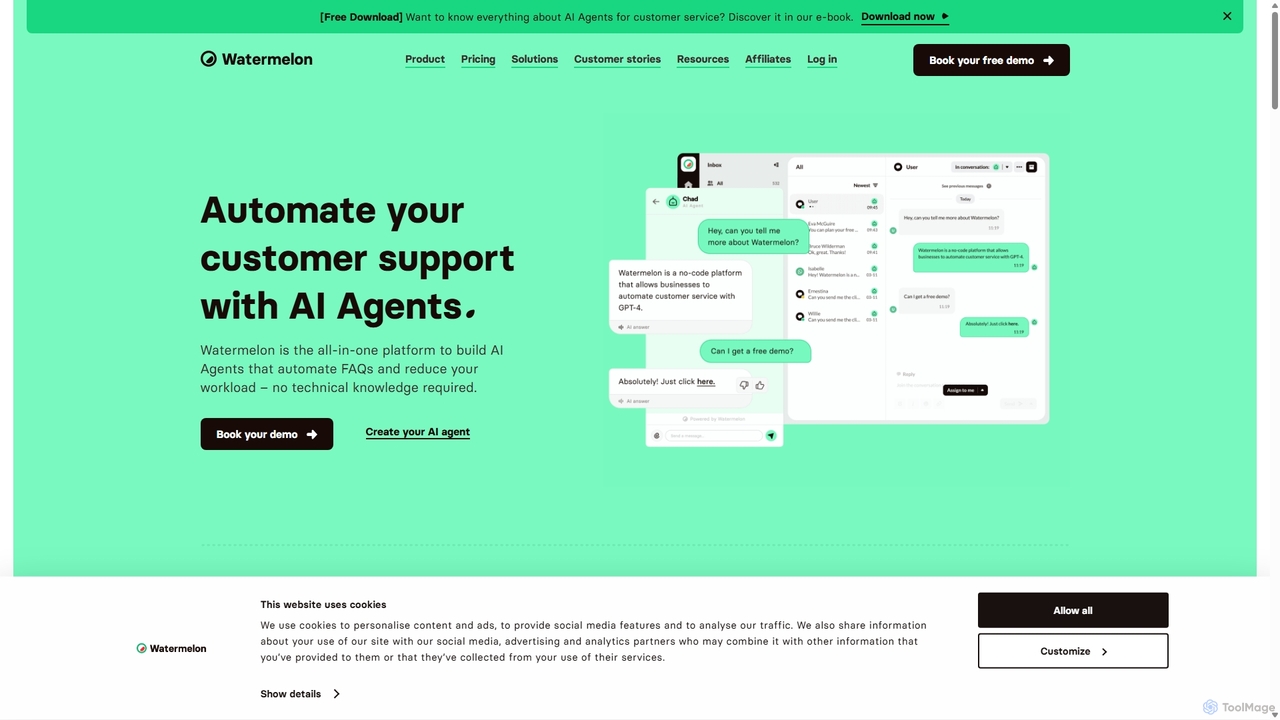
Watermelon is an advanced AI agent platform designed to revolutionize customer service. It enables businesses to build and deploy fully autonomous AI agents powered by GPT-4o to handle customer interactions efficiently across multiple channels like websites, WhatsApp, and social media, improving satisfaction and reducing workload.
Chatbot
Fini
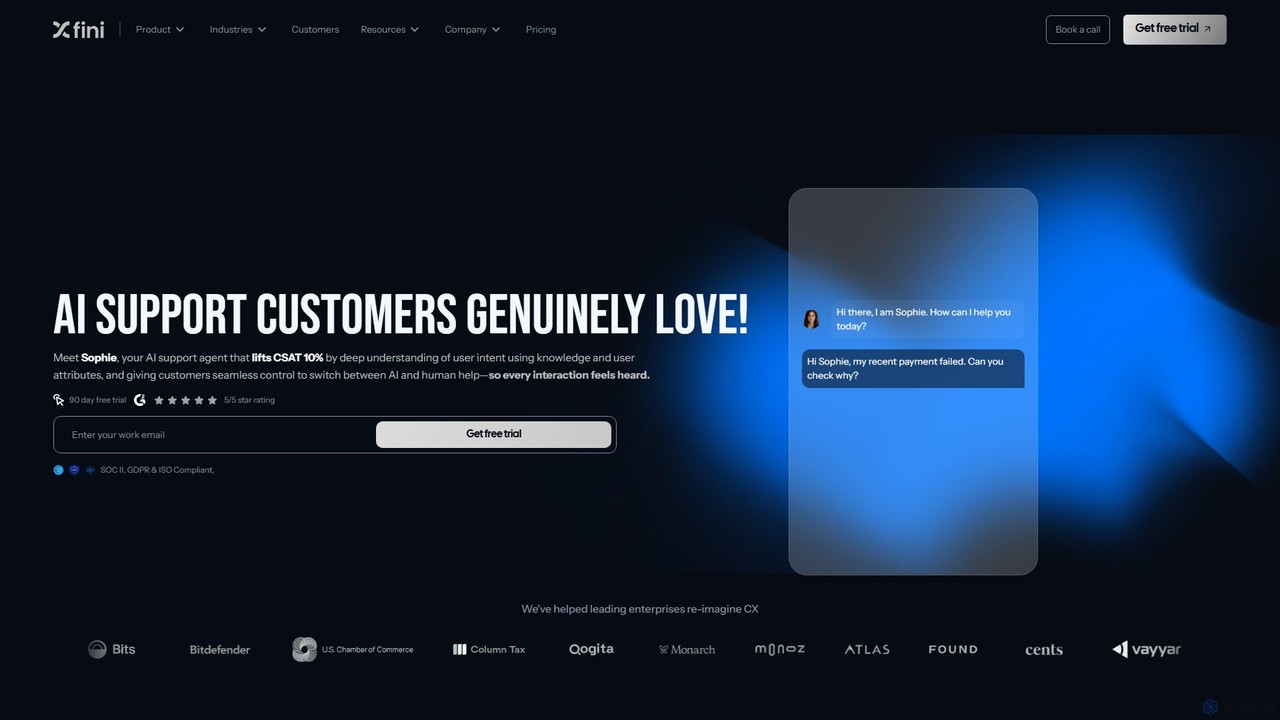
Fini is an advanced AI support agent designed to automate customer service by not just answering queries, but resolving them. It integrates with existing helpdesks, learns from every interaction, and performs actions like processing refunds or updating accounts. With enterprise-grade security and a high resolution rate, Fini aims to boost CSAT, reduce support costs, and free up human agents for complex issues.
Customer Relationship Management
Smartly.AI
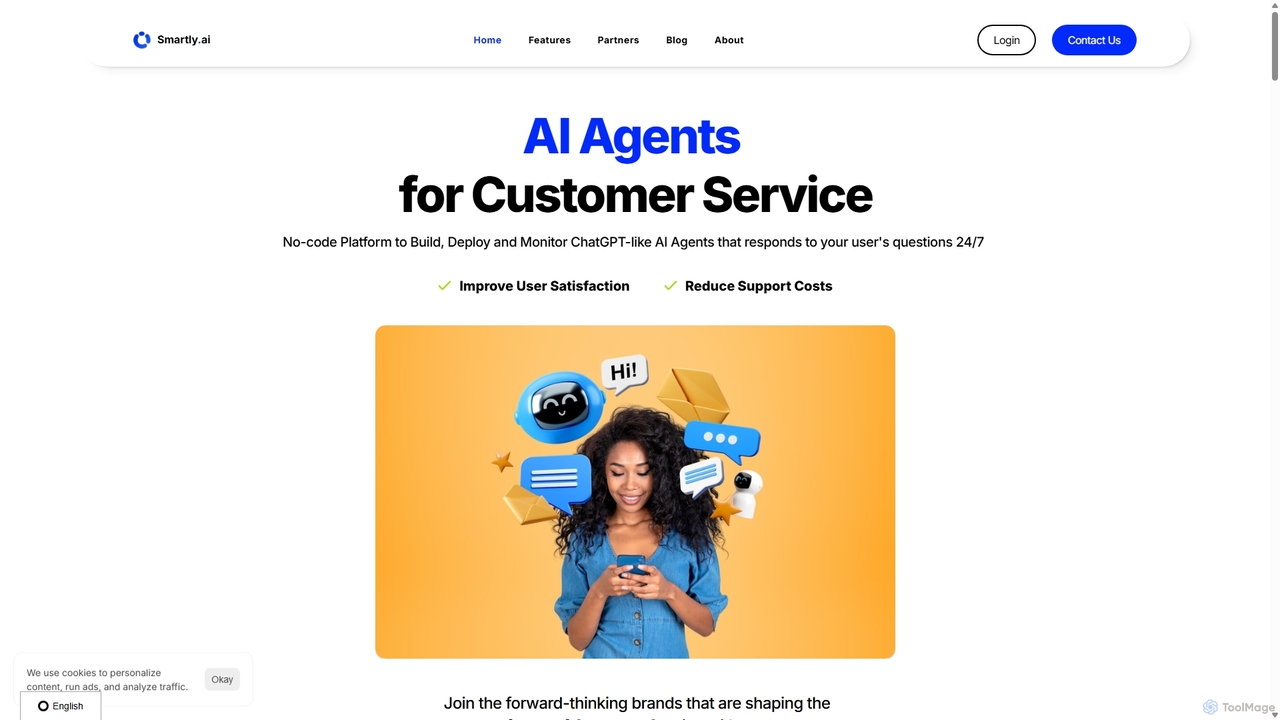
Smartly.AI is an enterprise-grade platform for building and deploying generative AI-powered chatbots for customer service. Leveraging Retrieval-Augmented Generation (RAG), it creates custom AI agents in just 14 days. The platform supports multi-channel deployment, integrates with all major LLMs (GPT-4, Claude 3, Gemini), and offers an all-in-one management console to automate up to 80% of customer interactions, enhancing efficiency and satisfaction.
Chatbot
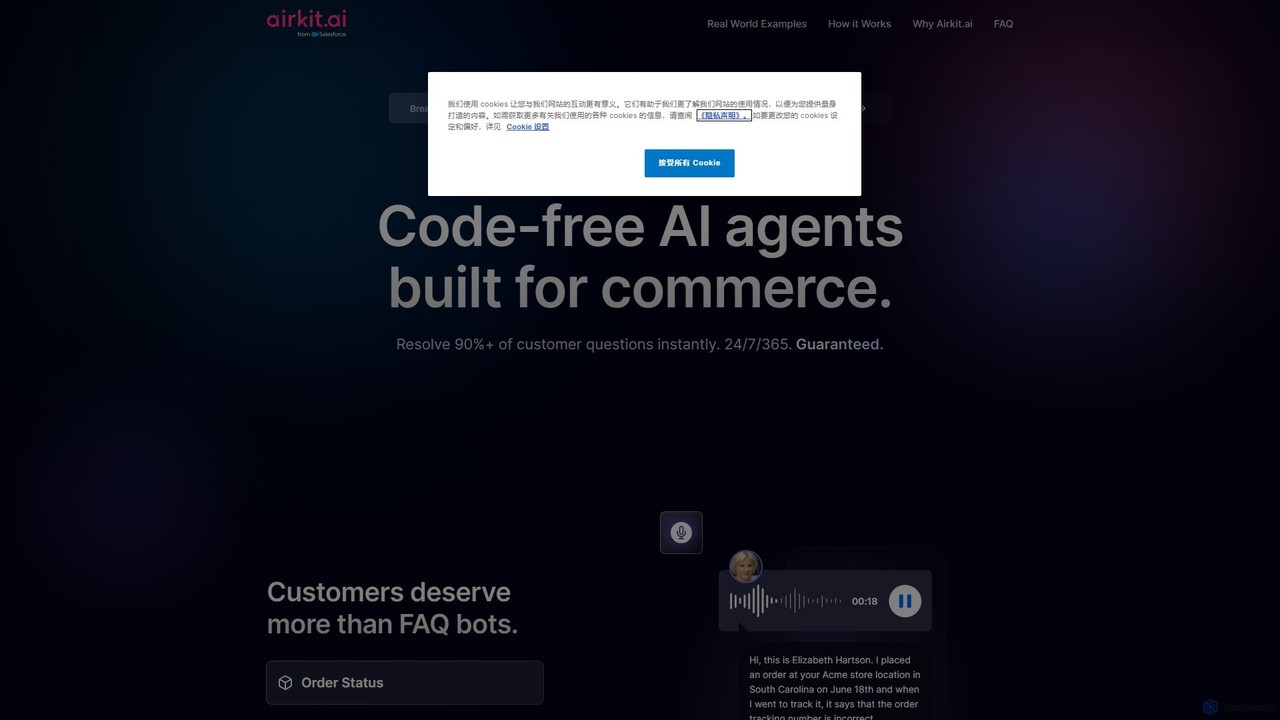
Airkit.ai
Airkit.ai provides no-code, GPT-4 powered AI agents specifically designed for eCommerce. It automates over 90% of customer service inquiries, such as order status, returns, and product questions, 24/7. Now part of Salesforce, it integrates seamlessly with existing helpdesks and CRMs to offer proactive, personalized, and high-resolution support across all channels.
Chatbot
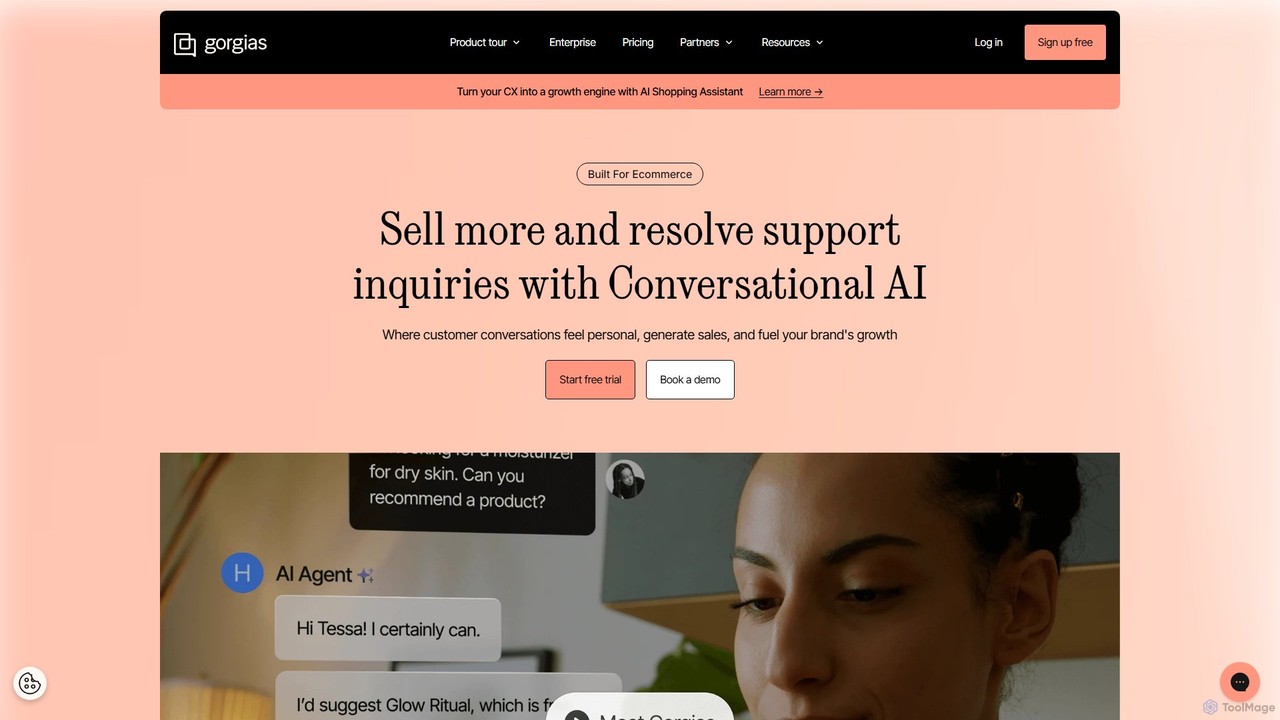
Gorgias
Gorgias is an AI-powered customer service platform specifically designed for e-commerce businesses. It centralizes all customer communications from email, chat, social media, and more into a single helpdesk. By leveraging AI automation, it resolves common inquiries, personalizes interactions, and helps turn customer support into a revenue-generating channel. It integrates deeply with platforms like Shopify to streamline workflows.
Helpdesk
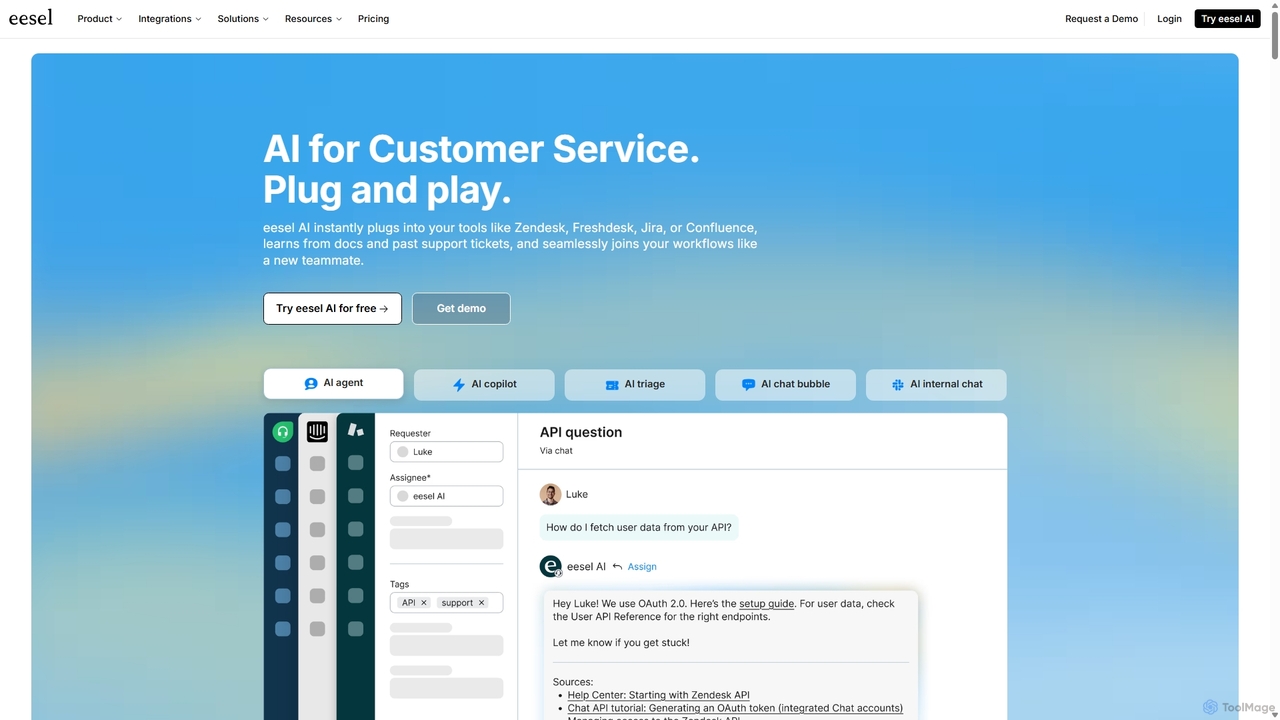
Eesel
Eesel is an AI platform designed to automate and enhance customer service and support. It integrates seamlessly with tools like Zendesk, Freshdesk, and Slack, learning from your existing documentation and past tickets. Eesel offers AI agents for autonomous support, a copilot for human agents, AI-powered ticket triage, and internal knowledge bots. This helps teams resolve issues faster, improve efficiency, and provide consistent, 24/7 support across all channels.
Knowledge Management
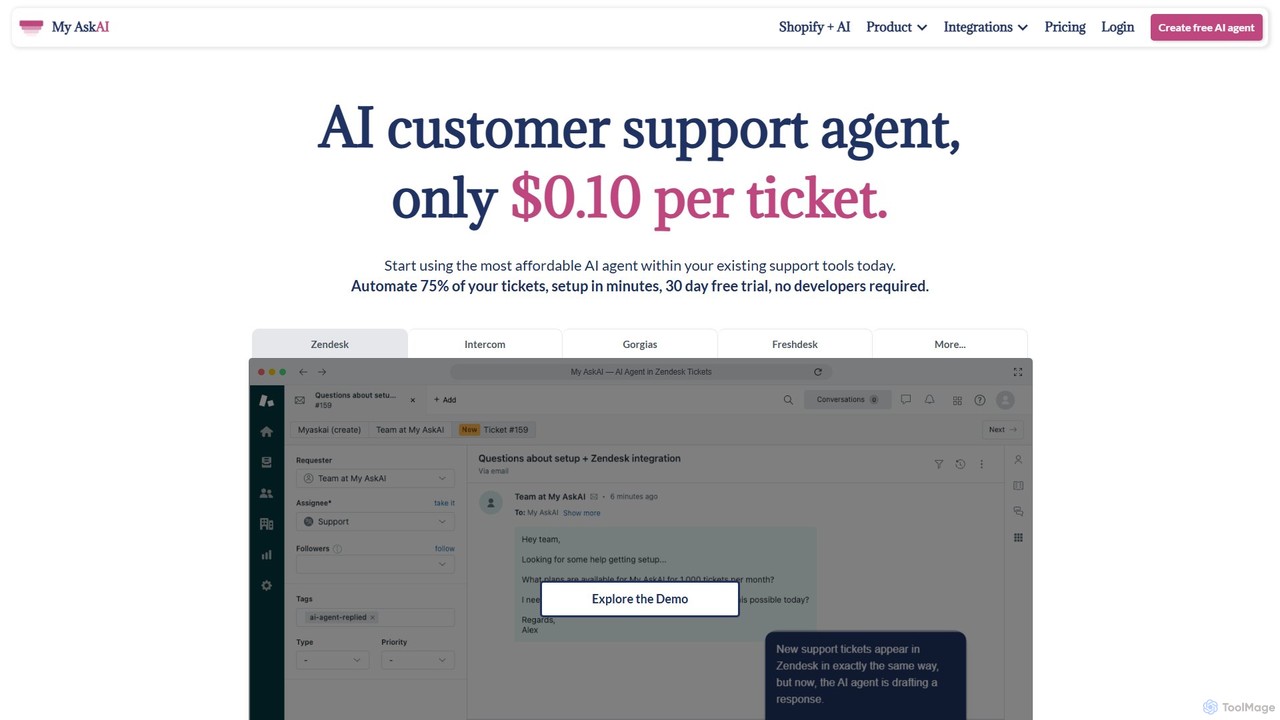
My AskAI
My AskAI is an AI-powered customer support agent that automates up to 75% of support tickets. It integrates seamlessly with existing tools like Zendesk, Intercom, and Shopify, providing instant, multilingual answers (95+ languages) by learning from your help docs and business data. Set up in minutes with no coding required and start with a 30-day free trial.
Customer Relationship Management
Intelswift
Intelswift is an all-in-one, AI-powered customer service automation platform. It combines AI agents, a Swift AI Copilot for human teams, an omnichannel helpdesk, and no-code workflows to automate support, sales, and marketing. It enables businesses to provide 24/7 multilingual support, reduce operating costs, and increase customer satisfaction.
Chatbot
Olivya
Olivya provides AI agents for customer service, designed to deliver exceptional, personalized customer experiences. These agents handle queries across chat, email, and phone, offering instant, 24/7 support. The platform aims to increase service capacity, boost lead conversion, and build deep, insightful customer profiles.
Chatbot
Narrot
Narrot is an AI-powered customer support automation API that provides 24/7, human-quality responses to customer inquiries. It integrates seamlessly with your existing systems to handle FAQs, troubleshooting, and more, reducing support costs by up to 95% and improving response times to seconds.
Chatbot
UltimateAI
UltimateAI is an enterprise-grade customer support automation platform. It uses advanced conversational AI to build multilingual virtual agents that handle inquiries across chat and email. By integrating with leading CRMs like Zendesk and Salesforce, it automates repetitive tasks, resolves issues instantly, and frees up human agents for complex cases, improving both customer satisfaction and operational efficiency.
Enterprise Solutions
ebi
ebi is an advanced AI platform for creating and deploying intelligent customer service assistants. It helps businesses reduce support costs, increase customer satisfaction, and improve operational efficiency through multi-channel, multilingual, and generative AI-powered automation.
Automation
edesk
eDesk is an AI-powered customer support platform designed specifically for eCommerce businesses. It centralizes all customer interactions from marketplaces, webstores, and social media into a single Smart Inbox. Leveraging AI, it automates responses, provides intelligent insights, and helps support teams improve efficiency, drive sales, and build customer loyalty.
Help Desk
Forethought
Forethought is an advanced AI agent platform for customer support teams. It leverages a multi-agent system to automate and resolve up to 90% of inquiries across all channels, including chat, email, and voice. By training on your business data, it delivers personalized, human-like support, significantly reducing costs and accelerating resolution times.
Customer Relationship Management
DigitalGenius
DigitalGenius is an advanced AI agent specifically designed for ecommerce. It goes beyond standard chatbots to fully resolve customer queries by integrating deeply with your tech stack. It automates support, provides product recommendations, and proactively solves issues, aiming to increase customer loyalty, boost sales, and enhance operational efficiency.
Automation