Cutout.Pro
Cutout.Pro is an AI-powered visual design platform offering a comprehensive suite of tools for image and video editing. …
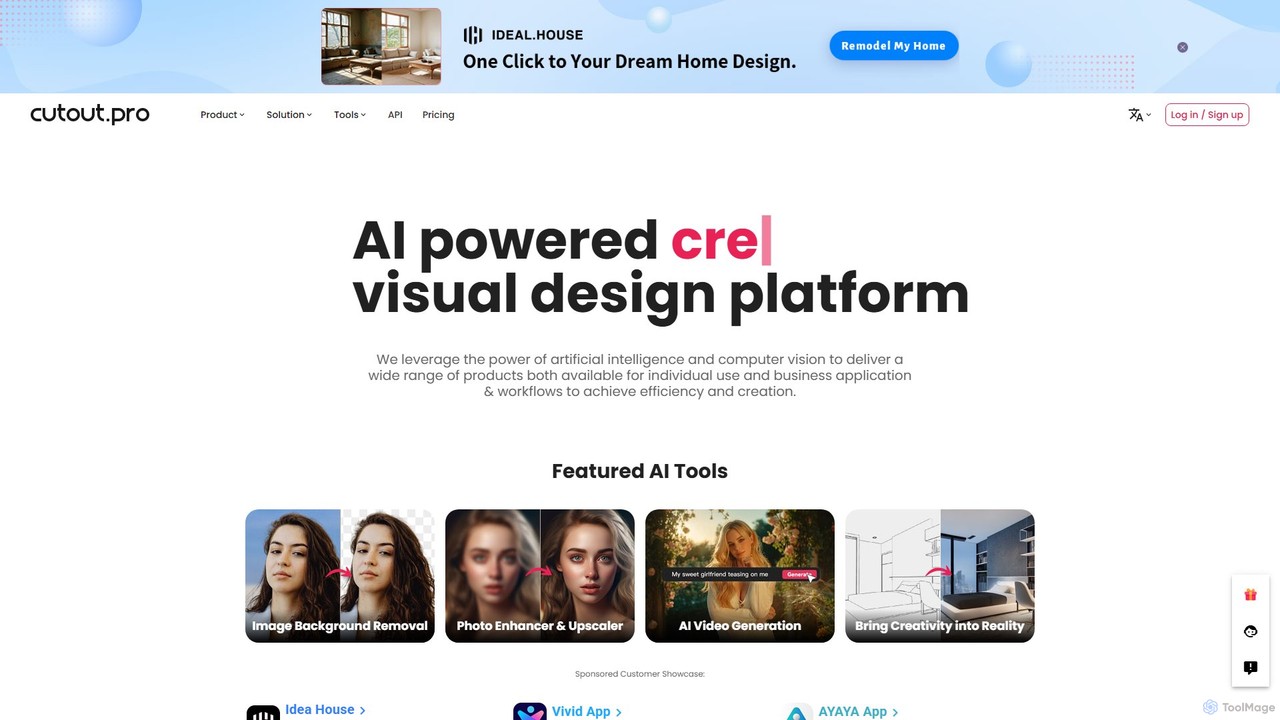
Cutout.Pro is an AI-powered visual design platform offering a comprehensive suite of tools for image and video editing. It specializes in automated background removal, photo enhancement, object removal, and AI content generation, catering to designers, e-commerce businesses, developers, and individual users.
About Art Generation
Art Generation tools are AI-powered platforms that create original visual content from text prompts, sketches, or other inputs. These tools leverage advanced generative adversarial networks (GANs) or diffusion models to interpret creative directives and synthesize unique images, illustrations, and digital art. They empower artists, designers, and content creators to rapidly prototype ideas, explore diverse styles, and produce high-quality visuals with unprecedented speed and flexibility. This sub-category within AI tools revolutionizes creative workflows by automating the visual creation process.
Core Features
- Text-to-Image Generation: Creates diverse visual outputs directly from descriptive text prompts.
- Image-to-Image Transformation: Modifies existing images or applies new styles based on input images and prompts.
- Style Transfer: Applies the artistic style of one image to the content of another.
- Inpainting & Outpainting: Intelligently fills missing parts of an image or extends its boundaries.
- Custom Model Training: Allows users to train models on their own datasets for personalized artistic styles.
Applicable Scenarios
Art Generation tools are widely adopted in creative industries. Graphic designers use them for rapid concept exploration and generating variations of design elements. Marketing teams leverage these tools to create unique visuals for campaigns, social media, and advertisements without extensive manual design work. Game developers utilize AI art generation for concept art, texture creation, and generating diverse in-game assets, significantly accelerating the production pipeline.
How to Choose
When selecting an Art Generation tool, consider the quality and consistency of its output, especially for specific artistic styles or realism. Evaluate the flexibility of its prompting system and available customization options, such as control over composition or specific elements. Assess the pricing model, including credit systems or subscription tiers, and compare it with your usage frequency. Finally, check for integration capabilities with existing design software and the community support for learning and sharing prompts.

Art GenerationUse Cases
Designing Game Character Concept Art
Game artists can use AI art generation tools to rapidly prototype character designs. By inputting text descriptions of a character's appearance, personality, and style, the AI generates multiple visual concepts. This allows artists to quickly iterate on ideas, explore various aesthetics, and present diverse options to stakeholders, significantly reducing the initial concepting phase from days to hours.
Generating Unique Social Media Visuals
Social media managers and content creators often need a constant stream of fresh, engaging visuals. Art Generation tools enable them to create unique images for posts, stories, and ads by simply typing in relevant keywords. This eliminates the need for stock photos or complex graphic design, ensuring brand originality and saving considerable time and resources for daily content production.
Creating Product Mockups and Ad Creatives
Marketing professionals can utilize AI art generators to produce diverse product mockups and advertising creatives. By providing product details and desired scenarios, the AI can generate images showcasing the product in various settings, with different models, or in abstract artistic styles. This helps in A/B testing ad campaigns and visualizing product potential without costly photoshoots.
Illustrating Children's Books and Storyboards
Independent authors and illustrators can leverage Art Generation tools to create illustrations for children's books or storyboards. Inputting scene descriptions and character details allows the AI to generate consistent visual elements and backgrounds. This democratizes illustration, making it accessible for those without traditional drawing skills, and speeds up the visual development of narratives.
Exploring Architectural and Interior Design Concepts
Architects and interior designers can use AI art generation to visualize early-stage concepts. By feeding in floor plans, material preferences, or stylistic keywords, the AI can render various design possibilities, from exterior facades to interior layouts and furniture arrangements. This aids in rapid ideation, client presentations, and exploring unconventional design solutions.
Developing Unique Digital Art for NFTs
Digital artists and NFT creators can employ Art Generation tools to produce unique and collectible digital artworks. By experimenting with prompts, styles, and iterative generation, artists can create distinctive pieces or entire collections with variations. This offers a new avenue for artistic expression and a scalable method for generating large volumes of unique digital assets for the blockchain market.