Ai Developer Tools Best in category 1 results Model Management AI Tool

Popular AI tools in the Model Management field of Ai Developer Tools include Prompt Refine, etc., helping you quickly improve efficiency.

Prompt Refine

Prompt Refine

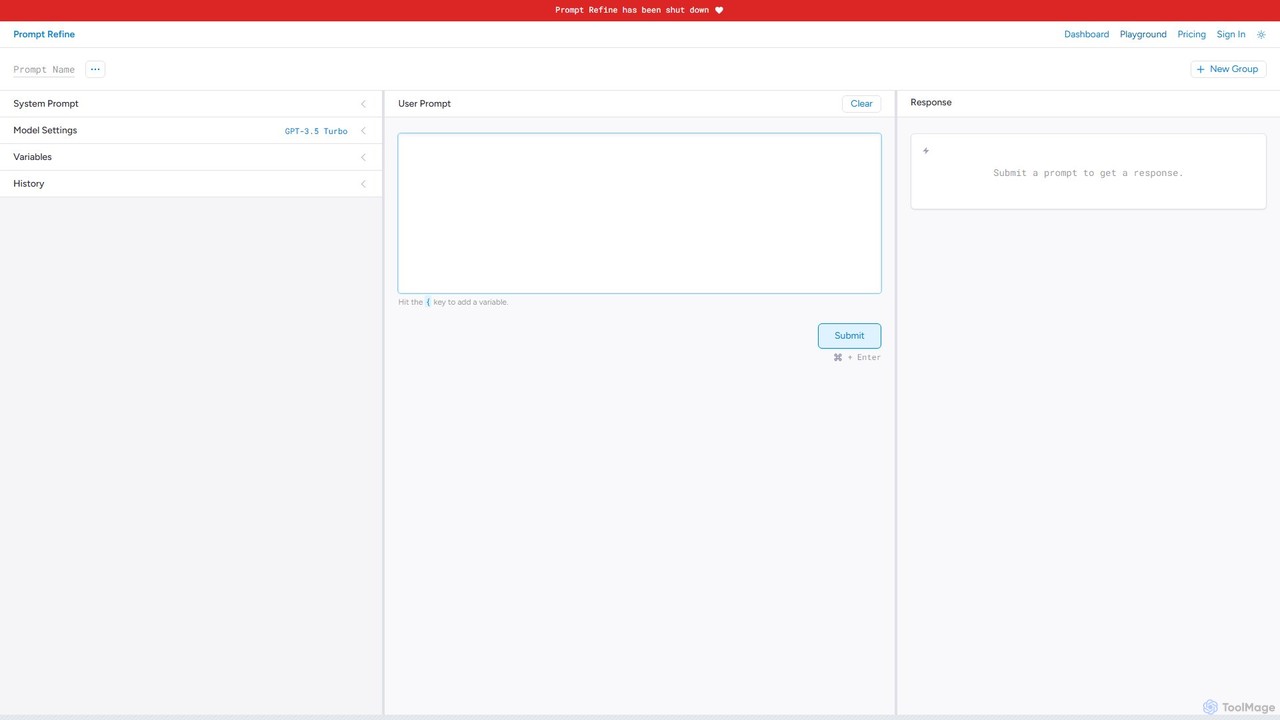
Prompt Refine is a powerful platform for prompt engineering, enabling developers and researchers to run systematic experiments. It …

3.0K

About Model Management

Model Management tools are a specialized category of AI developer tools for systematically governing the entire lifecycle of machine learning models. These platforms provide a centralized system to track, version, deploy, and monitor models after the training phase. They are crucial for implementing MLOps (Machine Learning Operations) principles, ensuring that models in production are reliable, reproducible, and auditable. By managing everything from experiment parameters to production performance, these tools bridge the gap between data science and IT operations.

Core Features

  • Model Registry: A central repository to store, catalog, and manage trained machine learning models and their metadata.
  • Versioning: Tracks changes to models, data, and code, enabling reproducibility and easy rollbacks to previous versions.
  • Automated Deployment: Streamlines the process of deploying models into production environments, supporting strategies like A/B testing and canary releases.
  • Performance Monitoring: Continuously observes live models for issues like data drift, concept drift, and accuracy degradation, triggering alerts when performance drops.
  • Governance & Compliance: Manages access controls, maintains audit trails, and helps ensure models adhere to regulatory and ethical standards.

Use Cases

Model Management tools are essential for data science teams, MLOps engineers, and enterprises that deploy multiple models at scale. They are widely used in industries like finance for managing credit scoring models, e-commerce for versioning recommendation engines, and healthcare for tracking the performance of diagnostic AI models, ensuring operational stability and compliance.

How to Choose

When selecting a Model Management tool, consider its integration capabilities with your existing ML frameworks (e.g., TensorFlow, PyTorch) and cloud platforms (AWS, GCP, Azure). Evaluate its scalability to handle your model volume and prediction traffic. Also, assess the flexibility of its deployment options (cloud, on-premise, edge) and the depth of its monitoring features for detecting model drift and performance issues.

Model ManagementUse Cases

1

Centralized Governance for Financial Models

A data science team at a financial institution manages hundreds of credit scoring and fraud detection models. They use a Model Management platform's registry to catalog each model, its version, the dataset it was trained on, and its performance metrics. This provides a single source of truth, ensuring that regulators and auditors can easily trace a model's lineage and validate its compliance. When a model needs to be updated, the platform automates the deployment process, minimizing risk and downtime.

2

A/B Testing a New Recommendation Engine

An MLOps engineer at an e-commerce company wants to deploy a new version of their product recommendation model. Instead of a full rollout, they use a model management tool to perform an A/B test. The tool routes 90% of user traffic to the existing model (A) and 10% to the new model (B). The platform monitors key business metrics like click-through rate and conversion rate for both versions in real-time. After analyzing the results, the engineer can confidently decide whether to promote the new model to 100% of traffic or roll it back.

3

Monitoring Model Drift in Manufacturing

A factory uses a predictive maintenance model to anticipate equipment failures. Over time, sensor behavior changes due to wear and tear, causing the model's predictions to become less accurate (data drift). A model management platform continuously monitors the statistical properties of incoming sensor data and compares them to the training data. When a significant drift is detected, it automatically alerts the MLOps team, who can then trigger a retraining pipeline to update the model with fresh data, ensuring its continued accuracy and preventing costly downtime.

4

Ensuring Reproducibility in Scientific Research

A university research lab develops complex AI models for climate simulation. To ensure their findings are verifiable and reproducible, they use a model management tool to version everything. Each experiment run logs the specific model version, the exact dataset snapshot, hyperparameters, and the source code commit. When publishing their paper, they can share a link to this complete, versioned experiment in the model registry. This allows other researchers to easily replicate their setup, validate the results, and build upon their work, fostering transparency and collaboration in science.

5

Automating the CI/CD Pipeline for ML

A tech startup integrates a model management platform into their CI/CD (Continuous Integration/Continuous Deployment) pipeline. When a data scientist pushes new code to the Git repository, it triggers an automated workflow. The pipeline checks out the code, trains a new model, evaluates its performance against a baseline, and if it passes, registers the new model version in the central registry. A subsequent step can then automatically deploy this validated model to a staging environment for further testing. This MLOps practice accelerates the development cycle and reduces manual errors.

6

Managing AI Models on Edge Devices

An IoT company deploys thousands of lightweight computer vision models on smart cameras for real-time object detection. A centralized model management platform is used to orchestrate this distributed network. Engineers can push updated models wirelessly to all devices, or specific groups of them. The platform also collects performance telemetry and error logs from each device, allowing them to monitor the health of the entire fleet from a single dashboard and quickly identify and troubleshoot underperforming models in the field.

Model ManagementFrequently Asked Questions