Symphony
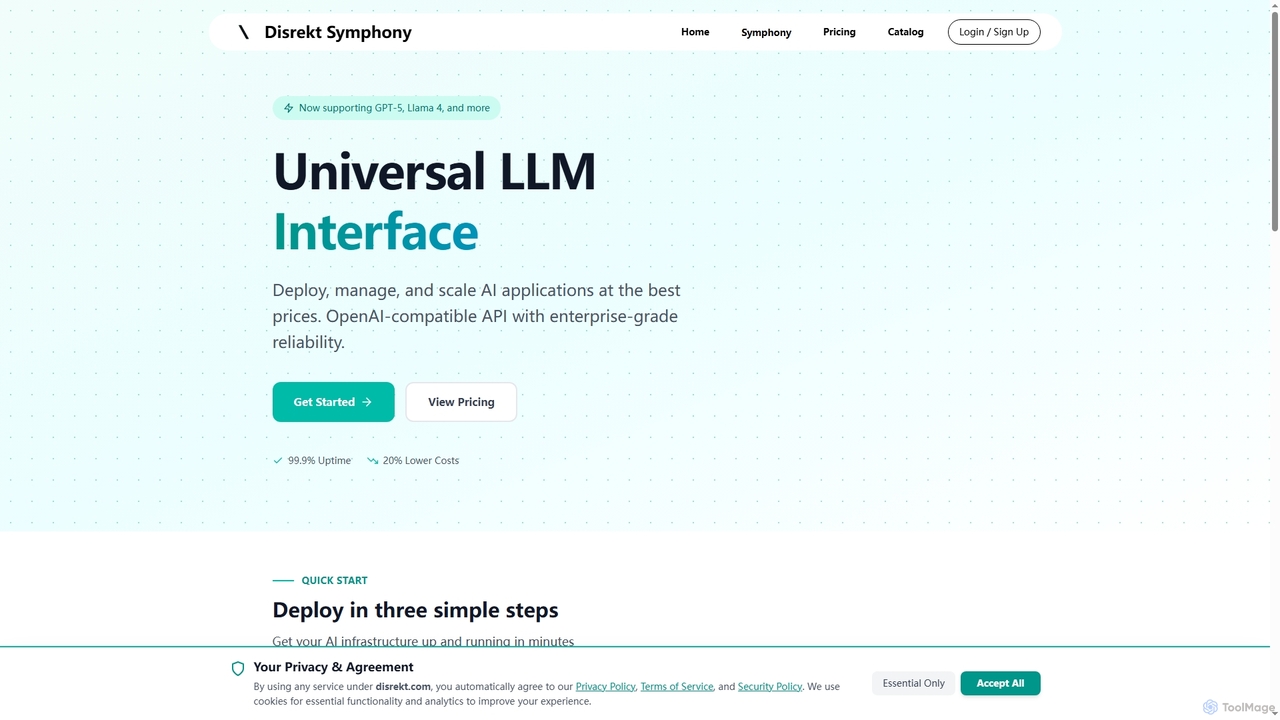
Symphony is a universal LLM interface providing an OpenAI-compatible API for deploying, managing, and scaling AI applications. It …
Symphony is a universal LLM interface providing an OpenAI-compatible API for deploying, managing, and scaling AI applications. It offers enterprise-grade reliability, up to 20% lower costs, and supports over 100 major AI models like GPT-5 and Llama 4, making it an ideal solution for developers and enterprises seeking efficient and robust AI infrastructure.
Salad
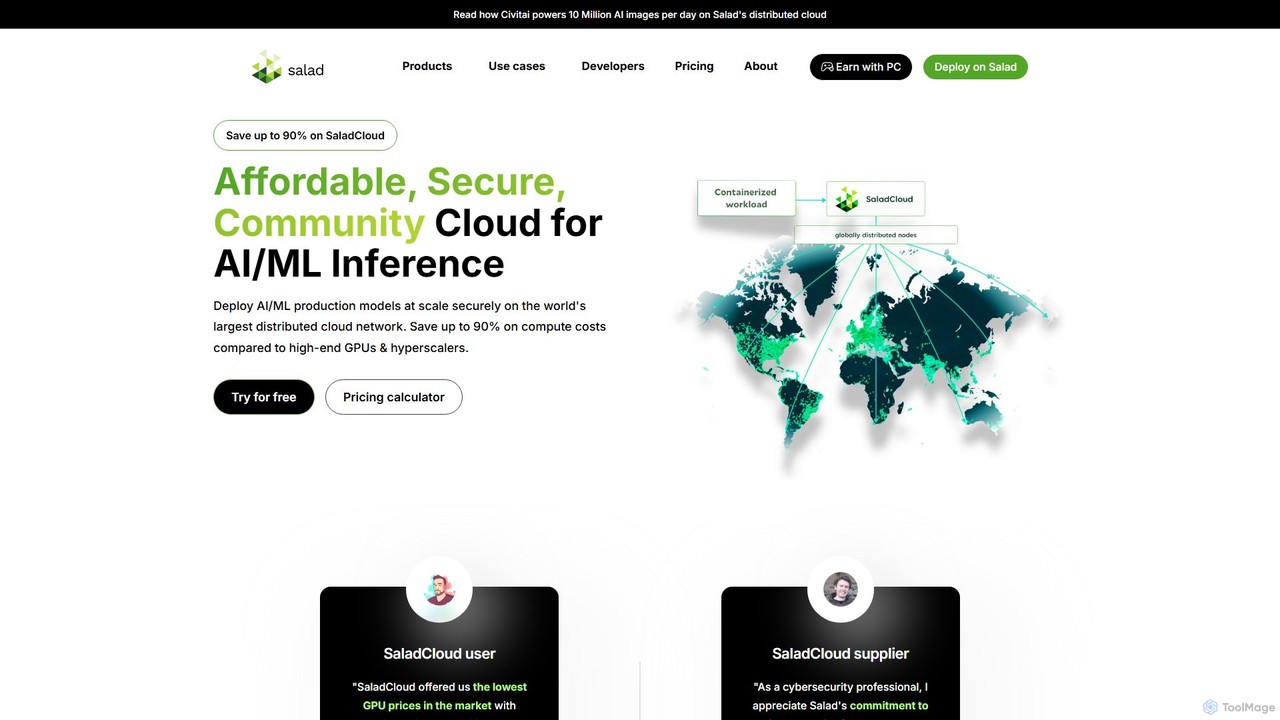
Salad is a distributed GPU cloud platform that harnesses unused computing power from a global network of consumer …
Salad is a distributed GPU cloud platform that harnesses unused computing power from a global network of consumer PCs. It offers businesses highly affordable and scalable on-demand GPU resources for AI/ML workloads, model training, and inference, reducing compute costs by up to 90% compared to traditional cloud providers.
About Model Deployment
Model Deployment refers to the critical process of making trained machine learning models available for use in real-world applications. These tools facilitate the transition of AI projects from development environments to production systems, enabling models to process new data, generate predictions, and deliver actionable insights. Effective model deployment ensures that AI solutions are scalable, reliable, and continuously operational, allowing businesses to fully leverage their AI investments.
Core Features
- Model Packaging: Encapsulating models with their dependencies into deployable artifacts like Docker containers or serverless functions.
- API Endpoint Creation: Generating RESTful APIs or gRPC services to allow applications to interact with deployed models for inference.
- Scalability Management: Automatically scaling model inference services up or down based on demand to handle varying workloads efficiently.
- Monitoring & Logging: Tracking model performance, resource utilization, data drift, and potential biases in real-time, with comprehensive logging.
- Version Control & Rollback: Managing different versions of deployed models and enabling quick rollbacks to previous stable versions if issues arise.
Use Cases
Model Deployment tools are essential for organizations looking to operationalize their AI initiatives. They are used by MLOps engineers, data scientists, and developers to integrate AI capabilities into existing software. Typical scenarios include deploying recommendation engines for e-commerce platforms, integrating natural language processing models into customer support systems, or operationalizing computer vision models for industrial quality control and anomaly detection.
How to Choose
When selecting a Model Deployment solution, consider its compatibility with your existing ML frameworks (e.g., TensorFlow, PyTorch) and infrastructure (cloud, on-premise, edge). Evaluate its scalability features, real-time monitoring capabilities, and ease of integration with CI/CD pipelines. Cost-effectiveness, security features, support for A/B testing, and the level of automation for tasks like canary deployments are also crucial factors.

Model DeploymentUse Cases
Deploying Real-time Fraud Detection
A financial institution's MLOps team deploys a trained machine learning model to analyze incoming transactions in real-time. The deployment tool ensures low-latency inference, automatically scales to handle peak transaction volumes, and integrates with existing fraud alert systems, allowing for immediate flagging of suspicious activities and reducing financial losses.
Integrating Personalized Product Recommendations
An e-commerce company deploys a recommendation engine model to provide personalized product suggestions to users. The deployment solution creates an API endpoint that the website's frontend calls, ensuring that recommendations are generated quickly based on user browsing history and purchase patterns, enhancing customer experience and driving sales.
Automating Customer Service with NLP Chatbots
A customer support department deploys a natural language processing (NLP) model as a chatbot service. The deployment platform manages the chatbot's API, ensuring it can handle a high volume of customer queries, understand intent, and provide relevant responses. This reduces the workload on human agents and offers 24/7 support, improving customer satisfaction.
Operationalizing Predictive Maintenance Models
An industrial manufacturer deploys a predictive maintenance model to monitor machinery health. The deployment solution integrates with IoT sensors on equipment, processing real-time data to predict potential failures. This allows maintenance teams to perform proactive repairs, minimizing downtime and extending the lifespan of valuable assets, leading to significant cost savings.
Deploying Computer Vision for Quality Control
A manufacturing plant deploys a computer vision model to inspect products on an assembly line for defects. The deployment system processes video feeds from cameras, identifies anomalies in real-time, and triggers alerts or automated rejection mechanisms. This significantly improves product quality, reduces manual inspection errors, and increases production efficiency.
Enabling Dynamic Pricing Optimization
A retail business deploys a machine learning model that optimizes product pricing based on real-time market demand, competitor prices, and inventory levels. The deployment solution provides a robust and scalable infrastructure for the model to make rapid pricing adjustments, maximizing revenue and maintaining competitiveness in a dynamic market environment.