ToolMage
Sign in

Best 3 Conversion Optimization AI tools for Analytics

Popular Conversion Optimization AI tools in Analytics include Zuko, Creative Drive, and FormStory, helping you work more efficiently.

Zuko
Freemium

Zuko

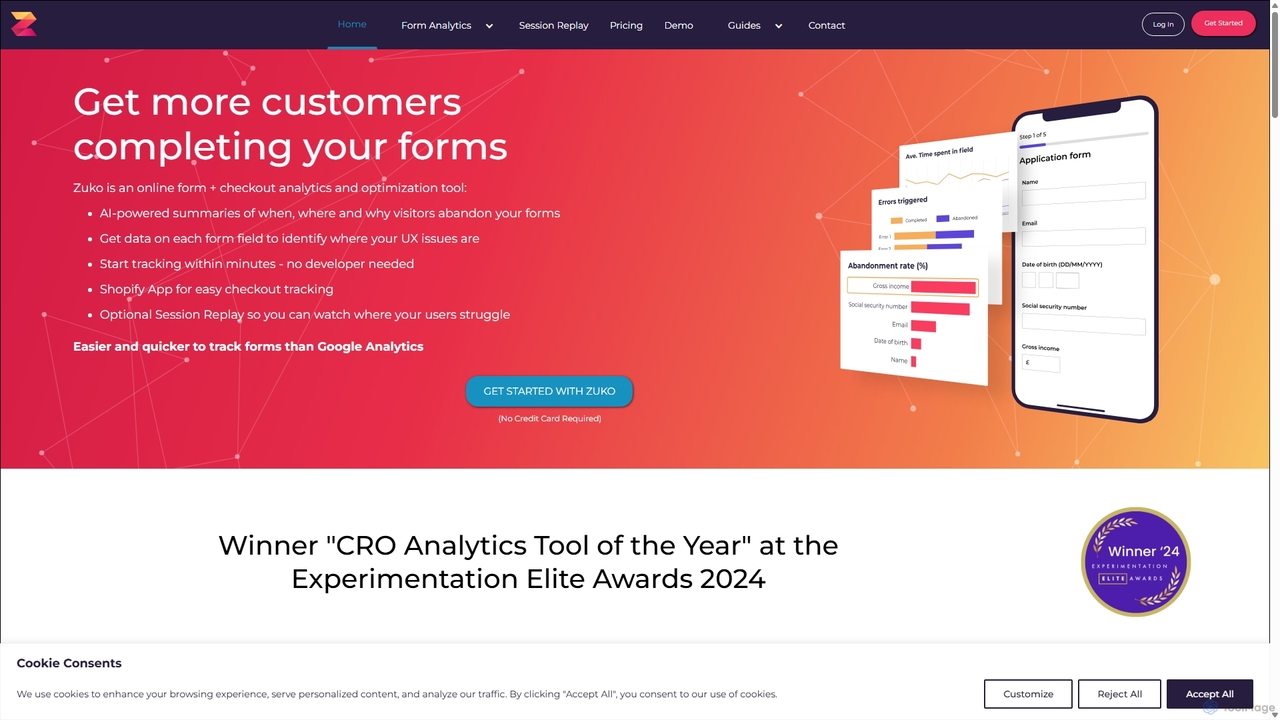
Zuko is a powerful form analytics and optimization tool that helps businesses understand user behavior in online forms and checkouts. By tracking detailed interactions like field returns, abandonment rates, and time spent, Zuko provides actionable insights to identify friction points, reduce form abandonment, and ultimately increase conversion rates. It's an essential tool for marketers, UX designers, and product managers looking to optimize their digital journeys.

Conversion Optimization
Visits 37.7KFavorites 99Likes 91
FormStory
Freemium

FormStory

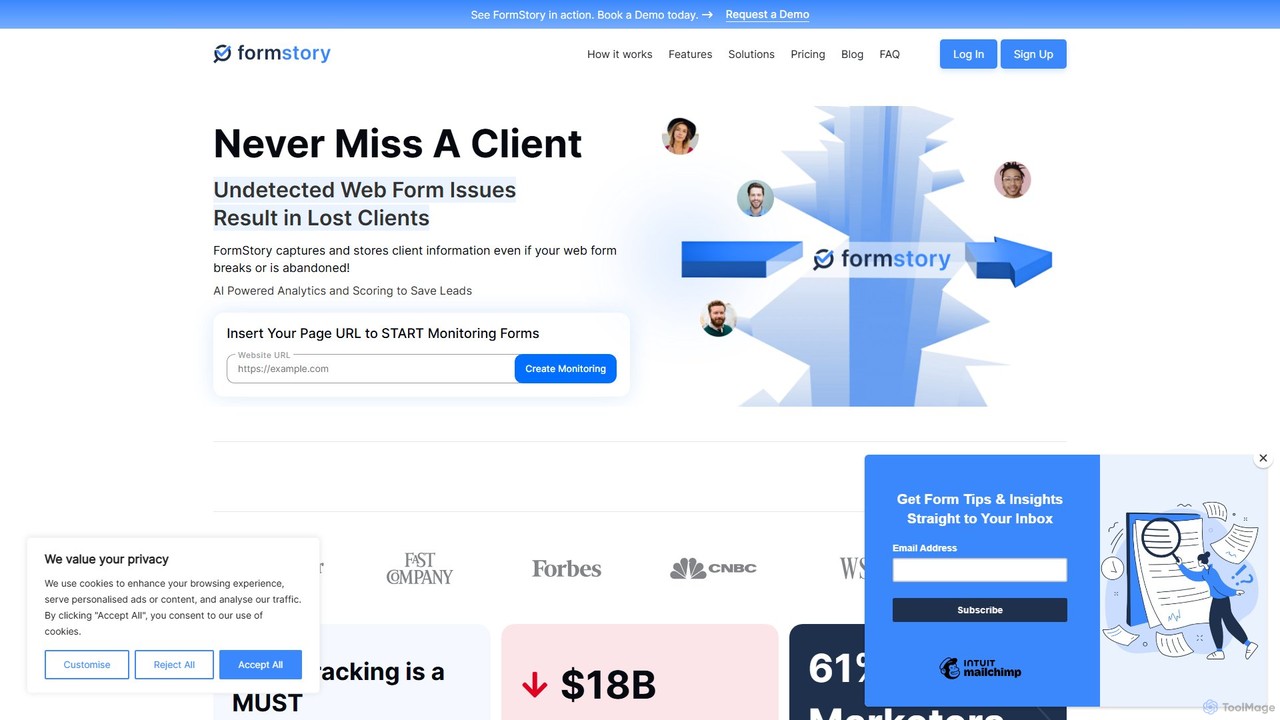
FormStory is a form tracking and monitoring software that helps businesses capture and recover lost leads from abandoned or malfunctioning web forms. It provides 24/7 monitoring, instant notifications, and in-depth analytics to optimize form performance and boost conversion rates, ensuring no potential customer slips through the cracks.

Conversion Optimization
Visits 7.3KFavorites 141Likes 153
Creative Drive
Paid

Creative Drive

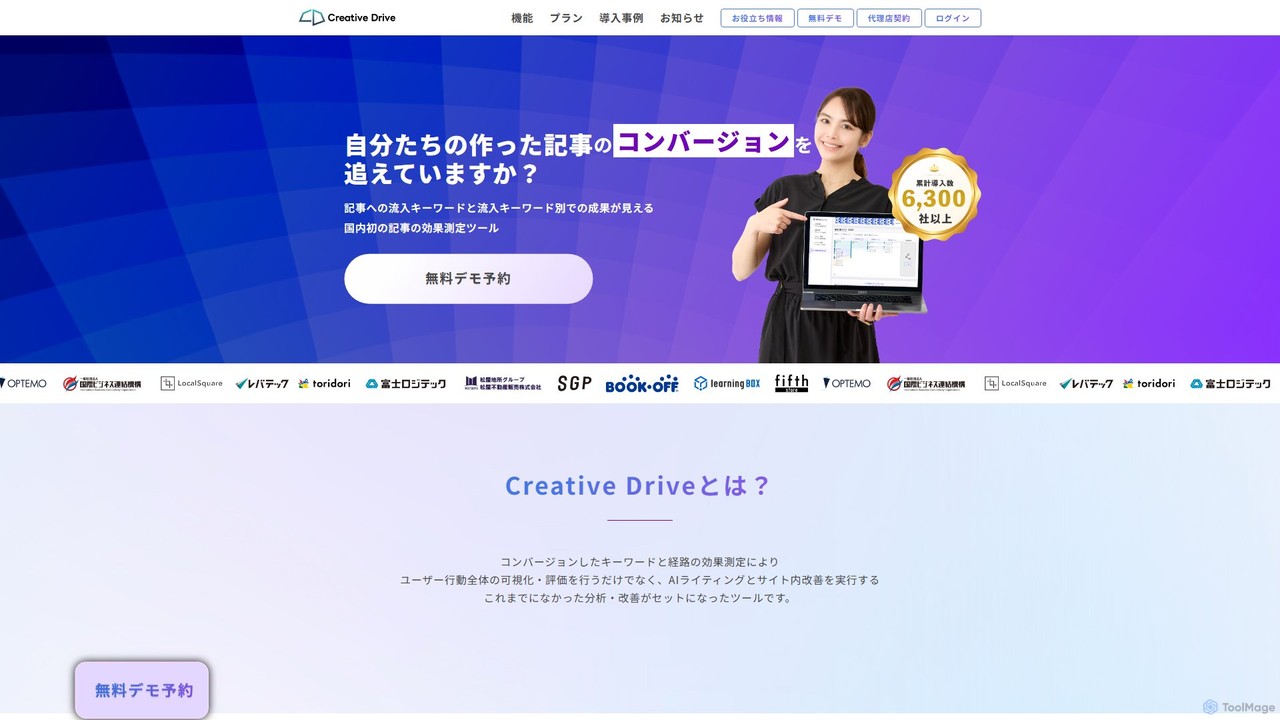
Creative Drive is an AI-powered content marketing platform designed to maximize conversions. It combines conversion keyword analysis, user behavior tracking, and AI-driven content creation to optimize your marketing strategy. The tool visualizes the entire customer journey, identifies high-performing keywords, and automates content generation, significantly boosting lead acquisition and sales.

Conversion Optimization
Visits 7.9KFavorites 116Likes 114

About Conversion Optimization

Conversion Optimization AI tools are a specialized subset of analytics solutions designed to enhance website and application performance by maximizing the percentage of visitors who complete a desired action. These tools leverage machine learning to analyze user behavior, identify friction points, and provide data-driven recommendations for improving conversion rates. They are crucial for businesses aiming to turn more visitors into customers, subscribers, or leads, directly impacting revenue and growth.

Core Features

  • A/B Testing & Multivariate Testing: Automated setup and analysis of experiments to compare different versions of web elements.
  • Personalization & Recommendation Engines: Delivering tailored content and product suggestions based on individual user behavior and preferences.
  • User Journey & Funnel Analysis: Visualizing and optimizing the paths users take, identifying drop-off points.
  • Heatmaps & Session Replays: Providing visual insights into user interaction, clicks, scrolls, and form submissions.
  • Predictive Analytics for Conversion: Forecasting user behavior and identifying segments most likely to convert or churn.

Use Cases

These tools are indispensable for digital marketers, e-commerce managers, and product owners. They are used to refine landing pages for lead generation, optimize checkout processes to reduce cart abandonment, and personalize user experiences on SaaS platforms to boost engagement and retention. By continuously testing and adapting, businesses can achieve significant improvements in their key performance indicators.

How to Choose

When selecting a Conversion Optimization AI tool, consider its integration capabilities with existing analytics and CRM platforms, the breadth of testing methodologies offered (A/B, multivariate, split URL), the sophistication of its AI for insights and automation, and the clarity of its reporting and recommendation engine. Ease of use, scalability, and support for various data sources are also critical factors.

Featured tool rankings

Conversion Optimization use cases

1

Optimize E-commerce Checkout Flows

An e-commerce manager uses AI conversion optimization tools to analyze user behavior during the checkout process. By identifying common drop-off points through session replays and funnel analysis, they can implement A/B tests on form fields, payment options, or shipping information presentation. The AI then recommends the most effective changes, leading to a significant reduction in cart abandonment and an increase in completed purchases.

2

Personalize Website Content for Higher Engagement

A digital marketer employs AI-powered personalization engines to tailor website content for different visitor segments. Based on browsing history, demographics, and real-time behavior, the AI dynamically adjusts headlines, product recommendations, and call-to-actions. This targeted approach ensures that each visitor sees the most relevant content, significantly increasing engagement metrics like time on site, page views, and ultimately, conversion rates for specific offers.

3

Improve Landing Page Performance with A/B Testing

A marketing team uses AI-driven A/B testing to continuously optimize their campaign landing pages. The AI automatically generates multiple variations of headlines, images, and call-to-action buttons, then intelligently distributes traffic to identify the highest-performing version. This process not only saves manual effort but also accelerates the discovery of optimal page elements, leading to higher lead generation rates and lower cost per acquisition for marketing campaigns.

4

Identify User Friction Points with Session Replays

A product manager utilizes AI-enhanced session replay tools to visually understand how users interact with a new feature or product. By watching recordings of actual user sessions, often aggregated and highlighted by AI for common patterns, they can pinpoint areas where users struggle, encounter bugs, or abandon tasks. This direct insight into user experience helps prioritize development efforts to remove friction and improve feature adoption, directly impacting conversion to active users.

5

Predict Customer Churn and Re-engagement

A SaaS company leverages AI conversion optimization tools to predict which customers are at risk of churning. By analyzing usage patterns, engagement levels, and historical data, the AI identifies early warning signs. This allows the customer success team to proactively intervene with targeted re-engagement campaigns, personalized offers, or support, significantly reducing churn rates and improving customer lifetime value by converting at-risk users back into active, satisfied customers.

6

Automate A/B Test Hypothesis Generation

A growth hacker uses AI conversion optimization tools to automate the generation of A/B test hypotheses. Instead of manually brainstorming ideas, the AI analyzes vast amounts of user data, including heatmaps, session recordings, and analytics, to suggest potential areas for improvement and specific test variations. This significantly speeds up the experimentation process, allowing for more tests to be run and accelerating the discovery of high-impact optimizations that drive conversions.

Conversion Optimization FAQ

What are AI Conversion Optimization tools?

AI Conversion Optimization tools are software solutions that leverage artificial intelligence, particularly machine learning, to analyze user behavior on websites and applications. They identify patterns, predict outcomes, and suggest improvements to increase the rate at which visitors complete desired actions, such as making a purchase, signing up for a newsletter, or filling out a form. These tools go beyond traditional analytics by providing actionable insights and often automating testing processes.

How do AI tools enhance traditional conversion optimization?

AI tools significantly enhance traditional conversion optimization by automating labor-intensive tasks like A/B test setup and analysis, personalizing content at scale, and providing predictive insights. Unlike traditional methods that rely heavily on manual data interpretation and hypothesis generation, AI can process vast datasets, identify subtle patterns, and even suggest optimal changes before they are tested. This leads to faster, more accurate, and more impactful optimizations, saving time and resources while driving better results.

What features should I look for in an AI Conversion Optimization platform?

When choosing an AI Conversion Optimization platform, prioritize features like robust A/B and multivariate testing capabilities, advanced personalization engines, and comprehensive user behavior analytics (heatmaps, session replays, funnel analysis). Look for predictive analytics that can forecast user actions and automated recommendation systems. Integration with your existing CRM, marketing automation, and analytics tools is crucial, as are intuitive dashboards, clear reporting, and strong data privacy compliance.

What's the difference between general analytics and AI conversion optimization?

General analytics tools (like Google Analytics) primarily focus on collecting, measuring, and reporting data about website traffic and user behavior. They tell you *what* happened. AI conversion optimization tools, while using analytics data, go a step further by leveraging AI to understand *why* it happened and *how* to improve it. They provide actionable insights, automate testing, personalize experiences, and often predict future behavior, directly aiming to increase conversion rates rather than just reporting on them.

Can AI conversion optimization tools predict user behavior?

Yes, many advanced AI conversion optimization tools are equipped with predictive analytics capabilities. By analyzing historical data, real-time user interactions, and various demographic or behavioral attributes, AI models can forecast future user actions, such as the likelihood of a user making a purchase, churning, or responding to a specific offer. This predictive power enables businesses to proactively tailor strategies, personalize experiences, and intervene at critical moments to guide users towards conversion.