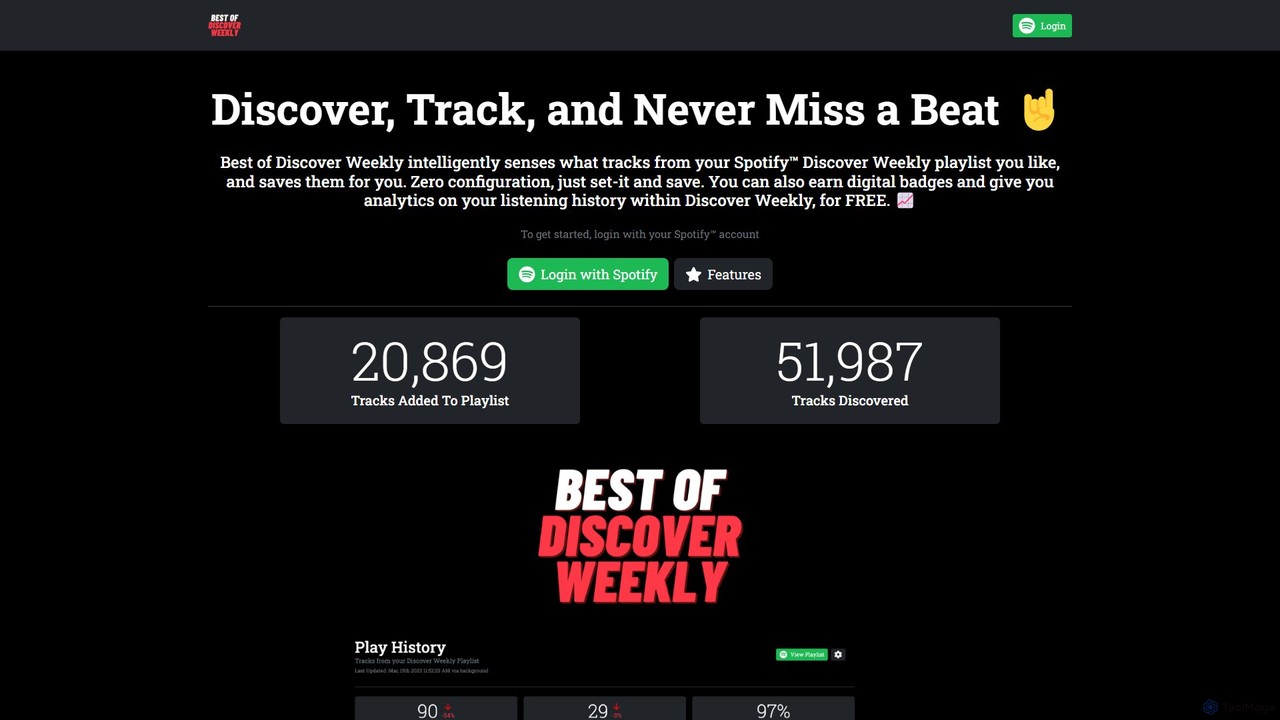
Music Analytics tools are AI-powered platforms designed to extract, analyze, and interpret data from musical content and related user interactions. These tools leverage machine learning algorithms to uncover patterns, trends, and insights crucial for artists, labels, and marketers. They provide deep understanding of audience engagement, track performance metrics, and inform strategic decisions in the music industry, distinguishing themselves from general analytics by their specialized focus on audio and music-specific data.
Core Features
- Audience Demographics Analysis: Identifies listener age, location, and preferences across various streaming platforms.
- Streaming Performance Tracking: Monitors play counts, listener retention, and playlist placements across major music services.
- Genre & Mood Classification: Automatically categorizes music by genre, sub-genre, and emotional tone using audio features.
- Social Media Engagement Monitoring: Tracks mentions, shares, and sentiment related to artists and tracks on social platforms.
- Predictive Trend Forecasting: Uses historical data to anticipate future music trends and artist growth potential.
Use Cases
Record labels utilize Music Analytics to identify emerging artists and market trends by scanning vast amounts of streaming and social data. Independent artists employ these tools to understand their audience demographics and optimize their release strategies. Music marketers leverage insights to craft targeted campaigns and measure their effectiveness in real-time.
How to Choose
When selecting a Music Analytics tool, consider the breadth of data sources it integrates (e.g., Spotify, Apple Music, YouTube, social media), its real-time reporting capabilities, and the depth of its analytical features, such as predictive modeling or sentiment analysis. Evaluate the user interface for ease of use and ensure it offers customizable dashboards relevant to your specific needs, whether you're an artist, label, or marketer.