
ToolMage
Sign in

Best 1 Predictive Insights AI tools for Analytics

Popular Predictive Insights AI tools in Analytics include MindX Service AI, helping you work more efficiently.

MindX Service AI
Freemium

MindX Service AI

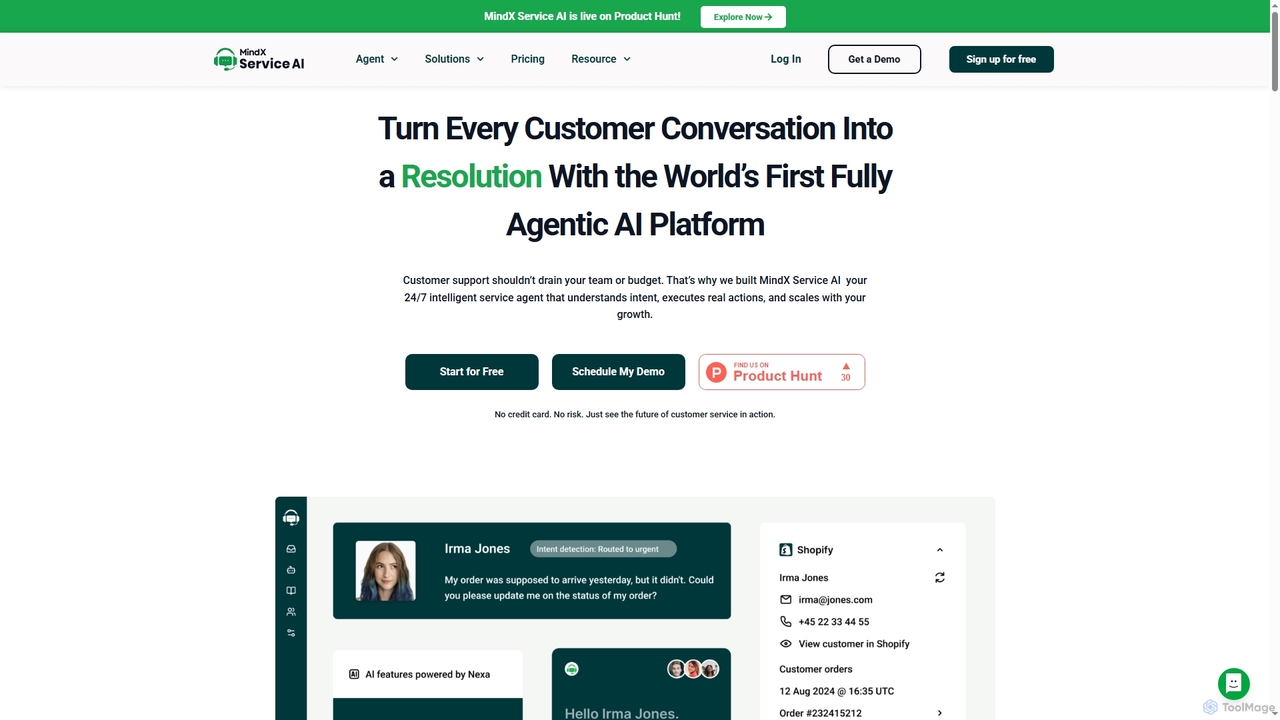
MindX Service AI is the world's first fully agentic AI platform designed to transform customer support. It leverages Nexa AI to provide instant, personalized resolutions, automate up to 90% of Tier 1 queries, and empower human agents. Designed for scalability, it integrates seamlessly with existing systems, reduces costs, and significantly improves customer satisfaction across all channels.

Predictive Insights
Visits 3.7KFavorites 117Likes 121

About Predictive Insights

Predictive Insights tools are AI-powered solutions that leverage historical data to forecast future trends, behaviors, and outcomes. These tools utilize advanced machine learning algorithms and statistical models to identify patterns and predict probabilities. By moving beyond descriptive analytics, they empower businesses to make proactive, data-driven decisions, optimize strategies, and mitigate risks effectively.

Core Features

  • Advanced Forecasting Models: Employ various algorithms (e.g., regression, time series) to predict future values and trends.
  • Anomaly Detection: Automatically identify unusual patterns or outliers in data that may indicate emerging issues or opportunities.
  • Scenario Planning & Simulation: Model different future scenarios based on varying inputs to assess potential outcomes.
  • Risk Assessment: Quantify and predict potential risks, such as customer churn, fraud, or equipment failure.
  • Performance Prediction: Forecast key performance indicators (KPIs) like sales, customer engagement, or operational efficiency.

Use Cases

Predictive Insights tools are invaluable across diverse sectors. Retailers use them for demand forecasting to optimize inventory and supply chains, while financial institutions predict credit risk to inform lending decisions. In manufacturing, these tools enable predictive maintenance, anticipating equipment failures before they occur to minimize downtime.

How to Choose

When selecting a Predictive Insights tool, prioritize accuracy and the reliability of its underlying models. Consider its data integration capabilities with your existing systems and the interpretability of its results. Evaluate scalability to handle growing data volumes and the level of customization offered to meet specific business needs.

Featured tool rankings

Predictive Insights use cases

1

Sales & Demand Forecasting

Retail and e-commerce businesses utilize Predictive Insights to accurately forecast future sales volumes and customer demand. By analyzing historical sales data, seasonal trends, and external factors, these tools help optimize inventory levels, prevent stockouts or overstocking, and streamline supply chain operations, leading to reduced costs and improved customer satisfaction.

2

Customer Churn Prediction

SaaS companies, telecom providers, and subscription services deploy Predictive Insights to identify customers at high risk of churning. By analyzing customer behavior, usage patterns, and interaction history, these tools flag potential churners, allowing businesses to proactively engage with targeted retention strategies, personalized offers, and improved support, thereby increasing customer lifetime value.

3

Predictive Maintenance

In manufacturing, logistics, and energy sectors, Predictive Insights tools monitor equipment performance data (e.g., sensor readings, operational logs) to predict potential failures. This enables organizations to schedule maintenance proactively, before a breakdown occurs, minimizing costly downtime, extending asset lifespan, and ensuring operational continuity and safety.

4

Financial Risk Assessment

Financial institutions, including banks and lending companies, leverage Predictive Insights to assess credit risk and predict loan defaults. By analyzing an applicant's financial history, credit scores, and other relevant data, these tools provide a more accurate risk profile, enabling better lending decisions, fraud detection, and portfolio management to minimize financial losses.

5

Healthcare Outcome Prediction

Healthcare providers use Predictive Insights to forecast patient outcomes, such as the likelihood of readmission, disease progression, or response to treatments. By analyzing patient data, medical history, and demographic information, these tools support early intervention, personalized care plans, and resource allocation, ultimately improving patient care and operational efficiency.

6

Marketing Campaign Optimization

Marketing teams employ Predictive Insights to forecast the performance of future campaigns and predict customer responses to various marketing initiatives. By analyzing past campaign data, customer demographics, and engagement metrics, these tools help optimize targeting, personalize messaging, and allocate budgets more effectively, maximizing ROI and customer acquisition.

Predictive Insights FAQ

What are Predictive Insights tools?

Predictive Insights tools are AI-driven applications that analyze historical data to forecast future events, trends, and behaviors. They use machine learning algorithms to identify patterns and probabilities, providing actionable foresight for proactive decision-making across various business functions, from sales to operations.

How to choose the right Predictive Insights tool?

When selecting a tool, prioritize its predictive accuracy and the robustness of its models. Consider its ability to integrate with your existing data sources, the clarity and interpretability of its outputs, and its scalability for future growth. Also, evaluate the level of customization and support available for your specific industry needs.

What's the difference between Predictive Insights and traditional Business Intelligence (BI)?

Traditional Business Intelligence (BI) primarily focuses on descriptive analytics, telling you "what happened" and "why it happened" based on historical data. Predictive Insights, conversely, focuses on "what will happen" by forecasting future outcomes. BI is reactive, providing reports on past performance, while Predictive Insights is proactive, enabling forward-looking strategies and decision-making.

What are the main benefits of using Predictive Insights?

The primary benefits include enabling proactive decision-making, significantly reducing risks by anticipating potential issues, and identifying new opportunities for growth. These tools also optimize resource allocation, improve operational efficiency, and enhance customer satisfaction by allowing businesses to anticipate needs and respond strategically.

What kind of data is needed for Predictive Insights?

Effective Predictive Insights require access to high-quality, relevant historical data. This typically includes structured data such as sales records, customer demographics, operational logs, and sensor readings. The data needs to be sufficient in volume, consistent, and clean to train accurate machine learning models and generate reliable forecasts.