flowRL
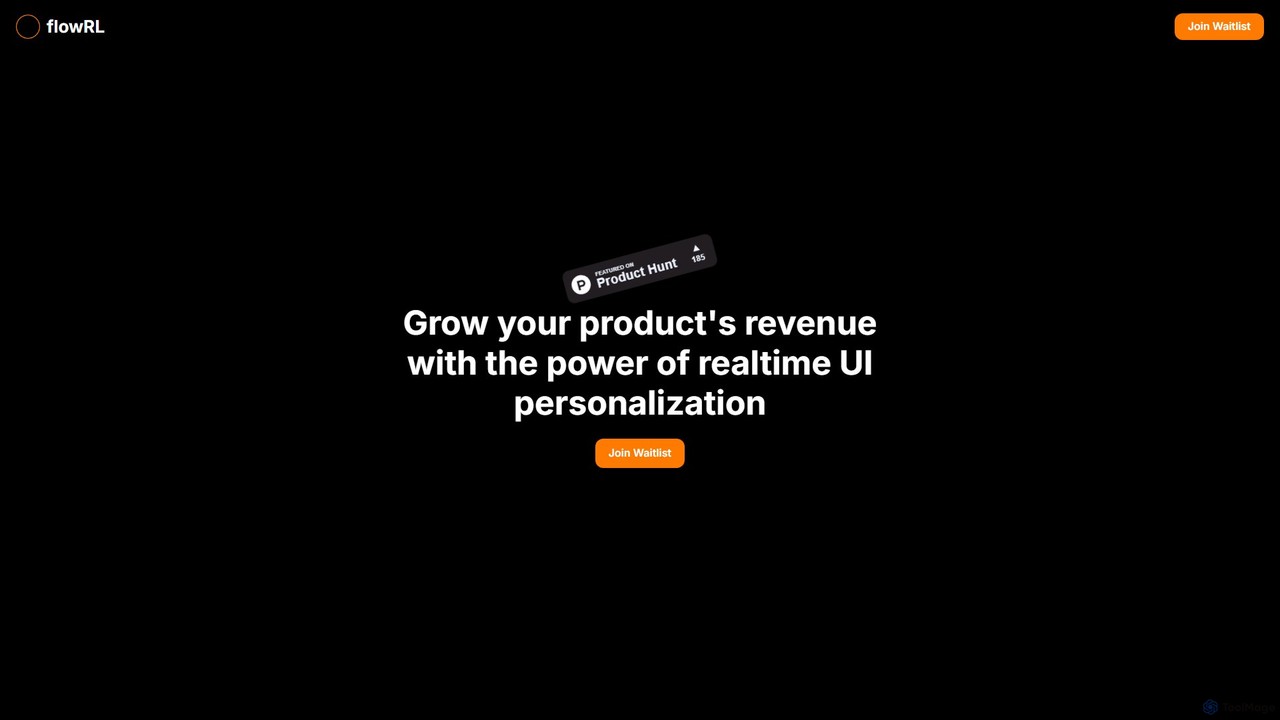
flowRL is an AI-powered platform that delivers real-time UI personalization to boost product revenue and user engagement. Using …
flowRL is an AI-powered platform that delivers real-time UI personalization to boost product revenue and user engagement. Using advanced Reinforcement Learning, it automatically adapts the user interface for each individual, moving beyond traditional A/B testing to achieve up to 2-3x uplift in key metrics like conversion, retention, and LTV.
About Testing
AI Testing tools are a specialized category of software that leverages artificial intelligence and machine learning to automate and enhance the quality assurance process. These tools analyze application behavior, generate intelligent test cases, and predict potential defects, significantly improving the efficiency and effectiveness of software validation. Within the broader field of Analytics, AI Testing provides deep insights into software quality, performance, and reliability, enabling development teams to deliver more robust and stable products.
Core Features
- Automated Test Case Generation: Automatically creates comprehensive test scenarios and data based on application understanding and user behavior patterns.
- Predictive Defect Identification: Uses machine learning models to analyze historical data and identify areas prone to defects before they occur.
- Self-Healing Tests: Automatically adapts test scripts to minor UI changes, reducing maintenance overhead and test failures due to UI shifts.
- Visual Regression Testing: Compares UI screenshots across different builds to detect subtle visual discrepancies and layout issues.
- Performance Anomaly Detection: Monitors application performance during tests and flags unusual behavior or bottlenecks using AI-driven analytics.
Use Cases
AI Testing tools are crucial for organizations aiming to accelerate their development cycles while maintaining high software quality. They are widely adopted in agile and DevOps environments where continuous integration and continuous delivery (CI/CD) pipelines require rapid and reliable feedback on code changes. From web applications to mobile apps and enterprise systems, these tools ensure that new features and bug fixes are thoroughly validated before deployment.
How to Choose
When selecting an AI Testing tool, consider its compatibility with your existing tech stack and CI/CD pipeline, the types of tests it supports (e.g., UI, API, performance), and its ability to integrate with other development and project management tools. Evaluate the accuracy of its AI models, the ease of test script creation and maintenance, and the clarity of its reporting and analytics features. Scalability, pricing models, and vendor support are also critical factors for long-term success.

TestingUse Cases
Automate Regression Testing for Web Applications
For web development teams, AI testing tools automatically execute comprehensive regression test suites across various browsers and devices. They detect UI changes, functional regressions, and performance degradations, providing instant feedback to developers. This significantly reduces manual testing effort and ensures new code deployments don't break existing functionalities, accelerating release cycles.
Predict Bugs in Mobile App Development
Mobile app developers leverage AI testing to analyze code changes and user interaction patterns, predicting potential bug hotspots before extensive manual testing. The AI identifies complex dependencies and common failure points, allowing testers to focus on critical areas and proactively address vulnerabilities, leading to more stable and higher-quality mobile releases.
API Testing and Validation for Microservices
In microservices architectures, AI testing tools generate and execute API tests, validating endpoints, data contracts, and performance under load. They can automatically discover new APIs, create test cases for complex data flows, and identify integration issues between services. This ensures robust communication and data integrity across distributed systems, crucial for scalable applications.
Ensure Visual UI Consistency Across Platforms
Marketing and design teams use AI-powered visual testing to ensure brand consistency across different platforms and screen sizes. The tools capture screenshots of UI elements and compare them against baseline images, flagging any pixel-level discrepancies or layout shifts. This guarantees a consistent user experience and brand representation, critical for maintaining user trust and professional appearance.
Identify Performance Bottlenecks in Enterprise Systems
IT operations and performance engineering teams deploy AI testing to simulate high user loads on enterprise applications, automatically identifying performance bottlenecks and scalability issues. The AI analyzes response times, resource utilization, and transaction throughput, pinpointing root causes of slowdowns. This proactive approach prevents system failures under peak demand, ensuring business continuity.
Generate Realistic Test Data for Complex Scenarios
QA engineers often struggle with creating diverse and realistic test data for complex scenarios, especially for edge cases. AI testing tools can automatically generate synthetic test data that mimics real-world patterns, ensuring comprehensive test coverage without compromising sensitive production data. This capability is vital for robust testing of data-intensive applications and compliance requirements.