
Analytics Best in category 1 results Workplace Insights AI Tool

Popular AI tools in the Workplace Insights field of Analytics include Attrove, etc., helping you quickly improve efficiency.

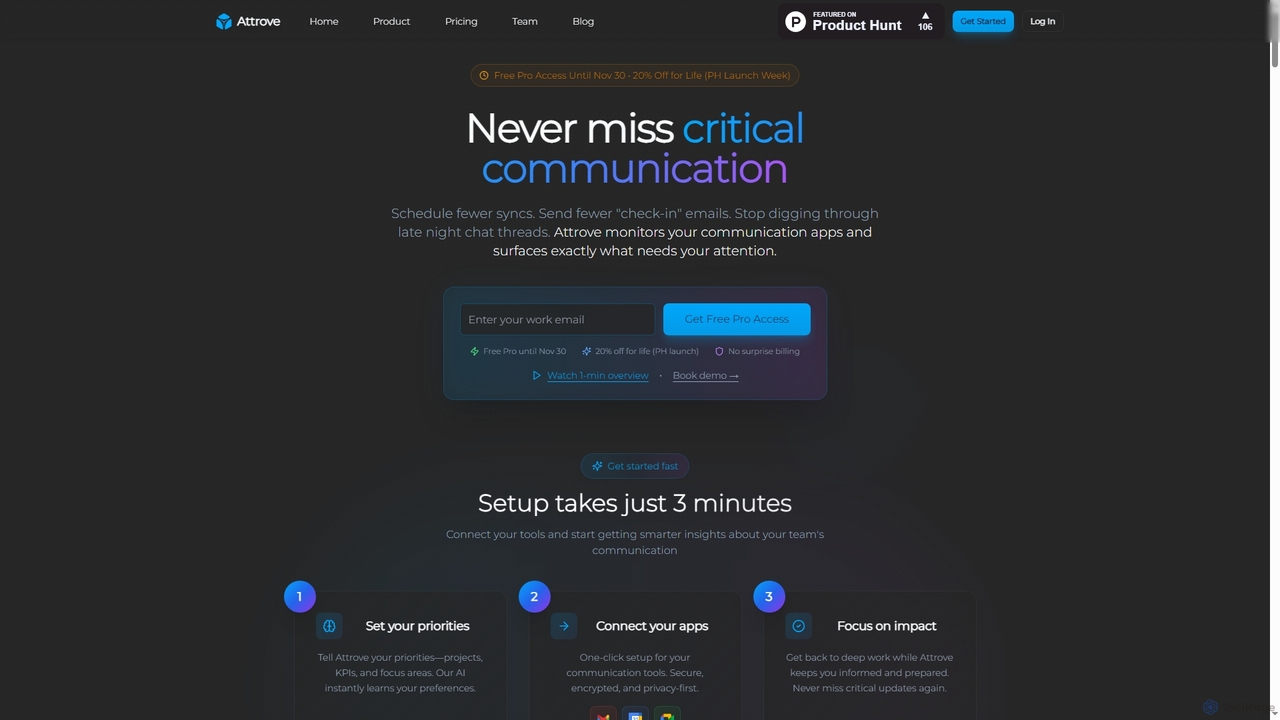
Attrove

Attrove

Attrove is an AI-powered communication intelligence platform designed to eliminate noise from work communication. It monitors apps like …

3.4K

About Workplace Insights

Workplace Insights AI tools analyze internal and external data to provide actionable intelligence about organizational dynamics and employee behavior. These tools leverage machine learning and natural language processing to uncover patterns in communication, productivity, and sentiment. They help businesses optimize workforce performance, enhance employee engagement, and make data-driven decisions for a healthier, more productive work environment. This sub-category of Analytics focuses specifically on human-centric and operational data within an organization.

Core Features

  • Employee Sentiment Analysis: Evaluates employee feedback and communication to gauge morale and identify areas for improvement.
  • Productivity Pattern Recognition: Identifies trends in task completion, project progress, and resource utilization to optimize workflows.
  • Collaboration Network Mapping: Visualizes team interactions and communication flows to enhance cross-functional efficiency.
  • Workforce Skill Gap Identification: Analyzes employee skills against business needs to pinpoint development areas and talent gaps.
  • Retention Risk Prediction: Uses historical data and behavioral patterns to forecast potential employee turnover.

Use Cases

HR departments use these tools to understand employee engagement and reduce turnover. Operations managers apply them to streamline workflows and identify bottlenecks. Leadership teams gain strategic insights for workforce planning and organizational development.

How to Choose

When selecting Workplace Insights tools, consider the specific data sources it integrates with (e.g., HRIS, communication platforms). Evaluate its analytical depth, including predictive capabilities and visualization options. Assess data privacy and security features, especially concerning sensitive employee information. Finally, consider scalability and ease of integration with existing enterprise systems.

Workplace InsightsUse Cases

1

Optimizing Team Collaboration

Project managers use Workplace Insights tools to analyze communication patterns and task dependencies within cross-functional teams. By identifying bottlenecks or isolated groups, they can restructure teams or introduce new collaboration strategies, leading to smoother project execution and improved team synergy.

2

Enhancing Employee Engagement & Retention

HR leaders deploy these AI tools to analyze employee survey responses, internal communication, and performance data. The insights help pinpoint factors contributing to low morale or high turnover risk, enabling targeted interventions like personalized development plans or improved work-life balance initiatives, ultimately boosting retention.

3

Identifying Skill Gaps for Strategic Planning

Learning & Development teams leverage Workplace Insights to map current employee skills against future business needs and industry trends. This allows them to proactively design training programs, allocate resources for upskilling, and make informed decisions about talent acquisition to ensure the organization remains competitive.

4

Improving Operational Efficiency in Service Centers

Operations managers in customer service centers use these tools to analyze agent performance, call durations, customer feedback, and resolution rates. By identifying inefficient processes or training needs, they can optimize staffing levels, refine scripts, and improve service delivery, leading to higher customer satisfaction and reduced operational costs.

5

Forecasting Workforce Needs & Resource Allocation

Senior leadership and workforce planners utilize Workplace Insights to predict future talent demands based on business growth projections, market shifts, and historical data. This enables them to strategically allocate resources, plan recruitment drives, and manage internal mobility, ensuring the right talent is available at the right time.

6

Assessing Impact of Organizational Changes

Change management teams use these tools to monitor employee sentiment and productivity before and after major organizational shifts, such as mergers or new policy implementations. By analyzing real-time data, they can quickly identify areas of resistance or success, allowing for agile adjustments and better change adoption.

Workplace InsightsFrequently Asked Questions