Best of the Year 9 results Architecture AI Tools

Popular AI tools in the Architecture field include Floor Plan、Home Design、Visualizee.ai、StagePro、FloorDesign、AI Architectures、Createy、KickRender、Spacemintai, etc., helping you quickly improve efficiency.

Createy

Createy

Createy is an innovative AI layer for macOS, designed to seamlessly generate high-quality visuals and assets directly within …

2.3K
Spacemintai

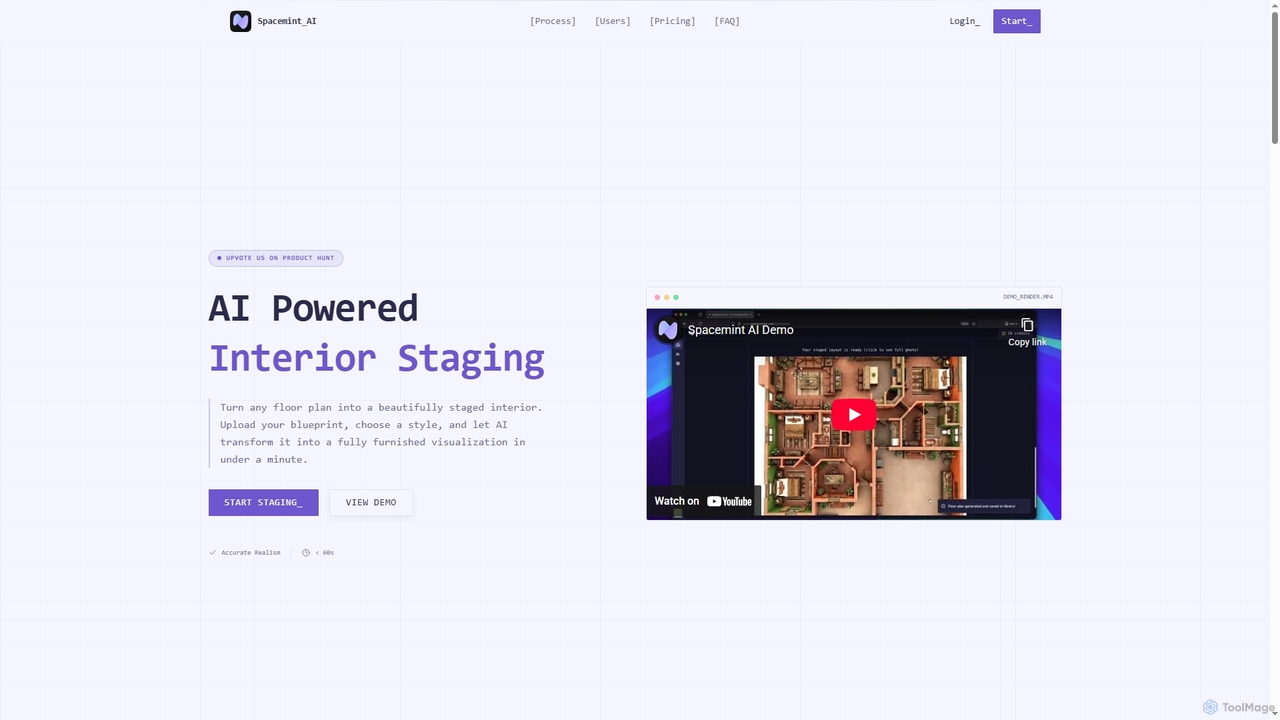
Spacemintai

An AI-powered tool that transforms floor plans into fully staged, realistic interior visualizations in under a minute. Designed …

2.1K
StagePro

StagePro

StagePro is an advanced AI-powered interior and exterior design tool that transforms any space into photorealistic visualizations in …

6.6K
FloorDesign

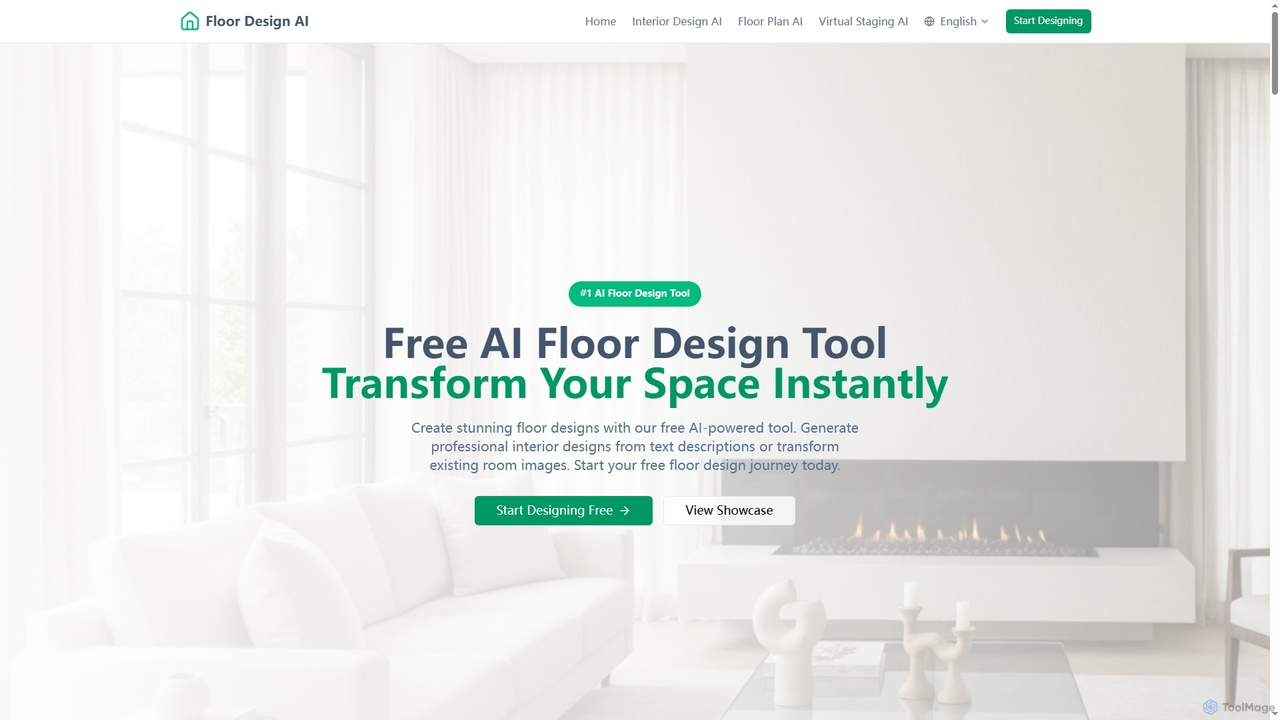
FloorDesign

FloorDesign is a comprehensive AI-powered platform offering free tools for floor design, interior design, floor plan generation, and …

5.4K
Free
Home Design

Home Design

Home Design is a professional AI-powered platform that revolutionizes interior, exterior, and garden design. It allows users to …

300.3K
Floor Plan

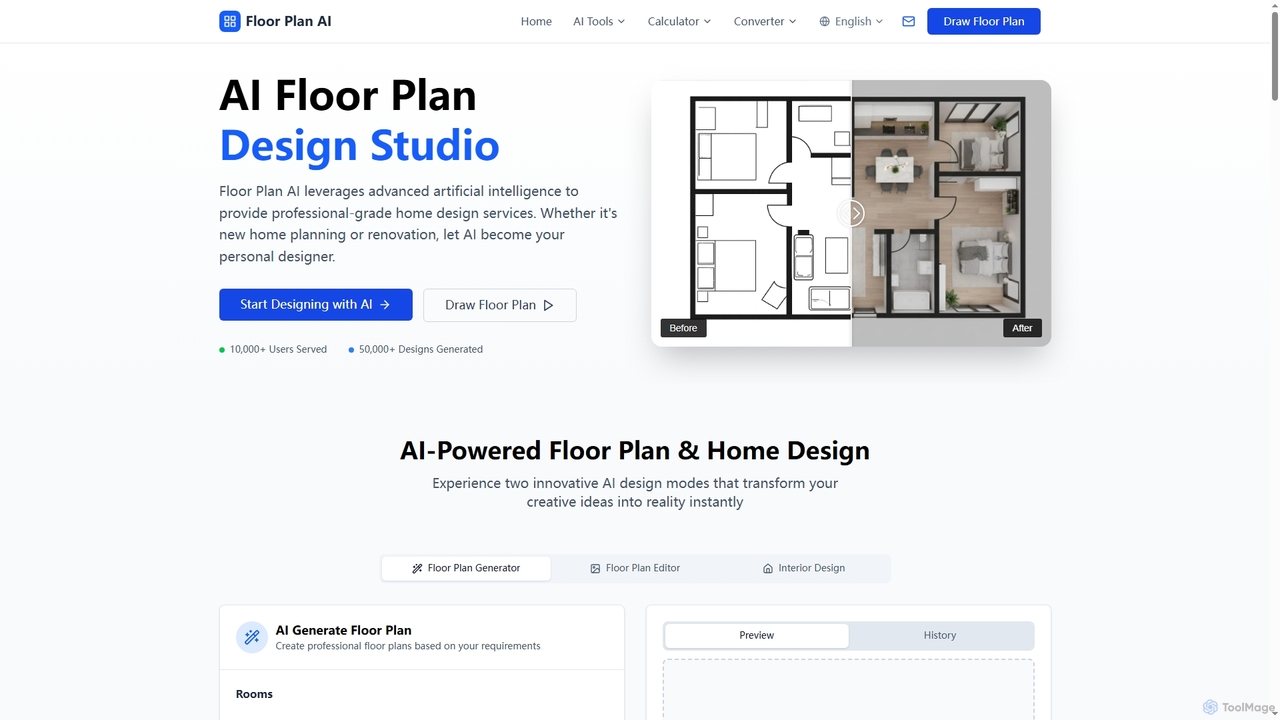
Floor Plan

Floor Plan is an advanced AI-powered platform offering comprehensive home and architectural design solutions. It enables users to …

394.7K
AI Architectures

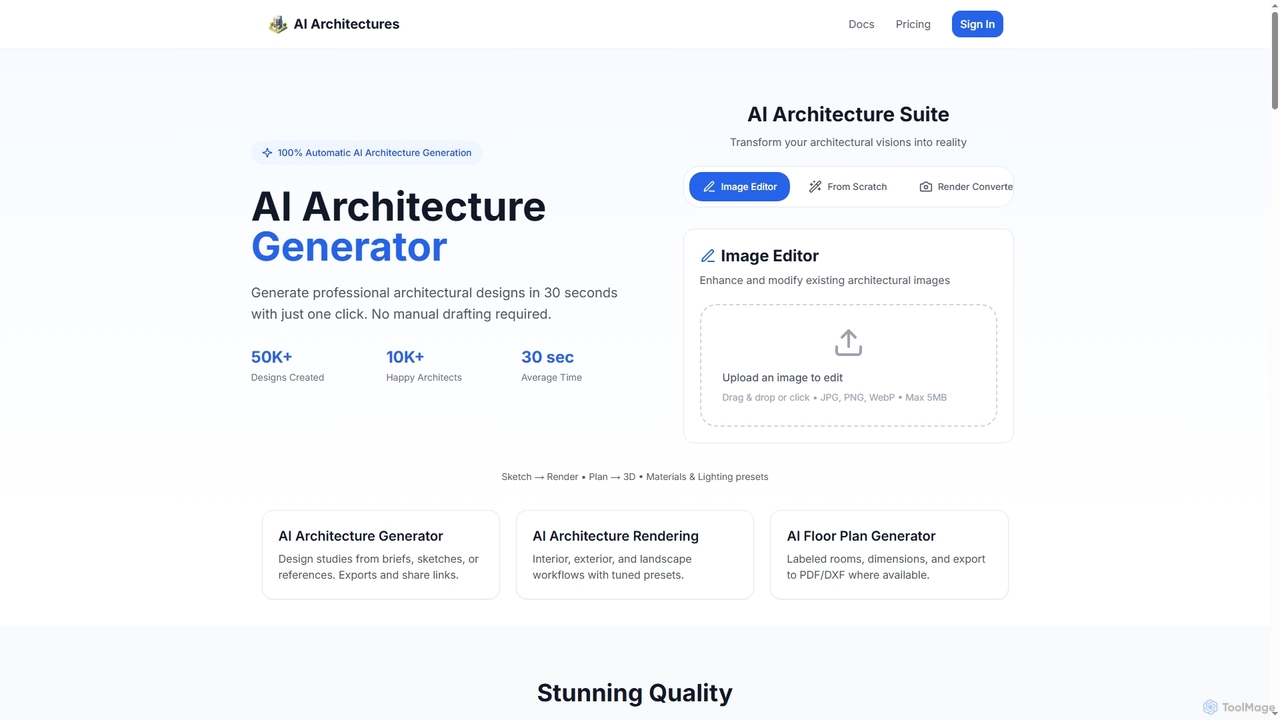
AI Architectures

AI Architectures is an advanced AI platform designed for architects and designers, enabling 100% automatic generation of professional …

5.0K
Visualizee.ai

Visualizee.ai

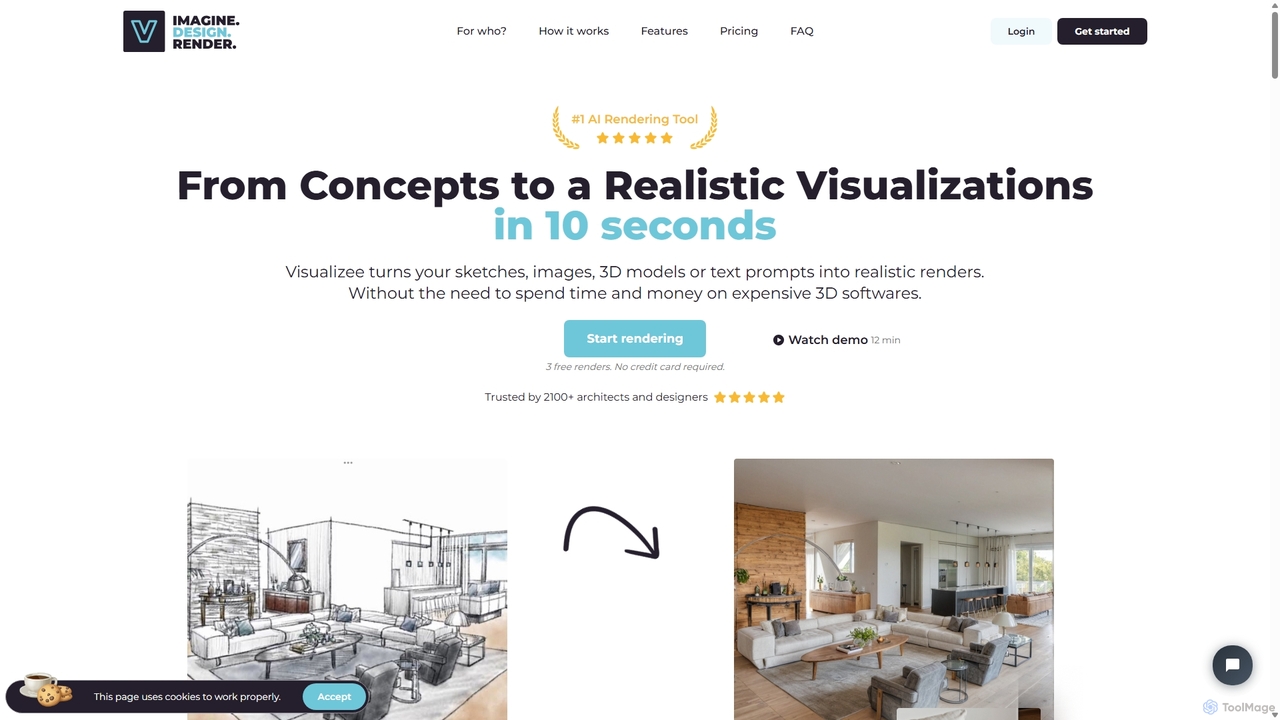
Visualizee.ai is a leading AI rendering tool that transforms sketches, 3D models, and text prompts into high-resolution (up …

26.6K
KickRender

KickRender

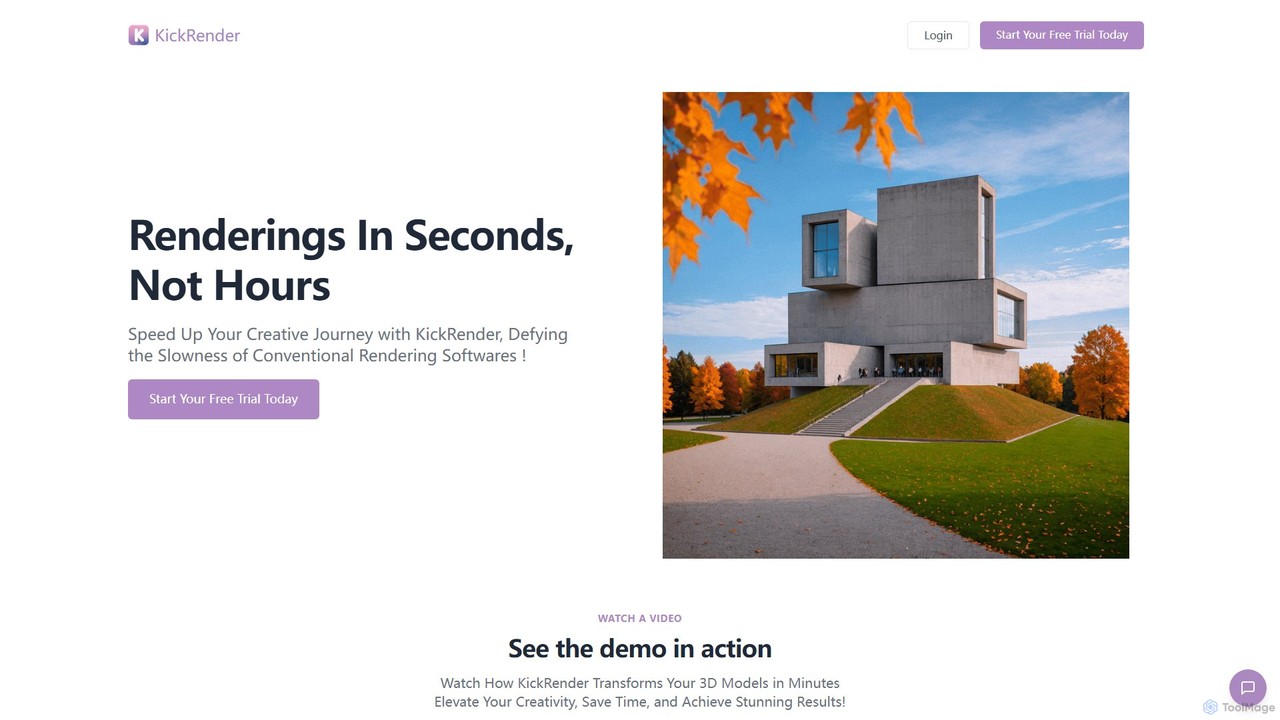
KickRender is an AI-powered rendering tool that transforms 3D models and sketches into stunning visualizations in seconds. It …

2.2K

About Architecture

Architecture AI tools are AI-powered software solutions that assist professionals in the architectural, engineering, and construction (AEC) industry. These tools leverage machine learning, generative design, and computer vision to automate complex tasks, optimize designs, and enhance project workflows. They enable architects to explore more design possibilities, improve efficiency, and make data-driven decisions throughout the building lifecycle, from conceptualization to construction documentation.

Core Features

  • Generative Design: Automatically creates numerous design options based on specified parameters and constraints, optimizing for performance, aesthetics, or cost.
  • BIM Automation: Automates repetitive tasks within Building Information Modeling (BIM) software, such as model generation, clash detection, and quantity take-offs.
  • Site Analysis & Planning: Analyzes environmental data, urban context, and regulations to inform optimal site placement and massing strategies.
  • Visualization & Rendering: Accelerates the creation of realistic 3D renderings and immersive virtual reality experiences from design models.
  • Performance Simulation: Predicts building performance metrics like energy consumption, daylighting, and structural integrity early in the design process.

Applicable Scenarios

Architecture AI tools are invaluable for architectural firms seeking to accelerate design iterations, urban planners analyzing complex city data for sustainable development, and construction companies optimizing project scheduling and resource allocation. They are also used by individual designers for rapid concept exploration and by educators for teaching advanced design methodologies.

How to Choose

When selecting Architecture AI tools, consider their compatibility with your existing software (e.g., BIM platforms), the specific design or analysis tasks you need to automate, and the level of customization offered. Evaluate the learning curve, data privacy policies, and the vendor's support and community. Finally, assess the pricing model against your budget and the potential return on investment in terms of time savings and design quality.

ArchitectureUse Cases

1

Accelerating Conceptual Design Exploration

Architects can leverage AI tools to rapidly generate and evaluate thousands of design alternatives for a project's initial concept phase. By inputting site constraints, programmatic requirements, and desired aesthetic styles, the AI explores a vast solution space, presenting optimized layouts, massing, and facade options. This process significantly reduces the manual effort and time traditionally spent on ideation, allowing designers to focus on refining promising concepts and achieving innovative, performance-driven outcomes within days instead of weeks.

2

Optimizing Building Performance and Sustainability

Environmental consultants and architects use AI tools to simulate and optimize building performance for energy efficiency, daylighting, and thermal comfort. By integrating with BIM models, AI can analyze various design parameters, material choices, and facade orientations to predict their impact on energy consumption and occupant well-being. This enables data-driven decisions early in the design process, leading to more sustainable and cost-effective buildings that meet stringent environmental standards and reduce operational costs over their lifespan.

3

Automating BIM Model Generation and Documentation

BIM managers and drafters utilize AI-powered tools to automate the creation of detailed Building Information Models and associated documentation. AI can interpret 2D sketches or point cloud data to generate 3D BIM elements, detect clashes between building systems, and automatically produce schedules, quantities, and construction drawings. This significantly reduces the time spent on repetitive modeling and documentation tasks, minimizes human errors, and ensures higher accuracy and consistency across project deliverables, freeing up professionals for more complex problem-solving.

4

Enhancing Architectural Visualization and Client Presentations

Architectural visualization specialists and marketing teams employ AI tools to create stunning, photorealistic renderings and immersive virtual tours with unprecedented speed. AI can quickly generate high-quality textures, lighting scenarios, and environmental elements, transforming raw 3D models into compelling visual narratives. This capability allows firms to produce more engaging client presentations, marketing materials, and competition submissions, helping stakeholders better understand and experience proposed designs before construction begins, ultimately improving project buy-in and reducing revision cycles.

5

Predictive Analytics for Construction Project Management

Construction project managers and contractors utilize AI for predictive analytics to optimize project schedules, manage risks, and allocate resources more effectively. By analyzing historical project data, weather patterns, supply chain information, and real-time site conditions, AI can forecast potential delays, cost overruns, or safety hazards. This proactive insight allows teams to make informed decisions, mitigate issues before they escalate, and ensure projects are completed on time and within budget, enhancing overall operational efficiency and profitability.

6

Automating Code Compliance Checks and Regulatory Analysis

Architects and compliance officers can use AI tools to automate the tedious process of checking architectural designs against complex building codes and regulatory standards. AI algorithms can quickly scan BIM models and drawings to identify potential violations related to fire safety, accessibility, zoning, and structural requirements. This automation drastically reduces manual review time, minimizes the risk of costly errors and rework, and ensures that designs meet all necessary legal and safety mandates early in the project lifecycle, streamlining the approval process.

ArchitectureFrequently Asked Questions