Chatbots Best in category 1 results Conversational AI Tool

Popular AI tools in the Conversational field of Chatbots include Heypi, etc., helping you quickly improve efficiency.

Heypi

Heypi

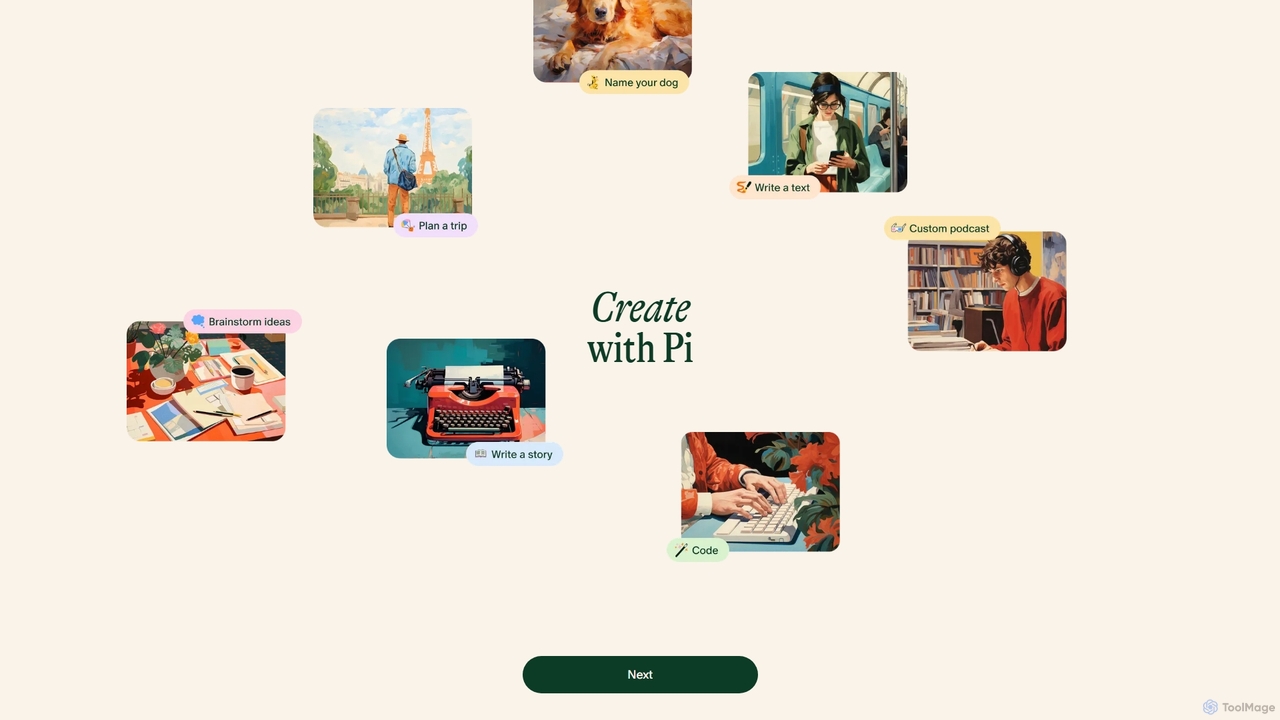
Heypi, also known as Pi, is a personal AI companion from Inflection AI, designed for supportive and empathetic …

2.4K

About Conversational

Conversational AI tools are an advanced category of chatbots designed to understand, process, and respond to human language in a natural and context-aware manner. They utilize sophisticated technologies like Natural Language Processing (NLP) and Natural Language Understanding (NLU) to interpret user intent, sentiment, and nuances, enabling fluid, multi-turn dialogues. This allows for the creation of highly engaging and personalized user experiences, automating complex interactions far beyond the capabilities of basic, rule-based bots. Consequently, these tools are pivotal for scaling customer support, qualifying leads, and providing interactive assistance 24/7.

Core Features

  • Natural Language Understanding (NLU): Accurately identifies user intent, entities, and sentiment from unstructured text or speech.
  • Context Awareness: Maintains memory of previous interactions within a conversation to provide relevant and coherent responses.
  • Dialogue Management: Intelligently guides the conversation's flow, handles digressions, and asks clarifying questions.
  • Omnichannel Capability: Deploys consistently across various platforms, including websites, mobile apps, social media, and voice assistants.
  • Sentiment Analysis: Gauges the user's emotional tone to adapt the response style and escalate issues when necessary.

Applicable Scenarios

These tools are widely used in customer service to automate support inquiries, in sales and marketing for lead generation and qualification, and in e-commerce to provide personalized shopping assistance. For instance, a telecommunications company can use conversational AI to troubleshoot technical issues, while a SaaS business can use it to onboard new users interactively. They are also valuable for internal functions like HR and IT support, providing instant answers to employee queries.

Selection Criteria

When choosing a conversational AI tool, evaluate its NLU accuracy and support for your specific industry's terminology. Assess its integration capabilities with your existing CRM, helpdesk, and communication platforms. Consider the ease of use of its conversation builder and training interface—whether it's a low-code platform for business users or a more developer-focused framework. Finally, examine the analytics and reporting features to measure performance and identify areas for improvement.

ConversationalUse Cases

1

Automating Complex Customer Support Queries

A customer support manager at a growing e-commerce company needs to handle a high volume of inquiries about order tracking, return policies, and product specifications. By implementing a conversational AI on their website, they can provide instant, 24/7 answers. The AI is trained on the company's knowledge base and past support tickets, allowing it to understand nuanced questions like "I haven't received my order yet, it was supposed to be here yesterday" and provide precise, context-aware responses. This automates over 60% of tier-1 support tickets, freeing up human agents to focus on complex, high-value cases and reducing average response time by 75%.

2

Interactive Lead Qualification on Websites

A marketing manager for a B2B SaaS company wants to increase lead conversion from their website. Instead of a static contact form, they deploy a conversational AI that proactively engages visitors. The AI asks qualifying questions in a natural, chat-like manner, such as "What's your biggest challenge with project management?" and "How large is your team?" Based on the responses, it can identify high-intent leads, provide relevant content, and even schedule a demo directly on the sales team's calendar. This interactive approach increases lead capture rates by 40% and improves the quality of leads passed to sales.

3

Personalized E-commerce Shopping Assistance

An online fashion retailer aims to replicate the in-store personal shopper experience. They integrate a conversational AI assistant into their website and mobile app. This assistant asks customers about their style preferences, occasion, and budget (e.g., "Are you looking for something casual or formal?"). It then provides tailored product recommendations, shows how different items can be styled together, and answers questions about sizing and materials. The AI can also process returns and track orders, providing a seamless end-to-end customer journey. This personalization leads to a 15% increase in average order value and a significant reduction in cart abandonment.

4

Streamlining Internal IT & HR Support

An IT director at a large corporation is tasked with reducing the number of repetitive support tickets. They deploy an internal conversational AI on platforms like Slack and Microsoft Teams. Employees can now ask the AI questions like "How do I reset my VPN password?" or "What is the company's policy on remote work?" The AI provides instant answers by pulling information from the internal knowledge base. For more complex issues, it can automatically create a support ticket with all the necessary context, routing it to the correct department. This reduces the ticket volume for the IT and HR helpdesks by 40%, allowing them to focus on more strategic tasks.

5

Conducting Automated User Onboarding

A product manager for a new project management software wants to improve user activation rates. They design an interactive onboarding process using a conversational AI. When a new user signs up, the AI greets them and guides them through setting up their first project. It proactively points out key features, asks what they want to achieve, and provides short, contextual video tutorials. If the user seems stuck on a particular feature, the AI can offer help or suggest a different workflow. This guided, conversational approach makes the software less intimidating and increases the user activation rate within the first week by 35%.

6

Gathering In-depth Customer Feedback

A market researcher needs to collect qualitative feedback that goes deeper than standard surveys. They use a conversational AI to conduct interactive interviews via a web link. The AI starts with broad questions and then asks dynamic follow-up questions based on the user's responses, probing for more detail. For example, if a user mentions they found a feature "confusing," the AI will ask, "What specifically about it was confusing to you?" This mimics a real interview, making the experience more engaging and resulting in richer, more nuanced feedback than what can be gathered from static forms, improving data quality for product development.

ConversationalFrequently Asked Questions