ToolMage
Sign in

Best 1 Creative Companion AI tools for Chatbots

Popular Creative Companion AI tools in Chatbots include Zenen AI, helping you work more efficiently.

Zenen AI
Freemium

Zenen AI

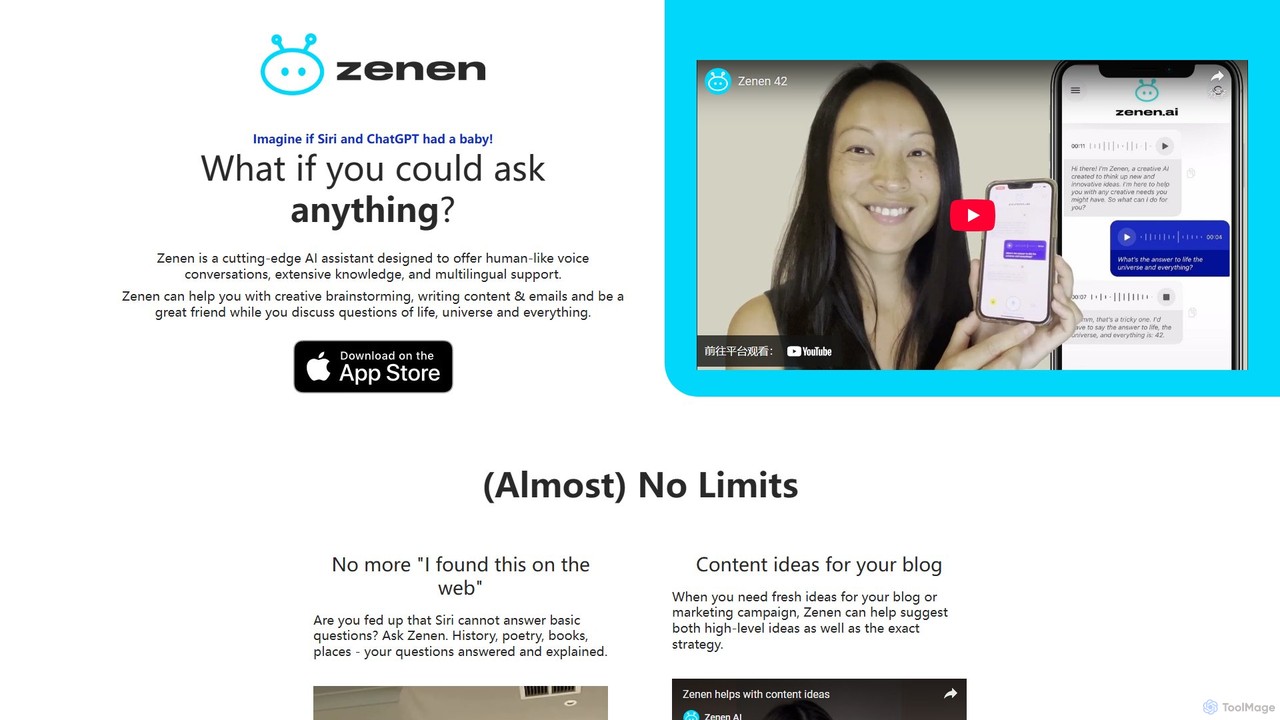
Zenen AI is a creative conversational AI assistant designed for human-like voice interactions. It excels at brainstorming, content creation, and imaginative discussions, acting as a creative partner rather than a factual database. It supports multiple languages and focuses on user privacy.

Creative Companion
Visits 4.7KFavorites 119Likes 126

About Creative Companion

Creative Companion chatbots are specialized AI partners designed to assist in the brainstorming, development, and refinement of creative ideas. Unlike traditional chatbots that retrieve information, these tools use advanced language models to generate novel concepts, suggest alternative phrasing, and engage in collaborative dialogue. They serve as an invaluable resource for writers, marketers, and artists seeking to overcome creative blocks and explore new narrative directions. Their primary function is not to answer questions, but to co-create and act as a persistent sounding board for imaginative work.

Core Features

  • Idea Generation: Proposes unique concepts, plot points, or marketing angles based on simple prompts.
  • Collaborative Writing: Acts as a co-writer, suggesting sentence completions, paragraph structures, and stylistic improvements.
  • Persona Simulation: Adopts specific personas (e.g., a critic, a target audience member) to provide feedback from different perspectives.
  • World-Building Assistance: Helps develop detailed settings, character backstories, and consistent lore for fictional projects.
  • Style & Tone Adaptation: Analyzes and mimics different writing styles, from formal business copy to poetic prose.

Use Cases

Creative Companions are ideal for content creators, scriptwriters, novelists, marketing professionals, and game developers. They are used for drafting initial concepts, refining dialogue, generating ad copy variations, and building complex fictional worlds where overcoming creative hurdles is key.

How to Choose

When selecting a Creative Companion, evaluate the model's creative range and consistency. Consider its ability to maintain context over long conversations, which is crucial for large projects. Check for features like persona adoption and style control. Also, assess the user interface for ease of collaboration and idea organization to ensure it fits your workflow.

Creative Companion use cases

1

Overcoming Writer's Block for a Novel

A novelist is stuck on a crucial plot point. They use a Creative Companion to brainstorm potential twists by feeding it the current story summary and asking 'what if' questions. The AI suggests several unexpected character motivations and plot developments, helping the writer break through the block and draft the next chapter with renewed inspiration. The tool acts as a 24/7 brainstorming partner, providing fresh perspectives without judgment.

2

Developing a Marketing Campaign Slogan

A marketing team needs catchy slogans for a new eco-friendly product. They provide the Creative Companion with the product's key features, target audience, and brand voice. The AI generates hundreds of slogan variations, from witty one-liners to benefit-driven taglines. The team can then refine the best options, saving hours of manual brainstorming and ensuring a wide range of creative possibilities are explored.

3

Scriptwriting and Dialogue Refinement

A screenwriter is crafting a scene, but the dialogue feels unnatural. They input the character profiles and the scene's context into a Creative Companion. They then 'role-play' the conversation with the AI, which responds in character. This process helps the writer test different lines, improve the conversational flow, and discover more authentic ways for their characters to interact, ultimately making the script more compelling.

4

Generating Character Backstories for a Game

A game developer is creating a new role-playing game and needs rich backstories for non-player characters (NPCs). Instead of writing each one from scratch, they provide the AI with a character's name, role, and a few key traits. The Creative Companion generates a detailed history, including family background, pivotal life events, and personal motivations, ensuring a consistent and immersive game world with minimal repetitive effort.

5

Brainstorming Content Ideas for a Blog

A content creator needs fresh ideas for their tech blog. They ask the Creative Companion to generate ten blog post titles about 'the future of AI in daily life,' specifying a target audience of non-technical readers. The AI provides a list of engaging titles like '5 Ways AI Will Organize Your Kitchen' and 'Could an AI Be Your Next Personal Trainer?'. This sparks new article directions and helps build a content calendar for the next month.

6

Crafting Personalized Email Outreach Copy

A sales professional needs to write compelling outreach emails that don't sound generic. They use a Creative Companion by providing a prospect's LinkedIn profile summary and the goal of the email. The AI drafts a personalized opening paragraph that references the prospect's recent achievements or company news. This allows the professional to scale their outreach while maintaining a high degree of personalization, improving open and response rates.

Creative Companion FAQ

What is a Creative Companion chatbot?

A Creative Companion is a specialized AI chatbot designed to act as a partner in the creative process. Unlike chatbots for customer service or information retrieval, its primary purpose is to help users brainstorm ideas, co-write content, and overcome creative blocks. Key features include generating novel concepts, simulating different personas for feedback, and assisting in the development of complex narratives or marketing campaigns.

How is a Creative Companion different from a general-purpose chatbot?

While both use large language models, a Creative Companion is often fine-tuned or features a user interface specifically for creative tasks. The key differences are in focus and features. Creative Companions prioritize maintaining long-term context for projects, offer tools for character and plot management, and are designed for collaborative, iterative work. General-purpose chatbots are more like a blank slate, whereas Creative Companions provide a structured environment for creation.

Who should use a Creative Companion?

Creative Companions are ideal for a wide range of professionals and hobbyists. This includes:

  • Writers and Authors: For brainstorming plots, developing characters, and refining prose.
  • Marketers: For generating ad copy, slogans, and content marketing ideas.
  • Scriptwriters and Game Developers: For creating dialogue, world-building, and designing quests.
  • Students and Researchers: For exploring topics and structuring arguments.

Anyone facing a creative challenge can benefit from an AI partner that offers endless ideas.

What are the key features to look for in a Creative Companion?

When choosing a Creative Companion, consider these factors:

  • Context Window: The ability to remember details from long conversations is crucial for ongoing projects.
  • Customization: Look for options to set a specific tone, style, or persona for the AI.
  • Organizational Tools: Features like project folders, character sheets, or mind maps can be very helpful.
  • Output Quality: Test its ability to generate coherent, creative, and non-repetitive content.
  • Integration: Some tools may integrate with writing software or other platforms.
Can a Creative Companion replace human creativity?

No, a Creative Companion is a tool to augment, not replace, human creativity. It acts as a catalyst, providing inspiration, suggesting alternatives, and handling repetitive aspects of the creative process. The final vision, critical judgment, and emotional depth still come from the human user. It is best viewed as a tireless assistant or a brainstorming partner that helps creators realize their own ideas more efficiently.