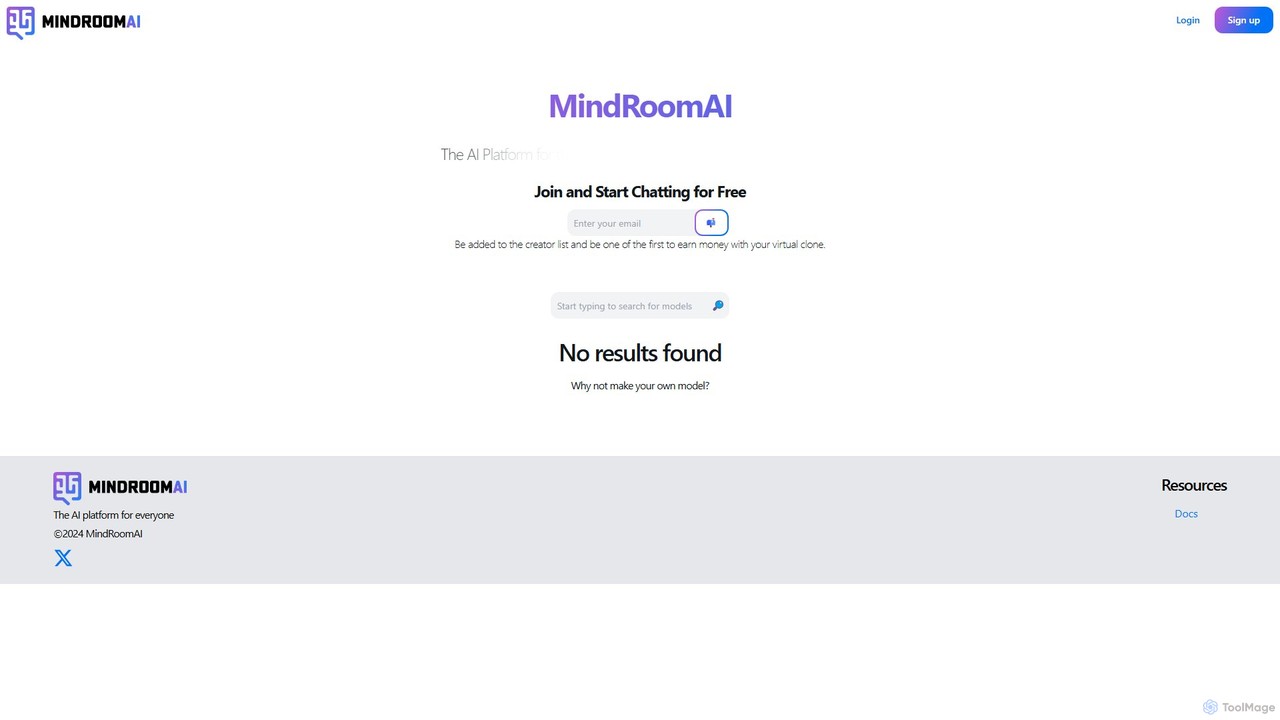
MindRoomAI
MindRoomAI is an AI platform that enables content creators and thought leaders to build and monetize a virtual …
MindRoomAI is an AI platform that enables content creators and thought leaders to build and monetize a virtual clone of themselves. This AI twin can interact with audiences 24/7, answer questions, and provide a scalable way to engage with fans, creating a new revenue stream.
About Custom Assistants
Custom Assistants are AI-powered tools designed to provide highly specialized and context-aware interactions by leveraging specific knowledge bases and predefined functionalities. These assistants are built upon advanced natural language processing (NLP) and machine learning (ML) models, enabling them to understand complex queries within a particular domain, far beyond the scope of general-purpose chatbots. Their primary value lies in delivering precise, personalized responses and automating tasks tailored to unique business processes or user requirements, significantly enhancing efficiency and user satisfaction in niche applications.
Core Features
- Knowledge Base Integration: Seamlessly connects to proprietary documents, internal databases, and external APIs for comprehensive, domain-specific information retrieval.
- Contextual Understanding: Interprets user queries with deep awareness of the integrated data, conversation history, and specific operational context.
- Task Automation: Executes specific actions, triggers workflows, or integrates with other systems based on user commands or predefined business rules.
- Personalized Responses: Generates highly relevant answers, recommendations, and content tailored to individual user profiles, preferences, or past interactions.
- Customizable Persona & Tone: Allows for precise adaptation of communication style, personality, and language to align with brand guidelines or specific user interaction needs.
Applicable Scenarios
Custom Assistants are invaluable for organizations seeking to automate specialized support, enhance internal knowledge access, or offer highly personalized digital experiences across various touchpoints. They are widely adopted in sectors like IT for internal help desks, HR for policy inquiries, customer service for product-specific troubleshooting, and education for personalized learning guides. For instance, an IT department might deploy a custom assistant to troubleshoot network issues based on internal system logs and documentation, providing instant, accurate solutions. Similarly, a university could use one to guide students through specific course registration processes, answering nuanced questions about prerequisites and deadlines.
How to Choose
Selecting the right Custom Assistant involves evaluating its knowledge integration capabilities, ensuring it can seamlessly connect with your existing data sources, such as CRM, ERP, or internal wikis. Assess the depth of customization offered, including granular control over its persona, conversational flows, and workflow automation logic. Consider scalability to accommodate future growth in data volume and user interactions without performance degradation. Prioritize robust security and privacy features to protect sensitive information and ensure compliance with relevant regulations. Finally, evaluate the ease of deployment, ongoing maintenance, and the availability of analytics to monitor performance and refine its effectiveness.

Custom AssistantsUse Cases
Automate Internal Knowledge Base Support
An HR department deploys a Custom Assistant trained on all company policies, benefits, and FAQs. Employees can ask natural language questions about leave policies, expense claims, or onboarding procedures. The assistant provides instant, accurate answers by retrieving information directly from the official HR knowledge base, reducing the workload on HR staff and ensuring consistent information delivery across the organization.
Provide Specialized Product Support
A software company uses a Custom Assistant to offer 24/7 support for its complex enterprise product. The assistant is trained on all product manuals, technical specifications, and common troubleshooting guides. Customers can describe their issues in detail, and the assistant diagnoses problems, suggests solutions, or guides them through specific features, significantly reducing the volume of support tickets and improving customer satisfaction with rapid, accurate assistance.
Personalized Learning and Development Guides
An educational platform implements a Custom Assistant for personalized learning. Students interact with the assistant, which is trained on specific course materials, textbooks, and learning objectives. It provides tailored explanations, generates practice questions based on individual progress, and suggests customized learning paths. This adaptive approach helps students grasp complex concepts more effectively, improving comprehension and academic performance by addressing their unique learning styles and needs.
Automate Sales Lead Qualification
A B2B sales team uses a Custom Assistant on their website to pre-qualify leads. The assistant is trained on specific ideal customer profiles, product offerings, and pricing tiers. It engages website visitors, asks targeted questions to assess their needs and budget, and then scores leads based on predefined criteria. Only highly qualified leads are forwarded to human sales representatives, streamlining the sales funnel and increasing conversion rates by focusing efforts on the most promising prospects.
Natural Language Data Analysis and Reporting
A business analyst uses a Custom Assistant integrated with their company's BI tools and databases. Instead of writing complex SQL queries or navigating dashboards, the analyst can ask questions in natural language, such as "What were our Q3 sales in Europe for product X?" The assistant processes the query, retrieves the relevant data, and generates a concise report or visualization. This democratizes data access, empowers non-technical users, and significantly accelerates the insight generation process for strategic decision-making.
Event Information and Logistics Support
An event organizer deploys a Custom Assistant for a large conference. The assistant is trained on the full event schedule, speaker bios, venue maps, and attendee FAQs. Attendees can ask questions about session times, room locations, or networking opportunities. The assistant provides real-time, accurate information, helps navigate the event, and even handles simple registration changes, ensuring a smooth experience for participants and reducing the need for human staff to answer repetitive inquiries.