ToolMage
Sign in

Best 2 Custom Chatbot AI tools for Chatbots

Popular Custom Chatbot AI tools in Chatbots include CustomGPT.ai and Omnimind, helping you work more efficiently.

Omnimind
Freemium

Omnimind

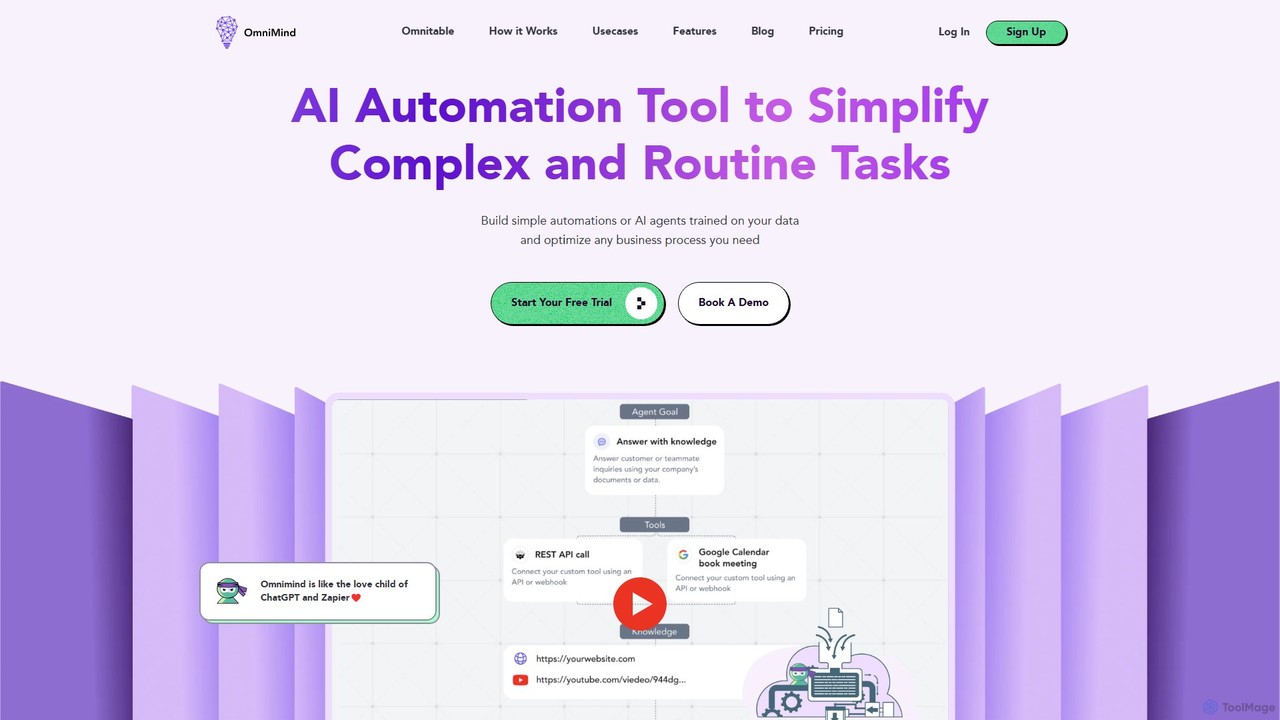
Omnimind is a no-code AI automation platform that lets you build custom AI agents trained on your own data. Connect to sources like Notion, PDFs, and websites to automate complex tasks in customer support, sales, and education. It combines the power of large language models with workflow automation, similar to a blend of ChatGPT and Zapier.

Custom Chatbot
Visits 5.2KFavorites 102Likes 105
CustomGPT.ai
Freemium

CustomGPT.ai

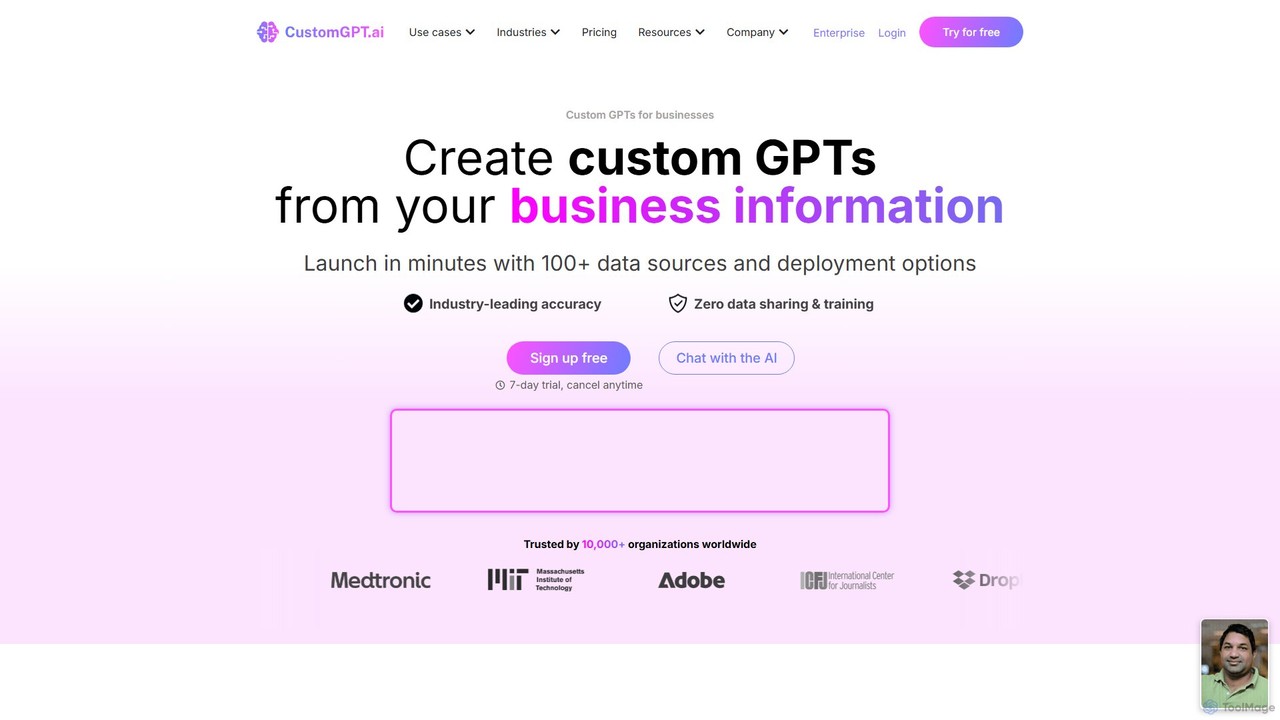
CustomGPT.ai is a no-code platform that enables businesses to create secure, custom AI chatbots trained exclusively on their own content. It supports over 100 data sources, ensures high accuracy by preventing hallucinations, and allows for easy deployment on websites or integration via API. Ideal for customer support, internal knowledge management, and sales enablement, it helps organizations automate processes and enhance user engagement without requiring technical expertise.

Custom Chatbot
Visits 121KFavorites 98Likes 84

About Custom Chatbot

Custom Chatbots are AI-powered conversational agents specifically designed and trained to meet the unique needs and operational contexts of a particular business or organization, representing a specialized segment within the broader chatbot landscape. These tools leverage advanced Natural Language Processing (NLP) and machine learning to understand complex user queries, provide highly relevant responses, and perform specific tasks tailored to an enterprise's data and workflows. They enable businesses to automate customer support, streamline internal operations, and enhance user engagement with unparalleled precision and personalization, moving beyond generic interactions to deliver deeply integrated and context-aware experiences.

Core Features

  • Deep Customization: Tailored knowledge bases, conversational flows, and integration with proprietary systems.
  • Advanced NLP & NLU: Superior understanding of industry-specific jargon, complex queries, and user intent.
  • Seamless Integration: Connects with CRM, ERP, internal databases, and various communication channels.
  • Personalized Interactions: Delivers context-aware and user-specific responses based on historical data and profiles.
  • Scalable Performance: Handles high volumes of concurrent conversations while maintaining response quality.

Applicable Scenarios

Custom chatbots are invaluable for organizations seeking to optimize specific operational areas. E-commerce businesses utilize them for personalized product recommendations and order management. Healthcare providers deploy them for patient intake, appointment scheduling, and answering FAQs about services. Financial institutions use them for secure account inquiries and transaction support, ensuring compliance and data security while offering instant assistance to clients.

How to Choose

Selecting a custom chatbot platform requires evaluating several key factors. Prioritize platforms offering robust integration capabilities with your existing tech stack (CRM, ERP). Assess the depth of customization available for knowledge base training, conversational design, and branding. Consider the platform's NLP accuracy for your specific industry's terminology and its scalability to handle future growth. Finally, evaluate data security protocols and compliance features, especially for sensitive industries like healthcare or finance.

Featured tool rankings

Custom Chatbot use cases

1

Automating E-commerce Customer Support

E-commerce businesses facing high volumes of customer inquiries about products, orders, and returns can deploy a custom chatbot. Trained on specific product catalogs, FAQs, and order management systems, the chatbot provides instant, accurate responses, tracks order statuses, and guides customers through return processes. This significantly reduces the workload on human support agents, improves customer satisfaction with 24/7 availability, and reduces response times by up to 70%.

2

Streamlining HR Onboarding and Employee FAQs

Large organizations can use a custom chatbot to assist new hires with onboarding and existing employees with HR-related queries. The chatbot is integrated with HR systems and internal knowledge bases, answering questions about company policies, benefits, payroll, and IT support. This automates routine HR tasks, ensures consistent information delivery, and allows HR staff to focus on more strategic initiatives, improving employee experience from day one.

3

Providing Personalized Technical Support

Software companies or IT departments can implement a custom chatbot to offer immediate technical assistance to users or employees. The chatbot is trained on product documentation, troubleshooting guides, and common technical issues. It can diagnose problems, suggest solutions, or escalate complex cases to human agents with relevant context. This reduces support ticket volume, speeds up resolution times, and provides users with instant, guided help.

4

Enhancing Lead Qualification and Nurturing

Sales and marketing teams can leverage custom chatbots on websites or landing pages to engage visitors, qualify leads, and gather essential information. The chatbot asks targeted questions based on predefined criteria, identifies potential customers, and can even schedule demo calls or provide personalized content. This automates the initial sales funnel, ensures high-quality leads are passed to sales, and improves conversion rates by engaging prospects proactively.

5

Delivering Interactive Educational Content

Educational institutions or e-learning platforms can use custom chatbots to provide interactive learning support. The chatbot can answer student questions about course material, provide explanations, offer quizzes, or guide them through complex topics. Integrated with learning management systems, it offers personalized assistance, enhances engagement, and makes learning more accessible and self-paced, acting as a virtual tutor.

6

Internal Knowledge Base Access for Employees

Companies with extensive internal documentation, policies, and procedures can deploy a custom chatbot to serve as an intelligent knowledge assistant for employees. Integrated with internal wikis, shared drives, and company portals, the chatbot allows employees to quickly find information on projects, company guidelines, or specific processes without sifting through documents. This boosts productivity, ensures information consistency, and reduces time spent searching for answers.

Custom Chatbot FAQ

What are Custom Chatbots?

Custom Chatbots are AI-powered conversational agents specifically developed and trained for a particular business or organization's unique requirements. Unlike off-the-shelf solutions, they are deeply integrated with a company's specific data, systems, and workflows. Their core purpose is to automate interactions, provide personalized responses, and perform tasks that are highly relevant to the business's operational context, such as specialized customer support or internal process automation.

How to choose a Custom Chatbot platform?

Choosing the right custom chatbot platform involves several critical considerations. First, assess its integration capabilities with your existing CRM, ERP, and internal databases to ensure seamless data flow. Second, evaluate the platform's customization options for natural language understanding (NLU) training, conversational flow design, and branding. Third, consider its scalability to handle anticipated user volumes and future growth. Finally, prioritize vendors with strong data security, privacy compliance (e.g., GDPR, HIPAA), and robust analytics features to monitor performance and identify areas for improvement.

What's the difference between a Custom Chatbot and a generic AI chatbot?

The primary difference lies in their specificity and integration. A generic AI chatbot (like many public-facing AI assistants) is designed for broad, general knowledge and common tasks, often with limited integration capabilities. A Custom Chatbot, however, is purpose-built and extensively trained on a company's proprietary data, industry-specific terminology, and unique business logic. This allows it to provide highly accurate, context-aware, and personalized responses, perform specific actions within a company's ecosystem, and integrate deeply with internal systems, offering a far more tailored and effective solution for business-specific challenges.

What are the key benefits of using a Custom Chatbot?

Custom chatbots offer numerous benefits for businesses. They significantly enhance customer experience by providing instant, 24/7 support and personalized interactions, leading to higher satisfaction. Operationally, they automate repetitive tasks, reducing the workload on human staff and lowering operational costs. They also improve efficiency by streamlining processes like lead qualification, HR inquiries, or technical support. Furthermore, custom chatbots ensure consistent information delivery and can gather valuable data insights from user interactions, aiding in continuous improvement and strategic decision-making.

How long does it take to deploy a Custom Chatbot?

The deployment time for a custom chatbot varies significantly based on its complexity, the depth of integration required, and the volume of data needing to be trained. A basic custom chatbot with limited integrations and a focused knowledge base might take a few weeks to a couple of months to deploy. More complex solutions involving extensive integrations with multiple systems, advanced NLU training for industry-specific jargon, and intricate conversational flows could take anywhere from three to six months, or even longer for enterprise-grade deployments. Ongoing training and optimization are also continuous processes.