ToolMage
Sign in

Best 1 Messaging AI tools for Chatbots

Popular Messaging AI tools in Chatbots include Ayudis.ai, helping you work more efficiently.

Ayudis.ai
Freemium

Ayudis.ai

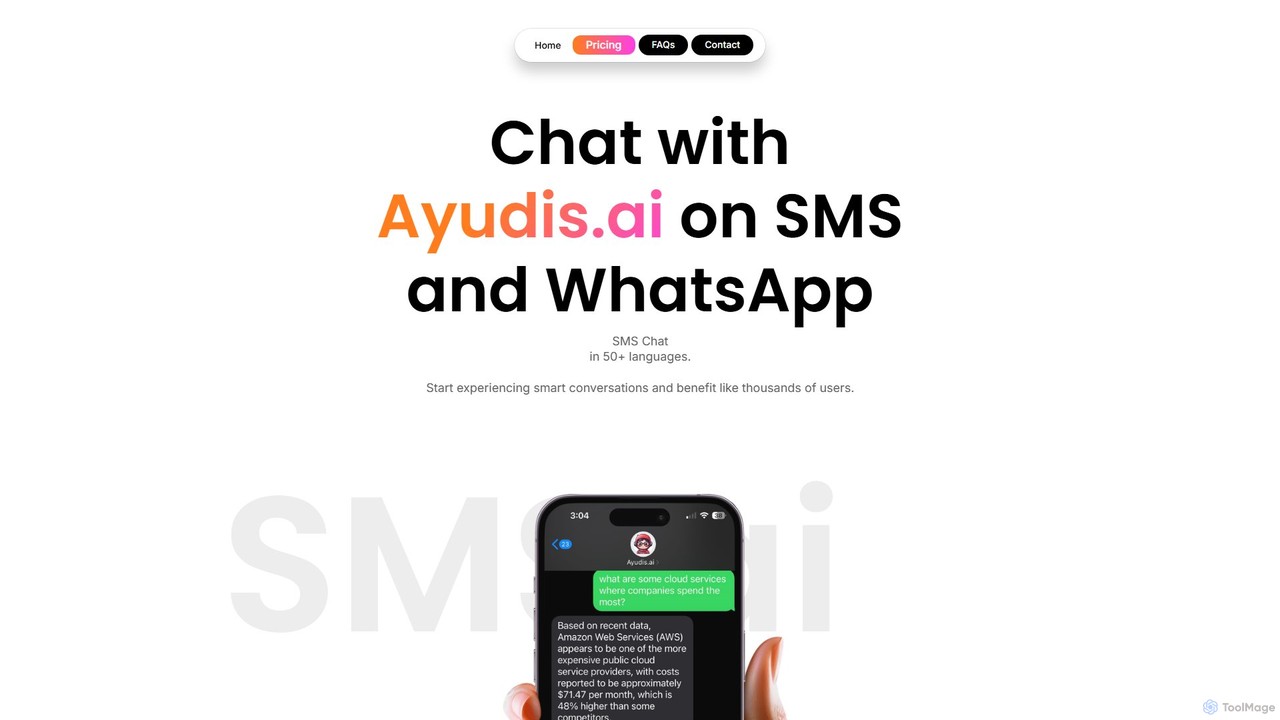
Ayudis.ai is a powerful AI assistant accessible directly via SMS and WhatsApp. It answers questions, summarizes YouTube videos, creates AI art, performs reverse phone lookups, and more, all within your messaging app. Supporting over 50 languages, it offers a convenient way to access AI-powered tools on the go.

Messaging
Visits 3.5KFavorites 117Likes 119

About Messaging

AI Messaging tools are specialized platforms designed to automate and enhance digital communication between businesses and their audiences. These tools leverage artificial intelligence, particularly natural language processing (NLP), to understand, generate, and deliver personalized messages across various channels. They streamline customer service, sales, and internal communications by providing instant, scalable, and context-aware interactions, often forming the backbone of advanced AI chatbots.

Core Features

  • Automated Responses: Instantly reply to common queries and route complex issues to human agents.
  • Personalized Interactions: Tailor messages based on user data, history, and real-time context.
  • Multi-channel Integration: Connect with users across websites, social media, email, and messaging apps.
  • Intent Recognition: Accurately interpret user intent to provide relevant information or actions.
  • Proactive Messaging: Initiate conversations for notifications, reminders, or targeted outreach.

Applicable Scenarios

AI Messaging tools are crucial for businesses aiming to scale their communication efforts. They are widely adopted in customer support centers for 24/7 assistance, in marketing for personalized campaign delivery, and in HR departments for automating employee queries. These tools enable efficient handling of high message volumes while maintaining a consistent brand voice.

How to Choose

When selecting an AI Messaging tool, prioritize its integration capabilities with existing CRM, helpdesk, or marketing automation systems. Evaluate its natural language processing accuracy and multi-language support. Consider scalability to handle fluctuating message volumes and the level of customization offered for branding and conversational flow. Finally, assess the analytics and reporting features for performance insights.

Featured tool rankings

Messaging use cases

1

Automated Customer Support

Customer service teams utilize AI Messaging tools to provide instant, 24/7 support for frequently asked questions, order tracking, and basic troubleshooting. By automating responses to common inquiries, agents can focus on complex issues, significantly reducing response times and improving customer satisfaction without increasing staffing costs.

2

Lead Qualification & Nurturing

Sales and marketing professionals deploy AI Messaging on websites or social media to engage visitors, qualify leads, and nurture prospects. The tool asks targeted questions, collects contact information, and can even schedule demo calls, ensuring that sales teams receive pre-qualified leads and reducing manual follow-up efforts.

3

Personalized Marketing Campaigns

Marketers use AI Messaging to deliver highly personalized promotional messages, product recommendations, and abandoned cart reminders directly to customers. Based on browsing history, purchase behavior, and user preferences, these tools craft relevant messages that drive engagement and conversion rates more effectively than generic broadcasts.

4

Internal HR & IT Support

Organizations implement AI Messaging for internal support, allowing employees to quickly find answers to HR-related questions (e.g., benefits, policies) or resolve common IT issues (e.g., password resets). This reduces the workload on HR and IT departments, providing employees with immediate assistance and improving internal efficiency.

5

Appointment Scheduling & Reminders

Businesses in service industries, such as healthcare or beauty, leverage AI Messaging to automate appointment booking, confirmation, and reminder processes. Users can interact with the messaging tool to select preferred times, receive confirmations, and get timely reminders, minimizing no-shows and optimizing scheduling efficiency.

6

Feedback Collection & Surveys

Companies use AI Messaging to proactively collect customer feedback and conduct surveys after interactions or purchases. The tool can engage users in a conversational manner, asking specific questions and recording responses, providing valuable insights into customer experience and product satisfaction in a less intrusive way.

Messaging FAQ

What are AI Messaging tools?

AI Messaging tools are software platforms that use artificial intelligence, primarily natural language processing (NLP), to automate and enhance digital conversations. They enable businesses to send, receive, and process messages across various channels like chat, email, and social media, providing instant, personalized, and scalable communication without constant human intervention.

How do AI Messaging tools differ from general AI Chatbots?

While often used interchangeably, AI Messaging tools focus on the delivery and management of conversational interactions across channels, whereas AI Chatbots are the conversational agents themselves. Messaging tools provide the infrastructure for chatbots to operate, including multi-channel integration, message routing, and analytics, often supporting both proactive and reactive communication strategies beyond just a chat interface.

How to choose the right AI Messaging platform?

Consider these key factors: Integration Capabilities with existing CRM or helpdesk systems are crucial for seamless workflows. Natural Language Processing (NLP) Accuracy determines how well the AI understands user intent across various languages. Scalability ensures the platform can handle fluctuating message volumes. Finally, evaluate Customization Options for branding and conversational flow, and the robustness of its Analytics and Reporting features for performance insights.

What are the main benefits of using AI Messaging tools?

The primary benefits include 24/7 customer support availability, significant reductions in operational costs, enhanced customer satisfaction through instant and personalized responses, and improved lead generation and conversion rates. They also free up human agents to handle more complex issues, leading to better resource allocation and overall efficiency.

What should I consider when choosing an AI Messaging platform?

Key considerations include the platform's ability to integrate with your existing systems (CRM, helpdesk), its natural language processing capabilities for understanding diverse user queries, support for multiple languages, scalability to handle varying message volumes, and the level of customization available for branding and conversational flows. Also, evaluate its analytics and reporting features.

What are common challenges when implementing AI Messaging?

Challenges often include ensuring seamless integration with existing IT infrastructure, training the AI model with high-quality, relevant data to achieve accurate responses, maintaining a balance between automation and human touch for complex or sensitive queries, and addressing data privacy and security concerns. Overcoming these requires careful planning and continuous optimization.